

 Home
Home Chiang Mai(




Rating: 4.3/5 (4 votes)
 |
|  Map
Map 
 Have Map
  No Map
Chai Nat attractions
Attractions in Thailand
Open Days: Open Daily
Opening Hours: Best Visited From Morning Until Late Afternoon
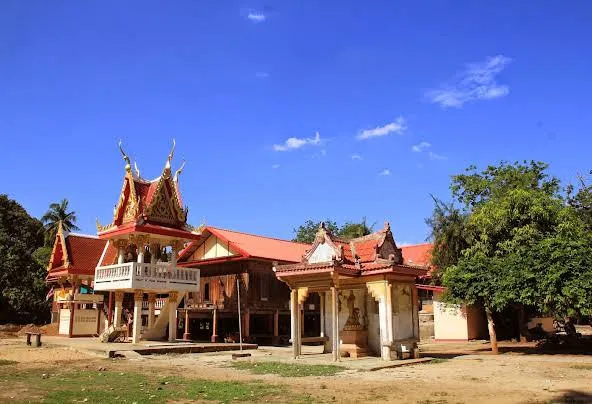
Wat Phikun Ngam in Manorom District, Chainat Province, is an important historical temple that was originally called “Wat Tha Hat” before receiving a new royal name from King Rama V during his royal journey by water in 1908. The temple’s importance lies not only in being an old community temple, but also in its museum of royal ecclesiastical objects associated with King Rama V, its revered sacred objects, and its peaceful atmosphere within the local community. These qualities make it suitable for pilgrims, history enthusiasts, and travelers who wish to discover a deeper side of Chainat.
Wat Phikun Ngam is located at Ban Tha Hat, Moo 1, Khung Samphao Subdistrict, Manorom District, Chainat Province. It is one of the temples with the most distinctive historical background in the area, because its significance extends beyond being a local community temple. It is directly connected to the royal journey of King Chulalongkorn, Rama V, and has become a destination that combines faith, memory, and cultural tourism in one place. Those who visit this temple do not come only to pay respect or make merit, but also to experience the atmosphere of an old temple whose story is deeply tied to local history.
What gives Wat Phikun Ngam its special charm is its clear identity in the memory of the people of Chainat and those interested in the history of King Rama V. Many know the temple through the story of the royal visit and the royal objects bestowed upon it, while others know it because of the Museum of Royal Ecclesiastical Objects of King Rama V, which is an uncommon highlight for an ordinary community temple. When these elements come together, Wat Phikun Ngam becomes more than a village temple. It is a sacred place, a historical site, and a learning space that clearly reflects the continuity between the local community and the Thai monarchy.
From a geographical perspective, Wat Phikun Ngam is located in Khung Samphao Subdistrict, an area long connected with waterways and transport routes. This area was important in the era when water travel was a normal part of daily life, especially for communication between towns, transportation, and royal journeys in the past. A temple located in such an area is therefore not simply a religious place. It is also an anchor of the community, a place that witnessed important events, and a site that has preserved local stories for later generations. Wat Phikun Ngam should therefore be viewed as a meeting point between community, religion, and history, rather than merely as a small temple in Chainat Province.
According to information that is consistent across local and government sources, the temple was originally called “Wat Tha Hat” and was established around 1877. Its former name reflects its roots as a riverside community temple, because both the words “tha” and “hat” are closely related to the landscape and travel routes of the past. Later, in 1908, or R.S. 127, King Chulalongkorn traveled through this area by water. The people of Ban Tha Hat prepared a pavilion to receive the royal visit. The King observed that the temple was peaceful, shady, and surrounded by many bullet wood trees, so he graciously bestowed a new name on the temple: “Wat Tha Phikun Ngam.” In later years, the word “Tha” gradually disappeared from common usage, leaving the name “Wat Phikun Ngam,” which is how the temple is known today.
The change of the temple’s name from Wat Tha Hat to Wat Phikun Ngam is not merely a small historical detail, but an important point that gives the site a very distinctive character. The temple’s present name comes directly from a royal bestowal, and it also carries an image of bullet wood trees and peaceful surroundings. This story gives the temple a narrative clearly different from other temples and helps readers and visitors feel connected to the place more easily. The name is not just a label, but the result of a real historical event. Because the name is linked to royal attention and a royal journey, it adds further depth and meaning to Wat Phikun Ngam beyond that of an ordinary temple.
One of the greatest strengths of Wat Phikun Ngam is its connection to the royal journey of King Rama V. Publicly available cultural information states that the King stayed in this area on 16 October 1908 and bestowed royal ecclesiastical objects upon the temple as commemorative gifts. These items included tiffin carriers, monks’ alms bowls, a royal sword, perforated wooden chests bearing the royal monogram, and certain objects related to the royal barge visit at that time. These are not merely old belongings, but historical evidence linking Wat Phikun Ngam to an important event in Thai national history. They make the temple stand out as a place that still preserves historical memory in a living and tangible way.
Because the royal gifts still exist, the story of Wat Phikun Ngam carries much greater weight. It is not simply an oral legend without physical proof, but a historical narrative that can still be touched through the preserved royal objects and personal items kept inside the temple. The importance of this lies in the fact that Wat Phikun Ngam is not merely a place once visited by a monarch, but a place where material evidence still confirms that relationship. For travelers interested in history, this is a remarkable attraction, because a visit to Wat Phikun Ngam does not end with worship alone, but also offers the opportunity to see visible traces of the past with one’s own eyes.
For this reason, the Museum of Royal Ecclesiastical Objects of King Rama V has become one of the most important highlights of Wat Phikun Ngam. This museum elevates the temple from being a community temple with a local story to becoming a place of historical and cultural learning with its own distinctive appeal. Travelers interested in King Rama V or the local history of Chainat can use this museum as an excellent starting point for understanding the area, because the objects on display do not tell only the story of the King. They also reveal the local social conditions, the community’s readiness to receive a royal visit, and the role of the temple in the past as a place where religion was closely connected with politics, administration, and Siamese culture of that period.
In terms of architecture and internal structure, Wat Phikun Ngam also reflects the picture of a community temple that has grown continuously through different periods. Its important religious buildings include the ubosot, the sermon hall, the prayer hall, monks’ residences, a merit-making pavilion, and a crematorium. These structures show that the temple has not remained frozen in the past, but still actively supports both monastic activities and community life. The ubosot is the heart of religious ceremonies, while the sermon hall serves as a place for gatherings, listening to sermons, and conducting communal activities. The monks’ residences, prayer hall, and merit-making pavilion all show that the temple is still in real use within the community, not merely functioning as a display site of history.
The importance of each building at Wat Phikun Ngam should therefore not be viewed only in terms of size or architectural style, but as part of the community life that has long depended on the temple. Many temples in rural or semi-rural Thailand are not just places for worship. They are also places where villagers gather, meet, and organize merit-making events. Wat Phikun Ngam functions in the same way, but with an added historical dimension through its association with King Rama V and the museum. This gives the site both the intimate quality of a community temple and the special value of a historical attraction at the same time.
For those who visit the temple to pay respect, the sacred objects inside Wat Phikun Ngam are another important element that makes the experience more complete. The principal Buddha image in the ubosot is in the Mara-Victory posture, and the principal Buddha image in the sermon hall is also in the Mara-Victory posture. In addition, there is a standing cast statue of Luang Pu Suk and a shrine to Guan Yin, both of which are popular points of worship for devotees. These sacred sites give Wat Phikun Ngam a wider spiritual dimension, as the temple does not center on only a single principal Buddha image, but allows visitors to engage with different forms of belief, including traditional Buddhist devotion, reverence for a revered monk, and faith in Guan Yin as a symbol of compassion and blessings.
The standing cast statue of Luang Pu Suk is especially interesting from a cultural perspective, because Luang Pu Suk is widely respected in Chainat and surrounding provinces. The presence of his statue at Wat Phikun Ngam adds another dimension of faith to the temple and also connects the temple to a broader network of local memory throughout the province. Meanwhile, the Guan Yin shrine reflects the diversity of belief in contemporary Thai society, where many people regard Guan Yin as a source of compassion, blessings, and peace of mind. The combination of principal Buddha images, a revered monk’s statue, and a Guan Yin shrine allows the temple to embrace the spiritual needs of a wide range of visitors with both breadth and depth.
Beyond its sacredness and antiquity, Wat Phikun Ngam also has value as a living temple in a very clear sense. It is not merely an old site that visitors come to see and then leave behind, but a place truly used in daily community life. It serves as a gathering place for merit-making ceremonies, funerals, festivals, and religious activities throughout the year. Seen from this perspective, Wat Phikun Ngam differs from museum-like attractions or silent ruins, because here there is continuity of use, there are people, there are monks, there are rituals, and there is the ongoing movement of community life. This gives the place a simple but genuine charm.
The role of the temple in the communities of Ban Tha Hat and Khung Samphao is also reflected in the way it serves as a center of collective memory and shared identity. The story of King Rama V is not merely historical information kept in documents, but a story that helps shape local pride, because it makes the people feel that their place is important, rooted, and rich in meaningful history. As the community continues to preserve this memory through the temple, through storytelling, and through the care of the museum, the site has become a center for the transmission of both faith and local historical consciousness.
From a traveler’s perspective, Wat Phikun Ngam is an ideal destination for those who do not want only to check in briefly, but wish to understand a place more deeply. Pilgrims will find several sacred images and worship points. History lovers will find stories connected with King Rama V and meaningful objects displayed in the museum. Cultural travelers will be able to see the natural continuity between the temple and the surrounding community. Those who appreciate the peaceful atmosphere of an old temple will find that Wat Phikun Ngam is shady, calm, and full of a gentle charm that invites slow and thoughtful exploration.
Another important charm of Wat Phikun Ngam is the authenticity of the place. Every element encountered by visitors, from the name Ban Tha Hat, the Khung Samphao area, the former temple name, the story of the royal visit, and the royal-related objects, gives the site a remarkable density of narrative. Unlike some places that must rely on exaggerated storytelling to appear interesting, Wat Phikun Ngam needs very little embellishment because its own history is already powerful. This is precisely what makes the place memorable for those who are interested in old temples, local history, and cultural travel in a genuine sense.
When considered within the tourism landscape of Chainat Province, Wat Phikun Ngam can be regarded as one of the places that adds real diversity to a travel itinerary. Chainat is not only about famous temples or natural attractions. It also has historical sites linked with King Rama V and with strong local narratives. If travelers want to plan a one-day or two-day trip in Chainat, adding Wat Phikun Ngam can make the journey more meaningful, especially when combined with other temples or historical places in the area. It helps show that Chainat is not merely a province people pass through, but a place with deeper cultural layers than many might expect.
Another interesting point is that Wat Phikun Ngam is not only distinguished by its past, but also remains visible in the present through public communication and the continued role of the temple in contemporary society. The fact that information about the temple can still be found through several public channels, including government sources, cultural databases, and the temple’s own public presence, reflects that the temple is still active and has not disappeared from the living awareness of the people. This continuity matters both for tourism and for public understanding, because it shows that the place still truly exists, still remains connected to its community, and still has ongoing care and supervision.
For those who wish to visit, Wat Phikun Ngam is best reached by private car, as this makes it easier to include in a travel route through Manorom District and nearby areas. From central Chainat, it is not difficult to drive to Khung Samphao Subdistrict, and once there, visitors can spend meaningful time inside the temple without having to rush. The charm of this temple does not lie in being a place to take a quick photo and leave, but in being a place where one should allow time to walk through the museum, look at eachาคาร, pay respect to the sacred objects, understand the stories, and quietly absorb the atmosphere of the temple and the surrounding community. For those who enjoy travel rich in content and feeling, Wat Phikun Ngam is especially rewarding.
Getting There If you start from central Chainat, you can drive toward Manorom District and continue into Khung Samphao Subdistrict. Wat Phikun Ngam is located in Ban Tha Hat, Moo 1, and is well known among local residents. The route is therefore not complicated, and the temple can easily be included in a travel itinerary focused on temples or historical places in Manorom District and nearby areas.
In terms of the visitor experience, the best time to visit Wat Phikun Ngam is from morning until late afternoon, because the weather is more comfortable and natural light makes the atmosphere of the temple appear calmer and more peaceful. This is also a suitable time for walking around and appreciating the details of the buildings and surrounding grounds without excessive heat. If you would like to take photographs, the morning usually provides softer and more beautiful light. Those who want to experience the temple in true quietness should choose an ordinary weekday or a time when no major event is being held, as this allows the simple and peaceful character of the community temple to be felt more clearly.
Wat Phikun Ngam is a place that gathers several layers of value within a single temple. The first is historical value, arising from the royal visit and the royal naming by King Rama V. The second is cultural value, represented by the museum of royal ecclesiastical objects and the community’s preservation of local memory. The third is spiritual value, found in the principal Buddha images, the standing cast statue of Luang Pu Suk, and the Guan Yin shrine. The final layer is tourism value, as the temple offers peace, knowledge, and a natural sense of connection to the past. For anyone searching for a temple in Chainat Province that offers more than sacredness alone, but also contains strong history and meaningful stories, Wat Phikun Ngam is one of the places that deserves to be experienced in person at least once.
| Place Name | Wat Phikun Ngam |
| Location | Ban Tha Hat, Moo 1, Khung Samphao Subdistrict, Manorom District, Chainat Province 17110 |
| Address | No. 82, Ban Tha Hat, Moo 1, Khung Samphao Subdistrict, Manorom District, Chainat Province |
| Place Summary | An important historical temple in Manorom District, originally known as Wat Tha Hat before being granted the new royal name Wat Tha Phikun Ngam by King Rama V, later shortened to Wat Phikun Ngam. The temple stands out for its history, spiritual significance, and the Museum of Royal Ecclesiastical Objects of King Rama V. |
| Highlights | 1. Originally known as Wat Tha Hat, with a clearly recorded history dating to around 1877 2. King Rama V visited the temple and granted it a new royal name 3. Home to the Museum of Royal Ecclesiastical Objects of King Rama V 4. Features principal Buddha images, a standing cast statue of Luang Pu Suk, and a Guan Yin shrine 5. A living community temple that continues to play an active role in local life |
| History | Established around 1877 and originally called “Wat Tha Hat.” On 16 October 1908, King Rama V passed through the area by water and bestowed the new name “Wat Tha Phikun Ngam,” which later became shortened to “Wat Phikun Ngam.” |
| Abbot / Temple Head | Phra Bailika Piyawit Chotithammo |
| Temple Zones | 1. Ubosot Zone 2. Sermon Hall Zone 3. Prayer Hall Zone 4. Monks’ Residence Zone 5. Museum of Royal Ecclesiastical Objects of King Rama V Zone 6. Standing Statue of Luang Pu Suk Zone 7. Guan Yin Shrine Zone 8. Merit-Making Pavilion and Crematorium Zone |
| Important Sacred Objects | Principal Buddha image in the Mara-Victory posture in the ubosot, principal Buddha image in the Mara-Victory posture in the sermon hall, standing cast statue of Luang Pu Suk, Guan Yin shrine |
| Nearby Tourist Attractions | 1. Wat Pa Sak, Manorom District – Approx. 9 km. 2. Wat Tha Sung, Uthai Thani Province – Approx. 13 km. 3. Golden Castle at Wat Tha Sung – Approx. 13 km. 4. Wat Songsawai, Chainat Province – Approx. 19 km. 5. Chao Phraya Dam – Approx. 27 km. |
| Popular Restaurants Nearby | 1. Rim Chon Restaurant, Manorom – Approx. 12 km. Tel. 056-491397, 085-8726152, 081-0451477 2. Ruean Phae Chainat Restaurant Since 1945 – Approx. 14 km. Tel. 080-0660999, 056-411625 3. Samrab Kab Khao Riverside Chainat – Approx. 15 km. Tel. 086-9699924, 056-410919, 095-6345303 4. Larb Ped Chainat – Approx. 15 km. Tel. 062-4912277, 096-4949287, 056-476776 5. Ton Sai Noodle Shop Chainat – Approx. 18 km. Tel. 092-4622559 |
| Popular Accommodations Nearby | 1. Chao Phraya Thara Riverside Chainat – Approx. 14 km. Tel. 084-2411234, 056-410800, 096-7784457 2. Suwannariverside Resort Chainat – Approx. 14 km. Tel. 056-477798, 090-5614898 3. Fantasy Resort Chainat – Approx. 13 km. Tel. 092-0935555, 088-4296025 4. Plaifah Resort Chainat – Approx. 15 km. Tel. 081-1811216 5. C2U Chainat – Approx. 13 km. |
| Open Days | Open Daily |
| Best Time To Visit | Morning until late afternoon, suitable for walking around the temple, paying respect to sacred objects, and visiting the museum inside the temple |
| Getting There | Travel by car from central Chainat or Manorom District into Khung Samphao Subdistrict, then continue toward Ban Tha Hat. The temple is well known locally and can easily be included in a cultural travel route. |
| Contact Numbers | 1. Wat Phikun Ngam 093-3120740 2. Rim Chon Restaurant 056-491397 3. Chao Phraya Thara Riverside Chainat 084-2411234 4. Suwannariverside Resort Chainat 056-477798 5. Fantasy Resort Chainat 092-0935555 6. Plaifah Resort Chainat 081-1811216 7. Ruean Phae Chainat Restaurant Since 1945 080-0660999 8. Samrab Kab Khao Riverside Chainat 086-9699924 |
Frequently Asked Questions (FAQ)
Q: Where is Wat Phikun Ngam located?
A: Wat Phikun Ngam is located at Ban Tha Hat, Moo 1, Khung Samphao Subdistrict, Manorom District, Chainat Province. It is an important temple whose history is closely connected with the royal journey of King Rama V.
Q: What was the original name of Wat Phikun Ngam?
A: The temple was originally called “Wat Tha Hat” before King Rama V graciously bestowed the new name “Wat Tha Phikun Ngam,” which later became “Wat Phikun Ngam.”
Q: How is Wat Phikun Ngam connected to King Rama V?
A: King Rama V passed through this area by water on 16 October 1908 and observed that the temple was peaceful and shaded by bullet wood trees. He then graciously bestowed a new name on the temple and also gave commemorative objects to the temple.
Q: What are the main highlights inside Wat Phikun Ngam?
A: The main highlights are the Museum of Royal Ecclesiastical Objects of King Rama V, the principal Buddha image in the ubosot, the principal Buddha image in the sermon hall, the standing cast statue of Luang Pu Suk, and the Guan Yin shrine.
Q: What does the museum inside Wat Phikun Ngam display?
A: The museum displays royal ecclesiastical objects and items associated with King Rama V, such as tiffin carriers, monks’ alms bowls, a royal sword, and perforated wooden chests, all of which are important historical highlights of the temple.
Q: What type of traveler is Wat Phikun Ngam suitable for?
A: It is suitable for pilgrims, people interested in the history of King Rama V, cultural travelers, and visitors who want to explore a deeper side of Chainat beyond ordinary tourist attractions.
Q: What is the best time to visit Wat Phikun Ngam?
A: The best time to visit is from morning until late afternoon, when the weather is more comfortable and the temple grounds can be explored more pleasantly while paying respect and learning about the site in detail.
 Wat Phikun Ngam Map
 Category:
  Group:
  Last Update: 1 HourAgo
Comment
 Nearby Attractions
| Keyword (Advance) |
 Region
|
 Muang Chai Nat(