

 Home
Home Chiang Mai(










Rating: 3.1/5 (14 votes)
 |
|  Map
Map 
 Have Map
  No Map
Chiang Mai attractions
Attractions in Thailand
Open Days: Daily (recommended to confirm activities/actual hours with the centre before visiting)
Opening Hours: Recommended 08.30–17.00 (mornings have the best light and fewer crowds)
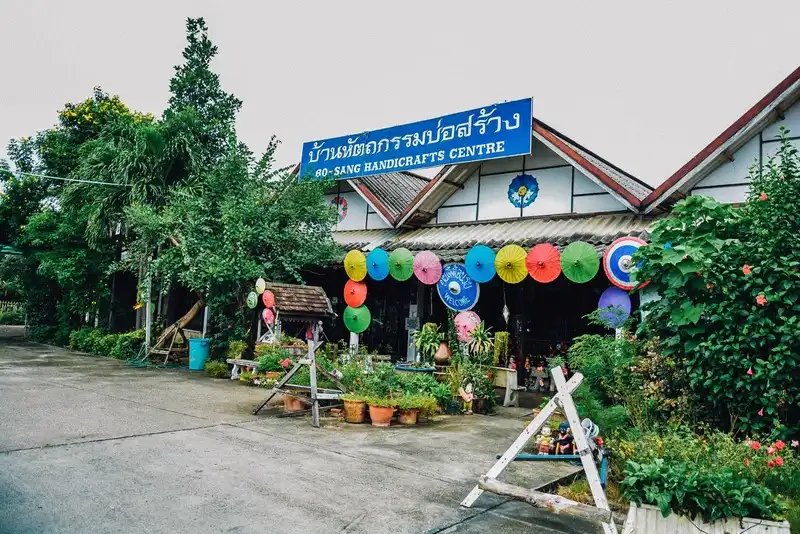
Borsang Village is one of those names in Chiang Mai that instantly makes people picture “bright, colourful umbrellas” — and honestly, that image isn’t exaggerated. Borsang umbrellas have travelled a long way from being made under stilted homes to becoming beloved souvenirs for both Thai and international visitors. What makes this place special is that you can still feel the “real making process” rather than just walking through a souvenir market. In the past, villagers often assembled umbrellas beneath their houses; once finished, the frames and freshly painted umbrellas would be laid out across the open yard to dry in the sun. Rows of umbrellas drying side by side became a signature scene — the kind that makes you think, “Yep, this is Borsang.”
The name “Borsang umbrella” is straightforward: this umbrella tradition is produced in Borsang Village, San Kamphaeng District, Chiang Mai, and there are learning/s demonstration points where visitors can watch the production steps up close. If you drive from central Chiang Mai along the Chiang Mai–San Kamphaeng Road for about 9 km, you’ll find a junction leading into the community area. That easy access makes Borsang a great half-day to one-day trip for anyone who wants both sightseeing and a deeper look at local craftsmanship.
What makes Borsang umbrellas truly “eye-catching” isn’t only the colour — it’s the intent behind the patterns and the consistency of handwork. In general, umbrellas you’ll see here can be grouped into 3 types by covering material: silk, cotton, and saa paper. The core process is similar, but the feel in hand and the final look differ. Fabric umbrellas feel softer and more fluid, often better for everyday use or fashion-style photography. Saa paper umbrellas, on the other hand, carry a distinctly northern Thai craft texture — perfect as souvenirs, home décor, or event props.
If you want the village story that locals often share, it begins long ago with a wandering monk who set up his glot (a monk’s umbrella-tent) in the Borsang area. One day strong winds damaged it beyond use. An elderly villager named “Nai Phueak” helped repair it — and this small act sparked a practical idea. He noticed that if the glot had a longer handle, it could be carried more easily from place to place. So he experimented by adding a handle. From “glot” it gradually became an “umbrella” in the everyday sense: something portable you could use for sun and rain.
In the earliest days, umbrellas weren’t painted with the lively florals people associate with Borsang today. Natural dyes from tree bark were used for simple, solid-colour finishes, with “red” often described as a common early shade. Over time, designs evolved into floral patterns, multi-coloured backgrounds, and more refined colour control that gave each umbrella a sense of life. The umbrella stopped being merely a “tool” and became a piece of “folk art” that reflects both the maker’s taste and the era. Even now, Borsang remains widely known for preserving this identity, and the sight of colourful umbrellas throughout the community is a big reason people keep coming back.
The part many visitors don’t immediately notice — because the patterns steal the spotlight — is the structure and materials. Traditional saa paper umbrellas rely on locally sourced components: bamboo frames, saa paper, paint, oils, and natural resin/varnish layers to improve durability. What’s interesting is that this craft doesn’t require factory-level investment, but it demands investment in “precision” at nearly every step. When done well, the umbrella opens and closes smoothly, the frame feels strong, colours hold, and the shape looks clean. It’s a craft that reveals discipline as much as it shows skill.
If you come specifically to watch how umbrellas are made, visiting the Umbrella Making Centre helps you see the process from the beginning: the top cap and hub pieces often made from softer woods because they’re easier to lathe and groove; bamboo ribs selected at the right maturity so they won’t shrink too much after drying; and the saa paper covering that takes colour beautifully. Assembly steps — carving ribs, drilling holes, threading short and long ribs, and binding the hub tightly — make you realise how much time and fine detail goes into a single umbrella before it becomes something you can carry home.
For a simple buyer’s checklist — no need to be a craft expert — try these 5 checks for a “good quality” umbrella. First, the shape should look balanced and not warped. Second, the frame and components should feel neat, firm, and not loosely wobbling. Third, the paper or fabric should be reasonably taut and thick enough, not easily wrinkled. Fourth, the paint and protective coating shouldn’t flake off easily or look patchy. Fifth, opening and closing should feel smooth without snagging — frequent stiffness can be a sign the assembly isn’t as refined as it should be.
Saa paper umbrellas come in many sizes, from small souvenir pieces to larger umbrellas meant for décor or photo props. If you want one for real use, hold it, open it, and test the weight — choose something you can comfortably manage, especially if wind is a factor. If you’re buying for décor or photography, match the size to your space: a very large umbrella can overwhelm a small room, but in a wider area it becomes a stunning focal point.
Another time when Borsang feels especially lively is during the umbrella-related activities and festival season, which often falls around January. You may see parades, cultural performances, demonstrations, and a street-fair atmosphere where people can stroll all day. If you love photography, aim for morning or softer afternoon light so colours pop without harsh shadows. If you want peak energy, late afternoon into evening usually brings the fullest festival vibe.
Getting There From central Chiang Mai, the most direct route is to drive east along the Chiang Mai–San Kamphaeng Road. After leaving the city area, continue toward San Kamphaeng and look for signs/junctions leading into Borsang. Because it’s only about 9 km from the city, it’s ideal for a short trip and can be easily combined with the San Kamphaeng–Mae On area in the same day, such as hot springs or nature-style cafés. On holidays or festival days, it’s smart to allow extra time for traffic and parking because many visitors come specifically to shop for souvenirs.
In the end, Borsang Village is more than just “pretty things.” It’s a living picture of a community that has kept a meticulous craft alive until it became the place’s identity. If you want a Chiang Mai experience that doesn’t require going up a mountain or spending an entire day — but still gives you culture, craft knowledge, and a meaningful souvenir with a story — Borsang is a strong pick.
| Name | Borsang Village – Umbrella Making Centre |
| Location | 111/2 Moo 3, Ton Pao Subdistrict, San Kamphaeng District, Chiang Mai |
| Characteristics | Famous umbrella craft village; vibrant hand-painted umbrellas; demonstrations/learning of umbrella making; popular for Chiang Mai souvenirs |
| Period | Long-standing community craft tradition; evolved from solid colours to floral patterns and contemporary folk-art styles |
| Key Evidence | Umbrella-making demonstrations; local-material system (bamboo, saa paper, paints, oils/resins); community craftsmanship knowledge |
| Name Origin | Called “Borsang umbrellas” because they are produced in Borsang and represent the village’s identity |
| Travel | From central Chiang Mai, take Chiang Mai–San Kamphaeng Road and turn into Borsang (approx. 9 km from the city) |
| Current Status | Open for visits/contact (recommended to confirm actual hours before travelling) |
| Contact Number | Umbrella Making Centre: 053-338195, 053-338324 |
| Nearby Tourist Attractions (approx. distance) | Wat Borsang (1 km) San Kamphaeng Hot Springs (18 km) (Public relations: 065-963-0137 / Accommodation booking: 087-659-1791) Mae Takhrai National Park (25 km) (052-000-0832) Mae Kampong Village (35 km) Tha Phae Gate/Chiang Mai Old City (11 km) |
| Popular Restaurants Nearby (approx. distance) | Borsang Kang Jong (2 km) (082-459-7779) Ruen Lada (5 km) (080-499-8826) GUSTO SITE (6 km) (087-657-9889) Tasty Leaf Cafe (7 km) (052-000-508) mumika toast & milk bar (2 km) (096-926-3644) |
| Popular Accommodations Nearby (approx. distance) | Thantara Resort Chiang Mai (7 km) (053-215008) Radateeree Boutique Resort (12 km) (084-359-3448) Brique Hotel Chiangmai (11 km) (052-012-555) Khum Phaya Resort & Spa (12 km) (053-415-555) B2 Mahidol Boutique & Budget Hotel (13 km) (1328 / 052-009-556) |
| Facilities | Community shops / umbrella-making demonstration area / walking area (on-site details may vary by season and events) |
| Fees | Generally free to visit (special activities/workshops depend on each shop/centre) |
| Traditions/Festivals | Borsang Umbrella Festival (often around January each year) and Borsang Umbrella Run (example: 18 Jan 2026) |
Frequently Asked Questions (FAQ)
Q: When is the best time to visit Borsang Village?
A: For beautiful light and fewer crowds, mornings — especially weekdays — are ideal. January is often the most lively due to umbrella-related events and festival atmosphere.
Q: How are Borsang umbrellas different from regular umbrellas?
A: The highlights are the handcrafted bamboo structure, careful assembly, and hand-painted designs — especially saa paper umbrellas that feel distinctly northern Thai in texture and style.
Q: Where can I watch the umbrella-making process?
A: You can visit the Umbrella Making Centre in Borsang Village, which is the main spot for demonstrations and learning.
Q: How do I choose a good-quality umbrella?
A: Test the open–close motion for smoothness, check that the frame feels firm, and look for paint/coating that doesn’t flake easily. The umbrella shape should also look balanced, not warped.
Q: Where can I go next nearby for a worthwhile day trip?
A: You can continue toward the San Kamphaeng–Mae On area, such as San Kamphaeng Hot Springs or Mae Takhrai National Park, then return to the city in the evening.
 Borsang Village Map
 Category:
  Group:
  Last Update: 7 HourAgo
Comment
 Nearby Attractions
| Keyword (Advance) |
 Region
|
 Muang Chiang Mai(