

 Home
Home Chiang Mai(




Rating: 4.5/5 (4 votes)
 |
|  Map
Map 
 Have Map
  No Map
Phetchaburi attractions
Attractions in Thailand
Open Days: Daily (access to headwater forest zones may require permission under national park regulations; please check before travel)
Opening Hours: 08:00 – 17:00 (based on general park entry/exit practice; please confirm the latest announcements, checkpoints, and route conditions before travel)
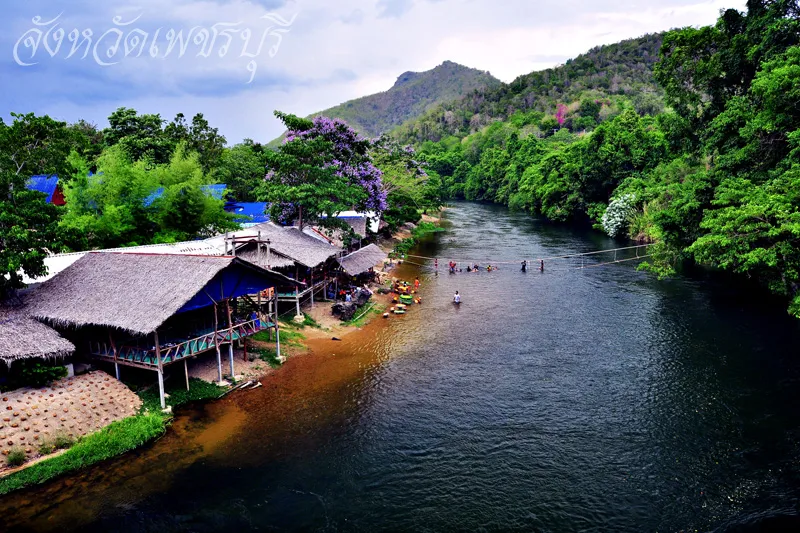
Phetchaburi River Headwaters (Kaeng Krachan National Park headwater forest) is not a destination designed for “fast tourism”; it is a place that makes visitors slow down and align their pace with real forest conditions, real water conditions, and the real risks of traveling deep in the wilderness. Here, the word “headwaters” does not mean an easy riverside photo spot. It refers to an upstream ecosystem that gradually forms the Phetchaburi River, flows down into the plains, passes through communities and agricultural landscapes, and eventually reaches the Gulf of Thailand. Visiting the Phetchaburi River Headwaters is therefore best understood as going to learn where the province’s lifeline truly begins, rather than ticking off a single attraction.
The Phetchaburi River Headwaters lie deep within the forested landscape of Huai Mae Priang Subdistrict in Kaeng Krachan District, connected to the southern Tanao Si mountain range, which generates numerous streams that steadily merge into major waterways. The headwater forests of Kaeng Krachan are highly diverse, with different forest types appearing across elevations. This diversity shapes the character of the water itself: clear, cool, and highly seasonal. During the rainy season, currents strengthen and river-crossings change constantly. In the dry season, water levels drop, revealing temporary sandbars and rocky corridors that can become walkable passages, although slippery rock surfaces and hidden pools still require careful footing.
For local people, the importance of the Phetchaburi River Headwaters is not only about scenic romance; it is also about tangible water security. The Phetchaburi River functions as a vital artery for the province, supporting agriculture, freshwater fisheries, community water management, and downstream coastal ecosystems. Looking upstream, the headwaters become the point that defines the quality of the entire system. If headwater forests are degraded, clear water turns turbid, sediment increases, tributary dynamics shift, and downstream areas absorb the impacts in a cascading chain. This is why the Phetchaburi River Headwaters should be entered with the highest level of respect and caution: many serious long-term impacts begin with small, careless actions that accumulate over time.
The charm of headwater travel is not about built facilities or service points; it is about an ecosystem that is still fully functioning. Along the watercourse, you may see massive trees lining the banks, wildlife signs on the ground, and hear gibbons calling through the forest in the morning or afternoon. In certain moments, you might spot langurs moving through the canopy. A forest river is both a corridor and a dining room for countless species, from birds that drop down to drink, to mammals that visit water sources on their daily rhythms. If you remain quiet enough, nature begins to reveal itself. This is precisely why headwater trekking demands strict discipline around noise and behavior: even a small amount of disturbance can make the entire living landscape disappear from view.
What makes the Phetchaburi River Headwaters different from ordinary nature attractions is that the environment forces you to think about safety at all times. Headwater travel often involves crossing the river multiple times in a single day. When water is low, depths may range from above the ankle to around the thigh, but after heavy rain or sudden runoff, water levels can change quickly and currents can become strong enough to make crossings risky. Underwater terrain includes slick rocks, deeper pools, and uneven substrates. For this reason, headwater routes should not be attempted solo and should not be treated like a typical sightseeing outing. Planning should follow official site regulations and the guidance of rangers or local guides, because mistakes in headwater forests do not end at minor scrapes; they can escalate into emergencies where assistance takes time to reach.
One historical layer often told in local narratives links the Phetchaburi headwaters to royal travel in Phetchaburi during the reign of King Chulalongkorn (Rama V). This memory frame reinforces the sense of purity and significance associated with the region’s upstream water. Even if modern visitors do not come specifically to retrace history, recognizing this layer adds depth: standing by the flowing water becomes more than watching a stream; it becomes standing within a landscape that local memory and Phetchaburi’s travel history continue to reference.
Geographically, the Phetchaburi River’s direction and character shift according to key tributary confluences. The upstream flow begins from the south and moves northward, passing the Phan Nam Yot zone before turning east toward Kaeng Krachan Dam. Multiple tributaries and streams also contribute along the way, functioning like capillaries that sustain the headwater system through seasonal change. This perspective is valuable for learning-focused travel because it clarifies that a “river” does not originate from a single point; it emerges from the combined work of an entire forested watershed. When that watershed thins, the river inevitably changes with it.
The best-known landmark within the headwater forest zone is often Thor Thip Waterfall, deeper inside the national park, commonly used as a practical gateway into the headwater landscape. It is a destination that many adventure travelers can realistically reach while still experiencing authentic forest conditions, often with more managed route guidance than truly deep headwater zones. The walk from the river corridor to the waterfall can be short in some seasons, yet overall difficulty still depends on current conditions. The most reliable approach is to choose a trip format that matches your readiness: a shorter trek to experience selected headwater segments, or a multi-day journey for experienced travelers who have secured proper permission under park regulations.
The core principle of visiting the Phetchaburi River Headwaters with quality is simple: leave no trace and do not pressure the ecosystem. The fastest damage is rarely caused by a single large group, but by repeated visits without discipline — leaving food scraps by the river (which alters wildlife behavior), lighting fires in risky areas, disturbing shallow water habitats, or cutting new paths that destabilize soil. Protecting headwater forests starts with small, consistent actions: stay on designated routes, carry out all trash, never feed wildlife, keep noise low, reduce plastic use, and avoid activities that unnecessarily churn the river corridor. The clarity of headwater water is not accidental; it is the outcome of a natural order that requires cooperation from every visitor.
Seasonality determines both beauty and risk. The rainy season brings the forest to peak vitality and makes water features most dramatic, but it also increases hazards from slippery terrain, fast currents, and sudden changes. The dry season typically makes crossings easier and routes more stable, but water levels can be notably lower. Late rainy season into early cool season is often the most balanced window for travel, with good water conditions and cooler air. Even then, decisions should be based on official park announcements and real-time weather and river conditions.
Seen through a deeper travel lens, the Phetchaburi River Headwaters invite a fundamental question: where does water come from, and how should we live so we do not destroy its source? This river does not only sustain the city of Phetchaburi; it supports riverside farming, orchards, rice fields, and downstream coastal ecosystems. Once you have stood in headwater forest conditions, water conservation and proper waste management stop feeling like abstract moral lessons; they become practical steps toward keeping the province’s lifeline functioning.
Getting There Accessing the Phetchaburi River Headwaters is done via routes within Kaeng Krachan National Park. In practice, travelers commonly use Kaeng Krachan Dam and/or the park headquarters area as starting points, then enter zones that are currently open under park regulations (some areas may require rangers, authorized guides, or seasonal restrictions). If you intend to reach deeper headwater zones, contact Kaeng Krachan National Park in advance to confirm access conditions, permissions, route readiness, and the latest weather and water-level information before departure.
In short, the Phetchaburi River Headwaters are not a place to visit by guessing. They suit travelers who plan carefully, respect rules, prioritize safety, and value wilderness integrity. If you enter the forest with the right discipline, you will gain more than scenery — you will encounter the upstream system that sustains the entire province, and understand what “headwater forest” truly means beyond what any photo can fully capture.
| Place Summary | A headwater forest zone inside Kaeng Krachan National Park where upstream streams form the Phetchaburi River system. Ideal for deep nature learning and responsible trekking; requires careful planning and strict compliance with park regulations. |
| Name | Phetchaburi River Headwaters (Kaeng Krachan National Park) |
| Address | Kaeng Krachan National Park headwater forest zone (Huai Mae Priang Subdistrict area, Kaeng Krachan District, Phetchaburi Province, Thailand) |
| Key Highlights | High-integrity headwater forest, clear seasonal river systems, chances to observe wildlife signs and forest soundscapes, strong suitability for learning-based nature travel with high safety discipline. |
| Period | Natural headwater landscape; local historical narrative links the upstream water to royal travel in Phetchaburi during the Rama V era. |
| Key Evidence | The tributary network that merges into the Phetchaburi River system (within the headwater context) and the Tanao Si mountain-linked headwater terrain. |
| Name Origin | “Phetchaburi River Headwaters” refers to the upstream watershed where the Phetchaburi River system forms before flowing through the province toward the Gulf of Thailand. |
| Site Management | Kaeng Krachan National Park (Department of National Parks, Wildlife and Plant Conservation, Thailand) |
| Travel | By car: Use Kaeng Krachan Dam and/or the park headquarters as starting points, then follow currently authorized routes — deeper headwater zones may require rangers or authorized guides and can be seasonally restricted. |
| Current Status | Accessible under park regulations and route readiness (contact the park in advance for the latest access conditions). |
| Facilities | Depends on the authorized zone and route; primary services are concentrated around the park headquarters/dam areas and officially opened tourist points. |
| Contact Number | Kaeng Krachan National Park: 032-459-293 |
| Nearby Tourist Attractions (Approx. Distance) | 1) Thor Thip Waterfall (Km.36 zone) (approx. 60 km) 2) Kaeng Krachan Dam / Reservoir (approx. 20 km; varies by starting point) 3) Phanoen Thung (Kaeng Krachan National Park) (approx. 80 km) 4) Ban Krang Camp (Kaeng Krachan National Park) (approx. 55 km) 5) Pa La-U Waterfall (approx. 95 km) |
| Popular Restaurants Nearby (Approx. Distance + Phone) | 1) Khrua Rim Kaeng, Kaeng Krachan (approx. 25 km) Tel. 061-835-1986 2) KISSA Cafe & Restaurant, Kaeng Krachan (approx. 25 km) Tel. 082-734-4300 3) Tanote Restaurant (Tham Rong / Ban Lat area) (approx. 45 km) Tel. 082-252-4990 4) Baan Poollatharn (approx. 55 km) Tel. 089-136-1336 5) Khrua Khun Lor (Ban Lat area) (approx. 55 km) Tel. 081-012-9919 |
| Popular Accommodations Nearby (Approx. Distance + Phone) | 1) River Tales Kaeng Krachan (approx. 25 km) Tel. 062-318-6886 2) Kaeng Krachan River Resort (approx. 25 km) Tel. 081-255-2006 3) Nana Resort Kaeng Krachan (approx. 25 km) Tel. 032-706-139 4) Jamjan Resort (approx. 25 km) Tel. 089-447-2595 5) Baan Maka Nature Lodge (approx. 60 km) Tel. 065-563-0672 |
Frequently Asked Questions (FAQ)
Q: Where are the Phetchaburi River Headwaters located?
A: They are within the headwater forest zone of Kaeng Krachan National Park, in the Huai Mae Priang Subdistrict area of Kaeng Krachan District, Phetchaburi Province.
Q: Who should I contact before visiting deeper headwater zones?
A: Contact Kaeng Krachan National Park in advance to confirm access conditions, permitted routes, and safety requirements. Tel. 032-459-293.
Q: What season is best for visiting headwater areas?
A: Late rainy season into early cool season is often the most balanced for water levels and trail conditions, but you should always follow official park announcements and real-time weather/water conditions.
Q: Who is this destination suitable for?
A: It is best for nature travelers who plan carefully, maintain safety discipline, and respect conservation-area rules, especially those who want a serious learning-based headwater ecosystem experience.
Q: What is the biggest safety risk when trekking along the river?
A: River crossings where water levels can change quickly, rocks are slippery, pools can be deep, and currents can be strong, combined with weather-driven route changes. Follow ranger/guided advice and do not force conditions.
Q: What places can be combined in a single trip?
A: Many visitors connect their trip with Kaeng Krachan Dam and officially opened park areas such as Ban Krang Camp, Phanoen Thung, or the Thor Thip Waterfall zone, depending on permitted routes and available time.
 The Phetchaburi River Map
 Category:
  Group:
  Last Update: 1 DayAgo
Comment
 Nearby Attractions
| Keyword (Advance) |
 Region
|
 Muang Phetchaburi(