

 Home
Home Chiang Mai(




Rating: 4/5 (5 votes)
 |
|  Map
Map 
 Have Map
  No Map
Phetchaburi attractions
Attractions in Thailand
Open Days: Daily
Opening Hours: All day (some zones/activities depend on the responsible agency and service hours)
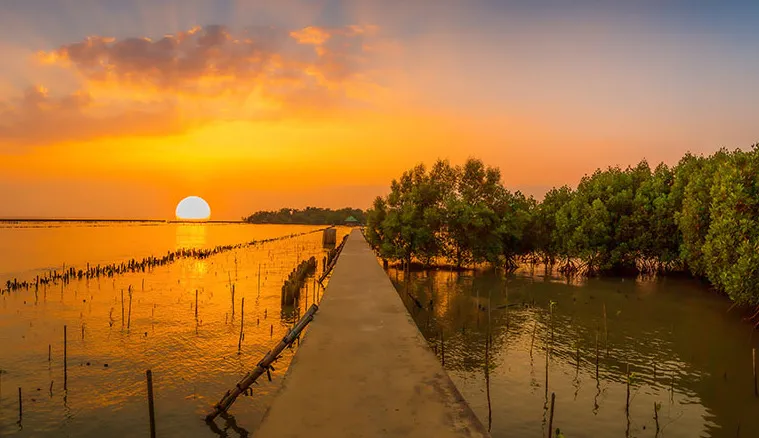
Laem Phak Bia is a long sandy cape on the Gulf of Thailand, widely known as “the first grain of sand of the Gulf”. It offers a highly natural atmosphere, long shoreline walks, and an easy one-day mix of mangroves, beach, and wetland landscapes. It is also closely connected to the Laem Phak Bia Environmental Research and Development Project (Royal Initiative), where you can see real-world examples of nature-based wastewater treatment.
Laem Phak Bia (Laem Phak Bia Subdistrict, Ban Laem District, Phetchaburi) is a Gulf-side cape with a clearly different personality from busier resort beaches such as Cha-am. The main appeal here is not adrenaline activities, but a more natural coastline where you can slow down, walk along a long stretch of shore, breathe in soft sea air, and quietly observe how the coastal scenery shifts with the tide. This is the particular charm of the upper Gulf: the same place can look and feel subtly different from hour to hour, depending on wind, light, and water level.
The phrase “the first grain of sand of the Gulf of Thailand” is an easy-to-grasp way people describe Laem Phak Bia: a memorable image of a cape that feels like the starting point of a long, continuous sandy shoreline. It gives your visit a small narrative anchor beyond simply looking at sea and sand, and on clear days the coastline appears to extend so far that you begin to sense the patience of nature in shaping this landscape over time.
One reason Laem Phak Bia is a place you can comfortably spend time in is that it is not arranged as a fully commercial beach zone like some famous seaside destinations. Around you, you will find beach, mangroves, open grass, wildflowers, and a steady presence of intertidal life that appears as you walk, such as mudskippers and crabs, along with shorebirds feeding in rhythm with the tide. If you enjoy nature observation, the fun here comes from noticing small details that make the coast feel alive, and in the right season you may also catch a glimpse of migratory birds or a stronger pulse of biodiversity.
Laem Phak Bia also takes you beyond a standard beach trip because the area is tightly connected to local coastal communities, especially around the curve of the bay near the mouth of the Phetchaburi River and small-boat fishing villages. You quickly realize that the sea here is not just a scenic backdrop for photos. It is a working landscape, a food source, a teacher of seasons and weather, and the force that sets the tempo of daily life in a way that large cities cannot replicate.
If you love seafood and you care about freshness, Laem Phak Bia and the wider Ban Laem coastline are strong choices. The signature of this area is seafood that comes from nearby boats and reaches local kitchens quickly, including blue swimmer crab, shrimp, shellfish, and fish. The appeal is not complicated seasoning, but ingredients that are naturally at their best. That is why many visits here naturally become a well-balanced day of “sea + fishing life + seafood”, and with thoughtful planning you can comfortably stop at multiple points along the same coastal line without exhausting travel time.
Another layer that gives Laem Phak Bia deeper meaning is its role as a learning landscape through the Laem Phak Bia Environmental Research and Development Project (Royal Initiative). Here, environmental management is not an abstract topic; it is a system you can see in place. Many people have heard that this area uses “nature to help nature”, and a visit clarifies what that means in practice: a structured process that can include wastewater reception, settling, flow through plant-based filtration, constructed wetlands, and an endpoint that supports the recovery and balance of the mangrove ecosystem. This makes the trip feel tangible and educational, because you can literally connect the scenery to a working answer for environmental challenges.
In simple terms, the nature-based treatment approach associated with Laem Phak Bia relies on “space” and “living systems” to filter and break down pollutants instead of depending only on machines. The long-term idea is to support nature’s capacity to recover and regulate itself. As you walk near wetland zones or look across mangrove lines, you begin to understand that mangroves are not only beautiful; they act as coastal protection, nursery grounds for marine life, and a crucial mechanism for maintaining shoreline stability.
Because of this, Laem Phak Bia fits multiple traveler types in the same place. If you want a mental reset, the calm atmosphere helps. If you travel as a family, you will find open space where children can run and learn from real nature. If you love photography, you get clean frames of mangroves, sea, and wide sky. If you are interested in sustainability, you gain a concrete reference site. When a destination allows both relaxation and learning without feeling like a museum, it becomes a place you can revisit in different moods and still feel it makes sense.
What you should pay attention to is the tide cycle and weather conditions, because the upper Gulf can change its mood with wind and season. Late rainy season to early cool season often feels comfortable, with pleasant breezes and clearer skies that suit long shoreline walks. Summer can be hot but visually striking. During monsoon periods, it is usually better to focus on walking and photography rather than swimming, and to prioritize safety, especially if you travel with children or seniors.
If you want a trip that feels complete without long drives, it works well to use Laem Phak Bia as your base and connect to nearby coastal stops such as Hat Chao Samran, Hat Puek Tian, or Bang Tabun along the same shoreline route. This kind of plan lets you experience several “shades” of Phetchaburi’s coast in one day: sandy beach, mudflats, mangroves, fishing life, and local seafood, with relatively light travel time.
In the end, whether Laem Phak Bia feels “worth it” depends on your expectations. If you want loud crowds, dense shops, and constant activities, it may feel too quiet. But if you want a coast where nature remains the main character, where you can walk slowly, notice small details, calm your mind, and then finish the day with truly fresh seafood, Laem Phak Bia fits extremely well. Its beauty does not depend on decoration; it depends on the natural rhythm that changes every day.
Getting There From Bangkok, take Highway 4 (Phetkasem Road) south into Phetchaburi Province. Then continue toward Ban Laem District and Laem Phak Bia Subdistrict, following local signs to the coastal area and to the Royal Initiative project zones/nature viewpoints. It is advisable to allow extra travel time on weekends. If you plan to enter specific project areas or join community activities, check each site’s access conditions and service hours before you depart.
| Place Summary | A natural Gulf-side cape with long shoreline walks, connecting beach, mangroves, and wetland landscapes. Ideal for quiet relaxation, nature observation, and learning about nature-based wastewater treatment linked to a Royal Initiative project. |
| Name | Laem Phak Bia (Laem Luang Beach) |
| Address | Laem Phak Bia Subdistrict, Ban Laem District, Phetchaburi, Thailand |
| Highlights | A long, peaceful cape with high natural value, mangrove scenery and intertidal wildlife, linked to a Royal Initiative environmental project, ideal for photography and slow, restorative beach time. |
| Facilities | Seaside resting areas/shoreline zones, seafood restaurants in the Ban Laem – Laem Phak Bia area, multiple accommodation options nearby, natural photo spots (availability depends on zone and service hours). |
| Fees | No entrance fee for the beach area (costs depend on selected activities, community tours, dining, and accommodation). |
| Current Status | Open for visitors (check weather and zone-specific conditions before traveling). |
| Nearby Tourist Attractions With Distance | 1) Laem Phak Bia Environmental Research & Development Project (Royal Initiative) (3 km) 2) Hat Chao Samran (12 km) 3) Hat Puek Tian (22 km) 4) Bang Tabun (25 km) 5) Phra Ram Ratchaniwet (Ban Puen Palace) (38 km) 6) Phra Nakhon Khiri (Khao Wang) (42 km) |
| Popular Restaurants Nearby | 1) Baan Poo Pen (Laem Phak Bia area) (4 km) Tel. 081-233-6118 2) Baan Talay Restaurant (Laem Phak Bia) (5 km) Tel. 085-405-2856 3) Zeed Beach (Hat Chao Samran area) (12 km) Tel. 081-665-6562 4) Krua Pluemjit (Hat Chao Samran area) (12 km) Tel. 095-880-4675 5) Krua Nong May (Hat Chao Samran area) (12 km) Tel. 086-175-0177 6) Chom View Seafood (Cha-am area) (30 km) Tel. 081-757-9704 |
| Popular Accommodations Nearby | 1) i Tara Resort & Spa (8 km) Tel. 032-478-301 2) Eco Moment Beach Resort (10 km) Tel. 032-770-555 3) Rabiang Rua Beach Resort (Hat Chao Samran area) (12 km) Tel. 032-478-070 4) Fisherman’s Resort (Hat Chao Samran area) (12 km) Tel. 032-478-020 5) Chez Nous Boutique Resort (Hat Chao Samran area) (12 km) Tel. 032-471-020 6) The Regent Cha Am Beach Resort (Cha-am area) (28 km) Tel. 032-451-240 |
Frequently Asked Questions (FAQ)
Q: Who is Laem Phak Bia best suited for?
A: It is ideal for travelers who love nature, quiet beach time, long walks, and anyone interested in mangroves, wetlands, and learning about Royal Initiative environmental work in the same trip.
Q: What does “the first grain of sand of the Gulf of Thailand” mean?
A: It is a memorable way people describe the cape as a symbolic starting point of a long, continuous sandy shoreline, making it a popular photo stop and a story marker for the journey.
Q: When is the best time to visit Laem Phak Bia?
A: Late rainy season to early cool season is often the most comfortable for walking and photography, but the area is visitable year-round. Avoid days with strong monsoon winds and rough sea conditions for the easiest experience.
Q: Is there more to do than just looking at the sea?
A: Yes. You can explore mangrove and wetland scenery, and continue the trip to the Laem Phak Bia environmental project area and community-based coastal experiences around Ban Laem.
Q: Is it safe to visit with children or older adults?
A: Yes, if you focus on walking and only allow very shallow water play on calm days. Supervise closely and avoid monsoon periods or days when currents change quickly.
Q: Where can you go next in a single day from Laem Phak Bia?
A: You can continue to Hat Chao Samran, Hat Puek Tian, Bang Tabun, or head into Phetchaburi town for Khao Wang and Ban Puen Palace, all with relatively light travel time along the same coastal route.
Q: What should you prepare for a nature-focused visit?
A: Bring a hat, sunglasses, drinking water, mosquito repellent (especially near mangroves), and footwear that is comfortable on sand and damp ground for longer, easier exploration.
 Laem Phak Bia Map
 Category:
  Group:
  Last Update: 1 DayAgo
Comment
 Nearby Attractions
| Keyword (Advance) |
 Region
|
 Muang Phetchaburi(