

 Home
Home Chiang Mai(




Rating: 3/5 (8 votes)
 |
|  Map
Map 
 Have Map
  No Map
Phetchaburi attractions
Attractions in Thailand
Open Days: Daily
Opening Hours: Recommended to arrive before 17:30 – bats usually emerge around 18:00 (actual timing varies by season and weather)
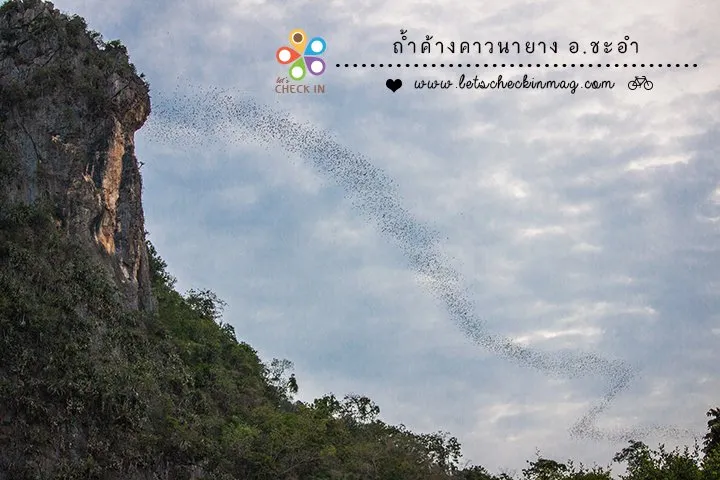
Nayang Bat Cave (Ban Na Yang Community Tourism) in Cha-am District, Phetchaburi, is a place where the phrase “nature travel” carries more weight than “quick check-in.” The highlight here is not a static viewpoint meant only for photos, but a phenomenon that repeats itself at dusk: millions of bats streaming out of the cave mouth in a long ribbon across the sky to forage through the night. Many visitors describe the scene as a “black river” or a “giant snake” moving through the air, because the bat column gradually forms, stretches, and sways with the wind into a continuous line that can extend for several kilometers.
The charm of Nayang Bat Cave lies in how intact and genuinely natural the environment still is – strong enough to support an enormous population of wild animals – and in how the area has been shaped into a community-run tourism spot where visitors “come to witness” rather than “come to disturb.” You will see both Thai and international travelers arriving early to reserve a good viewing spot. Some set up their cameras while the sky is still bright; others arrive as the sun begins to drop. What feels consistent is how voices naturally soften, almost without anyone needing to ask, because everyone is waiting for the same moment – the moment nature begins its performance.
To be precise, Nayang Bat Cave is a “time-based” destination. The true value of visiting is not about exploring the cave all day, but about arriving at the right hour and standing in the right place. The bat emergence itself may not last long compared with the full day, yet the impression it leaves can be remarkably lasting. Watching an overwhelming number of bats pour out in a steady flow makes the scale of nature difficult to explain with words alone. And if you come on a cool day with a gentle breeze and clear skies, the bat ribbon often appears sharper, longer, and so continuous that it can feel as if it will never end.
From an ecological perspective, bats play an important role in maintaining local balance. Many bats feed on insects at night, helping reduce pest insect populations and supporting the wider ecosystem. A cave that can sustain such a large bat colony suggests that surrounding habitats still provide enough food and suitable conditions. That is why bat-cave tourism should be paired with responsibility: what visitors come to witness is real wildlife behavior, not a staged show created for humans.
The bat-watching experience at Na Yang often begins with stillness. You arrive before evening, choose a viewpoint that clearly faces the cave mouth or the flight path, and then wait as the light softens. As twilight approaches, the temperature drops slightly, ambient noise fades, and you may first notice “tiny black dots” beginning to appear. Those dots quickly turn into a thicker, denser band until it becomes a full, sweeping procession across the sky. The feeling is often a quiet kind of awe – the spectacle is simply too large to meet with loud cheering. You will see many people lift their cameras at once, but some will lower them again because, at times, watching with the naked eye feels clearer and more complete than viewing through a screen.
What makes the bat ribbon resemble a giant snake in midair is the way the bats fly continuously in one direction and adjust their line to wind currents. When huge numbers move in the same rhythm, the stream appears alive: it twists, bends, thins and thickens in sections, and changes altitude in places. This fluid movement is why bat watching is more than simply “seeing animals fly.” It becomes a view of a complex natural pattern unfolding in real time.
For photography, preparation matters. Twilight fades fast. If you plan to shoot with a camera, arrive early enough to test settings before the bats emerge. If you are filming with a phone, choose an angle where the sky is your background rather than a dark ground line, because bats are dark subjects and contrast is key to making the ribbon visible. Also avoid using flash or strong lights pointed toward the cave mouth. Even though the bats follow their natural routine, excessive light and noise can still disturb wildlife behavior.
Nayang Bat Cave is also well-suited to storytelling content because it has two strong layers in one place: the natural layer (the dusk emergence of millions of bats forming a long ribbon) and the community layer (how the area is managed, kept orderly, and respectfully shared by visitors who gather to observe without needing constant instruction). When you tell both layers together, readers understand that the site’s appeal is not only “how many bats” there are, but also the shared atmosphere that turns wildlife viewing into a meaningful experience rather than an activity that harms nature.
One important point is that the bats’ emergence time is not fixed. It can shift depending on season, temperature, humidity, and weather conditions on the day. Some days they may begin earlier; on others, a little later; and in some periods you may see them emerge in waves. The most reliable approach is to arrive about 30–60 minutes before dusk so you can find a good viewing position and avoid missing the start – often the most visually striking part, when the stream forms and gradually thickens into a full ribbon.
Visitor safety matters as much as wildlife safety. In the evening, the area can become crowded. Some paths and viewing points may have uneven ground or gravel. Wear stable footwear and avoid standing too close to edges if any area is elevated. If you bring children, hold hands and set clear boundaries; children may run just as adults are lifting cameras, which increases the chance of collisions. Bring drinking water and insect repellent as well, because mosquitoes and insects are more common in natural areas at dusk.
In terms of travel etiquette, Nayang Bat Cave is best enjoyed under a “watch quietly, respect nature” mindset. Conversation is fine, but keep your voice low. Avoid shouting, playing music, or making loud noises. Do not move too close to the cave mouth unless the area is clearly designated for visitors. The cave mouth is the corridor the bats use in massive numbers, and maintaining distance helps keep both people safe and the bats undisturbed. Responsible viewing helps ensure the phenomenon remains sustainable – not just impressive for a short period and then diminished by excessive disturbance.
The cave is located in Na Yang Subdistrict, Cha-am District, Phetchaburi. It is roughly 12 km from Cha-am Beach, making it easy to plan a one-day route such as “beach in the afternoon – bat watching at dusk.” Even if you are not focused on the sea, this is still a short, high-impact nature trip that offers something different from Phetchaburi’s more typical attractions. Instead of rushing between cafes and check-in points, you stand still, wait, and let nature tell the story.
Getting There Nayang Bat Cave is in Na Yang Subdistrict, Cha-am District, Phetchaburi. If driving from Bangkok or from Phetchaburi city, use Phetkasem Road (Highway 4) toward Cha-am, then follow local signs/roads into Na Yang. Overall access is convenient, and it is best to time your arrival before late afternoon so you can secure a viewing spot and prepare. From Cha-am Beach, the distance is about 12 km, so travel time is generally short.
If you do not have a private car, a practical option is to reach Cha-am first and then hire local transport to Na Yang. Allow extra time because dusk is when many people plan to arrive. Going as a group can make timing and costs easier to manage. If you are photographing seriously, having someone to help watch your gear and coordinate viewpoints can make the experience both smoother and safer.
Ultimately, Nayang Bat Cave suits travelers who want to witness “nature at full scale without a long hike.” Arrive at the right time, stand still, and you can watch millions of bats flow out in a long ribbon across the sky – a scene that is beautiful, unusual, and humbling in a meaningful way. And by following simple rules – keep quiet, do not litter, and do not disturb wildlife – you help ensure this spectacle continues to happen day after day, so future visitors can see the same phenomenon as a living present rather than a story from the past.
| Place Summary | A dusk wildlife viewing spot in Na Yang, Cha-am, where millions of bats stream out of the cave mouth in a long ribbon across the sky – one of Phetchaburi’s standout nature experiences for eco-tourism and photography. |
| Name | Nayang Bat Cave |
| Address | Na Yang Subdistrict, Cha-am District, Phetchaburi |
| Key Highlights | A massive bat emergence at dusk forming a long “black ribbon,” easy viewing without long hiking, ideal for nature photography and responsible wildlife tourism. |
| Best Time To Visit | Twilight (recommended arrival before 17:30); bats often start around 18:00 but timing varies by season and weather. |
| Signature Experience | Local tourism reports describe millions of bats flying out in a long, river-like ribbon for several kilometers at dusk to forage at night. |
| Travel | By Car: Take Phetkasem Road (Highway 4) toward Cha-am, then follow local roads into Na Yang / About 12 km from Cha-am Beach / No Car: Reach Cha-am first, then hire local transport (allow extra time at dusk). |
| Current Status | Open for viewing as a natural site (bat emergence depends on season and weather conditions). |
| Contact Number | |
| Facilities | Viewing/waiting areas depending on community management, parking based on site conditions (bring drinking water and insect repellent). |
| Visitor Guidelines | Keep noise low, avoid flash/strong lights toward the cave mouth, do not litter, keep a safe distance, respect the site and community. |
| Nearby Attractions (Approx. Distance) | 1) Cha-am Beach (Approx. 12 km) 2) Swiss Sheep Farm (Approx. 25 km) 3) Mrigadayavan Palace (Approx. 22 km) 4) Santorini Park Cha-Am (Approx. 25 km) 5) Cha-am Forest Park (Approx. 15 km) |
| Popular Restaurants Nearby (Approx. Distance / Phone) | 1) Khrua Huai Sai (Approx. 20 km) – 088-860-3898 2) Chom View Seafood Cha-am (Approx. 16 km) – 032-771-992 3) Yao Seafood Cha-am (Approx. 14 km) – 081-828-2534 4) Captain Yod Seafood (Approx. 14 km) – 032-470-766 5) Khrua Pa Yuen Seafood (Approx. 15 km) – 089-149-2807 |
| Popular Accommodations Nearby (Approx. Distance / Phone) | 1) Bann Pantai Resort (Approx. 12 km) – 032-471-028 2) Methavalai Hotel (Approx. 13 km) – 032-471-028 3) The Regent Cha-Am Beach Resort (Approx. 22 km) – 032-451-240 4) Bay Window At Sea (Approx. 13 km) – 082-687-6680 5) Long Beach Cha-Am Hotel (Approx. 13 km) – 032-472-444 |
Frequently Asked Questions (FAQ)
Q: Where is Nayang Bat Cave located?
A: It is in Na Yang Subdistrict, Cha-am District, Phetchaburi, and is best known for watching bats emerge from the cave at dusk.
Q: What time do the bats usually come out?
A: Most often around twilight, commonly near 18:00, but timing can shift earlier or later depending on season and weather. Arriving before 17:30 is recommended.
Q: Why does the bat flight look like a long ribbon in the sky?
A: Because huge numbers fly continuously in the same direction and align with wind currents, creating a flowing line that twists and thickens in sections.
Q: What should I prepare for bat watching?
A: Wear stable shoes, bring drinking water and insect repellent, arrive before dusk, and avoid flash or strong lights aimed toward the cave mouth.
Q: How can I photograph the bat ribbon more clearly?
A: Choose a viewpoint with the sky as the background, set your camera/phone in advance, and shoot while there is still some light before it becomes fully dark.
Q: Is this place suitable for children and elderly visitors?
A: Yes, if supervised closely and if you choose a safe viewing area. Be mindful of uneven ground and crowds during peak dusk hours.
 Tham Na Yang Map
 Category:
  Group:
  Last Update: 1 DayAgo
Comment
 Nearby Attractions
| Keyword (Advance) |
 Region
|
 Muang Phetchaburi(