

 Home
Home Chiang Mai(










Rating: 3.9/5 (8 votes)
 |
|  Map
Map 
 Have Map
  No Map
Chiang Mai attractions
Attractions in Thailand
Open Days: Generally “every day” (recommended to check announcements/road conditions before traveling, especially during rainy periods or when the area is under restoration management)
Opening Hours: Generally 08:00 – 17:00 (hours may be adjusted depending on area management and safety)
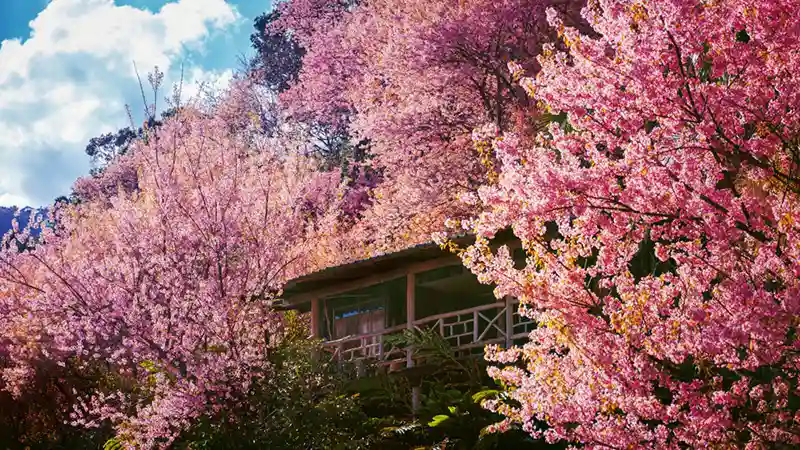
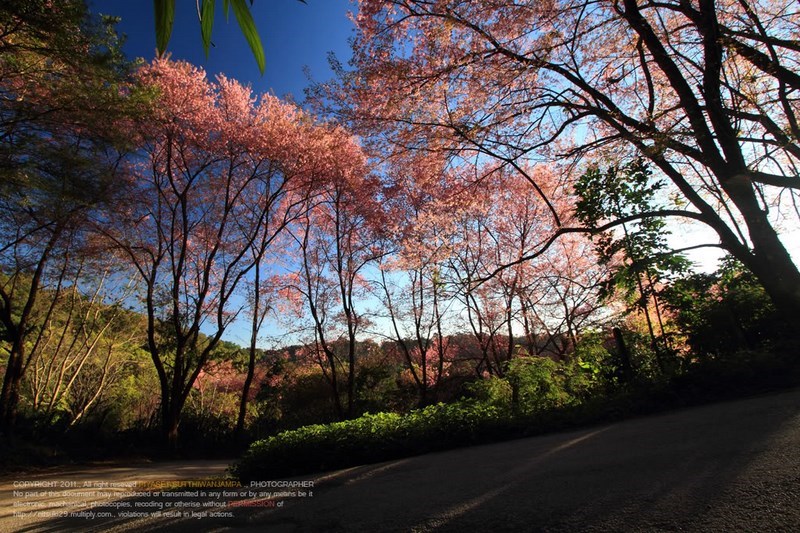
Khun Mae Ya Wild Himalayan Cherry Blossom Viewpoint is one of those classic winter images Chiang Mai lovers tend to chase, because this is not a staged flower garden. It is a highland watershed forest area where wild Himalayan cherry trees were planted as part of long-term forest restoration. The site is managed by the Khun Mae Ya Watershed Management Unit under the Department of National Parks, Wildlife and Plant Conservation. The landscape sits within the broader Chiang Mai–Mae Hong Son border forest context and is closely related to protected-area management in nearby zones such as Huai Nam Dang National Park and adjoining wildlife sanctuary areas. That is why coming here feels like a proper mountain trip rather than a casual city stroll.
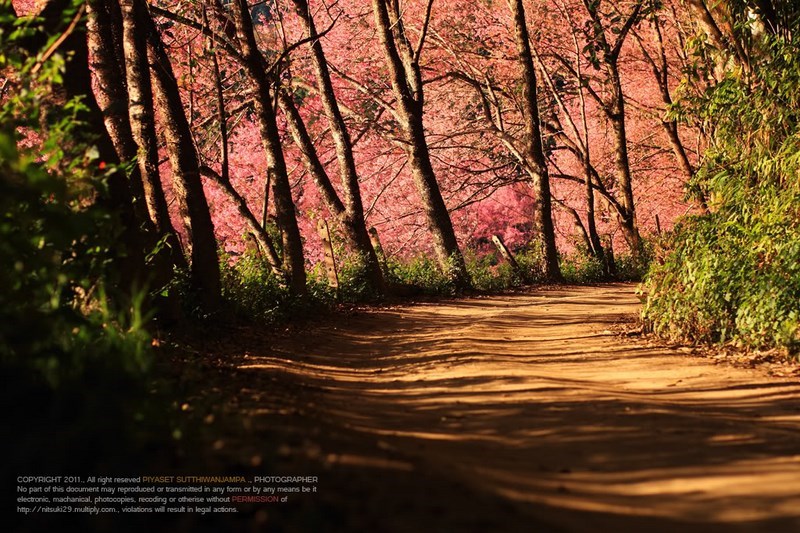
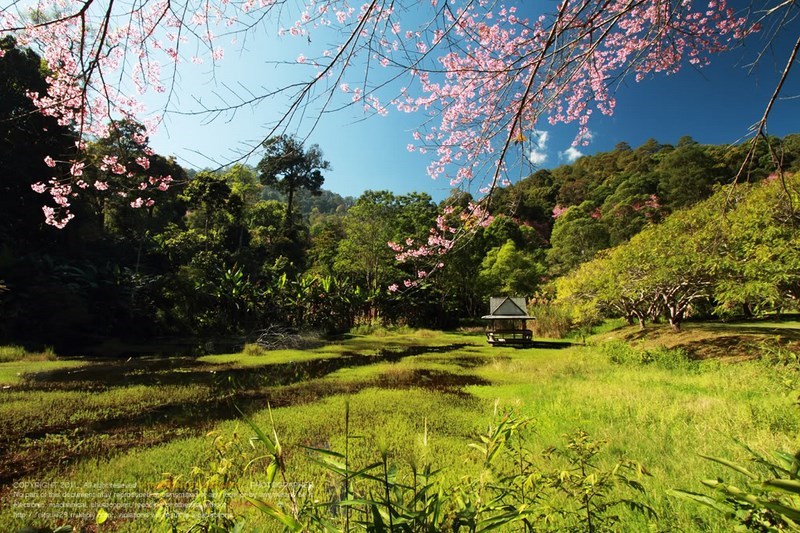
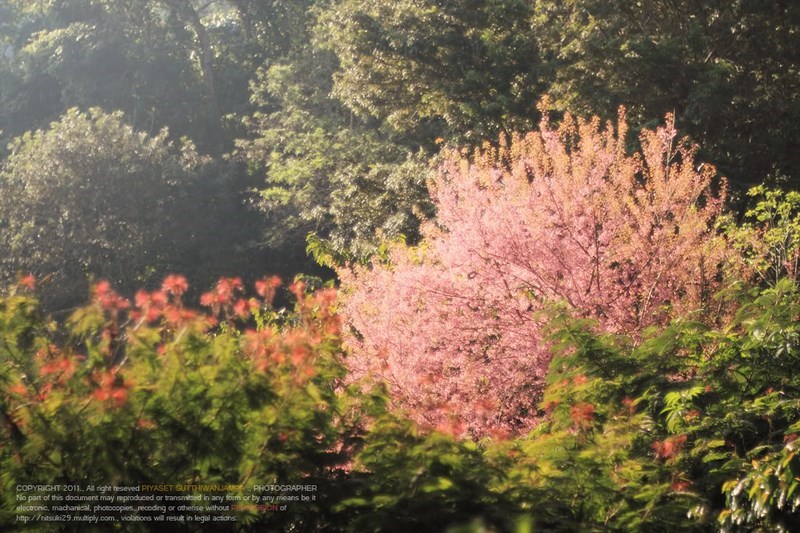
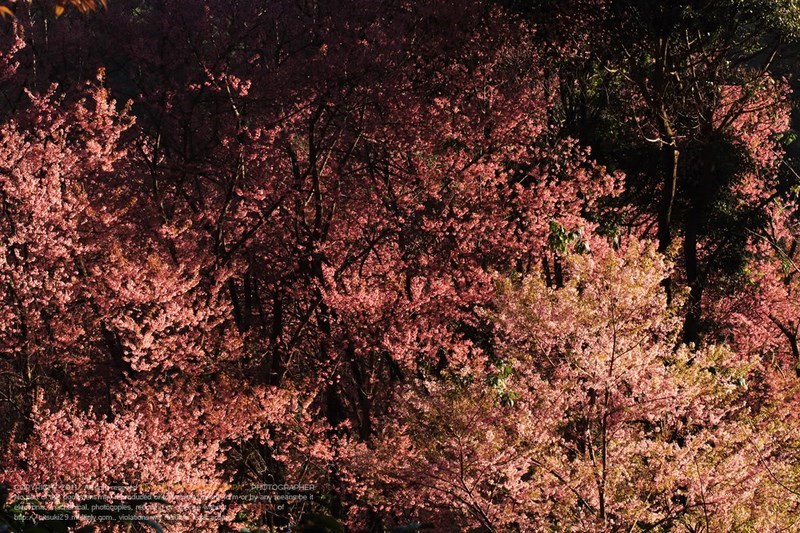
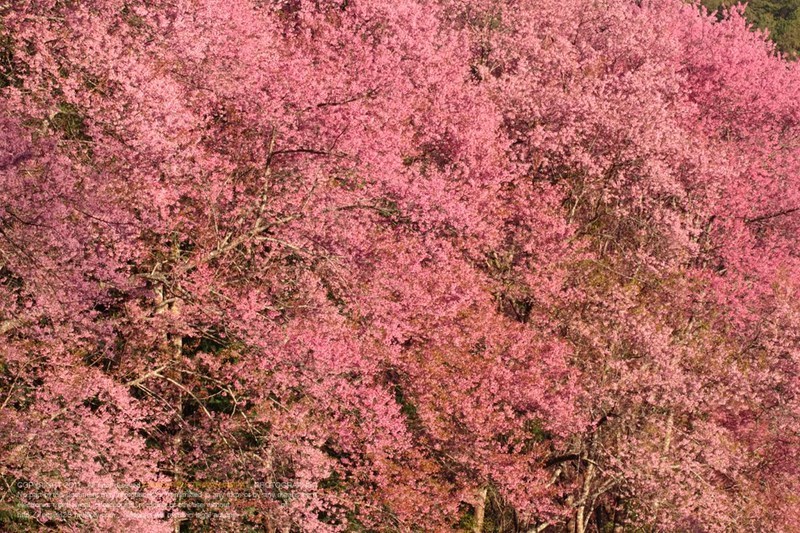
What makes Khun Mae Ya special is the elevation and mountain climate that push the cherry blossom season into a short window each year. When the bloom peaks, the slopes are brushed with soft pink against pine forest lines and layered mountain backdrops. The charm is not only the color, but the “seasonal rhythm” that changes the look every year. In years when cold weather arrives early, blossoms may start sooner; in years when cold comes late, the peak can shift into early January. Mornings often give the gentlest light and occasional thin mist if the weather cooperates, while afternoons can be brighter—but if the sky opens up, you get crisp blue as a clean background.
In terms of the story behind the scenery, Khun Mae Ya used to be severely degraded. Planting wild Himalayan cherry trees became one of the restoration approaches because they establish relatively quickly and produce beautiful flowers that encourage people to come up the mountain. But the real point is to help people reconnect with the value of forest. As visitor numbers grow, the challenge is no longer just “getting a pretty photo,” but traveling in a way that does not damage the place—no breaking branches for close-up blossoms, no stepping on the base of trees, no littering, and no parking in narrow sections that block traffic. Each of these affects both nature and everyone’s safety immediately.
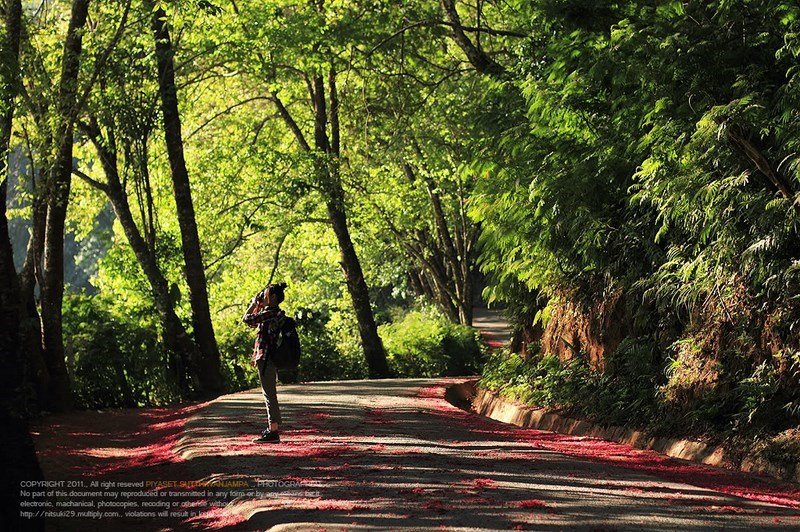
One important practical note: access involves a steep dirt-and-gravel mountain road. In dry conditions it can still be manageable with careful driving, but after rain or when the surface turns muddy, the difficulty increases significantly. Sedans are often not suitable, especially if the road becomes rutted or slick. The best plan is to choose a clear day, start early, allow extra time, and drive slowly to protect your vehicle. The distance may not look far, but real travel time on mountain roads is never the same as in the city.
Getting There If you start from Chiang Mai city, most travelers use Chotana Road (Chiang Mai–Fang) through the Mae Malai area, then turn onto Highway 1095 (Chiang Mai–Pai). Continue along the winding mountain road, and as you approach the Huai Nam Dang zone, watch for the checkpoint area that many people use as a key reference point (often referred to as the Mae Ya checkpoint). From there, turn onto the dirt road and climb roughly another 8 kilometers to reach the watershed unit area. The dirt section is where patience matters most: control your gear and speed, avoid overtaking in blind spots, and be especially cautious if there are oncoming vehicles, because some sections are narrow and the shoulder is not forgiving.
If you want the trip to stay smooth, prepare enough cold-weather layers and wind protection for morning and late afternoon, bring a flashlight or headlamp in case you return later than expected, carry drinking water and small snacks because services are not guaranteed at every point, fill up your fuel before heading into the mountains, and always allow more travel time than you initially calculate. Most importantly, do not force the climb if it’s raining or the road surface is already turning muddy—the value of “getting the shot” is not worth the risk of getting stuck or having an accident on a steep slope.
| Name | Khun Mae Ya Wild Himalayan Cherry Blossom Viewpoint (Khun Mae Ya) |
| Managing Agency | Khun Mae Ya Watershed Management Unit (Department of National Parks, Wildlife and Plant Conservation) |
| Location Summary | Chiang Mai–Mae Hong Son border mountain area (main approach via Highway 1095 toward Pai/Huai Nam Dang, then a dirt road climb to the unit area) |
| Highlights | High-elevation cherry blossom viewpoint, watershed forest and pine forest atmosphere, ideal for winter travel and mountain photography |
| Best Time To Visit | Typically late December – early/mid January (varies by annual weather conditions) |
| Road Notes | The final climb is steep dirt/gravel with rough sections; sedans are often not suitable, especially in rainy or muddy conditions |
| Facilities | Parking/view areas depending on on-site conditions (recommended to bring essentials and drinking water) |
| Contact (Verified) | 053-248-491, 053-819-349 |
| Nearby Attractions (Approx. Distance) | Huai Nam Dang National Park (main viewpoint/passing zone): 15 km Pai (town area/walking street): 35 km Pai Canyon: 40 km Pai Memorial Bridge: 42 km Wat Phra That Mae Yen: 38 km |
| Popular Restaurants Nearby (Approx. Distance + Phone) | Coffee in Love (Pai): 40 km | 053-698-251 Witching Well (Pai): 35 km | 084-366-4269 Reverie Siam (on-site dining/bar in Pai): 36 km | 053-699-870 Pai River Corner (café/dining within the resort area): 35 km | 081-413-5739 Pai Village (on-site dining within the resort area): 35 km | 053-698-152 |
| Popular Accommodations Nearby (Approx. Distance + Phone) | Pai Village Boutique Resort: 35 km | 053-698-152 Reverie Siam Resort: 36 km | 053-699-870 The Quarter Hotel Pai: 35 km | 061-765-4040 Phu Pai Art Resort: 45 km | 053-065-111 Pai River Corner Resort: 35 km | 081-413-5739 |
Frequently Asked Questions (FAQ)
Q: When should I visit Khun Mae Ya for the best chance of seeing beautiful cherry blossoms?
A: The season is typically from late December to early or mid January, but peak timing can shift earlier or later depending on that year’s weather. If you want to be sure, check the latest updates and recent photos before you leave.
Q: Can a sedan drive up to Khun Mae Ya?
A: The final section to the unit area is steep, rough dirt road. Sedans are often not suitable, especially when the surface is muddy or deeply rutted. A more capable vehicle and very cautious driving are recommended.
Q: What should I prepare before heading up to see the blossoms?
A: Bring warm layers and wind protection, a flashlight or headlamp, drinking water, and fill your fuel tank before the climb. Also allow extra travel time because mountain roads take longer than city driving.
Q: How can I take photos without harming nature?
A: Don’t break branches, don’t step on tree bases, don’t litter, don’t block narrow roads with parking, and stand only in safe areas without trampling low vegetation. These small habits help the site stay beautiful longer.
Q: Can I stay overnight near the blossom viewpoint?
A: This area is not primarily set up with resort-style lodging right at the blossom viewpoint. Many visitors prefer staying in Pai or nearby areas and visiting Khun Mae Ya as a day trip for convenience.
 Khun Mae Ya (Wild Himalayan Cherry) Map
 Category:
  Group:
  Last Update: 35 MinuteAgo
Comment

Photo Gellery(9) 
 Thank you photo(9) from: Piyaset
|
|
|
|
|
|
|
|
|

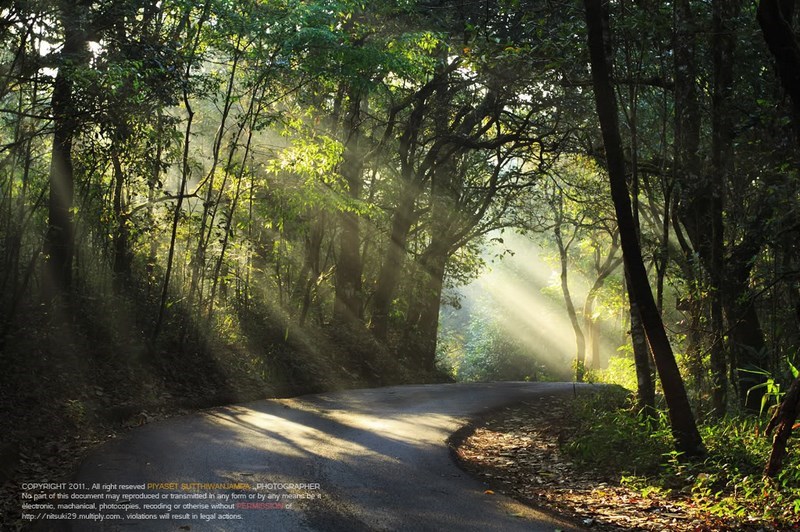
 | ● Photographer: Piyaset Sutthiwanjampa ● Link: facebook.com/piyaset.sutthiwanjam ● Ref: pixpros.net |
● Copyright Photography. (800*500)
● View full size images from the photographer.
● View full size images from the photographer.
 Nearby Attractions
| Keyword (Advance) |
 Region
|
 Muang Chiang Mai(