

 Home
Home Chiang Mai(









Rating: 4.3/5 (6 votes)
 |
|  Map
Map 
 Have Map
  No Map
Chiang Mai attractions
Attractions in Thailand
Open Days: Friday–Wednesday (Closed on Thursday)
Opening Hours: 09.30–16.00
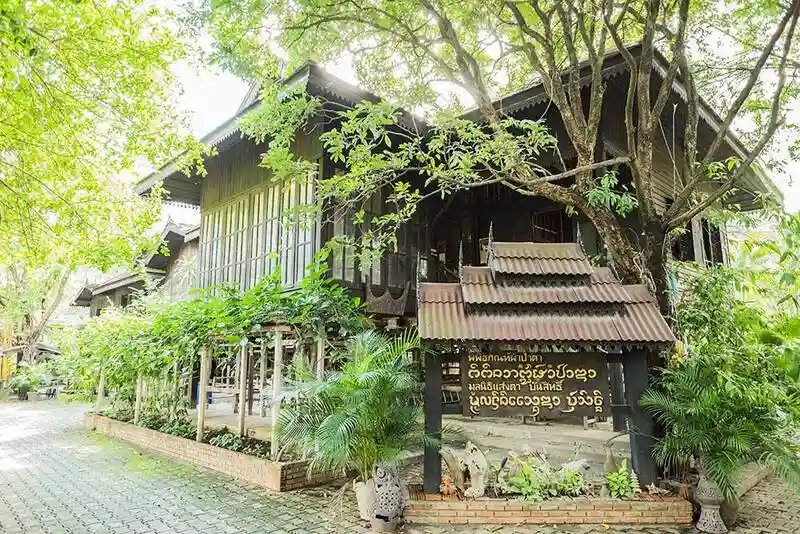
Baan Rai Phai Ngam (Pa Da Textile Museum) is one of Chiang Mai’s cultural destinations that does not need to be loud to be meaningful. The closer you look, the more value it reveals. This is not a place that simply sells beautiful objects or photo opportunities, but a place that offers the sincerity of handmade work rooted in everyday life. The house that has been adapted into a museum still retains the strong character of a traditional riverside home along the Ping River, while the surrounding area remains an active workspace for local women who continue the heritage of naturally dyed handwoven cotton—an identity that has brought recognition to both Chom Thong District and Chiang Mai as a whole.
One of the first things visitors fall in love with is the shaded bamboo-lined entrance road. This gentle approach sets the tone long before reaching the museum itself. Baan Rai Phai Ngam is located around kilometer markers 69–70 along the Chiang Mai–Hot route (Highway 108). From there, visitors turn left and continue into the village for approximately 1 kilometer. Driving deeper into the area feels like leaving the main road behind and entering a place where time slows down. The quiet atmosphere and surrounding greenery make this a destination best suited for visitors who wish to truly observe and engage, rather than simply stop briefly and move on.
The heart of this story is deeply connected to Khun Pa Saengda Bansit, a National Artist of Thailand, who was the original source of knowledge in handwoven cotton and natural dyeing techniques. What made her work exceptional was not merely technical skill, but her profound understanding of materials, fibers, colors, and balance in daily life. In this sense, weaving was not simply craftsmanship, but wisdom—bringing together raw materials, skilled hands, patience, and aesthetic sensitivity into a single practice.
Over time, Pa Saengda’s work was passed on and became a source of inspiration for local women who formed a group dedicated to producing handwoven cotton and natural dyes in a serious and sustained way. Their base of work remains at Pa Saengda’s home beside the Ping River. This riverside setting makes it immediately clear why nature is inseparable from the textiles produced here, as humidity, air, light, and seasons all directly affect dyeing processes and fiber care. The textiles here are therefore born from a relationship between people and their environment, rather than factory conditions designed for absolute uniformity.
The Pa Da Textile Museum was established to commemorate the life and work of Pa Saengda and to present traditional rural lifestyles in a tangible way for later generations. The museum occupies a converted traditional house, creating an atmosphere very different from formal institutional museums. Instead, visitors feel as though they are stepping into someone’s home—a place where stories are shared warmly and personally. On display are original weaving and dyeing tools that were actually used, along with Pa Saengda’s textiles, which clearly demonstrate the standard of refinement associated with master-level craftsmanship and offer a concrete understanding of what “high-quality handwoven fabric” truly means.
To fully appreciate this place, visitors are encouraged to slow down and observe closely. Examine the fabric texture, the consistency of the cotton threads, the edges, the structure of the patterns, and the calm depth of natural colors. Unlike chemical dyes, natural colors are not loud or flashy. Their beauty lies in earthy, leaf-toned, and floral hues that become more appealing the longer you look. These colors coexist naturally with everyday life, age gracefully when cared for properly, and often become more charming over time.
One of the most engaging aspects of Baan Rai Phai Ngam is seeing the thinking process behind each piece. Many people associate weaving only with the loom, but in reality each textile begins with careful preparation of cotton fibers. Native cotton has its own character and is not as perfectly uniform as industrial cotton. This requires the weaver to constantly adjust hand pressure, rhythm, and technique to achieve the right balance of density, softness, and durability. High-quality handwoven fabric is therefore about managing balance, not forcing absolute sameness.
This leads into the world of natural dyes—a world that is both beautiful and demanding at the same time. Dyes extracted from leaves, flowers, and plants produce living, nuanced tones but are highly sensitive to temperature, water acidity, boiling time, soaking duration, and seasonal conditions. Anyone familiar with craft work will immediately understand why this complexity gives natural textiles their true value. It requires real experience, not just following recipes, and the subtle variations between batches are considered a charm rather than a flaw.
Once the fabric is properly dyed and dried, the weaving process begins—where time itself is woven into the cloth. The rhythmic sound of the loom and the steady, focused movement of the hands reveal why handwoven textiles so clearly reflect the identity of their makers. Patience, consistency, and dedication are essential. If you visit on a working day, take a moment to observe. You will quickly realize that craftsmanship does not rely on talent alone, but on countless hours of honest practice.
One important thing to understand before purchasing naturally dyed textiles is proper care. Natural dyes and cotton fibers can last many years if treated correctly. It is generally recommended to avoid strong bleaching agents and prolonged exposure to intense sunlight, which can cause colors to fade more quickly. Air-drying in shaded, well-ventilated areas is more suitable, and storing textiles in dry conditions helps preserve fiber strength. When chosen thoughtfully, a single piece can be used for years and gradually becomes a personal item rather than just a souvenir.
Products available at Baan Rai Phai Ngam include a wide range of handwoven cotton items such as fabric lengths, tablecloths, shawls, bed covers, and textile-based household items adapted for modern living. For first-time buyers, shawls or scarves are recommended as they are versatile, easy to use, and clearly showcase natural colors. Tablecloths are ideal for those who wish to bring a soft, handcrafted atmosphere into their homes. For textile enthusiasts, selecting pieces with clearly defined weaving patterns and balanced density offers excellent long-term value.
Visiting Baan Rai Phai Ngam also provides direct support to the local community. Visitors are encouraged to purchase thoughtfully by asking about the origin of each piece—whether it is genuinely handwoven, what natural dyes were used, and how to care for it. Such questions are not awkward; they are a form of respect. They show that the work is valued for its story, not just as merchandise. For collectors of handcrafted items, knowing the background adds an extra layer of meaning.
For photography enthusiasts, this is a naturally beautiful place that requires little staging. Morning and afternoon light soften the bamboo shades and highlight the textures of the textiles. Entrance shots framed by bamboo convey a peaceful mood, while close-up images capture fiber details and weaving patterns. Photos that include riverside village life help tell the story that this is a living, working community—not a staged backdrop.
Simple etiquette helps ensure sustainable community-based tourism. Maintain a quiet presence, avoid intruding into private spaces, do not handle tools or exhibits without permission, and always ask before photographing people. This area is both a tourist destination and an active workplace. Being a respectful guest helps preserve places like this for the long term.
Getting There From Chiang Mai city, take Highway 108 (Chiang Mai–Hot) toward Chom Thong District. At kilometer markers 69–70, look for a left turn into the village and continue for approximately 1 kilometer to reach Baan Rai Phai Ngam and the Pa Da Textile Museum. The village road is shaded and quiet. Driving is straightforward, though extra caution is advised during the rainy season when some sections may be slippery.
For a well-planned day trip, this destination pairs nicely with cultural and natural attractions. Visitors may begin with Wat Phra That Si Chom Thong in the morning, continue to Baan Rai Phai Ngam in the late morning or afternoon, and then proceed to Doi Inthanon National Park to explore waterfalls or nature trails. This itinerary offers both meaningful stories and scenic landscapes without feeling rushed.
Baan Rai Phai Ngam is ideal for visitors who appreciate craft, human stories, and learning through experience. If you have ever felt that travel only leaves you with photographs, this place offers more—it provides understanding. Behind the beauty of a single piece of fabric lies time, patience, and dedication, and recognizing this often leaves visitors with a deeper respect for local wisdom long after they return home.
| Place Name | Baan Rai Phai Ngam (Pa Da Textile Museum) |
| Location | Km. 69–70, Chiang Mai–Hot Road (Highway 108), Sop Tia Subdistrict, Chom Thong District, Chiang Mai (turn left into the village and continue approx. 1 km) |
| Highlights | Learning center for traditional handwoven cotton with natural dyes, exhibition of authentic weaving and dyeing tools, Pa Saengda’s works, riverside village atmosphere, ideal for cultural and craft-focused tourism |
| Recommended Time | Morning–afternoon (soft light enhances textile colors and bamboo entrance scenery); allow at least 1–2 hours |
| Current Status | Open to visitors (closed on Thursdays; occasional special closures—check official announcements before visiting) |
| Contact | Museum / Baan Rai Phai Ngam: +66 53 361231, +66 53 273625 Additional phone: +66 62 1928242 |
| Nearby Attractions & Distance | 1) Wat Phra That Si Chom Thong Worawihan (approx. 11–15 km) Tel. +66 53 342184 2) Doi Inthanon National Park (visitor center) (approx. 30–40 km) Tel. +66 53 286729 3) Mae Klang Waterfall (Doi Inthanon NP) (approx. 22–30 km) Tel. +66 2 561 0777 ext. 1742 4) Wachirathan Waterfall (Doi Inthanon NP) (approx. 40–50 km) Tel. +66 2 561 0777 ext. 1742 5) Royal Project Inthanon / Cooperative Shop (approx. 35–45 km) Tel. +66 53 286728, +66 53 286777 |
| Recommended Restaurants & Distance | 1) Khao Soi Kaew Noi (Chom Thong) (approx. 12–18 km) Tel. +66 53 826043, +66 86 1982999 2) Rayne Coffee Bar (Chom Thong) (approx. 12–18 km) Tel. +66 81 7385555 3) Krua Ton Tan Chom Thong (approx. 12–18 km) Tel. +66 89 2646361 4) The Garden Inthanon (café/restaurant) (approx. 12–18 km) Tel. +66 62 2696636 5) Royal Project Cooperative Shop (approx. 35–45 km) Tel. +66 53 286728, +66 53 286777 |
| Recommended Accommodations & Distance | 1) B-tel Chom Thong Resort (approx. 12–18 km) Tel. +66 98 7592003 2) Inthanon Riverside Resort (approx. 12–20 km) Tel. +66 81 5305767 3) Inthanon Highland Resort (approx. 20–35 km) Tel. +66 53 033552 4) Nokchanmeena (approx. 25–40 km) Tel. +66 80 5335183 5) Phu Terrace View Resort (approx. 18–35 km) Tel. +66 97 1264620 |
Frequently Asked Questions (FAQ)
Q: Where is Baan Rai Phai Ngam located, and is it difficult to reach?
A: It is located at km 69–70 along the Chiang Mai–Hot route (Highway 108). Turn left into the village and continue for approximately 1 kilometer. The road is accessible by standard vehicles and easy to drive.
Q: On which days is the Pa Da Textile Museum open?
A: It is generally open from Friday to Wednesday, 09.30–16.00, and closed on Thursdays. Visitors are advised to check for occasional special closures before traveling.
Q: What should visitors focus on to make the most of their visit?
A: Pay close attention to the weaving and dyeing tools, Pa Saengda’s original works, and examine fabric texture, patterns, and natural color tones up close to fully appreciate the craftsmanship.
Q: What items are suitable as souvenirs?
A: Shawls or scarves are easy to use, low-maintenance, and showcase natural colors well. Tablecloths are ideal for adding a soft handcrafted atmosphere to the home.
Q: Is there a contact number for inquiries before visiting?
A: Yes. Visitors may contact Baan Rai Phai Ngam / Pa Da Textile Museum at +66 53 361231, +66 53 273625, or +66 62 1928242.
 Baan Rai Phai Ngam (Pa Da Textile Museum) Map
 Category:
  Group:
  Last Update: 10 HourAgo
Comment
 Nearby Attractions
| Keyword (Advance) |
 Region
|
 Muang Chiang Mai(