

 Home
Home Chiang Mai(




Rating: 3.7/5 (7 votes)
 |
|  Map
Map 
 Have Map
  No Map
Phetchaburi attractions
Attractions in Thailand
Open Days: Daily
Opening Hours: 08:00 – 17:00
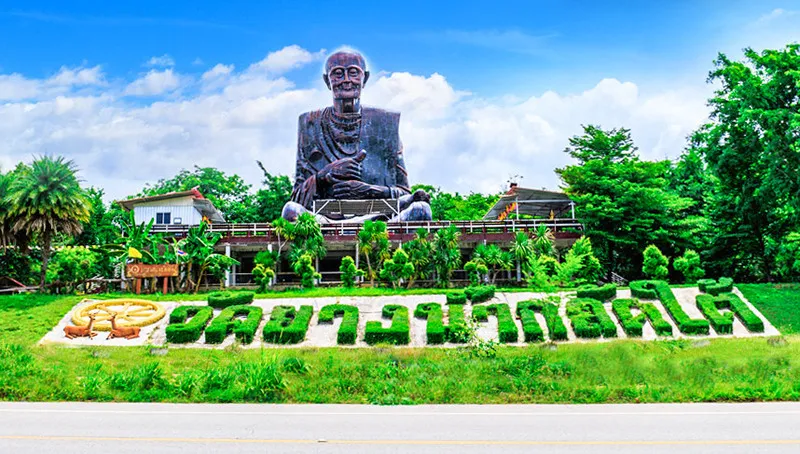
Wat Yang Nam Klat Tai is located in Ban Yang Nam Klat Tai, Moo 1, Yang Nam Klat Tai Subdistrict, Nong Ya Plong District, Phetchaburi. It is a local temple under the Mahanikaya order, established through the genuine faith and collective effort of the community. This is not a site designed from the outset as a commercial tourist attraction. Rather, it is a true village temple that has grown gradually in step with local life, continuously supporting religious ceremonies, merit-making, and community activities that bring people together. The temple grounds cover 8 rai 2 ngan 70 square wah and are legally owned by the temple. All four sides border public land, clearly reflecting the role of the temple as an accessible communal center for the surrounding area.
The broader setting of Yang Nam Klat Tai Subdistrict and Nong Ya Plong District is rural, with a landscape that blends gentle plains and low hills. Forested areas and mountain ridgelines connect toward Kaeng Krachan and Khao Yoi, shaping a way of life closely tied to agriculture, rainwater, seasonal water sources, and travel along secondary roads that link villages to the province’s main routes. Within this context, Wat Yang Nam Klat Tai serves as a steady spiritual anchor, especially in communities where extended families live closely and rely on one another. On observance days, major Buddhist holy days, and during festive merit-making periods, the temple becomes a shared space for collective participation: alms-giving, offering meals to monks, listening to Dhamma teachings, cleaning the temple, and gathering for kathin and pha pa ceremonies, ordinations, and memorial merit-making rites.
Wat Yang Nam Klat Tai was officially established on 17 December 1986. The founding initiative came from Phra Plueang of Wat Hua Na together with local villagers. This is a familiar and enduring pattern in rural Thailand: a temple is rarely the product of large-scale investment, but rather the result of shared faith and gradual hands-on work. In the early period, Phra Sangwan was appointed as abbot, and the temple’s administrative structure developed over time. Records of abbots include: the 1st abbot Phra Sangwan, the 2nd abbot Phra Luang, and the 3rd abbot Phra Bai Dika Chan (Chantho), who has been recorded as serving from 1996 to the present in local documentation. At the same time, a publicly available kathin activity listing for the temple identifies the current abbot as Phra Maha Karakrit Kittiyano, indicating that the temple has active public-facing activities and more systematic updates in recent years compared with its earliest period.
The charm of Wat Yang Nam Klat Tai does not come from grand royal-era architecture, but from the authentic reality of a community temple that fulfills multiple roles at once: religious practice, education, and public benefit. Its existing buildings reflect step-by-step growth, beginning with shared-use spaces and gradually adding structures necessary for monastic life and for welcoming lay visitors appropriately. A key feature is the sermon hall (sala kan parian), measuring 10 meters wide and 21 meters long, built in 1996 as a half-concrete, half-wood structure. This building style is widely found in rural central and western Thailand because it is practical, well-ventilated, and maintainable within a community’s means. The sermon hall typically functions as the main venue for temple life: chanting, sermons, merit-making meals, community meetings, and major annual ceremonies.
Completing the picture are wooden monks’ quarters (kuti) and a multipurpose pavilion measuring 15 by 24 meters, built in 2000 as a half-concrete, half-wood structure. This kind of space is often used for flexible activities beyond formal ceremonies: setting up communal kitchens and refreshments, arranging ritual tables for particular rites, preparing for kathin and pha pa events, or hosting activities for children and youth during school breaks. The temple also has one funeral pavilion (sala bamphen kuson) built with reinforced concrete, supporting memorial rites and funeral-related ceremonies in a suitable setting. Together, these facilities allow the temple to serve the community across life’s full cycle, from auspicious merit-making to the rites associated with loss, where a shared communal space is essential.
In structural terms, the temple includes a kitchen area, restrooms, and a rainwater storage tank. These are vital components for rural temples because local merit-making does not end with chanting or a sermon; it requires real logistics to support large gatherings: food preparation, water use, and hygiene. A rainwater tank signals practical awareness of local water constraints during certain seasons, helping the temple remain functional year-round. When a temple is ready to host community life in this way, the community in turn is able to sustain religious and social activities continuously. In practice, every annual ceremony becomes a form of collective discipline and teamwork—from preparing the grounds and organizing food to coordinating rituals and caring for elders, children, and visitors.
Another important dimension is education. Wat Yang Nam Klat Tai operates a Dhamma Studies school (Phra Pariyatti Dhamma, Dhamma Division), opened in 1996, the same year the sermon hall was built. The significance is clear: once the temple had a stable core space for communal use, it strengthened its educational role to support monks, novices, and interested laypeople in systematic learning. For community temples, a pariyatti school both elevates the religious knowledge base of the monastic community and makes the Dhamma feel accessible, structured, and tangible to local families. In rural contexts where education is highly respected, a pariyatti school helps ensure the temple has a future by nurturing new generations who understand and can sustain the temple’s role.
For visitors, Wat Yang Nam Klat Tai suits those who prefer a calm atmosphere and want a sincere temple visit without crowds. Because it is embedded in everyday community life, visitors should prioritize respectful conduct: modest dress, quiet voices, and consideration for monastic routines—especially in the morning when monks may be engaged in daily duties. If you wish to make offerings, choose items that are genuinely useful rather than focusing on quantity. Commonly suitable offerings include daily necessities, dry goods, and basic medical supplies, reflecting both practicality and mindful generosity.
In terms of annual traditions and community rhythm, a village temple like this is typically most lively during kathin and pha pa seasons, when family members who work elsewhere often return home to participate. The temple becomes a shared gathering point that reinforces community bonds. Kathin ceremonies follow the yearly schedule, and there may also be merit-making activities such as gilding and acts of devotion associated with the temple’s own annual events as announced by the local community. These occasions show why a temple is more than a ritual venue: it functions as a community social calendar. Such events usually include alms-giving, offering meals to monks, sermons, communal refreshments, and volunteer work to maintain or improve the temple grounds and contribute to ongoing construction or repairs.
A distinctive development storyline at Wat Yang Nam Klat Tai is that the ordination hall (ubosot) is currently under construction. This is a realistic reflection of many community temples across Thailand: an ubosot is essential for formal monastic acts, but it requires significant funding and careful compliance with religious and construction standards. Community-funded ubosots are often built in stages. When the community has capacity, work advances; when economic conditions are tighter, progress slows, yet the long-term goal remains. Over time, returning visitors can see clear changes, and the temple itself becomes a living record of the community’s timeline through buildings erected in different periods and through the names and efforts of those who have contributed.
For travelers planning a day that combines merit-making with nature and local exploration, Nong Ya Plong connects to multiple types of nearby destinations, from other religious sites to natural areas and reservoirs. A visit to Wat Yang Nam Klat Tai can work well as a quiet pause along the route, especially for those driving toward Kaeng Krachan or traveling between rural districts. Stopping briefly at a community temple slows the pace, reduces travel fatigue, and adds a genuine local layer that major tourist attractions alone cannot provide.
When you arrive, a simple and respectful way to engage is to walk the grounds calmly, observe how the main buildings function in real daily temple life, and then proceed to pay respects at the areas designated by the temple. If you happen to visit during preparations for a merit-making event or communal cleaning, small acts of help may be appropriate when welcomed by the temple’s caretakers. Many community temples value considerate goodwill that does not create extra burden. Even simple assistance—moving chairs, helping organize items, or picking up litter—can become a practical form of merit-making and a respectful way to connect with the community.
As a cultural travel story, Wat Yang Nam Klat Tai represents three enduring values of community temples. First is its grassroots role: a shared public space where people can enter and participate. Second is continuity of faith: founded by monks and villagers together and still developing through that same collective commitment. Third is the structured nature of Thai temples: beyond rituals, there is governance, education, and essential facilities that support real community gatherings. Seeing these three dimensions helps a visit move beyond a quick stop and becomes a window into how rural Thai community life is organized around the temple as a living institution.
Getting There If traveling by private car, search for “Wat Yang Nam Klat Tai, Nong Ya Plong” and follow the main provincial roads connecting into local routes within Yang Nam Klat Tai Subdistrict. The temple is in Ban Yang Nam Klat Tai, Moo 1, and is accessible by standard local roads. As with many rural areas, allow extra time and drive carefully due to intersections and local traffic. For those continuing to Kaeng Krachan, the temple can be planned as a convenient merit-making stop along the route.
For a smoother visit, morning or early afternoon is recommended, when the weather is less intense and you may have a better chance to see everyday temple activity. This timing also fits well for continuing to nearby restaurants and accommodations in the Kaeng Krachan or Nong Ya Plong areas within the same trip. If you plan to offer alms or a sangkathan set, choose items that are practical and genuinely needed, such as personal necessities, consumables, or cleaning supplies, as community temples tend to use resources carefully and efficiently.
Wat Yang Nam Klat Tai stands as a meaningful example of a rural temple that truly belongs to its community: a spiritual center, a place for ceremonies, a learning space, and a shared public ground. Visiting may not deliver the spectacle of a major landmark, but it offers something deeper—a chance to see the everyday reality of a Thai community temple that continues to function daily and to grow steadily through local faith and collective effort.
| Place Summary | A Mahanikaya community temple in Ban Yang Nam Klat Tai, supporting religious life, annual merit-making, and Dhamma education. The temple has developed gradually; the ubosot is currently under construction. |
| Name | Wat Yang Nam Klat Tai |
| Address | Ban Yang Nam Klat Tai, Moo 1, Yang Nam Klat Tai Subdistrict, Nong Ya Plong District, Phetchaburi 76160 |
| Abbot (Latest Listing) | Phra Maha Karakrit Kittiyano |
| Highlights | A genuine community temple; a sermon hall and multipurpose pavilion supporting local ceremonies; a Dhamma Studies school (opened in 1996); practical facilities for community events (kitchen, restrooms, rainwater tank). |
| Period | Established on 17 December 1986 |
| Key Evidence | Temple land area: 8 rai 2 ngan 70 square wah (temple-owned); sermon hall built in 1996; multipurpose pavilion built in 2000; one funeral pavilion; ubosot under construction. |
| Nearby Tourist Attractions (Approx. Distance) | 1) Guanyin Bodhisattva Park – approx. 5.3 km 2) Wat Phusawan – approx. 5.1 km 3) Forest Floating Market at Kwang Jow Waterfall – approx. 10 km 4) Nong Ya Plong Hot Spring – approx. 16 km 5) Kaeng Krachan Dam – approx. 19 km |
| Popular Restaurants Nearby (Approx. Distance + Phone) | 1) Krua Kluai Hom, Kaeng Krachan – approx. 3.2 km – 096-161-6196 2) Little Forest Coffee House, Kaeng Krachan – approx. 3.2 km – 086-174-4245 3) Im Aun Rim Thang, Nong Ya Plong – approx. 6.2 km – 082-824-4616 4) Na Nom Sarika – approx. 7 km – 095-526-5624 5) 289 Hill Farm Cafe & Resort – approx. 9.5 km – 099-289-9628 |
| Popular Accommodations Nearby (Approx. Distance + Phone) | 1) Kiri Park Resort, Kaeng Krachan – approx. 3.3 km – 085-653-9954 2) Montoro Resort, Nong Ya Plong (Phetchaburi) – approx. 6.8 km – 032-473-533 3) River Tales – approx. 18 km – 062-318-6886 4) Ban Mai Rai Charoen Resort, Kaeng Krachan – approx. 19 km – 089-164-1332 5) Ban Ob Fah Resort – approx. 20 km – 089-528-2428 |
| Current Status | Open for worship and merit-making (typical visiting hours: 08:00 – 17:00). |
Frequently Asked Questions (FAQ)
Q: Where is Wat Yang Nam Klat Tai located?
A: It is in Ban Yang Nam Klat Tai, Moo 1, Yang Nam Klat Tai Subdistrict, Nong Ya Plong District, Phetchaburi.
Q: Is the temple open every day and what are the opening hours?
A: It is generally open daily from 08:00 – 17:00.
Q: When was Wat Yang Nam Klat Tai established?
A: The temple was established on 17 December 1986 by Phra Plueang from Wat Hua Na together with local villagers.
Q: Who is the current abbot of Wat Yang Nam Klat Tai?
A: The latest publicly listed abbot name is Phra Maha Karakrit Kittiyano.
Q: What are the key buildings at the temple?
A: The temple includes a sermon hall (built in 1996), a multipurpose pavilion (built in 2000), monks’ quarters, one funeral pavilion, and an ubosot that is currently under construction.
Q: Does the temple provide formal Buddhist education?
A: Yes. It has a Dhamma Studies school (Phra Pariyatti Dhamma, Dhamma Division) opened in 1996.
Q: What nearby places can be combined with a temple visit in the same trip?
A: Nearby options include Guanyin Bodhisattva Park, the Forest Floating Market at Kwang Jow Waterfall, Nong Ya Plong Hot Spring, and Kaeng Krachan Dam, which can be planned as a day trip or an overnight itinerary.
 Wat Yang Nam Klat Tai Map
 Category:
  Group:
  Last Update: 30 MinuteAgo
Comment
 Nearby Attractions
| Keyword (Advance) |
 Region
|
 Muang Phetchaburi(