

 Home
Home Chiang Mai(










Rating: 3.9/5 (11 votes)
 |
|  Map
Map 
 Have Map
  No Map
Chiang Mai attractions
Attractions in Thailand
Open Days: Generally daily (recommended to check Doi Pha Hom Pok National Park announcements before traveling, especially during heavy rain)
Opening Hours: Recommended 08:00 – 17:00 (hours may change depending on park announcements/season; please check before you go)
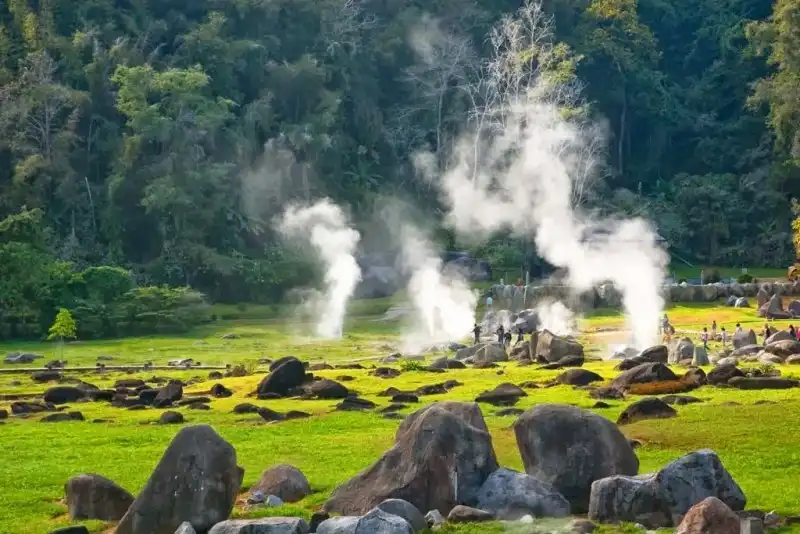
Fang Hot Springs in Ban Pong Nam Ron, Mon Pin Subdistrict, Fang District, Chiang Mai is a seriously good pit stop if you’ve just come off a mountain trip, cold-season trekking, or a long drive. This isn’t a tiny soak-and-go pool. It’s a large natural hot-spring system with many vents and pools spread across one area, so the visit feels a bit like walking through an outdoor classroom where you can actually watch subterranean energy at work. You get the steam, the strong sulfur scent, and the rhythmic bubbling/boiling that makes people unconsciously pause together, just to watch.
Overall, Fang Hot Springs sits inside Doi Pha Hom Pok National Park and close to the park headquarters zone, which usually means you’ll find more on-site convenience than remote forest hot springs. The surrounding landscape is a river-basin and mountain-forest setting typical of Fang, with seasons that feel distinct. In winter, the contrast between crisp air and warm water makes the comfort hit harder—no effort required.
From a geology angle (based on the information you provided), the area features large rounded boulders, Carboniferous biotite granite, and quartz veins. The hot-spring group is associated with fault trends running both north–south (N–S) and east–west (E–W) within the Mae Chai river plain. So what you see isn’t a single isolated pool, but a broad system of multiple vents formed along subsurface structures. As groundwater circulates through deeper, hotter rock layers, it absorbs heat, builds pressure, and rises through fractures and fault lines—creating hot-water jets, warm pools, and near-boiling pools within the same complex.
What makes Fang Hot Springs genuinely interesting to walk through is the sheer number of pools and the variation in temperature from spot to spot. Some pools are comfortably warm for foot soaking or resting between short strolls, while others are visibly boiling with constant steam. Travel information about the area often describes a wide range of temperatures, from warm to very hot, with certain spots reaching close to boiling levels. That’s why safety matters more here than at typical nature stops—this is real hot water, not a controlled spa pool in town.
Chemically, the first thing most people register is the large amount of gas bubbling up with the hot water and the intense sulfur smell—a signature of natural hot springs. The area also shows hydrothermal alteration minerals, including carbonate and silica groups. If you look closely, you may notice mineral crusts along pool edges or on parts of the ground—natural traces that help you “read” what’s happening here without needing to be a specialist.
The classic must-do activity is boiling eggs. For many visitors, leaving a hot spring without trying it feels like the trip is missing a piece. Another activity that suits almost everyone is foot soaking in designated areas. The temperature there is usually more “manageable” than the natural boiling pools, though at first you may want to ease in—lifting your feet in and out until your body adjusts. And for people who want a deeper reset, certain periods may offer full-body soaking in private rooms, or shared pools separated by gender, plus steam baths or Thai massage services (if operating, and typically with fees). These options can turn the visit into genuine recovery time rather than just a photo stop.
Still, a hot spring that looks this dramatic and “powerful” needs to be visited with respect for both nature and safety. Don’t step beyond barriers near boiling pools, don’t touch the water or steam, and watch your footing because the ground can be slick from humidity—especially in the rainy season or early mornings when dew lingers. If you’re traveling with children or elderly family members, walk slowly, stay on designated paths, and don’t allow running near steam zones, because risks escalate fast.
Getting There From Chiang Mai city, plan to drive up to Fang District, then continue toward Ban Pong Nam Ron and the entrance area of Doi Pha Hom Pok National Park. From there, proceed to the hot-springs zone, which is near the park headquarters. It’s recommended to check weather conditions and park access announcements before departing—especially during heavy rain—and to visit during daylight hours for a safer return drive.
If you’re planning a “full day” in Fang, these hot springs fit beautifully into the itinerary. They connect well with Doi Pha Hom Pok routes, Angkhang Royal Agricultural Station trips, or a relaxed Fang-town day built around eating, walking, and resting. In winter, this is one of those places that makes your body feel better quickly. But the real charm is that it still feels unmistakably natural: sulfur in the air, steam in your face, and boiling pools that let you witness the underground system working right in front of you—an experience you don’t get that often on a typical Chiang Mai trip.
| Place Name | Fang Hot Springs |
| Location | Ban Pong Nam Ron, Mon Pin Subdistrict, Fang District, Chiang Mai (within Doi Pha Hom Pok National Park) |
| Highlights | Large natural hot-spring complex with many pools and varied temperatures; strong sulfur scent; walking/viewing zones; egg boiling, foot soaking, and soaking/steam areas (subject to operating hours and site management) |
| Period | Natural hot springs (no fixed founding year confirmed by official sources) |
| Key Evidence | Abundant gas bubbling and strong sulfur smell; hydrothermal alteration minerals (carbonate and silica groups); multiple hot-water jets/warm pools/boiling pools; associated with N–S and E–W fault trends in the Mae Chai plain |
| Name Origin | Named after Fang District and the area’s natural hot-spring features |
| Travel | Drive from Chiang Mai city → Fang District → Ban Pong Nam Ron → enter Doi Pha Hom Pok National Park and continue to the hot-springs zone (recommended private vehicle; allow extra time for rain/fog) |
| Current Status | Generally open for visits (recommended to check the latest park announcements before traveling) |
| Contact | Doi Pha Hom Pok National Park: 084-483-4689, 052-080-801 |
| Nearby Attractions (Approx. Distance / Phone) | Doi Pha Hom Pok National Park HQ Area (2 km) Tel. 084-483-4689 | Kio Lom Viewpoint (Doi Pha Hom Pok) (25 km) Tel. 084-483-4689 | Huai Bon Cave (15 km) Tel. 084-483-4689 | Angkhang Royal Agricultural Station (35 km) Tel. 053-969-476 ext. 114 | Wat Chedi Ngam (Fang town) (20 km) Tel. 066-157-7930 |
| Popular Restaurants Nearby (Approx. Distance / Phone) | Nong Fang Restaurant (20 km) Tel. 053-451-164 | Yin Dee Chinese Restaurant (20 km) Tel. 053-452-215 | Krua Luk Nam (20 km) Tel. 089-950-6350 | W Bowling & Beer (20 km) Tel. 053-451-204 | Larb Khom & Clay-Pot Pork Roast (20 km) Tel. 089-261-1566 |
| Popular Accommodations Nearby (Approx. Distance / Phone) | Fang Modern Hotel (22 km) Tel. 086-439-1843 | Fang Villa Hotel (20 km) Tel. 053-452-448 | Hug Fang (21 km) Tel. 084-617-4888 | BB&B Hotel (21 km) Tel. 082-889-9773 | KYP Hotel (20 km) Tel. 093-069-1212 |
| Facilities | Viewing paths and steam observation points (subject to site management) | Egg boiling area | Foot soaking area | Restrooms | Shops/drinks (depending on season and park management) |
| Fees | Fees and service charges may change depending on park announcements and service types (recommended to confirm the latest rates before use) |
Frequently Asked Questions (FAQ)
Q: Is Fang Hot Springs open every day?
A: It is generally open for visits, but it’s best to check the latest Doi Pha Hom Pok National Park announcements before traveling, especially during heavy rain when some areas may close for safety.
Q: Is Fang Hot Springs dangerous?
A: Some pools are extremely hot and can be boiling, so you should not cross barriers or touch the water/steam. Stay on designated paths, and supervise children and elderly visitors closely.
Q: What activities are most popular here?
A: Boiling eggs is the classic must-do, and foot soaking in designated areas is very popular. Full-body soaking, steam baths, or Thai massage may be available in some periods with service fees—ask on-site for current options.
Q: When is the best time to visit?
A: Winter is usually the best for comfort and atmosphere because cool air makes warm-water soaking feel even better and the steam looks more dramatic. In the rainy season, be extra careful of slippery surfaces and check for temporary closures.
Q: Any advice for visitors with medical conditions?
A: If you have heart disease, high blood pressure, are pregnant, or get dizzy easily, start with a short, gentle foot soak and monitor how you feel. Consult a doctor if you plan longer hot-water soaking for safety.
Q: What should I bring?
A: Bring a towel, a change of clothes, non-slip footwear, and drinking water—especially in the morning or rainy season when surfaces can be damp and slippery.
 Fang Hot Springs Map
 Category:
  Group:
  Last Update: 13 HourAgo
Comment
 Nearby Attractions
| Keyword (Advance) |
 Region
|
 Muang Chiang Mai(