

 Home
Home Chiang Mai(










Rating: 3.6/5 (5 votes)
 |
|  Map
Map 
 Have Map
  No Map
Chiang Mai attractions
Attractions in Thailand
Open Days: Generally open daily (recommended to check the official page/announcement before you go, as hours or entry conditions may change seasonally)
Opening Hours: Generally 09:00 – 17:00
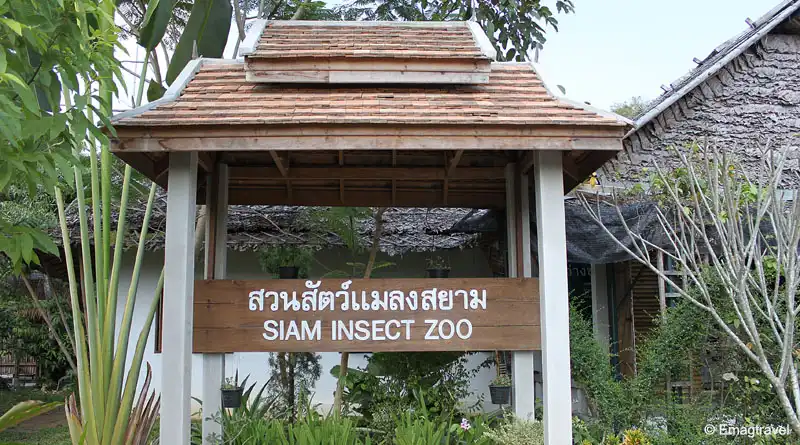
Siam Insect Zoo (Siam Insect Zoo) in Mae Rim, Chiang Mai, is the kind of place that quietly changes what “a museum” feels like. It is both a breeding and learning space for living insects and a long-running insect collection museum built up over more than 20 years, featuring specimens from many parts of the world. Instead of being a walk-through where you only read labels, this is a place where you can observe real forms, textures, patterns, and behaviors up close—from robust beetles with hard elytra to stick insects and walking branches that demonstrate camouflage so perfect it feels unreal.
The charm here is that it works as an easy, family-friendly visit while still having enough depth for anyone who is curious about biology and ecosystems. Insects are not just “weird creatures” or “scary bugs.” They are essential parts of the living world that keep ecosystems functioning: pollination, decomposition, food chains, and environmental indicators. Seeing many groups in one place becomes a compact lesson in biodiversity, and it gently shifts your perspective from “small things” to “how small things shape the big picture.”
The zoo is located in Mae Raem, Mae Rim District, in the Mae Sa area cluster (Mae Rim–Samoeng Road). This is a convenient part of Chiang Mai for building half-day trips, because nearby you can pair the visit with waterfalls, botanical gardens, and scenic drives. That pairing is also why this topic connects naturally to Chiang Mai’s larger “watershed forest” story: when you talk about watershed ecosystems, you inevitably end up talking about insects—because they are the gears inside the machine.
Inside Siam Insect Zoo, thinking in “zones” makes the visit feel smoother. The collection/museum area works like an archive of insect design. You start noticing differences in wings, legs, antennae, body segmentation, and the survival strategies each form implies. Some species win by speed, some by armor, some by camouflage, and others by colors that function as warning signals or mate attraction. If you slow down and read only the labels that catch your interest, the knowledge starts to stack without feeling like homework.
The live-insect and breeding sections add another layer: movement, behavior, and everyday “life rhythms” you rarely get to observe in nature at close distance. Watching a stick insect hold still like a real twig, or seeing the steady movement of a large beetle, reinforces a core idea: nature does not design creatures only for beauty. It designs for survival inside a specific environment—and when the environment changes, species adapt, relocate, or disappear. This is exactly the bridge into watershed forest thinking: healthy forests tend to support higher insect diversity, and insect diversity often reflects whether an ecosystem is still functioning well.
The butterfly garden is a highlight for many visitors, especially families. Butterflies tell the clearest story of life cycles—egg, caterpillar, chrysalis, adult—and when you see it with your own eyes, you feel how crucial time and conditions are for a single life. It also makes conservation feel tangible without heavy preaching: if you want butterflies, you need host plants for caterpillars, nectar sources for adults, and a surrounding environment that is not overwhelmed by excessive chemicals.
For a more serious conservation lens, there are three layers worth remembering. First is respect for living things: do not tap enclosures, do not use flash too close, and do not try to force animals to move just for content. Second is responsibility about origins: do not support suspicious wildlife trade, and value learning spaces that manage animals properly. Third is the “big picture”: insects are tied to forests, cities, farming, water quality, and environmental health. When you see that connection, travel becomes learning that changes behavior, not just a photo stop.
Getting There From Chiang Mai city, head toward Mae Rim District and take the Mae Rim–Samoeng Road (Route 1096 area). The site is in Mae Raem, Mae Rim. Local directions often reference the Mae Sa area cluster. If you are traveling on weekends or in the cool season, leaving earlier in the day helps avoid traffic on the Mae Rim–Mae Sa corridor.
| Name | Siam Insect Zoo (Siam Insect Zoo), Mae Rim, Chiang Mai |
| Location | 23/4 Moo 1, Mae Rim–Samoeng Road, Mae Raem, Mae Rim, Chiang Mai 50180 (Mae Sa Area) |
| Characteristics | Insect discovery museum & long-running specimen collection + live insect breeding/learning zones + butterfly garden; great for families and educational visits |
| Zones | Museum/Collection Zone, Live Insects & Breeding Zone, Butterfly Garden, Family/Education Zone, Mae Sa Cluster Link (Watershed Forest / Nature Learning) |
| Open Days & Hours | Generally open daily, 09:00 – 17:00 (check latest updates before visiting) |
| Fees | Adult ticket is commonly listed as 80 THB (recommended to confirm the latest price via official channels/on-site) |
| Travel | Chiang Mai City → Mae Rim → Mae Rim–Samoeng Road (Mae Sa Area) → Follow local signs to Siam Insect Zoo |
| Current Status | Operating (recommended to check official announcements before traveling) |
| Contact Number | +66 62 956 5645 |
| Nearby Tourist Attractions (Approx. Distance) | Mae Sa Waterfall (Approx. 6 km) Tel. 053-210-244 Queen Sirikit Botanic Garden (Approx. 13 km) Tel. 053-114-633 / 080-495-3700 Tiger Kingdom Chiang Mai (Approx. 3 km) Tel. 061-268-2669 Mae Sa Cluster Orchid & Butterfly Farms (Approx. 6 km) (varies by place; check per venue) Pong Yaeng – Mon Jam Scenic Area (Approx. 20 km) (multiple viewpoints; check per spot) |
| Popular Restaurants Nearby (Approx. Distance) | Sala Cafe Mae Rim (Approx. 9 km) Tel. 053-860-996 Krua Lawng Khao (Approx. 12 km) Tel. 083-476-3421 The Ironwood (Mae Rim) (Approx. 5 km) Tel. 081-831-1000 Baan Landai Fine Thai Cuisine (Approx. 11 km) Tel. 064-469-2929 Pongyang Angdoi (Approx. 17 km) Tel. 085-618-8885 |
| Popular Accommodations Nearby (Approx. Distance) | Four Seasons Resort Chiang Mai (Approx. 11 km) Tel. 053-298-181 Raya Heritage (Approx. 14 km) Tel. 053-111-670 Panviman Chiang Mai Spa Resort (Approx. 23 km) Tel. 053-879-540 Howie’s HomeStay (Approx. 12 km) Tel. 081-882-8345 Maesa Valley Garden Resort & Craft Village (Approx. 6 km) Tel. 053-298-152 |
Frequently Asked Questions (FAQ)
Q: Is Siam Insect Zoo suitable for young kids?
A: Yes, especially if the child enjoys seeing real specimens and live insects. The butterfly garden and life-cycle learning aspects tend to be the easiest and most engaging for kids, and parents can choose which labels to read for the right pace.
Q: How much time should I plan for a good visit?
A: Around 1–2 hours is a comfortable range. If you are visiting with children or you enjoy reading details, plan longer and pair it with Mae Sa Waterfall or the botanic garden for a full half-day route.
Q: Why does an “insect” attraction connect to watershed forests and nature clusters in Chiang Mai?
A: Because insects are core ecosystem workers: pollination, decomposition, and food chains. Learning from an accessible place like this helps visitors understand the bigger forest-and-water story without needing to trek deep into protected areas.
Q: What season is best to visit?
A: It can be visited year-round. For the most comfortable driving and walking weather in the Mae Rim–Mae Sa area, late rainy season through cool season is often ideal.
Q: What are the key conservation manners to follow in a living-insect learning space?
A: Observe gently, do not disturb animals for content, avoid tapping or flashing too closely, and do not support suspicious wildlife trade. Also, daily choices matter: reducing excessive chemical use and supporting pollinator-friendly plants helps the broader ecosystem that insects depend on.
 Siam Insect Zoo Map
 Category:
  Group:
  Last Update: 16 HourAgo
Comment
 Nearby Attractions
| Keyword (Advance) |
 Region
|
 Muang Chiang Mai(