

 Home
Home Chiang Mai(










Rating: 3.6/5 (5 votes)
 |
|  Map
Map 
 Have Map
  No Map
Chiang Mai attractions
Attractions in Thailand
Open Days: Generally open daily (recommended to avoid days with heavy rain, as this is a wetland/peat-soil area)
Opening Hours: Recommended 08:00 – 17:00 (visit during daylight hours and return before dark)
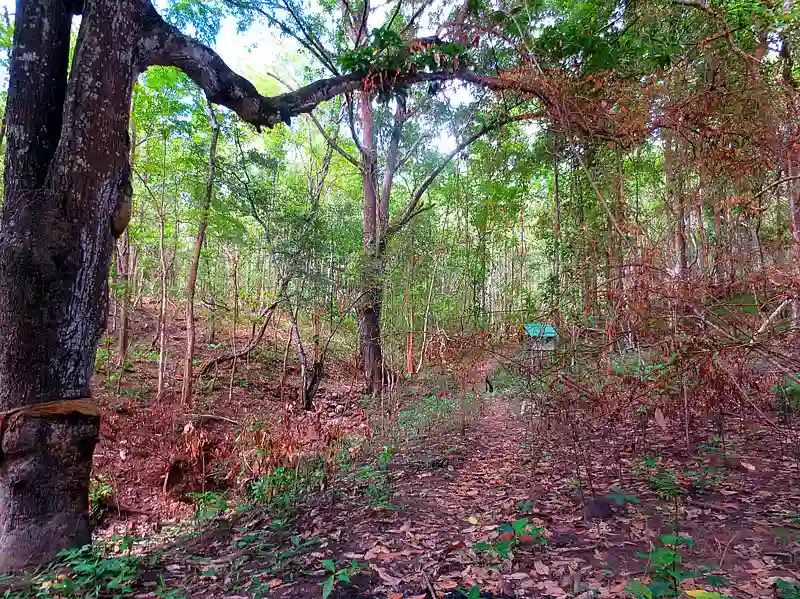
Dong Pong Wai Forest in San Kamphaeng District, Chiang Mai, is a community forest with a very distinct identity—starting with its name. “Pong Wai” is a Lanna term referring to a peat-soil zone or a type of wetland. What makes this kind of landscape special is the moisture stored in the ground and in layers of organic matter, keeping the forest lush and humid longer than typical woodland. In some spots, when you walk or gently press the surface, the ground can naturally tremble or “bounce” slightly. That’s what makes a visit to Dong Pong Wai feel different from an ordinary forest walk—it’s like watching the “mechanics of the earth” working right in front of you, without needing staged scenery or built attractions.
The location of Dong Pong Wai Forest is commonly described as lying between Ban Muang Khiao (Village No. 4, Rong Wua Daeng Subdistrict) and Ban Pa Tueng (Village No. 7, Huai Sai Subdistrict) in San Kamphaeng District, Chiang Mai. This is a community forest zone that local residents have consistently valued and cared for together. The appeal is not only the dense greenery, but also the “fragility” of a wetland ecosystem. Peat soils can compress and sink more easily when repeatedly stepped on in the same area. For that reason, visiting here should be done with extra respect and caution: follow the paths arranged by the community, do not wander off-route, and do not step into wet, spongy-looking spots just for fun. In landscapes like this, ground subsidence can genuinely happen.
From a social and cultural perspective, Dong Pong Wai is a strong example of a “community forest rooted in stories and shared beliefs.” Many communities rely on the forest as a water source, a food source, and a place deserving of respect. When belief is shared, care rules often follow naturally—such as avoiding damage to plants, helping watch out for forest fires, and keeping the area quiet. These practices help preserve the forest’s richness over time. For travelers, it’s a chance to see that conservation is not only about warning signs; it is also supported by the living relationship between people and the forest.
The best experience here is a gentle nature walk—observing the structure of a moist forest and noticing how the ground behaves in peatland zones. If you enjoy photography, early morning or late afternoon light can add depth and softness to the scene, because the humidity smooths out harsh shadows and makes greens look more delicate. During the rainy season, however, the ground becomes more slippery and more easily compressed, so shoes with good grip are strongly recommended. Bring drinking water, insect repellent, and keep your pace unhurried. Most importantly, take all trash back with you. Wetland systems can accumulate pollutants easily, and keeping the area clean is one of the most direct ways to show respect.
Getting There It’s recommended to begin from the San Kamphaeng area, then head toward either Ban Muang Khiao (Rong Wua Daeng Subdistrict) or Ban Pa Tueng (Huai Sai Subdistrict), as these villages border the Dong Pong Wai forest zone. After arriving, ask local residents or follow community signage to reach the walking starting point, because this is a community forest and entry paths may change depending on seasons and community management. During rainy periods, avoid going deep into the forest and choose the areas recommended by the community for safety.
| Place Name | Dong Pong Wai Forest |
| Location | Between Ban Muang Khiao (Village No. 4, Rong Wua Daeng) and Ban Pa Tueng (Village No. 7, Huai Sai), San Kamphaeng District, Chiang Mai |
| Coordinates (Latitude, Longitude) | 18.753949, 99.191436 |
| Key Characteristics | Community forest with peat-soil/wetland traits (“pong wai”); in some areas the ground can naturally tremble; lush, humid, and ecologically fragile—walk with caution |
| Best Time To Visit | Morning – afternoon (very green in the rainy season, but ground becomes more slippery and easier to compress) |
| Recommended Activities | Short nature walks, observing wet-forest and peatland ecology, learning community-based forest conservation principles |
| Nearby Tourist Attractions (Approx. Distance) | San Kamphaeng Hot Springs (approx. 20 km) Tel. 053-037-101 Bo Sang Umbrella Making Center (approx. 18 km) Tel. 053-338-195 Mae Kampong Village (approx. 30 km) Tel. 095-324-9501 Baanpong Lodge (On Tai / Mae On area) (approx. 22 km) Tel. 053-036-105 The Boone Resort (Ton Pao, San Kamphaeng) (approx. 20 km) Tel. 053-106-490 |
| Nearby Restaurants (Approx. Distance + Phone) | Huen Jai Yong (approx. 20 km) Tel. 086-671-8710 San Kamphaeng Pochana (approx. 20 km) Tel. 053-332-935 Hoi Kha Boat Noodles (San Kamphaeng) (approx. 22 km) Tel. 083-573-4463 Nai Noi Boat Noodles (San Kamphaeng) (approx. 21 km) Tel. 083-565-0707 Kin Pu Du Na On Tai–San Kamphaeng (approx. 24 km) Tel. 094-265-6094 |
| Nearby Accommodations (Approx. Distance + Phone) | The Puka Boutique Resort (approx. 20 km) Tel. 053-965-499 Thantara Resort Chiang Mai (approx. 25 km) Tel. 053-215-008 The Boone Resort (approx. 20 km) Tel. 053-106-490 Baanpong Lodge (approx. 22 km) Tel. 053-036-105 San Kamphaeng Lakeview Resort (approx. 24 km) Tel. 053-381-039 |
Frequently Asked Questions (FAQ)
Q: Where is Dong Pong Wai Forest located?
A: It lies between Ban Muang Khiao (Village No. 4, Rong Wua Daeng Subdistrict) and Ban Pa Tueng (Village No. 7, Huai Sai Subdistrict) in San Kamphaeng District, Chiang Mai, and is a community forest with wetland/peat-soil characteristics.
Q: What does “pong wai” mean?
A: It is a Lanna term referring to a peat-soil zone or wetland area. In some spots the ground may naturally tremble slightly when stepped on, so visitors should walk carefully and avoid leaving designated paths.
Q: When is the best time to visit?
A: Mornings and late afternoons are comfortable and offer beautiful light. It can be visited year-round, but in the rainy season the forest becomes especially lush while the ground also becomes more slippery and easier to compress—avoid days with heavy rain.
Q: What kind of trip is this place best for?
A: It is ideal for travelers who want a gentle nature walk and are interested in community forests and local conservation. Visiting at a slow pace and respecting community rules will give the best experience.
Q: What should I prepare before going?
A: Shoes with good grip, drinking water, insect repellent, a hat or light outer layer, and a small bag to carry your trash out. Most importantly, follow the routes recommended by the community and do not step into areas that look very soft or spongy.
 Dong Pong Wai Forest Map
 Category:
  Group:
  Last Update: 10 HourAgo
Comment
 Nearby Attractions
| Keyword (Advance) |
 Region
|
 Muang Chiang Mai(