

 Home
Home Chiang Mai(




Rating: 3.6/5 (5 votes)
 |
|  Map
Map 
 Have Map
  No Map
Chachoengsao attractions
Attractions in Thailand
Open Days: Daily
Opening Hours: Exterior Viewing Available 24 Hours
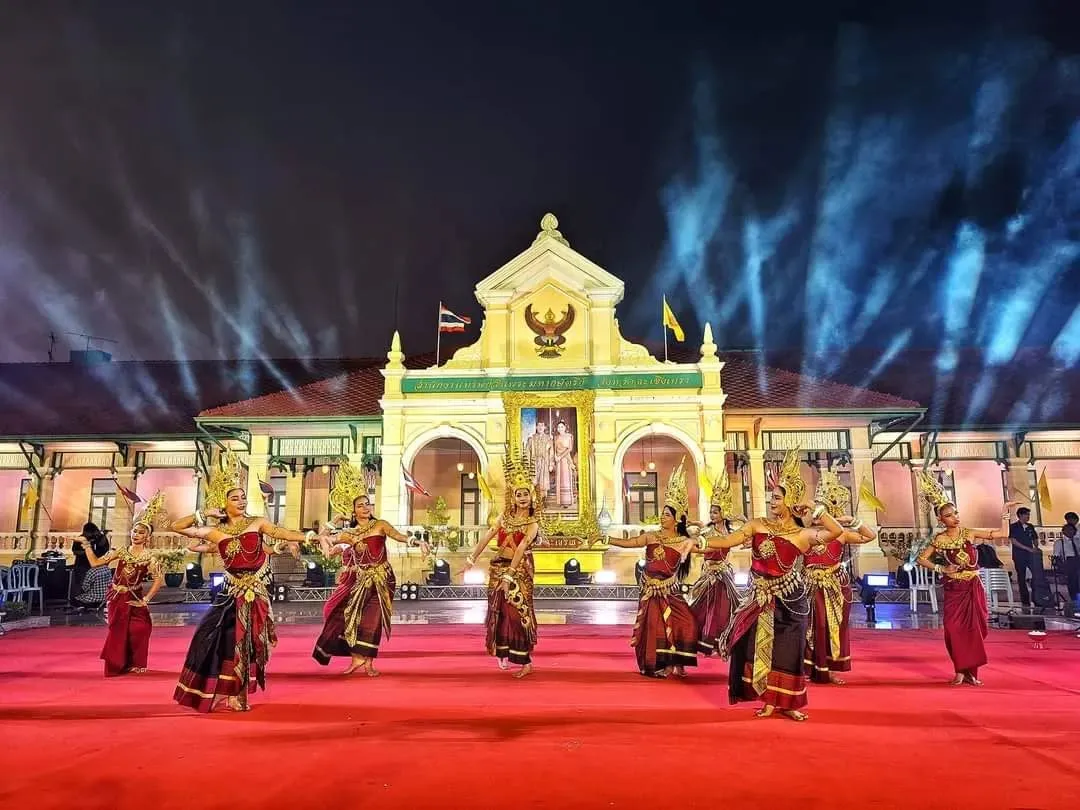
Crown Property Bureau Office Building, Chachoengsao is widely regarded as one of the most powerful “old-building, city-story” landmarks in Paet Riu. A single structure reveals the rise of the modern state during the reign of King Rama V, the building’s shifting role from an administrative hub to its present-day function, and Western architectural details adapted for Thailand’s hot, humid riverside climate along the Bang Pakong River. Visiting here is ideal for a slow walk, photography, and “reading the city” through architectural elements—strictly from the exterior, without rushing.
The building sits along the Bang Pakong River on Maruphong Road in Na Mueang Subdistrict, Mueang Chachoengsao District, right in the city center. This location has long been the heart of Chachoengsao because “government town” and “river town” once overlapped within true walking distance. Viewing the building from the outside is therefore more than admiring an old façade—it is standing before tangible spatial evidence of administrative order, urban transition, and heritage conservation at the provincial level.
Part of the charm lies in how people refer to it across different eras. Many know it as the “former Chachoengsao Provincial Hall,” because the building once served as a key government center for a period of time. Others use its present identity as the Crown Property Bureau office building in Chachoengsao, which clearly shows that the structure has not been frozen as a mere memorial—it still has an active life in the present. For cultural travelers today, setting the intention clearly as “exterior viewing only” makes the visit both appropriate and comfortable, respecting the working area while still delivering a full experience of reading the city through architecture.
Historically, the building dates to the reign of King Rama V, a period when Siam was pushing forward major reforms of the bureaucracy and provincial administration. Establishing institutions, defining the roles of key towns, and constructing permanent government buildings using materials and forms that signaled a modern state were all part of the same era. As an eastern gateway city and a river town linking trade, travel, and governance, Chachoengsao was precisely the kind of place that “needed” a dignified, standardized government building to support official ceremonies and the administrative functions of a modernizing state.
If you observe carefully from the outside, you will notice the building’s orderly composition, its symmetry, and the deliberate rhythm of openings designed for real use in a hot, humid climate. Overall, it conveys a Western neoclassical atmosphere “translated” to fit a Thai context—through wall proportions, plaster details, gable forms, and the placement of verandas or open corridors to catch breezes. These features give the building a formal governmental elegance without turning it rigid or disconnected from local realities, because it ultimately had to function in a riverside environment where wind, humidity, and rain are everyday conditions.
The architectural details visible from the outside can turn “visiting” into “reading” in an engaging way. Notice the entrance composition that signals ceremony and symbolic hierarchy even before stepping inside. Observe the gables that often emphasize state identity and governance symbolism. Study the arched doorways that feel formal yet flow in Western lines. At the same time, look for practical elements—ventilation openings and wood components that reduce heat and improve air circulation—an essential functional answer in tropical architecture.
From the exterior, the overall plan suggests an early government-building concept that needed to accommodate many functions within one compound. The structure often reads as having wings extending to both sides, with multiple access points to organize circulation and operational workflows. This matches the historical context of a provincial town where people traveled in from surrounding areas for official services, making clear entrances and corridors both a matter of usability and a visual communication of state authority.
Another reason the building is well worth visiting, even for exterior viewing only, is its recognized conservation status. It has been registered as a National Historic Site, confirming that it is not simply an old structure but a cultural resource of national value. This status places the building under conservation standards and helps protect its overall character from changes that could erode its original significance. For travelers, that translates into a credible experience: the site has a clear historical identity and can be interpreted as a coherent story rather than a vague “old building.”
If you enjoy an old-town day trip, this Maruphong Road landmark works especially well as a starting point. The road itself is a core axis of the historic town and the former administrative district. From here, you can walk easily to other points in the city center, and the journey gradually reveals the idea of a “city built by the river”—from solemn government architecture to lively community and commercial zones, then back toward riverside walkways that feel open and relaxing. It is a multi-layered itinerary without the need to drive far outside the city.
To get the most from exterior viewing, start by standing at a distance to take in the whole composition, then move closer step by step to “zoom in” on details—plaster lines, the rhythm of openings, the curvature of arches, the alignment of the building with the street, and its relationship to the Bang Pakong River. This approach helps you see that historic buildings are not beautiful merely because they are old, but because they were designed with clear reasons—reflecting the intentions of the state and builders of that era to create something dignified, functional, and resilient in real climatic conditions.
The best times for exterior photography are morning and late afternoon, when the light is softer and shadows enhance the depth of walls and plaster details. Strong midday light can wash out fine features; if you must visit at noon, choose angles where shadows fall across the surface to add weight and dimension. In the evening, breezes along the Bang Pakong River often make the walk more comfortable, and the atmosphere supports wide shots that connect the building, the city, and the river in a single frame.
Respectful behavior matters, because the building is both an active workplace and a protected historic site. Keep noise at an appropriate level, do not climb or lean on vulnerable elements, and avoid blocking entrances or operational areas. If you plan to photograph individuals nearby, ask permission first. These practices help cultural travel benefit both visitors and the place itself, while supporting long-term preservation.
In terms of storytelling, Chachoengsao is not only a city known for paying respects at Luang Pho Sothon. It is also a town that preserves many traces of the modern state through old government buildings, historic streets, and riverside urban structures. Visiting the Crown Property Bureau office building from the outside suits travelers who want to see Paet Riu through the lens of “urban history,” because it allows you to feel change through real architecture rather than through words alone.
If you are creating travel content, the narrative can be framed as “old buildings telling riverside city stories” with strong ingredients: a Bang Pakong riverside setting, Western architecture blended into a Thai context, the building’s former role as a governing center, and its National Historic Site status that gives the story weight. For photography, you can play with leading lines in multiple ways—Maruphong Road drawing toward the building, repeated wall and window rhythms, or angled perspectives to reveal corridor depth and arch curvature.
Another compelling angle is how this building connects to a broader “network of historic places” nearby. Chachoengsao’s city center offers sites that tell different chapters yet fit neatly into a single day—such as the former Monthon Prachin Buri Court building, the old shophouse zone on Phanit Road, heritage markets like Baan Mai 100-Year Market, and major religious landmarks such as Wat Sothon Wararam Worawihan. This kind of itinerary shows that the city does not have only one story; multiple layers coexist—administration, commerce, religion, and riverside life.
For those interested in symbolic meaning, early government buildings from the Rama V era often reflect Siam’s effort to stand confidently in the modern world by making “systems” visibly present in real urban space. Symmetry, ceremonial entrances, Western forms, and durable materials collectively communicate stability and increasing order. Standing outside and observing the building can feel like reading a three-dimensional historical document—an experience difficult to replicate through books alone.
Even when viewing only the exterior, planning a good walking route makes the trip more worthwhile. Start at the Crown Property Bureau office building, explore front and side angles to read the plan and wing composition, then continue to nearby historic streets and riverside walkways to absorb the Bang Pakong atmosphere. End with local food or a café in the city center. In one day, you can combine architecture, history, everyday life, and a photo set with diverse moods.
For families or older travelers, exterior viewing is easy to manage because it requires limited time and no stairs. Choose a convenient parking point and walk short segments. Still, consider heat during midday—bring water, and prepare a hat or umbrella, especially if you plan to continue walking to nearby sites in the same district.
Overall, the Crown Property Bureau office building in Chachoengsao is best suited to old-town walkers, architecture lovers, and travelers interested in governance history, because it carries both “form” and “meaning” in the same place. Its beauty is not decorative; it is the beauty of an era’s logic—function, authority, and preservation. Observe it carefully, and you will begin to see Chachoengsao as more than a pass-through city, understanding more clearly why a Bang Pakong riverside town holds a distinct place in Thailand’s modern history.
Getting There If driving from Bangkok, use expressways and Motorway No. 7 to enter Chachoengsao city, then head toward Maruphong Road in the Na Mueang area, the historic town and former administrative district. When you reach the Bang Pakong riverside zone, look for the heritage-building area and the street network connecting major city-center landmarks. By train, get off at Chachoengsao Junction Station and continue by local transport or taxi to Maruphong Road. By van or bus, disembark in the city center and take a local ride to Na Mueang, then continue on foot within the old-town area.
Finally, if you want the visit to feel genuinely meaningful, try asking simple questions as you walk: Why did government buildings of that era emphasize symmetry? Why include open verandas or corridors? Why do the openings follow a consistent rhythm? Why place the building near the river? When you can answer these by observation, you gain not only good photos but a deeper understanding of the city—at the core of authentic cultural travel.
| Name | Crown Property Bureau Office Building, Chachoengsao (Former Chachoengsao Provincial Hall) |
| Address | 122/6 Maruphong Road, Na Mueang Subdistrict, Mueang Chachoengsao District, Chachoengsao 24000, Thailand (Bang Pakong Riverside) |
| Coordinates (Latitude, Longitude) | 13.689749, 101.077565 |
| Summary | A historic government building on the Bang Pakong River featuring Western-influenced architecture from the Rama V era; formerly used as provincial and municipal offices; now functions as the Crown Property Bureau office in Chachoengsao and is registered as a National Historic Site. |
| Highlights | Western-style architecture adapted to a hot, humid riverside climate; strong “modern-state” era character; photogenic Bang Pakong riverside setting; located in the old-town district with many walkable nearby attractions; best appreciated through exterior viewing and architectural details. |
| History / Period | Built during the reign of King Rama V (early 20th century Buddhist Era); formerly served as the Chachoengsao Provincial Hall and later as a municipal hall; registered as a National Historic Site in 1977; currently used as the Crown Property Bureau office in Chachoengsao. |
| Key Evidence / Notable Facts | Registration as a National Historic Site (1977) is cited in official tourism/heritage references; address and coordinates are consistently used for location identification. |
| Name Origin / Context | The commonly used names reflect the building’s changing roles over time: “Former Provincial Hall” indicates its historical administrative function, while the current name reflects its present operational use. |
| Travel | Drive to Chachoengsao city center and follow routes to Maruphong Road (Na Mueang); by train, get off at Chachoengsao Junction Station and take local transport/taxi; by van/bus, disembark in the city center and continue by local transport, then explore the old town on foot. |
| Current Status | Active working building and protected heritage site; recommended for exterior viewing only to respect the operational area. |
| Contact Number | 0-3853-5301 |
| Fees | No fee for exterior viewing. |
| Facilities | Exterior-viewing spot in the old-town district; bring water/umbrella in hot weather and plan parking in the city center. |
| Nearby Attractions (Approx. Distance) | 1) Monthon Prachin Buri Court (Chachoengsao Buddhist Association Building) – 0.6 km 2) Phanit Road (Old Shophouse District) – 0.8 km 3) Bang Pakong Riverside Clock Tower – 1.0 km 4) Tha Khai Market – 1.2 km 5) Baan Mai 100-Year Market – 2.2 km 6) Wat Chin Prachasamoson (Leng Hok Yi Temple) – 2.8 km 7) Wat Sothon Wararam Worawihan – 3.5 km |
| Popular Restaurants Nearby (Approx. Distance + Phone) | 1) Pradit Phochana – 2.0 km – 093-614-9564 2) Kung Nang Restaurant – 2.5 km – 0-3851-3414 3) Pae Kiang Nam – 14.0 km – 089-252-4666 4) Krua Mae Somkliang (Bang Pakong Riverside) – 12.0 km – 094-681-6636 5) Krua Im Suk by Baan Yu Pen Suk – 11.0 km – 062-332-2422 |
| Popular Accommodations Nearby (Approx. Distance + Phone) | 1) Heaven Hotel Chachoengsao – 2.5 km – 0-3851-1150 2) JK Living Hotel & Service Apartment – 3.5 km – 092-742-9929 3) Malone Maranatha (Morocc Hotel) – 4.0 km – 084-008-0004 4) The Wish Hotel & Condo – 5.5 km – 088-521-5234 5) Suntara Wellness Resort & Hotel – 8.5 km – 033-590-250 |
Frequently Asked Questions (FAQ)
Q: Where is the Crown Property Bureau Office Building in Chachoengsao located?
A: It is located at 122/6 Maruphong Road, Na Mueang Subdistrict, Mueang Chachoengsao District, along the Bang Pakong River in the old-town area of Chachoengsao.
Q: Can visitors go inside the building?
A: Exterior viewing only is recommended, to respect the building’s operational use and the site’s appropriate boundaries.
Q: Why is this building historically significant to Chachoengsao?
A: It is a historic government building from the Rama V era that reflects administrative reform and the emergence of a modern state structure in eastern provincial towns, with roles evolving through different periods to the present.
Q: What architectural highlights should I look for from the outside?
A: Look for the building’s symmetry, the rhythm of openings and arched entrances, plaster and gable details, and exterior elements that support airflow and ventilation—well suited to the hot, humid riverside climate.
Q: What is the best time for photography?
A: Morning and late afternoon are best, when light is softer, shadows add dimension to the façade, and the weather is more comfortable than midday.
Q: What can I visit after seeing the building?
A: Nearby options include the former Monthon Prachin Buri Court building, Phanit Road’s old shophouse zone, the Bang Pakong riverside clock tower and walkways, Tha Khai Market, Baan Mai 100-Year Market, Wat Leng Hok Yi, and Wat Sothon Wararam Worawihan.
Q: Is there a contact phone number?
A: Yes. The published contact number is 0-3853-5301.
 Crown Property Bureau Office Building Map
 Category:
  Group:
  Last Update: 4 HourAgo
Comment
 Nearby Attractions
| Keyword (Advance) |
 Facebook Fanpage
 Region
 Historical Sites and Monuments(
 Royal Palace(
 Art, Craft Centres, Tradition(
 Museums(
 Historical Houses and The Ancient City(
 Educational Places
 Museum for Study(
 Library(
 Educational Gardens, Farm(
 University
 Places of Worship
 Temple(
 Mosque(
 Other religious and spiritural sites(
 Research and Development
 Royal Project(
 Suburban Living
 Village, Community(
 Local Market(
 Floating Market(
 Nature and Wildlife
 National Parks and Marine Reserves(
 Mountain (Doi)(
 Dam, Reservoir, Lake(
 Waterfalls(
 Caves(
 River, Canal(
 Bays and Beaches(
 Islands(
 Other natural attractions(
 Entertainment and Agricultural
 Zoos and Aquariums(
 Animal camps and shows(
 Farm, Parks, Gardens and Ecotourism(
 Spas and Wellness
 Spas and Wellness(
 Travel Articles, Recipes
 Travel Review, Food Review(