
 Home
Home North(
 Chiang Mai(


Rating: 4.2/5 (5 votes)
 |
|  Map
Map 
 Have Map
  No Map
Nakhon Pathom attractions
Attractions in Thailand
Open Days: Daily
Opening Hours: 05:00–19:00
Buddhamonthon, Nakhon Pathom is a nationally significant Buddhist site located in Salaya Subdistrict, Phutthamonthon District, Nakhon Pathom Province. Covering an area of approximately 2,500 rai, it is far more than a large public park or a place for casual walks. Buddhamonthon was jointly created by the Thai government and the Thai people in 1957 as a Buddhist offering to commemorate the occasion of Buddhism reaching its 2,500th year. For this reason, Buddhamonthon holds deep meaning in terms of history, religion, and the spiritual life of Thai Buddhists.
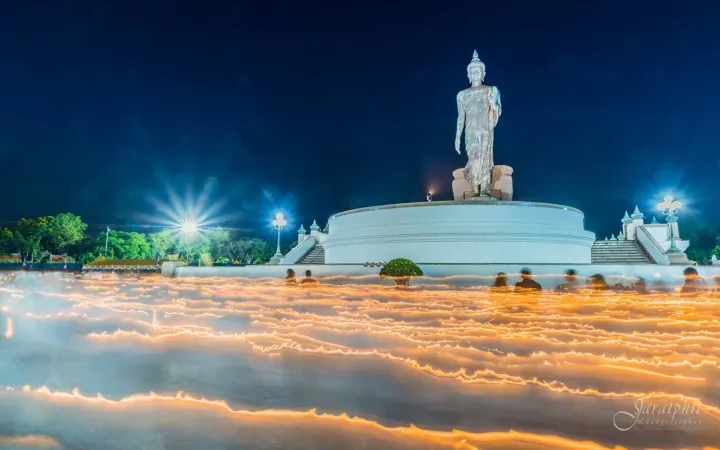
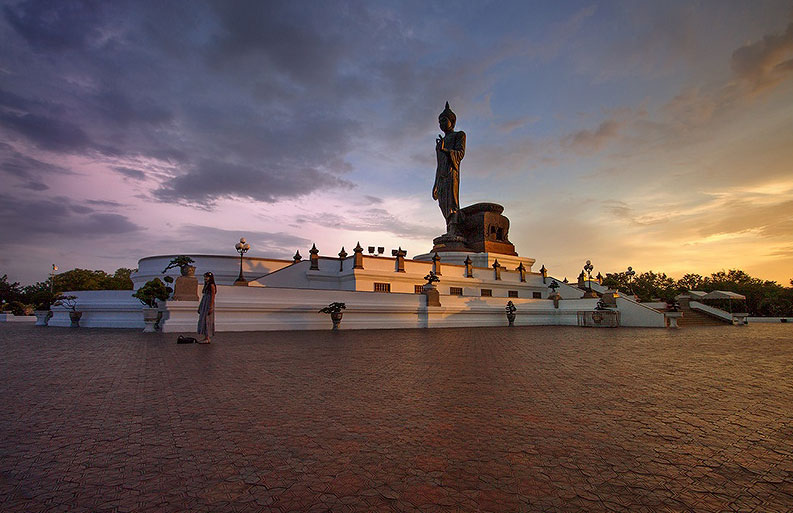
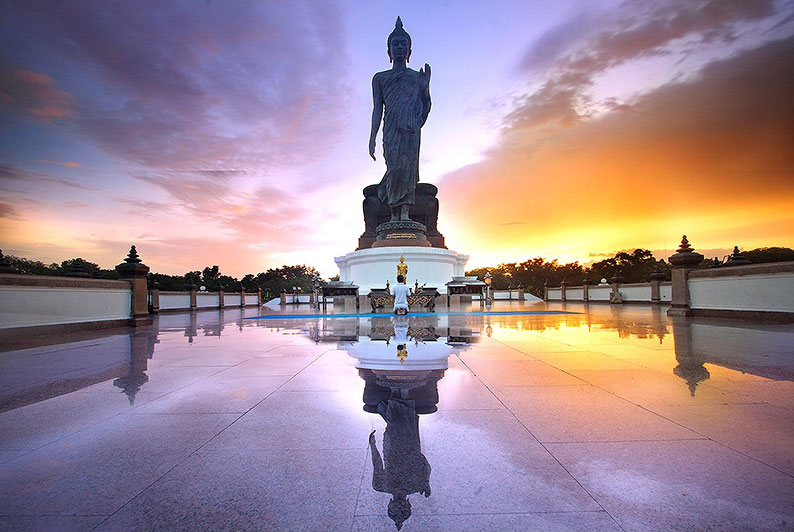
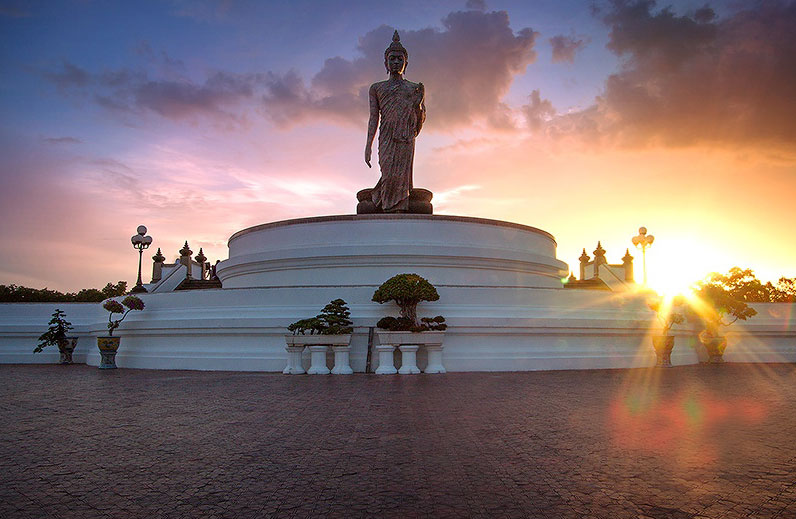
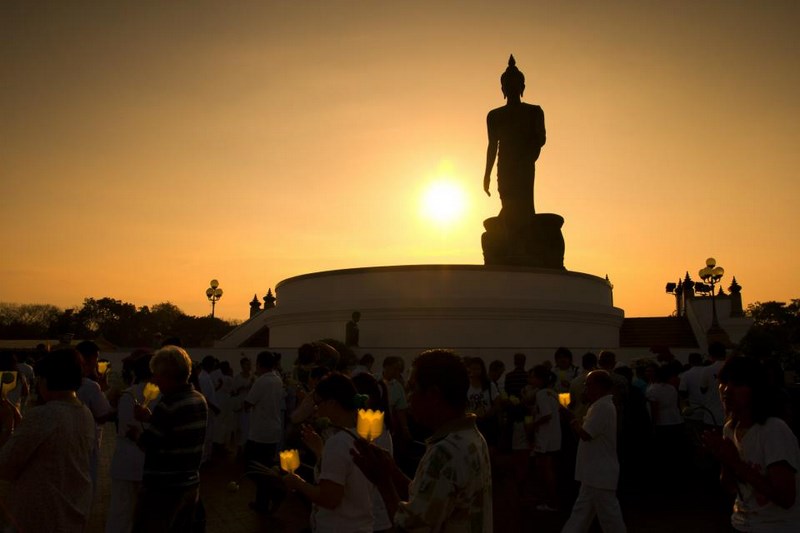
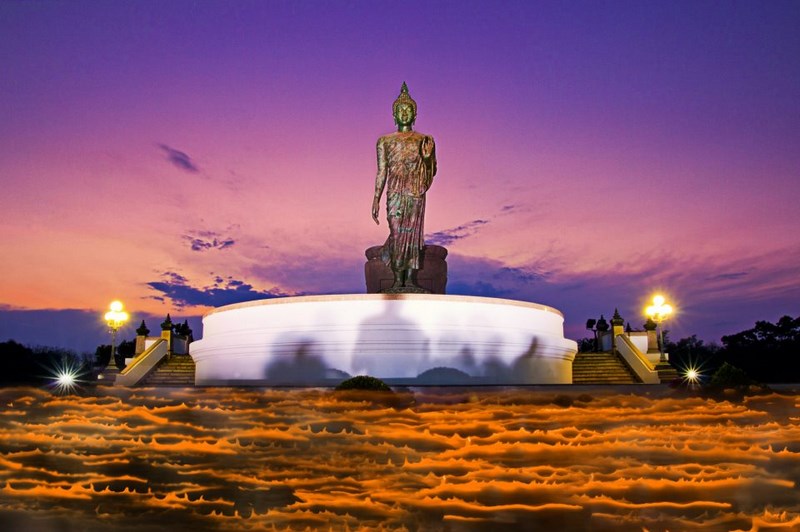
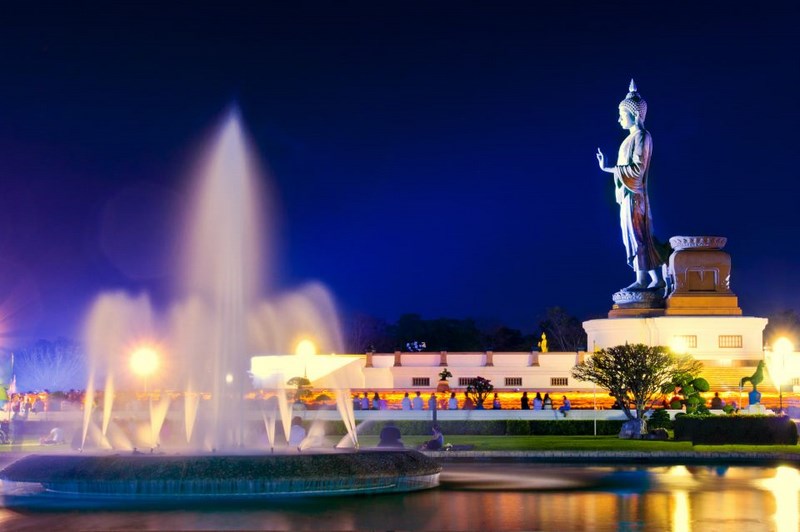
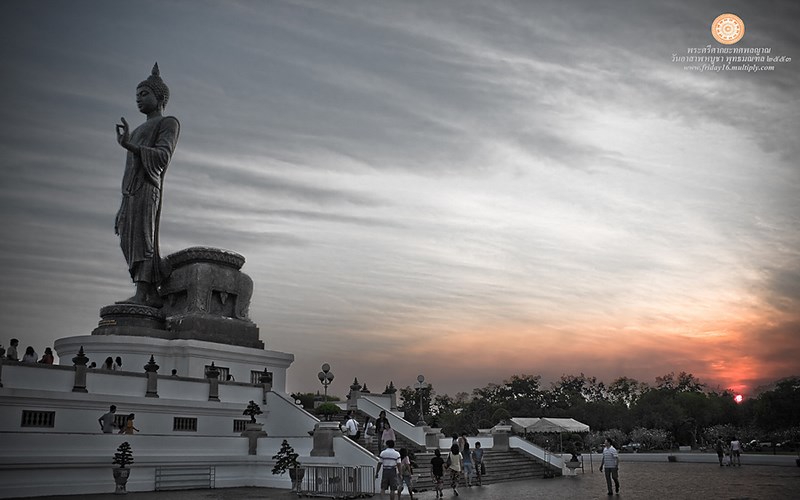
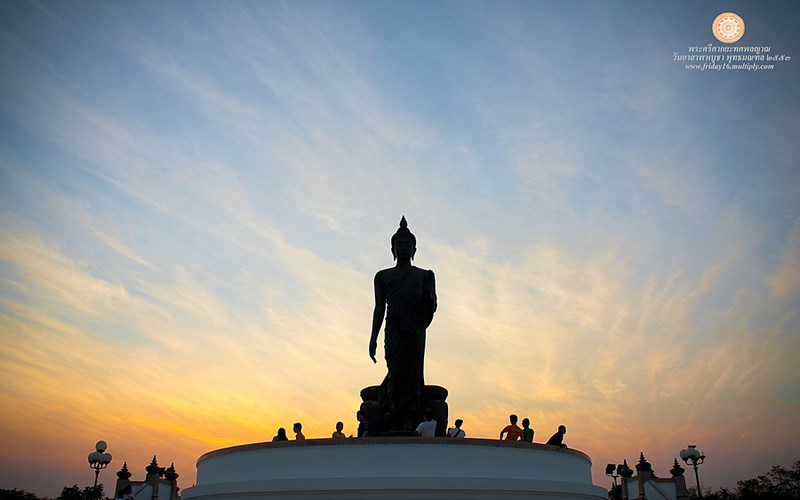
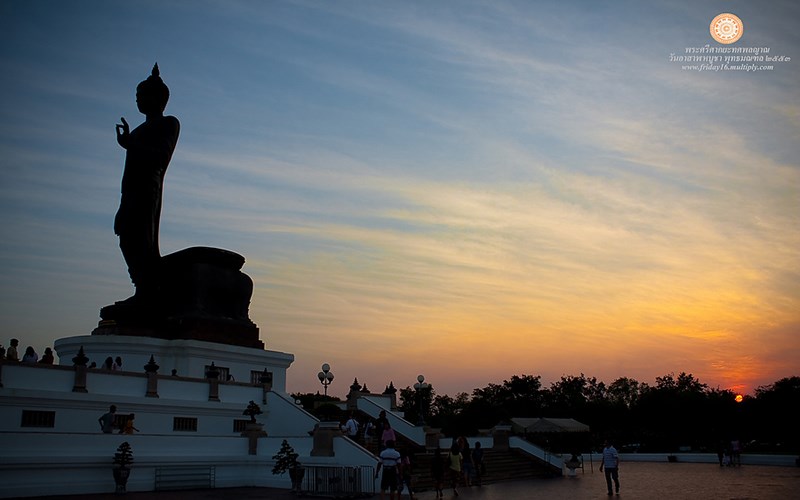
When people speak of Buddhamonthon, the first image that often comes to mind is the majestic walking Buddha image enshrined at the center of the grounds. This principal Buddha image of Buddhamonthon stands 2,500 krebiet in height, or approximately 15.875 meters. His Majesty the King graciously bestowed upon it the name Phra Si Sakaya Thotsaphonlayan Prathan Phutthamonthon Suthat. The statue is not merely a symbol of the site, but also the spiritual focal point for visitors from across Thailand. Its elegance lies in the graceful walking posture, which conveys serenity and the continuous progress of the Dharma. As a result, it is both a work of significant Buddhist art and the heart of this sacred place.
The area surrounding the principal Buddha image is designed to reflect the core teachings and history of Buddhism in a clear and meaningful way. Here, visitors will find representations of the 4 sacred Buddhist pilgrimage sites: the place of the Buddha’s birth, enlightenment, first sermon, and final passing into Parinirvana. This concept means that walking through Buddhamonthon is not simply a matter of admiring the landscape or architecture. It is also a journey through the life of the Buddha presented in an accessible and concrete form, allowing visitors to study, understand, and reflect on key moments of Buddhist history within one unified space.
The greatness of Buddhamonthon is not limited to the principal Buddha image and the open ceremonial grounds. The site also contains a number of important religious buildings and institutions that reflect its role as a center of Buddhist affairs. These include the Buddhamonthon Vihara, the residence of the Supreme Patriarch, guest monk accommodations, a Buddhist assembly hall, a meditation practice pavilion, a Buddhist museum, and a Buddhist library. With all of these elements together, Buddhamonthon functions simultaneously as a sacred site, a ceremonial venue, a center of learning, and a place for meditation practice.
Another characteristic that sets Buddhamonthon apart from many other religious sites is its vast open space, which creates a strong sense of calm and order. The grounds are filled with large trees, expansive lawns, flower gardens, ornamental plants, and pathways that connect the important areas in a clear and organized manner. This lush environment allows visitors to use the space in many ways. Some come to make merit on important Buddhist holy days, some come to sit quietly, read Buddhist literature, or walk mindfully, while others come simply to spend time in a setting that helps the mind slow down and become still.
In historical terms, Buddhamonthon holds immense importance as a project that reflected the unified commitment of the Thai state and the Thai people during the Buddhist era commemoration of 2,500 years. Its establishment in 1957 was not merely symbolic. It also served as a strong affirmation of the central role of Buddhism in Thai society. Buddhamonthon therefore stands as the result of an intention to create a “realm of the Buddha” as a national memorial, a center for Buddhist activity, and a public expression of Thailand’s role as a major center of Buddhism.
Today, Buddhamonthon continues to play an active role as a venue for important Buddhist ceremonies such as Visakha Bucha Day, Makha Bucha Day, and Asalha Bucha Day, as well as events related to Dharma dissemination, meditation practice, and national religious observances. The sight of Buddhist devotees gathering here on important holy days reflects the real and continuing role of Buddhamonthon in contemporary life. It is not merely a historical site frozen in the past, but a living place of faith that continues to be used and valued by Thai society.
For first-time visitors, Buddhamonthon often leaves a strong impression from the moment they enter the grounds. The scale of the project is much larger than many people expect. As visitors drive in and see the tree-lined roads, broad open spaces, and religious structures gradually unfolding before them, it becomes immediately clear that this is not an ordinary park. It is a place systematically designed with religious meaning at its core. The sense of peace that arises while walking among the principal Buddha image, the symbolic pilgrimage sites, and the various important buildings is what makes many people wish to return, whether as tourists or as seekers of inner calm.
From the perspective of cultural tourism, Buddhamonthon is one of the most complete destinations in the province. Those interested in Buddhist art can admire the walking Buddha image and the religious architecture. Those interested in history can learn about its foundation during the 2,500-year Buddhist commemoration. Those interested in Buddhist teachings can spend time studying the life of the Buddha and taking part in religious activities. Meanwhile, visitors looking for a peaceful green space can enjoy the expansive landscape. This completeness gives Buddhamonthon strong relevance for searches related to Buddhism, meditation sites, places to visit in Nakhon Pathom, and day trips from Bangkok.
The principal Buddha image, Phra Si Sakaya Thotsaphonlayan Prathan Phutthamonthon Suthat, also holds high artistic value. Beyond its monumental scale, its walking posture expresses movement with grace, setting it apart from the seated or standing Buddha images commonly found elsewhere. The flowing lines of the robe and the overall proportion of the statue make it one of the most memorable examples of Buddhist sculpture in Thailand. It is also one of the most recognizable visual symbols of Buddhamonthon in travel and religious media.
Another reason Buddhamonthon remains consistently popular is its convenience for visitors from Bangkok and nearby provinces. Located in Salaya and close to major roads such as Phutthamonthon Sai 4 Road, it can easily be included in a one-day trip. Those who come solely for merit-making can comfortably spend half a day here, while those wishing to continue exploring can connect their route to Mahidol University, Sirirukkhachati Nature Learning Park, the Thai Film Archive, or nearby temples. This makes Buddhamonthon suitable for spiritual travelers, families, and educational visitors alike.
The atmosphere of Buddhamonthon differs noticeably between morning and evening. In the morning, it feels especially peaceful, open, and suitable for quiet walks or meditation. In the evening, more people come to exercise, stroll, and spend time with family. Even when visitor numbers increase, the vast grounds help preserve a sense of openness and calm. This makes Buddhamonthon not only a sacred place, but also a public religious space that people can genuinely use in everyday life.
Visitors arriving as a group can also coordinate in advance with the relevant departments of Buddhamonthon. This makes the site especially suitable for study visits, Dharma activities, and organized visits by students or groups interested in Buddhism. The site’s infrastructure and administrative support make group visits more practical and convenient than at many other religious sites.
Getting There The most convenient way to reach Buddhamonthon is by private car, using Phutthamonthon Sai 4 Road toward Salaya Subdistrict, Phutthamonthon District, Nakhon Pathom Province. The destination is located at 25/25 Phutthamonthon Sai 4 Road. If traveling by public transport, visitors can take a train or bus to the Salaya area and then continue by local transportation to Buddhamonthon without much difficulty. Group visitors are advised to contact the Buddhamonthon public relations office in advance for smoother coordination and visits.
Overall, Buddhamonthon is far more than an important Buddhist site. It brings together historical meaning, artistic grandeur, expansive green space, and a contemporary role as a center for Buddhist activity in one place. For anyone looking for a destination in Nakhon Pathom that offers peace, Buddhist knowledge, and an atmosphere suited to rest and reflection, Buddhamonthon deserves a place on the itinerary, whether for worship, religious study, family time, or simply walking through the serene grounds of this nationally important Buddhist landmark.
| Place Name | Buddhamonthon |
| Overview | A nationally significant Buddhist site in Salaya, established in 1957 on approximately 2,500 rai to commemorate the 2,500th year of Buddhism, and now serving as a major center for Buddhist activities in Thailand. |
| Highlights | Home to the walking Buddha image named “Phra Si Sakaya Thotsaphonlayan Prathan Phutthamonthon Suthat,” approximately 15.875 meters tall, surrounded by representations of the 4 sacred Buddhist pilgrimage sites and numerous important religious buildings. |
| History | Jointly built by the Thai government and Thai people in 1957 to commemorate the 2,500th year of Buddhism, and later developed into a national center for Buddhist affairs. |
| Location | Salaya Subdistrict, Phutthamonthon District, Nakhon Pathom Province |
| Address | 25/25 Phutthamonthon Sai 4 Road, Salaya Subdistrict, Phutthamonthon District, Nakhon Pathom 73170, Thailand |
| Getting There | Conveniently reached by private car via Phutthamonthon Sai 4 Road, or by continuing from Salaya via local public transportation. |
| Open Days | Daily |
| Opening Hours | 05:00–19:00 |
| Facilities | Buddhamonthon Vihara, the residence of the Supreme Patriarch, guest monk accommodations, Buddhist assembly hall, meditation pavilion, Buddhist museum, Buddhist library, flower and ornamental gardens, and ceremonial grounds. |
| Main Contact Numbers | Public Relations: 02-441-9012, 02-441-9009, 02-441-9801-2, 02-441-9440; Buddhist Information Division: 02-441-4515 |
| Nearby Attractions | 1. Mahidol University, Salaya – approx. 3 km 2. Sirirukkhachati Nature Learning Park – approx. 4 km 3. Thai Film Archive and Thai Film Museum – approx. 5 km 4. Wat Yannavesakavan – approx. 6 km 5. Thai Human Imagery Museum – approx. 12 km |
| Nearby Restaurants | 1. Mahidol Cafe – approx. 3 km, Tel. 02-849-6000 2. HOB Café & Bistro – approx. 4 km, Tel. 02-429-8401 3. Hong Kong Pientang – approx. 4 km, Tel. 02-429-8431 4. Salaya Foodpark – approx. 5 km, Tel. 081-614-1860 5. Salaya Halal Food – approx. 7 km, Tel. 090-564-1050, 092-915-9991 |
| Nearby Accommodations | 1. The Salaya – approx. 4 km, Tel. 02-429-8401, 081-848-0800 2. Salaya Pavilion Hotel – approx. 4 km, Tel. 02-441-0568-9 3. The September Salaya – approx. 5 km, Tel. 081-911-5866, 081-843-7075 4. Salaya One Hotel – approx. 6 km, Tel. 02-441-4886 5. The Palm Hotel Salaya – approx. 6 km, Tel. 061-525-2099 |
Frequently Asked Questions (FAQ)
Q: Where is Buddhamonthon located?
A: Buddhamonthon is located in Salaya Subdistrict, Phutthamonthon District, Nakhon Pathom Province, on Phutthamonthon Sai 4 Road.
Q: What time is Buddhamonthon open?
A: Buddhamonthon is open daily from 05:00 to 19:00.
Q: What is the main highlight of Buddhamonthon?
A: Its main highlights are the walking Buddha image named Phra Si Sakaya Thotsaphonlayan Prathan Phutthamonthon Suthat, the 4 symbolic sacred Buddhist pilgrimage sites, and its role as a national center for Buddhist activities.
Q: When was Buddhamonthon established?
A: Buddhamonthon was established in 1957 to commemorate the 2,500th year of Buddhism.
Q: What type of visit is Buddhamonthon suitable for?
A: It is suitable for worship, learning Buddhist history, meditation, relaxing in green open space, and cultural day trips from Bangkok.
Q: What should group visitors do before arriving?
A: Groups should contact the Buddhamonthon public relations office in advance to inform them of the visit and arrange coordination before arrival.
Q: What important places are located inside Buddhamonthon?
A: The site includes the principal Buddha image, Buddhamonthon Vihara, the residence of the Supreme Patriarch, guest monk accommodations, a Buddhist assembly hall, a meditation pavilion, a Buddhist museum, and a Buddhist library.
 Buddhamonthon Map
 Category:
  Group:
  Last Update: 14 HourAgo
Comment

Photo Gellery(9) 
 Thank you photo(3) from: Aerano
|
|
|
|
● Photographer: Aerano ● Link: taklong.com/landscape/show-landscape.php ● Ref: taklong.com |
Thank you photo(3) from: Mixrinho
|
|
|
 |
● Photographer: Suphakarn Suphamongkol ● Link: facebook.com/Mixrinho ● Ref: flickr.com/photos/62592696@N02 |
Thank you photo(3) from: Friday16
|
|
|
 |
● Photographer: Friday16 ● Link: friday16.multiply.com ● Ref: pixpros.net |
● Copyright Photography. (800*500)
● View full size images from the photographer.
● View full size images from the photographer.
 Nearby Attractions
| Keyword (Advance) |
 Region
|
 Muang Nakhon Pathom(