
 Home
Home North(
 Chiang Mai(


Rating: 4.6/5 (5 votes)
 |
|  Map
Map 
 Have Map
  No Map
Phranakhon Si Ayutthaya attractions
Attractions in Thailand
Open Days: Daily
Opening Hours: Approximately 08:00 – 17:00 (hours may change depending on temple announcements or on-site activities; please check before you go)
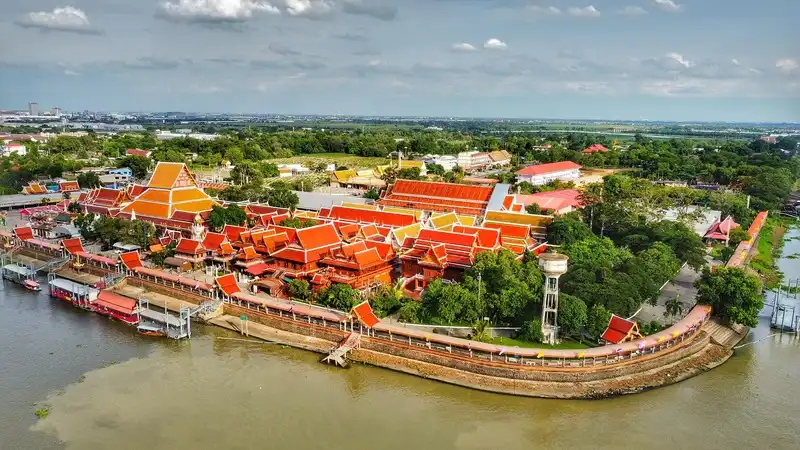
Wat Phanan Choeng Worawihan is one of those Ayutthaya temples you really shouldn’t just drive past, because it’s a living place of faith where history, art, and present-day devotion sit in the same space. The temple stands along the Pa Sak River, on the southern side opposite Ayutthaya Island, in Khlong Suan Phlu Subdistrict, about 5 kilometers from the city center. That location alone gives it a different feel from many sites inside the Historical Park, which are often experienced mainly as ancient ruins. Here, people still come to worship, make merit, fulfill vows, and visit with genuine intention – not simply to take photos and move on.
What makes Wat Phanan Choeng stand out from the very first line of its story is its status as a second-class royal temple (Worawihan) in the Mahanikai order. It is also widely described as a temple that existed before the founding of Ayutthaya. That’s why, as soon as you step inside, it can feel like you’ve entered a “pre-Ayutthaya space” that was later layered with multiple eras of history. Visiting here isn’t only about sacredness; it carries the flavor of walking backward through time while watching devotion unfold in the present.
In legend and chronicle-based narratives, the temple grounds are linked to King Sai Nam Phueng (ruler of Ayodhya), and the temple’s location is tied to the royal cremation of Princess Soi Dok Mak. These accounts also mention an earlier name, “Wat Phrachao Phra Nang Choeng” (or “Wat Phra Nang Choeng”), which later became commonly recognized as “Wat Phanan Choeng.” This layer of storytelling matters because it gives the temple a clear Thai–Chinese dimension from the beginning – not as a modern tourism addition, but as a long-standing memory carried through belief and tradition.
The heart of Wat Phanan Choeng is the main grand vihara, which enshrines a colossal Buddha image known by several names. Locals often call it “Luang Pho To,” many Thai-Chinese worshippers call it “Sam Poo Kong,” and the widely cited formal name is “Phra Phuttha Trai Rattan Nayok.” The image is commonly described as a stucco Buddha in the U Thong style, in the Maravijaya posture, lacquered and gilded. It is so striking in scale that you don’t really begin this temple with “walking around” – you begin with “looking up.” The proportions make you stop automatically, then adjust your eyes to the sheer presence in front of you.
Worshipping Luang Pho To here has a very distinct atmosphere. It isn’t simply paying respects inside a typical hall; it’s standing in a space designed to “hold” the Buddha image within the grand vihara. When you stand in the right spot, the figure fills your view, and you’ll notice ceremonial elements placed in front – such as fans of rank and attendant figures traditionally understood as the chief disciples, modeled in stucco and gilded. Together, they create a composition that feels especially dignified and formal compared with many temples people are used to.
Another layer of the vihara that many visitors overlook is the interior craftsmanship. If you look up at the columns, you’ll notice painted decoration and ornamentation that suggests deliberate artistry meant to make this sacred space feel alive rather than rigid. Along the four walls, there are small niches for many smaller Buddha images set around the hall, often described as numbering 84,000 – echoing the number of dhamma aggregates in Buddhist belief. With that kind of arrangement, being inside the vihara isn’t just about stepping in, bowing, and stepping out; it’s about standing within a carefully composed “visual language of faith” that invites slow, attentive looking.
If you enjoy woodcarving, don’t rush past the front entrance. The doorway is often noted for its high-relief carved wooden doors featuring scrolling vine motifs with raised floral forms – a beautiful example of Ayutthaya-era artistry. Up close, you can see how the carving creates depth and layered dimension rather than a flat surface. That’s one reason Wat Phanan Choeng works so well for travelers who want to “read Ayutthaya in detail,” not just collect landmarks.
Beyond the grand vihara, the temple also has other key points that round out the experience, such as the ubosot, which is commonly described as enshrining five Buddha images (often associated in descriptions with Sukhothai-style aesthetics). There are also additional buildings that give you a varied walking route. If you set aside enough time to explore, the temple can feel like a “small city of devotion” with zones for worship, zones for observing art, and zones of belief where visitors come seeking comfort and support.
One of the clearest expressions of the Thai–Chinese connection is the area associated with “Chao Mae Soi Dok Mak,” often told through a legend of love and cross-cultural ties. This is part of why worshippers here aren’t only from Ayutthaya or even only Thai; many Thai-Chinese devotees and international visitors also come with specific intention. You’ll notice offerings, garlands, incense, and sometimes bilingual cues in certain areas. It’s a kind of living Ayutthaya atmosphere – more a real spiritual place than an outdoor museum.
In broader historical storytelling, Wat Phanan Choeng is frequently mentioned in connection with Chinese communities in the era of trade and travel by sea. There are narratives that link the temple to journeys and maritime worlds, which helps explain why the name “Sam Poo Kong” becomes more than a casual nickname – it can function as a cultural code that frames the temple as a protector for travelers, especially those connected to water routes and sea voyages. Even though the temple is not on the coast, the belief in protection for journeys remains remarkably strong and can still be seen in how people make vows and return to fulfill them.
Another story that gives the temple a deeply emotional place in Ayutthaya memory is the widely repeated belief that, before the fall of Ayutthaya, Luang Pho To shed tears. For many visitors, this legend adds a quiet weight to the experience. Standing before the image can feel not only peaceful, but also faintly heartbreaking – as if you’re facing the living memory of a city that once flourished and once suffered loss.
If you want to experience Wat Phanan Choeng in a way that feels complete, a simple approach is to walk it in three rhythms. First, enter the grand vihara and pay respects with full attention – no need to rush into taking photos. Stand quietly for a moment and let your eyes adjust to the scale and atmosphere. Second, circle back to observe details around the vihara: the columns, decorative elements, the surrounding niches, and the carved doors, so you can see that the temple’s power isn’t only its size, but also its craftsmanship. Third, continue to the areas tied to local belief and the supporting buildings, so your visit carries the full dimension of Buddhism, art, and Thai–Chinese culture in one place.
As for timing, mornings are usually more comfortable for walking, and the softer light helps interior photos look less harsh in contrast. Late afternoons can feel gentler in mood and temperature, too. But if you plan to visit on festivals or major Buddhist holy days, it’s wise to allow extra time – the number of worshippers and the rhythm of on-site activities can change significantly, and some areas may require queuing or moving with the flow of the space.
In terms of etiquette, Wat Phanan Choeng is a temple where people come to worship in earnest, so modest clothing and a quiet voice are especially appropriate inside the grand vihara. If you take photos, do so respectfully – avoid blocking pathways or disturbing those who are praying. If you bring offerings, place them where the temple designates, so the area stays orderly and safe.
Getting There Wat Phanan Choeng Worawihan is located in Khlong Suan Phlu Subdistrict along the Pa Sak River, on the southern side opposite Ayutthaya Island. If you are coming from Wat Yai Chai Mongkhon, a commonly described route is to leave that temple, turn left, and continue for about 1 kilometer – Wat Phanan Choeng will appear on your right. From Bangkok, you can drive in via Asia Road (Highway 32) into Ayutthaya, then use navigation to “Wat Phanan Choeng Worawihan” to avoid unnecessary detours at intersections and one-way sections.
If you arrive by train, you can get off at Ayutthaya Station and then continue by local transport (taxi or public options available at the time) toward the riverside and crossing points near Ayutthaya Island, depending on what is most convenient that day. If you want a classic river-city feel, traveling by boat can also connect several major temples. It’s best to check the latest service routes and piers before you go, so the day stays smooth.
A simple, easy-to-pace itinerary for many visitors is to start at Wat Phanan Choeng in the morning to pay respects to Luang Pho To, then continue to Wat Yai Chai Mongkhon, and later head into Ayutthaya Island for Wat Mahathat and Wat Ratchaburana, finishing at Wat Phra Si Sanphet and Viharn Phra Mongkhon Bophit. You can also reverse the order – it mainly depends on the light you want and the rhythm you prefer for photography.
| Summary | A second-class royal temple (Worawihan) in the Mahanikai order along the Pa Sak River opposite Ayutthaya Island. Best known for the grand vihara enshrining “Luang Pho To” or “Phra Phuttha Trai Rattan Nayok” (known among Chinese worshippers as “Sam Poo Kong”). A major Thai–Chinese spiritual center with layered history, art, and living devotion, ideal for a visit focused on sincere worship and close observation of craftsmanship. |
| Area | Khlong Suan Phlu Subdistrict, Phra Nakhon Si Ayutthaya District, Phra Nakhon Si Ayutthaya Province (along the Pa Sak River, south side opposite Ayutthaya Island) |
| Address | Khlong Suan Phlu Subdistrict, Phra Nakhon Si Ayutthaya District, Phra Nakhon Si Ayutthaya Province 13000 |
| Highlights | Grand vihara and the monumental Luang Pho To (Phra Phuttha Trai Rattan Nayok), revered nationwide; legends describing the temple as pre-Ayutthaya and linked to Princess Soi Dok Mak; Thai–Chinese faith atmosphere (Sam Poo Kong); interior details such as many small Buddha niches and carved wooden doors; convenient access near Wat Yai Chai Mongkhon and onward routes into Ayutthaya Island’s main temple circuit. |
| Abbot (Latest) | Phra Thep Rattanakorn (Waew Katasaro) |
| Open Days | Daily |
| Opening Hours | Approximately 08:00 – 17:00 (hours may change depending on temple announcements or on-site activities; please check before you go) |
| Fees | Generally free entry (donations are welcomed) |
| Facilities | Worship areas inside the grand vihara; donation points and offering shops (depending on temple arrangements); parking area within the temple grounds (may vary by time and events) |
| Contact Number | 035-243-867 |
| Current Status | Open for visits and worship as usual |
| Nearby Attractions (Approx. Distance) |
1) Wat Yai Chai Mongkhon – approx. 2 km
2) Ayothaya Floating Market – approx. 2 km
3) Pom Phet Fortress – approx. 4 km
4) Chao Sam Phraya National Museum – approx. 6 km
5) Wat Mahathat – approx. 6 km
6) Wat Ratchaburana – approx. 6 km
7) Wat Phra Si Sanphet – approx. 6 km
|
| Popular Restaurants Nearby (Distance + Phone) |
1) Café Kantary Ayutthaya – approx. 6 km, Tel. 035-337-177
2) Sala Ayutthaya Eatery and Bar – approx. 6 km, Tel. 035-242-588
3) Burinda Thai Cuisine – approx. 6 km, Tel. 035-241-678
4) Baan Mai Rim Nam – approx. 6 km, Tel. 035-232-079
5) California Steak (Kantary Hotel) – approx. 6 km, Tel. 035-337-177
|
| Popular Accommodations Nearby (Distance + Phone) |
1) Kantary Hotel Ayutthaya – approx. 6 km, Tel. 035-337-177
2) Krungsri River Hotel – approx. 7 km, Tel. 035-244-333
3) iuDia on the River – approx. 6 km, Tel. 086-080-1888
4) sala ayutthaya – approx. 6 km, Tel. 035-242-588
5) Phuttal Residence – approx. 6 km, Tel. 035-242-525
|
Frequently Asked Questions (FAQ)
Q: Where is Wat Phanan Choeng Worawihan located?
A: The temple is in Khlong Suan Phlu Subdistrict along the Pa Sak River on the southern side opposite Ayutthaya Island. It’s a short trip from Wat Yai Chai Mongkhon and connects easily to the main temple circuit on Ayutthaya Island.
Q: What is the royal status of Wat Phanan Choeng?
A: Wat Phanan Choeng is a second-class royal temple (Worawihan) in the Mahanikai order.
Q: What is the official name of Luang Pho To at this temple?
A: It is widely referred to by the formal name “Phra Phuttha Trai Rattan Nayok.” Locals often call it “Luang Pho To,” and many Chinese worshippers call it “Sam Poo Kong.”
Q: Besides the main Buddha image, what should visitors look for inside the grand vihara?
A: Look closely at the surrounding niches of smaller Buddha images, interior decorative details on columns and surfaces, and the carved wooden doors that are often praised as a beautiful example of Ayutthaya craftsmanship.
Q: What time does Wat Phanan Choeng open?
A: The hours are often cited as approximately 08:00 – 17:00 daily, but they can change depending on temple announcements or activities, so it’s best to check before you go.
Q: How long should I plan to spend at Wat Phanan Choeng?
A: For worship and key points, plan around 45 minutes to 1 hour. If you want to explore the temple grounds and observe details inside the vihara more thoroughly, allow 1 to 2 hours at an unhurried pace.
Q: When is the best time to visit for comfortable walking and good photos?
A: Morning is usually more comfortable and the light helps interior details appear clearer. Late afternoon can be calmer with softer tones, but on weekends or festivals you should allow extra time due to larger crowds.
Q: Where should I go next after visiting Wat Phanan Choeng?
A: You can continue nearby to Wat Yai Chai Mongkhon and Ayothaya Floating Market, or head into Ayutthaya Island to visit major sites such as Wat Mahathat, Wat Ratchaburana, Wat Phra Si Sanphet, and Viharn Phra Mongkhon Bophit for a full-day itinerary.
 Wat Phanan Choeng Worawihan Map
 Category:
  Group:
  Last Update: 2 MonthAgo
Comment
 Nearby Attractions
| Keyword (Advance) |
 Region
|
 Phranakhon Si Ayutthaya(