
 Home
Home North(
 Chiang Mai(


Rating: 4.4/5 (5 votes)
 |
|  Map
Map 
 Have Map
  No Map
Phranakhon Si Ayutthaya attractions
Attractions in Thailand
Open Days: Daily
Opening Hours: Approximately 08:00 – 17:00 (Hours may change depending on temple announcements or on-site activities; checking before you go is recommended)
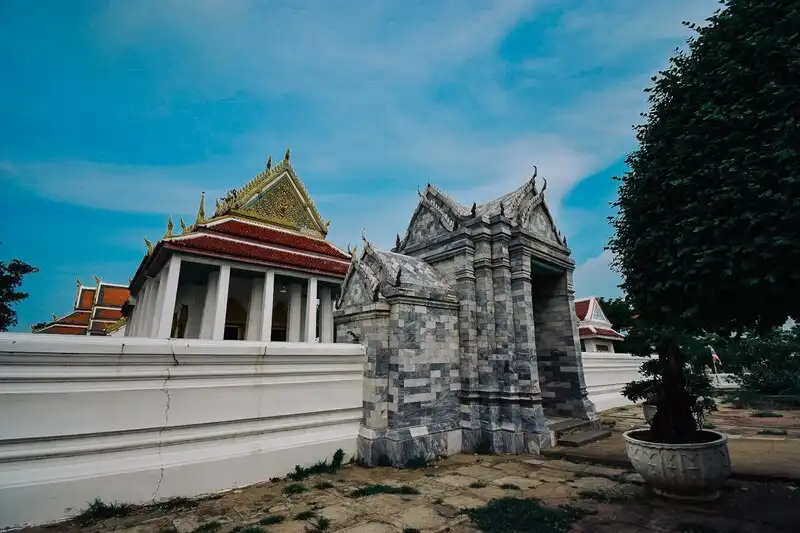
Wat Boromwong Isarawararam Worawihan is a temple with layered stories—one of those places where history lovers can “see scenes in their head” while walking through the real site. Originally, this area was a community temple known as “Wat Thale Ya” or “Wat Thamle Ya,” a name tied to its setting in the middle of grassland. During the rainy season, this area was often flooded year after year. The image of a quiet temple in open fields, repeatedly nourished and inundated by water, kept the old name alive for a long time. Over time, however, Wat Thale Ya fell into a period of abandonment. Many monastic structures collapsed, leaving only a “chedi mound” as a sign that a temple once stood here.
The charm of this temple does not begin with grandeur in the way major landmark temples inside the historical park often do. Instead, it begins with “coming back to life.” With the intention of supporting Buddhism and ensuring its long-term stability, Somdet Phra Chao Boromwong Thoe Chao Fa Mahamala, Krom Phraya Bamrapporapaks, recognized that this deserted temple stood in a calm and secluded environment suitable for monks and novices to reside and practice. He therefore initiated a serious restoration of Wat Thale Ya—so extensive that it was nearly equivalent to “rebuilding the entire temple.” The work began during the reign of King Rama IV, and it was completed in 2418 BE during the reign of King Rama V. The temple was then presented as a royal monastery, and the king granted the new name “Wat Boromwong Isarawararam Worawihan.”
If you like history told in a clear sequence, this temple fits a strong narrative framework: “once abandoned – revived through restoration – elevated to a royal monastery.” Each phase also reflects Thai society in different eras. During the period of abandonment, we can sense how vulnerable structures become during times of transition or weakening central authority. During the revival under Rama IV, we see the role of the royal elite in supporting religion and monastic education. Then, when the restoration was completed and the new name was granted under Rama V, we see the emerging modern state organizing the Sangha and formalizing royal-monastery status in a systematic way.
What makes many visitors linger at Wat Boromwong is the chance to walk with intention and study the temple’s internal art, rather than simply checking in and moving on. Here, accounts often mention groups of Buddha images depicted in royal regalia, complete with detailed ornaments such as crowns, side-flaps, and other decorative elements—forms not commonly encountered along typical tourist temple routes. The temple is also associated with a “reclining Buddha in royal regalia,” a piece often described as rare to see. Details like these mean that exploring Wat Boromwong goes beyond observing buildings; it becomes a way to read “belief and symbolism” through artistic language.
Another layer that adds meaning to a visit is its association with King Rama V. The temple is often said to hold historical connections to him, including a revered statue in a viharn, and parts of the site sometimes described as relating to the preservation of images or information connected to royal history during certain periods of temple stewardship. Narratives like these set Wat Boromwong apart from many Ayutthaya temples that people remember mainly as “old brick ruins.” This is a temple where early-to-mid Rattanakosin time layers overlap the older landscape, reminding us that Ayutthaya did not simply end with the fall of the capital—its spaces continued forward through restoration, meaning-making, and changing status in later eras.
Atmosphere-wise, Wat Boromwong is often seen as a temple suited for visitors who want to walk quietly, without rushing or competing with crowds. You can slowly collect details, pause to observe the craftsmanship, and move from point to point as though reading a book page by page. In the morning, light tends to bring out surface textures and decorative details with clear depth—no filters needed. Late afternoon also works well for those who prefer softer photo tones and a less demanding temperature.
If you want to understand the temple through its “place context,” keep the old name “Wat Thale Ya” in mind and walk while imagining the former landscape—open fields repeatedly flooded each year. That image helps explain why a site that once lay abandoned, leaving only a chedi mound, was later chosen for revival as a place for residence and spiritual practice. The quietness here is not emptiness; it is a quality that makes the place “suitable” for practice. And once the temple was elevated to a royal monastery, that quietness shifted in meaning—becoming “a calm that is cared for,” rather than the silence of neglect.
If you come to worship and truly absorb the atmosphere, it’s worth allowing at least 45 minutes to 1.5 hours for a complete experience. Beyond the main points, you may find yourself stopping to study details of royal-style ornaments on Buddha images and other spatial elements without realizing how much time has passed. If you are a photographer, try spending a moment observing with your eyes before lifting the camera; “reading the direction of light” often produces better results than shooting immediately, especially in the morning when light emphasizes patterns and textures so well.
In terms of religious activity, Wat Boromwong is a royal monastery. News of significant events—such as royal kathin robe ceremonies held in some years—reflects the temple’s role as a center of religious proceedings at a provincial or state level. If you enjoy cultural experiences, consider checking the kathin season or major Buddhist holy days, because the atmosphere can differ greatly from ordinary days: the number of visitors, the way spaces are arranged, and the rhythm of devotion becomes more visibly “alive.”
Getting There Wat Boromwong Isarawararam Worawihan is located in Suan Phrik Subdistrict, Phra Nakhon Si Ayutthaya District, Phra Nakhon Si Ayutthaya Province, near the Ayutthaya Elephant Kraal area and the main historical landmarks on Ayutthaya Historical Island. If driving from Bangkok, you can take Highway 32 (Asia Road) toward Ayutthaya and continue along local routes into the Suan Phrik area. Using navigation with the temple name (Thai or English) is the most convenient option, as the city streets and tourist-connection roads include multiple intersections, and traffic can be heavy on weekends and holidays.
If you want an itinerary that flows smoothly, Wat Boromwong fits well into a “Ayutthaya cultural route without crowds”: start the morning at a calmer temple where you can walk with focus, then continue to more popular spots later in the day, such as major temples inside the historical park or museums. The advantage is that you avoid beginning the day by competing for parking at top tourist landmarks, and you ease into the city in a way that feels gentle rather than abrupt.
Modest attire is recommended in line with temple etiquette, especially if you plan to worship or enter areas where monks and merit-makers are present. While walking, avoid climbing or touching fragile structures, as some artistic features are highly detailed and can be damaged by repeated contact. Respectful visiting is the most practical way to help the temple’s beauty remain for future generations.
| Site Summary | A royal monastery in Phra Nakhon Si Ayutthaya Province. Formerly known as “Wat Thale Ya / Wat Thamle Ya,” it once became abandoned before undergoing major restoration beginning in the reign of King Rama IV and completing in 2418 BE under King Rama V. Noted for its narrative of revival from a deserted temple and for royal-regalia Buddha imagery, including a reclining Buddha in royal regalia often described as rare to encounter. Ideal for calm, detail-oriented visiting. |
| Area / Location | Suan Phrik Subdistrict, Phra Nakhon Si Ayutthaya District, Phra Nakhon Si Ayutthaya Province (near the Ayutthaya Elephant Kraal area) |
| Address | Suan Phrik Subdistrict, Phra Nakhon Si Ayutthaya District, Phra Nakhon Si Ayutthaya Province 13000 |
| Key Highlights | The original name “Wat Thale Ya / Wat Thamle Ya” linked to a flood-prone grassland setting, the historical revival from an abandoned temple into a royal monastery, royal-regalia Buddha images with intricate ornamentation, and a reclining Buddha in royal regalia often described as rare to see, plus a quiet atmosphere suited to unhurried walking and detailed photography |
| Administrator / Abbot (Latest) | Phra Yantrilok |
| Open Days | Daily |
| Opening Hours | Approximately 08:00 – 17:00 (Hours may change depending on temple announcements or on-site activities; checking before you go is recommended) |
| Admission Fee | Generally free of charge (donations are commonly made according to personal faith) |
| Facilities | Worship areas and walkable paths within the temple grounds, parking area (availability depends on temple management at different times) |
| Contact Number | 081-832-6204 |
| Current Status | Open for visits and religious activities as usual |
| Nearby Attractions (Approximate Distance) |
1) Ayutthaya Elephant Kraal – approx. 2 km
2) Wat Maheyong – approx. 5 km
3) Wat Mahathat – approx. 7 km
4) Wat Ratchaburana – approx. 7 km
5) Wat Phra Si Sanphet – approx. 8 km
6) Viharn Phra Mongkhon Bophit – approx. 8 km
7) Chao Sam Phraya National Museum – approx. 8 km
|
| Nearby Restaurants (Distance + Phone) |
1) Krua Mae Lim – approx. 7 km Tel. 035-242-242
2) Baan Mai Rim Nam – approx. 8 km Tel. 035-232-079
3) Sala Ayutthaya Eatery and Bar – approx. 9 km Tel. 035-242-588
4) The Summer House Ayutthaya – approx. 8 km Tel. 065-924-2424
5) Burinda Thai Cuisine – approx. 9 km Tel. 035-241-678
|
| Nearby Accommodations (Distance + Phone) |
1) Krungsri River Hotel – approx. 7 km Tel. 035-244-333
2) Kantary Hotel Ayutthaya – approx. 6 km Tel. 035-337-177
3) Sala Ayutthaya – approx. 9 km Tel. 035-242-588
4) iuDia on the River – approx. 9 km Tel. 035-241-123
5) Phuttal Residence – approx. 9 km Tel. 035-242-525
|
Frequently Asked Questions (FAQ)
Q: Where is Wat Boromwong Isarawararam Worawihan located?
A: The temple is located in Suan Phrik Subdistrict, Phra Nakhon Si Ayutthaya District, Phra Nakhon Si Ayutthaya Province, near the Ayutthaya Elephant Kraal area. It is also convenient for connecting a trip to the main historical landmarks on Ayutthaya Historical Island.
Q: What was the temple’s original name, and why was it called “Wat Thale Ya”?
A: It was originally a community temple known as “Wat Thale Ya” or “Wat Thamle Ya,” because it stood amid grassland and the surrounding area was often flooded during the rainy season year after year, which is why the old name remained widely used.
Q: How was Wat Boromwong revived from an abandoned temple?
A: Accounts mention that Somdet Phra Chao Boromwong Thoe Chao Fa Mahamala, Krom Phraya Bamrapporapaks, initiated a major restoration beginning in the reign of King Rama IV. The work was completed in 2418 BE under King Rama V, after which the temple was presented as a royal monastery and granted its current name.
Q: What is a rare highlight at Wat Boromwong?
A: One highlight often mentioned is the group of Buddha images depicted in royal regalia with intricate ornamentation, as well as a “reclining Buddha in royal regalia,” a form that many people do not commonly encounter at mainstream tourist temples.
Q: What time does Wat Boromwong open, and when is the best time to visit?
A: It is commonly referenced as open daily from approximately 08:00 – 17:00. Morning visits are often best for comfortable walking and clearer visibility of artistic details, though checking ahead is recommended in case of schedule changes.
Q: How long should I plan to spend visiting Wat Boromwong?
A: For a general walk-through, about 45 minutes to 1 hour is usually sufficient. If you plan to study the royal-regalia Buddha images and take photos, allowing 1 to 1.5 hours at an unhurried pace is recommended.
Q: Where should I go next after visiting Wat Boromwong?
A: You can continue either to nearby sites such as the Ayutthaya Elephant Kraal area, or to Ayutthaya Historical Island landmarks including Wat Mahathat, Wat Ratchaburana, Wat Phra Si Sanphet, Viharn Phra Mongkhon Bophit, and the Chao Sam Phraya National Museum for a full day that blends temples and museum context.
 Wat Boromwong Isarawararam Worawihan Map
 Category:
  Group:
  Last Update: 2 MonthAgo
Comment
 Nearby Attractions
| Keyword (Advance) |
 Region
|
 Phranakhon Si Ayutthaya(