
 Home
Home North(
 Chiang Mai(


Rating: 4.5/5 (4 votes)
 |
|  Map
Map 
 Have Map
  No Map
Chiang Mai attractions
Attractions in Thailand
Open Days: Every day (the museum is usually open around 09:00–16:00; however, it may be closed on Asalha Puja Day, Makha Puja Day, Visakha Puja Day, and other important Buddhist holy days at the temple’s discretion)
Opening Hours: Approximately 09:00–16:00
Wat Ket Karam Museum is located within Wat Ket Karam in the Wat Ket community on the eastern bank of the Ping River in Chiang Mai. Wat Ket Karam is an ancient temple founded in 1971 BE during the reign of King Sam Fang Kaen of the Lanna Kingdom. The Wat Ket area has long been an important zone, both economically as a river trading hub and as a residential neighborhood for people of many backgrounds — local Lanna residents, Chinese merchants, and foreign traders — whose architectural styles and ways of life have left visible traces up to the present day.
Today, the Wat Ket area has become both a quiet residential neighborhood and a cultural riverside district of Chiang Mai. Visitors can stroll around the temple, old shophouses, traditional wooden houses, riverside cafes, and boutique hotels converted from old warehouses and buildings along the Ping River. A visit to Wat Ket Karam Museum is therefore not only about viewing objects on display, but also about absorbing the atmosphere of an old community that is still very much alive.
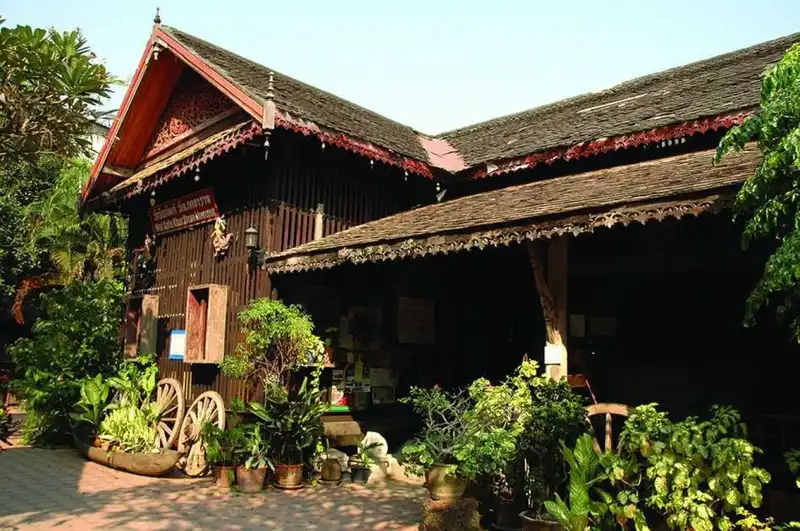
Wat Ket Karam Museum was founded on 19 December 1999 through the cooperation of the local community and temple devotees, under the care of the Wat Ket Karam temple committee. The museum building was originally the monk’s residence of Phra Khru Chai Sinwimon (2429–2500 BE), a former abbot and an important senior monk of the temple. Locals affectionately called this wooden residence “Hong Tu Chao Luang”. Converting this old wooden monastic residence into a community museum is like continuing the original role of the place, which once served both as a dwelling of a revered monk and a spiritual center of the community.
Before establishing the museum, the Wat Ket Karam committee visited Rong Meng Temple Museum to study its exhibition style. They realized that the Wat Ket community also possessed many culturally significant objects — household items, old photographs, documents, and items reflecting traditional Lanna life and the riverside community along the Ping River. If these were not systematically preserved, they might gradually disappear. This led to the idea of collecting and exhibiting these objects in the form of a community museum, as a learning space and memory archive for the people of Wat Ket.
Upon entering the museum building, the first exhibition area is a large open hall with no partitioned rooms. Objects are grouped according to their “type” rather than by walls, so the space naturally divides itself. For example, on the right-hand side from the entrance is the area for the altar and Burmese-style Buddha images, most of which were donated to the temple in recent years and reflect historical religious and cultural ties between Lanna and Burma. On the left-hand side are groups of traditional household utensils and Lanna musical instruments arranged side by side.
Many of the household utensils are made of earthenware, neatly arranged on simply built wooden shelves. Some pieces are hung from wooden frames in their original manner of use, such as hanging earthen jars, woven baskets, and containers for household items. Beneath or beside each object is a label naming the donor and the local name of the object, helping visitors understand its function while also revealing the close bond between community members and the items they offered to the temple.
Next to the household section is the musical instrument area, featuring traditional Lanna instruments such as salo, seung, pooja drum, and pi, as well as central Thai instruments like the ranat (xylophone) and gong circle. Bringing these two musical traditions together in one space shows how the temple and Wat Ket community have welcomed outside cultures while harmoniously blending them with Lanna roots. Before entering the instrument area, there is a low wooden “fence” about hip height marking off the zone, signaling the need to maintain some distance from these fragile objects.
Beyond the front exhibition hall, there are three smaller exhibition rooms continuing from the main hall. Each room reflects different dimensions of “memory” and “objects” in its own way.
The first room is a large space packed with such a variety of objects that it feels more like a storage room than a formal gallery. Inside are layers of old textiles arranged in glass cabinets, old religious and community-related books, glassware, bowls and chinaware, hanging cloth fans on the ceiling, old water pumps, and other everyday items that, although not centuries old, have fallen out of use. Having all these items gathered in one room invites visitors to reconsider what “antique objects” really mean — perhaps not only those hundreds of years old, but also everyday objects that have disappeared from modern life.
The second room also displays a wide range of objects but focuses more on items that tell stories of belief systems and social connections within the Lanna community. The room contains old photographs, Buddha images, votive tablets, Burmese ceremonial fans (tala pat), Lanna literature, wooden, stone, and stucco deities, Chinese figurines, traditional weighing scales, as well as old cassette tapes and vinyl records. The dense mix of items from different cultures and eras allows visitors to feel the “cultural crossroads” nature of Wat Ket, which historically absorbed influences from Lanna, Chinese, Burmese, and Western worlds.
The third room is located at the very back of the building, smaller than the others, about 2x4 meters, with a door clearly separating it from the rest. This room focuses mainly on cloth and textiles: hanging flags, dragon banners, kapi (textual) cloths, and traditional garments. Some textiles are stored in glass cabinets, while many others are stretched on the walls so their patterns are fully visible. One wall bears a detailed list of the objects on display and their origins, most of which are related to Lanna kings and ruling dynasties. This is the only room in the museum with such a formal inventory, allowing visitors to clearly see the relationship between textiles, royal regalia, and the power structures of old Lanna society.
A walk through Wat Ket Karam Museum is therefore not simply about “looking at old things”, but about gradually immersing oneself in multiple layers of memory — memories of a riverside trading district, of families entrusting their ancestors’ belongings to the temple, and of the city itself as reflected in old photographs and local stories. The straightforward, unpolished style of display, which does not hide the “crowded” or slightly unorganized feel of the objects, instead makes visitors feel as though they are stepping into an old relative’s house rather than a rigid, formal museum.
After leaving the museum building, visitors can continue exploring the grounds of Wat Ket Karam itself. Highlights include the main viharn with its layered roof and intricate woodcarving and stucco work, the chedi enshrining the Buddha’s relics, and other buildings showcasing a beautiful blend of Lanna and Burmese architectural styles. Walking out to Charoenrat Road along the Ping River, you will find old shophouses, traditional wooden homes, cafes, and riverside restaurants. A visit to Wat Ket Karam Museum thus becomes a travel experience that connects religion, history, and contemporary community life in one continuous route.
Getting to Wat Ket Karam Museum is quite convenient from downtown Chiang Mai, as the temple is located on Charoenrat Road on the east bank of the Ping River. From Warorot Market (Kad Luang) or the Night Bazaar area, you can walk across Chansom or Nakornping Bridge and follow the river toward the temple within a short time. Alternatively, you can take red songthaews, tuk-tuks, or taxis directly to “Wat Ket Karam”. It suits both travelers who enjoy walking through local neighborhoods and those who prefer a more relaxed journey.
| Name | Wat Ket Karam Museum, inside Wat Ket Karam, Wat Ket Community, on the eastern bank of the Ping River, Chiang Mai Province |
| Location | Charoenrat Road, Wat Ket Subdistrict, Mueang Chiang Mai District, Chiang Mai Province, near Warorot Market (Kad Luang) and the Night Bazaar area |
| Key Features | A community museum housed in the old monk’s residence “Hong Tu Chao Luang”, displaying antique objects, traditional household items, Lanna musical instruments, old textiles, photographs, and items that tell the story of Wat Ket Community and Chiang Mai city along the Ping River. |
| Period | Wat Ket Karam Temple was founded in 1971 BE during the reign of King Sam Fang Kaen of the Lanna Kingdom. The museum building was later established as a community museum on 19 December 1999. |
| Key Evidence | The old monk’s residence “Hong Tu Chao Luang” of Phra Khru Chai Sinwimon, religious objects, traditional household items, Lanna musical instruments, ritual flags and textiles, old photographs of Chiang Mai, and historical documents and books related to Lanna and the riverside community along the Ping River. |
| Name Origin | The museum is named after “Wat Ket Karam”, reflecting the temple’s role as the spiritual center of the Wat Ket community and as a place that preserves memories of the people living along the Ping River. |
| How to Get There | From downtown Chiang Mai, visitors can reach Wat Ket Karam by red songthaew, tuk-tuk, or taxi, as it is close to Warorot Market and the Night Bazaar. On foot, you can cross Chansom or Nakornping Bridge from the Warorot Market side and walk along Charoenrat Road to the temple, a distance of about 0.5–1 km. |
| Nearby Attractions & Distance | - Warorot Market (Kad Luang) and Ton Lam Yai Market, about 0.5 km away. Contact (Kad Luang): +66 53 232 592 - Chiang Mai Night Bazaar, about 1.0–1.2 km away (one of Chiang Mai’s main night-time shopping and dining areas) - Chansom and Nawarat Bridges over the Ping River, about 0.5–1.0 km away, ideal for river views and the old town atmosphere - Chang Moi Road area — an old commercial neighborhood about 1.0 km away, featuring old shophouses and former warehouses of wealthy merchants - Wat Ket Riverside Community (Wat Ket Community), directly connected by walking from the temple, full of traditional wooden houses, cafes, and small local galleries |
| Popular Restaurants Nearby (Distance / Phone) | - Lung Khajohn Wat Ket, a local steamed rice dumpling stall on Charoenrat Road opposite Wat Ket Karam, about 0.1 km away. Tel. +66 86 917 9887 or 053 243 157 - The Riverside Bar & Restaurant, a riverside bar and restaurant on Charoenrat Road, about 0.5 km away. Tel. +66 53 243 239 - David's Kitchen, a fusion restaurant near the Ping River in the Wat Ket area, about 1.0–1.5 km away. Tel. +66 91 068 1744 - Other restaurants and cafes in the Wat Ket community and along the river (such as Thai-Chinese eateries and local cafes) within roughly 0.2–1.0 km, ideal for relaxing by the river after visiting the museum |
| Popular Accommodation Nearby (Distance / Phone) | - RarinJinda Wellness Spa Resort, a boutique riverside resort in the Wat Ket area, about 0.2–0.3 km away. Tel. +66 53 247 000 or +66 53 303 030 - Cross Chiang Mai Riverside, a luxury riverside resort on the Ping River, about 0.4–0.6 km away. Tel. +66 53 931 999 - Rimping Village, a boutique hotel on Chiang Mai–Lamphun Road in the Wat Ket area, about 0.8–1.0 km away. Tel. +66 53 243 915 to 6 - Gategaa Village, a local-style accommodation in the Wat Ket community, about 0.7–1.0 km away. Tel. +66 88 894 4777 - Other medium and small hotels/guesthouses around the Wat Ket community and riverside area within about 0.3–1.5 km, suitable for those wishing to stay close to the museum and Kad Luang area |
| Facilities | Temple courtyard areas for resting and photography, an indoor exhibition space in the museum building, toilets within the temple, and shops and restaurants within walking distance in the Wat Ket community and along the Ping River. |
| Fees | Entry to the museum is generally free, with donations welcome according to visitors’ wishes. However, it is recommended to check the latest information with the temple or tourism authorities before visiting in case of any changes in policy. |
| Current Status | The museum remains open as a community museum of Wat Ket Karam and is part of the cultural riverside walking route along the Ping River. Visitors often combine a museum visit with a stroll around Kad Luang and the Night Bazaar. |
| Contact Number | Contact numbers in the Wat Ket area and museum (from tourism sources): Tel. +66 53 248 604, +66 53 248 607, +66 53 204 273 (it is advisable to call ahead to confirm opening hours before visiting). |
Frequently Asked Questions (FAQ)
Q: When is Wat Ket Karam Museum open?
A: The museum is generally open during the daytime, approximately 09:00–16:00, on most days. However, it may be closed on important Buddhist holy days or during renovation. It is recommended to check the latest information with the temple or local tourism office before visiting.
Q: Is there an entrance fee for Wat Ket Karam Museum?
A: There is usually no official entrance fee. Visitors are welcome to make donations according to their wishes, which help support the maintenance of the museum and temple grounds. If you plan to visit as a group, it is a good idea to contact the temple in advance.
Q: What is special about Wat Ket Karam Museum?
A: The museum’s main highlight is its role as a living community museum that reflects real everyday life in the Wat Ket riverside neighborhood. Most exhibits are everyday household items, Lanna musical instruments, ritual textiles and flags, old photographs, and objects donated by local residents. The atmosphere feels more like walking through an old family home in the community than visiting a formal museum.
Q: How much time should I allow to visit the museum?
A: A brief visit takes about 30–45 minutes. However, if you want to read the labels, look closely at each object, and also explore Wat Ket Karam temple and the surrounding community, you should allow at least 1–2 hours to fully enjoy the area.
Q: Is it easy to travel from downtown Chiang Mai to Wat Ket Karam Museum?
A: Yes, getting there is quite easy. Wat Ket Karam is not far from Kad Luang and the Night Bazaar. You can take a red songthaew, tuk-tuk, or taxi and ask to be dropped off at Wat Ket Karam. Alternatively, you can walk across the bridge from Warorot Market and follow Charoenrat Road along the Ping River to the temple, enjoying the riverside scenery along the way.
Q: Are there restaurants and accommodation near the museum?
A: The area around Wat Ket Karam and the Wat Ket community offers many options, including local eateries such as Lung Khajohn Wat Ket, riverside restaurants and bars like The Riverside Bar & Restaurant, and fusion dining at David's Kitchen. There is also a wide range of accommodation, from luxury riverside resorts like RarinJinda Wellness Spa Resort and Cross Chiang Mai Riverside to boutique hotels and small guesthouses within walking distance.
 Tel: 053204273
 Wat Ket Karam Museum Map
 Category:
  Group:
  Last Update: 3 MonthAgo
Comment
 Nearby Attractions
| Keyword (Advance) |
 Region
|
 Muang Chiang Mai(