
 Home
Home North(
 Chiang Mai(


Rating: 4.3/5 (6 votes)
 |
|  Map
Map 
 Have Map
  No Map
Chiang Mai attractions
Attractions in Thailand
Open Days: Daily
Opening Hours: 06.00–18.00
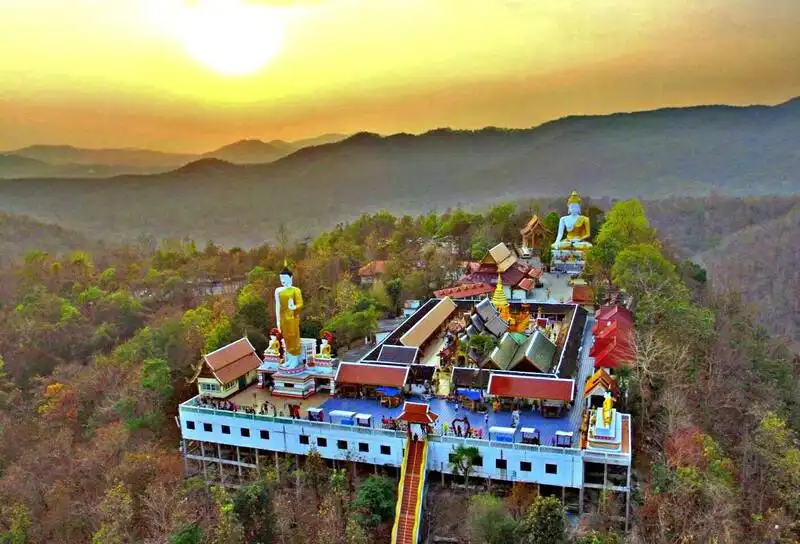
Wat Phra That Doi Kham is one of Chiang Mai’s most revered temples, long respected by local residents and widely known among visitors as a place of faith, reflection, and quiet devotion. The temple is located in Mae Hia Subdistrict, Mueang Chiang Mai District, on a hillside to the southwest of the old city. It can be reached via the irrigation canal road, where clear signposts guide visitors across the canal toward Mae Hia and up the winding road leading to Doi Kham.
Getting There From Chiang Mai Old City or the city moat area, visitors typically drive toward Mae Hia or Hang Dong and follow the canal-side road, which is considered the most convenient route with continuous directional signage. The final section of the journey ascends the hillside and includes several gentle curves, so moderate speed and caution are advised. Both cars and motorcycles can reach the parking area near the top. On weekends or during religious festivals, arriving early in the morning is recommended to avoid congestion on the uphill road. For those who prefer not to drive, taxis, ride-hailing services, or private car rentals with drivers offer a comfortable alternative, as the temple is located relatively close to the city center.
The appeal of visiting Doi Kham extends beyond worship alone. The journey upward gradually transitions from urban neighborhoods into a quieter natural setting, creating a sense of separation from the city below. On clear days, parts of the temple grounds offer distant views over Chiang Mai, especially in the early morning or late afternoon. The cool hillside breeze and open surroundings naturally slow one’s pace, making the temple a place where many locals come not only to pray, but also to rest the mind.
From an architectural perspective, the temple reflects the traditional Lanna character of northern Thailand. The layout follows the natural slope of the hill, with structures arranged in ascending levels. The chedi enshrining the sacred relics serves as the spiritual focal point, while surrounding viharns and ceremonial spaces accommodate communal worship. Several open courtyards and viewpoints are integrated into the complex, allowing the temple to feel spacious even during busy periods. Walking through the grounds often feels like a gradual ascent toward calm and contemplation rather than a single destination.
Historically, Wat Phra That Doi Kham was abandoned for a long period. In 1966, the site gained renewed attention when villagers discovered a number of ancient artifacts during excavation, including Phra Rod Luang amulets, a large gilded sandstone Buddha image, and Phra Sam Mor clay amulets. These relics were subsequently enshrined within the temple, confirming the site’s long-standing sacred status. In more recent history, the temple also served as a visual landmark used by Thai Airways pilots when approaching Chiang Mai International Airport.
The legend of Phra That Doi Kham traces its origins back to the Buddha’s lifetime. According to local tradition, when the Buddha was over fifty years old, he journeyed northward accompanied by arahant monks and Indra. After resting near what is now the site of Wat Chedi Liam, he continued westward to Doi Kham, where three ogres—father, mother, and child—were said to dwell, surviving on human and animal flesh.
When the ogres first encountered the Buddha and his followers, they intended to seize them as food. However, the Buddha extended compassion and calmed their minds, inspiring deep reverence. The male ogre was named Jikham, and the female Ta Khiao. Unable to fully observe the Five Precepts, they requested permission to consume human flesh twice a year. The Buddha refused and redirected them to seek the city ruler’s consent for the consumption of animal flesh instead, which was granted.
This belief later became intertwined with ancient Lanna guardian-spirit traditions. Rituals involving the sacrifice of a white buffalo for Pu Sae at the foothills of Doi Suthep and a black buffalo for Ya Sae at the base of Doi Kham symbolized the coexistence of ancestral spirit beliefs and Buddhism. These ceremonies were understood not as acts of violence, but as symbolic offerings intended to maintain balance and protection over the city.
When the ogres’ child later sought ordination, the Buddha preached the Dhamma and bestowed hair relics upon them. These relics were enshrined in an emerald crystal reliquary. Shortly afterward, a miraculous sign occurred: heavy rain fell continuously for three days and nights, and the raindrops transformed into streams of gold flowing into a cave. This cave became known as Tham Kham, or the Golden Cave, from which Doi Kham derives its name.
The Buddha is also said to have left a footprint on a stone platform near the eastern side of Doi Kham. Over time, the stone is believed to have sunk into the earth, reflecting a Lanna worldview in which sacred presence does not always remain physically visible, but endures through memory and faith.
The construction of a chedi to enshrine the sacred relics took clearer form during the era of Queen Chamadevi around 1230 CE. She ordered her two sons, Prince Mahantayot and Prince Anantayot, to build a small stupa on Doi Kham to house the emerald reliquary. The queen prayed that the site remain quiet and untouched until the destined time foretold by the Buddha, when the relic would flourish. This vow is believed to explain why the temple repeatedly fell into abandonment over the centuries.
In 1966, when the ancient chedi collapsed, extensive excavation revealed numerous relics and amulets beneath its base. A deep shaft was discovered beneath the structure, showing unusual movement and soil displacement. Local belief held that protective spells guarded hidden treasures below. The shaft was sealed, and a new chedi was constructed above it, marking the beginning of the temple’s modern restoration.
Today, Wat Phra That Doi Kham is under the care of Phra Khru Sunthorn Jetiyaruk, the current abbot. The temple remains one of the most important sacred sites in Chiang Mai, continuously visited by devotees and travelers. Each year, the temple hosts the Phra That Bathing Ceremony on the eighth waning day after Visakha Bucha Day, known as Atthami Bucha Day. The event includes ritual bathing of the relic, offerings at the Queen Chamadevi monument, and alms-giving ceremonies, reflecting the enduring bond between the temple and the Mae Hia community.
For visitors, Wat Phra That Doi Kham offers more than a religious destination. It combines ancient legend, historical continuity, and a peaceful hillside atmosphere that encourages unhurried movement and quiet reflection. In favorable weather, the openness of the grounds and the gentle pace of walking naturally turn a simple visit into a meaningful experience.
| Name | Wat Phra That Doi Kham (Wat Suwannabanphot) |
| Location | Mae Hia Subdistrict, Mueang Chiang Mai District, Chiang Mai Province |
| Key Characteristics | Hillside Lanna-style temple, sacred relic chedi, viewpoints over Chiang Mai, major spiritual site for locals |
| Period | Lanna era, with legends linked to Hariphunchai and Queen Chamadevi |
| Key Evidence | Artifacts discovered in 1966, including ancient amulets and a chedi associated with hair relics of the Buddha (according to legend) |
| Name Origin | Derived from “Doi Kham” and the legendary Tham Kham (Golden Cave) |
| Getting There | Via the irrigation canal road toward Mae Hia, then follow signs up the hillside to the temple; parking available near the top |
| Current Status | Open daily for worship and visits; annual relic bathing ceremony held each year |
Frequently Asked Questions (FAQ)
Q: What is Wat Phra That Doi Kham known for?
A: It is a major sacred site in Chiang Mai, associated with ancient legends, Buddhist relics, and long-standing local faith.
Q: When is the Phra That Bathing Ceremony held?
A: The ceremony is held annually on the eighth waning day after Visakha Bucha Day, known as Atthami Bucha Day.
Q: Is Wat Phra That Doi Kham easy to access?
A: Yes. The temple can be reached by car or motorcycle via the Mae Hia canal road, with clear signage and parking available.
Q: Can visitors enter Tham Kham cave?
A: No. The cave entrance is currently sealed due to rock collapse and preservation concerns.
Q: How much time should visitors plan for a visit?
A: Around 1–2 hours is ideal for worship, walking around the grounds, and enjoying the atmosphere without rushing.
 Wat Phra That Doi Kham Map
 Category:
  Group:
  Last Update: 3 MonthAgo
Comment
 Nearby Attractions
| Keyword (Advance) |
 Facebook Fanpage
 Region
 Art, Culture and Heritage
 Historical Sites and Monuments(
 Landmarks and Memorials(
 Royal Palace(
 Art, Craft Centres, Tradition(
 Museums(
 Educational Places
 Museum for Study(
 Educational Gardens, Farm(
 Training Center(
 University
 Mosque(
 Other religious and spiritural sites(
 Research and Development
 Royal Project(
 Suburban Living
 Village, Community(
 Local Market(
 Nature and Wildlife
 National Parks and Marine Reserves(
 Mountain (Doi)(
 Dam, Reservoir, Lake(
 Waterfalls(
 Hot Springs(
 Caves(
 River, Canal(
 Other natural attractions(
 Entertainment and Agricultural
 Zoos and Aquariums(
 Animal camps and shows(
 Stadium(
 Farm, Parks, Gardens and Ecotourism(
 Waterpark(
 Theater(
 Outdoor and Adventure Activities(
 Shopping
 Shopping and Night Market(
 Restaurant
 Michelin Star(
 Michelin Guide(
 Call Customer Service in Tourism
 Call Customer Service in Tourism(
 Travel Articles, Recipes
 Travel Review, Food Review(
 Food Menu, North Recipes(
 Thai Desserts, North Recipes(