
 Home
Home North(
 Chiang Mai(


Rating: 4/5 (6 votes)
 |
|  Map
Map 
 Have Map
  No Map
Chiang Mai attractions
Attractions in Thailand
Open Days: Daily
Opening Hours: 07.00–17.00
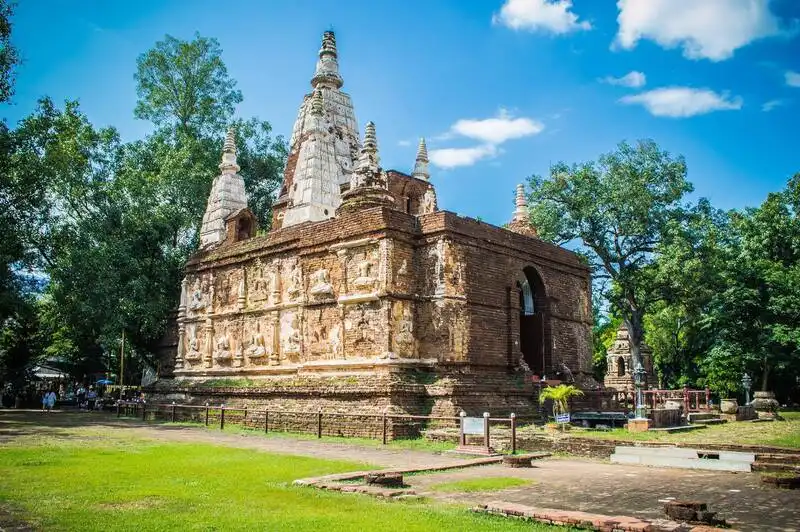
Wat Chedi Chet Yot (Wat Photharam Mahawihan) is one of Chiang Mai’s most historically significant temples, a place many people recognize by name but truly understand only after standing in front of its remarkable main stupa. Its beauty is not loud or ornamental; instead, it lies in fine details, quiet symbolism, and layers of history embedded in every surface of aged stucco and carved relief. The seven-spired chedi, inspired by the Mahabodhi Temple in Bodh Gaya, India, makes this site especially compelling for visitors interested in Buddhist history and Lanna-era architecture.
The most striking feature of Wat Chedi Chet Yot is the refined craftsmanship rather than sheer scale. The base and exterior walls of the chedi are decorated with stucco figures of celestial beings, both seated in meditation and standing in regal attire. Each figure differs subtly in posture, ornamentation, and expression, encouraging visitors to slow down and observe closely. When sunlight falls softly on the surface in the early morning or late afternoon, the shadows enhance the depth of these details, giving the impression that the sculptures themselves are quietly alive.
The name “Chet Yot,” meaning “seven peaks,” refers to the seven spires crowning the stupa. This architectural form is uncommon in Thailand and immediately signals its connection to Buddhist sacred architecture from the Indian subcontinent. Rather than being a simple imitation, the chedi represents a meaningful adaptation, reflecting the transmission of Buddhist thought, art, and monastic connections between India, Sri Lanka, and the Lanna Kingdom. Standing here, visitors are not merely observing a monument but witnessing tangible evidence of centuries-old religious exchange.
Historically, Wat Chedi Chet Yot is deeply associated with the golden age of Buddhism in Lanna. During the reign of King Tilokaraj, Buddhism flourished through strong royal patronage, particularly of the Sinhalese (Lankavamsa) tradition. Monastic education and the study of Pali scriptures were actively promoted, leading to a highly learned Sangha. This intellectual environment culminated in a major religious event that would elevate the temple’s status far beyond regional importance.
In 1477 CE (B.E. 2020), King Tilokaraj convened an assembly of senior monks at Wat Photharam Mahawihan to revise and purify the Tripitaka. The process took approximately one year and is widely regarded as the Eighth Buddhist Council of the world, as well as the first Tripitaka council ever held in what is now Thailand. This event firmly established Chiang Mai as a major center of Buddhist scholarship and left a lasting influence on monastic practice throughout northern Thailand.
Another important structure within the temple grounds is the stupa associated with King Tilokaraj himself. After his passing in 1487 CE (B.E. 2030), his grandson King Yot Chiang Rai succeeded him and commissioned a grand stupa to enshrine the king’s ashes. This act honored both royal lineage and spiritual devotion, reinforcing the temple’s role as a sacred space where political history and religious faith intersect.
Wat Chedi Chet Yot is also closely linked to the concept of the Seven Sacred Sites of Buddhist history, known as the Sattamaha Sathan. These represent key locations associated with events following the Buddha’s enlightenment, including the Bodhi Throne, Animit Chedi, Ratanaghara Chedi, and Mucalinda Chedi. Although only three of these structures remain visible today, they still convey the original intention of recreating a symbolic Buddhist landscape within Lanna territory.
For photography enthusiasts, this temple is best appreciated through close-up compositions rather than wide scenic shots. Focusing on individual stucco figures, weathered surfaces, and subtle contrasts of light and shadow reveals a deeper aesthetic character. For spiritual visitors, Wat Chedi Chet Yot is traditionally associated with reverence for the relic of those born in the Year of the Snake, making it particularly meaningful during the early months of the year when devotional visits increase.
The overall atmosphere of the temple is calm and contemplative, far removed from the crowds found at more commercial attractions. Its location near Huay Kaew Road, Nimmanhaemin, and the MAYA shopping area makes it easy to incorporate into a half-day itinerary. Visitors often combine a morning temple visit with nearby cafés or museums, or arrive later in the day to enjoy softer light and a quieter setting.
Getting There Wat Chedi Chet Yot is located in the Chang Phueak area of Chiang Mai, close to the Chiang Mai–Lampang Superhighway. Travelers can reach the temple by private car or rental vehicle, by local red truck taxi (songthaew), or by ride-hailing services and taxis, which are especially convenient during busy periods. When visiting, modest attire is recommended, and visitors are encouraged to maintain a respectful and quiet demeanor within the temple grounds.
To fully appreciate the site, visitors should allow at least 45 to 90 minutes to walk around the chedi, observe the stucco details, and absorb the historical atmosphere. Those with limited time can visit more briefly, but the temple tends to reward patience and unhurried exploration.
Currently, Wat Chedi Chet Yot remains open to the public and continues to serve as an active place of worship. During certain religious periods, particularly at the beginning of the year, the temple may host devotional activities related to traditional beliefs. Visitors during these times should expect increased local attendance and plan their visit accordingly.
| Name | Wat Chedi Chet Yot (Wat Photharam Mahawihan) |
| Location | Mueang Chiang Mai District, Chiang Mai Province (Chang Phueak area, near the Chiang Mai–Lampang Superhighway) |
| Key Characteristics | Seven-spired chedi inspired by the Mahabodhi Temple, intricate stucco celestial figures, major historical role in Buddhist scripture revision |
| Period | Lanna Kingdom era (associated with the reign of King Tilokaraj) |
| Historical Significance | Site of the Eighth Buddhist Council and early Tripitaka revision in Thailand |
| Name Origin | “Chet Yot” refers to the seven spires crowning the main stupa |
| Travel | Private car, local songthaew, taxi, or ride-hailing service |
| Current Status | Open to visitors and active for religious activities |
| Contact Number | +66 53 221 464 |
Frequently Asked Questions (FAQ)
Q: Is Wat Chedi Chet Yot open every day?
A: Yes, the temple is generally open daily from 07.00 to 17.00, though visitors are advised to check locally during special events or festivals.
Q: What makes Wat Chedi Chet Yot unique?
A: Its seven-spired chedi inspired by Bodh Gaya, intricate stucco figures, and its role as the site of the Eighth Buddhist Council make it historically and architecturally unique.
Q: How much time should I spend visiting the temple?
A: Around 45–90 minutes is ideal for exploring the chedi, appreciating the details, and enjoying the peaceful atmosphere.
Q: Is there an entrance fee?
A: There is no fixed entrance fee; visitors may donate according to personal faith and discretion.
Q: How can I contact Wat Chedi Chet Yot?
A: The temple can be reached at +66 53 221 464 during daytime hours.
 Wat Chedi Chet Yot Map
 Category:
  Group:
  Last Update: 3 MonthAgo
Comment
 Nearby Attractions
| Keyword (Advance) |
 Region
|
 Muang Chiang Mai(