
 Home
Home North(
 Chiang Mai(


Rating: 4.2/5 (5 votes)
 |
|  Map
Map 
 Have Map
  No Map
Chiang Mai attractions
Attractions in Thailand
Open Days: Daily
Opening Hours: 06.00–18.00 (generally)
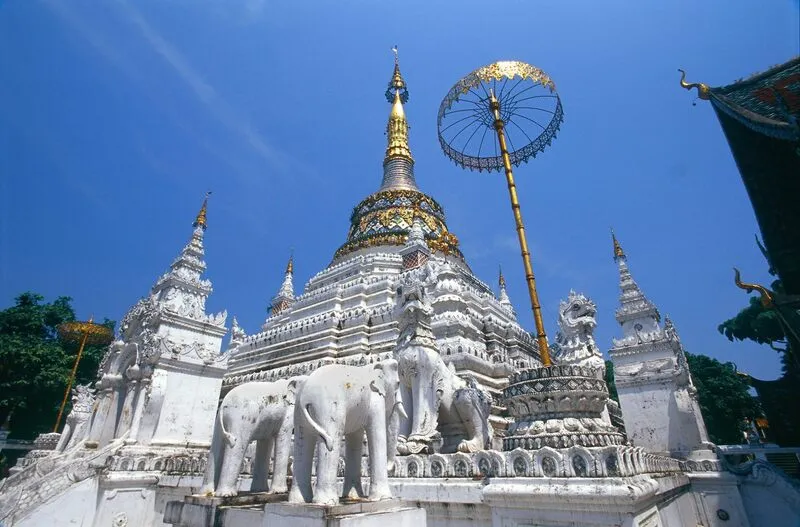
Wat Saen Fang is one of Chiang Mai’s quietly historic temples located within the inner city, long familiar to local residents yet often overlooked by visitors who pass through the Tha Phae area without noticing it. Despite its modest appearance, the temple holds a distinct charm, particularly through architectural details influenced by Burmese artistry. These subtle elements give Wat Saen Fang a softer, more delicate visual character that sets it apart from the more familiar classical Lanna temples. Situated along Tha Phae Road, close to Tha Phae Gate and major walking routes, the temple is ideal for a short cultural stop woven naturally into a city walk.
One of the most appealing aspects of Wat Saen Fang is its role as a living community temple rather than a purely touristic site. Local residents continue to visit regularly to make merit, pay respects, and find a moment of calm in their everyday routines. Stepping inside the temple grounds, visitors often sense a balanced atmosphere—peaceful without being isolated, active without feeling crowded. In the early morning, gentle sunlight filtering through the trees adds a warm, tranquil quality that enhances the contemplative mood of the temple.
From an architectural perspective, Wat Saen Fang is frequently noted for its Burmese-influenced decorative details. These influences appear in selected ornamental elements, especially in stucco work and refined decorative patterns that convey a sense of elegance and precision. Such features serve as quiet reminders of Chiang Mai’s historical role as a crossroads of cultures, trade, and political relationships. The temple’s design reflects how Burmese and Lanna aesthetics once coexisted and blended, leaving behind artistic traces that continue to enrich the city’s visual heritage.
Another point of interest is the former abbot’s residence, commonly said to be over 100 years old. This structure adds a tangible sense of time and continuity to the temple grounds, highlighting Wat Saen Fang not only as a religious site but also as a place shaped by generations of monastic life. For visitors who enjoy observing details, this aspect helps transform the temple visit into a deeper encounter with lived history rather than a quick sightseeing stop.
Local historical accounts often mention that parts of the temple were associated with relocated or repurposed structures from noble residences during the late 19th century, around 1877–1878. This period marked a time of transition for Chiang Mai as it adapted to modern administrative systems and urban development. Although some details invite further academic verification, the broader narrative positions Wat Saen Fang within an important chapter of the city’s evolution, linking religious architecture with political and social change.
In terms of traditions and community life, Wat Saen Fang benefits from its location in one of Chiang Mai’s most vibrant districts. During major festivals such as Yi Peng (Loy Krathong) and Songkran, the surrounding area becomes especially lively. As a neighborhood temple near Tha Phae Gate, Wat Saen Fang naturally participates in the seasonal rhythm of merit-making, water blessings, and communal religious activities. Visitors during festival periods are encouraged to dress modestly, speak softly, and remain mindful of worshippers, ensuring a respectful and meaningful experience.
Getting There From Tha Phae Gate, walk or drive eastward along Tha Phae Road toward the Night Bazaar area. Wat Saen Fang is located along this route and is easy to include as part of a walking itinerary. Walking is highly recommended, as the area offers sidewalks and numerous nearby attractions. If traveling by car, allow extra time for parking, especially in the late afternoon or on weekends when traffic is heavier.
From Warorot Market (Kad Luang), follow Chang Moi Road or nearby streets toward Tha Phae Road, then continue toward Tha Phae Gate. The temple lies conveniently along one of Chiang Mai’s main cultural walking routes, making it easy to combine with visits to the riverfront, old city landmarks, or shopping areas.
Public transport options include red songthaews, taxis, or ride-hailing services. Simply inform the driver that your destination is “Wat Saen Fang on Tha Phae Road, near Tha Phae Gate.” Most drivers are familiar with the location due to its proximity to popular tourist areas.
| Name | Wat Saen Fang |
| Location | Tha Phae Road, inner city of Chiang Mai, near Tha Phae Gate and Night Bazaar |
| Key Characteristics | Community temple, Burmese-influenced decorative details, peaceful atmosphere, easy access |
| Historical Context | Old inner-city temple associated with late 19th-century developments (circa 1877–1878) |
| Notable Architecture | Burmese-influenced stucco and ornamentation, historic abbot’s residence (over 100 years old) |
| Current Status | Open for worship and visitors; active community temple |
| Contact Number | +66 53 234 393 |
Frequently Asked Questions (FAQ)
Q: Where is Wat Saen Fang located?
A: It is located on Tha Phae Road, close to Tha Phae Gate and the Night Bazaar area in central Chiang Mai.
Q: What makes Wat Saen Fang unique?
A: The temple features subtle Burmese-influenced decorative elements that distinguish it from more typical Lanna-style temples.
Q: Is Wat Saen Fang suitable for a short visit?
A: Yes. Its central location and calm atmosphere make it ideal for a brief cultural stop while exploring the old city.
Q: When is the best time to visit?
A: Early morning or late afternoon offers pleasant light, fewer crowds, and a more tranquil atmosphere.
Q: Does the temple participate in local festivals?
A: While not hosting major standalone festivals, Wat Saen Fang is part of the wider community activities during major Chiang Mai events such as Songkran and Yi Peng.
 Wat Saen Fang Map
 Category:
  Group:
  Last Update: 3 MonthAgo
Comment
 Nearby Attractions
| Keyword (Advance) |
 Region
|
 Muang Chiang Mai(