
 Home
Home North(
 Chiang Mai(


Rating: 3.4/5 (7 votes)
 |
|  Map
Map 
 Have Map
  No Map
Rayong attractions
Attractions in Thailand
Open Days: Every day (approximately)
Opening Hours: 09:30–17:00 – It’s best to confirm before visiting
Wat Tham Khao Prathun is a cave temple nestled deep within the limestone mountains of Moo 4, Ban Khlong Yang, Khao Noi Subdistrict, Khao Chamao District, Rayong Province. The surrounding landscape is a blend of forest canopy and rugged limestone cliffs dotted with natural caves. As you step past the temple gate into the first cavern, the temperature drops noticeably. The air turns cool and moist, infused with the scent of stone and earth. Water drips steadily from the ceiling, echoing against the rock floor like a natural metronome. This rhythm, slow yet steady, transforms the cave into a space of quiet presence. Wat Tham Khao Prathun is not merely a place of worship, but a journey inward—a place where light and shadow, water and stone, calm and wonder coexist effortlessly.
The story of the temple’s origin dates back to the late 1980s when a group of forest monks and villagers discovered a solitary limestone hill surrounded by seasonal water. Seeing its stillness and isolation, they recognized its potential for meditation practice. Restoration and path clearing began, turning the site into a small hermitage, which later became the present Wat Tham Khao Prathun. The word “Prathun” comes from the Thai for “hood” or “canopy.” From afar, one side of the mountain curves gracefully like a boat’s hood, especially at sunrise when the rock’s mineral streaks catch the light, glimmering like a thin sail above a vessel. That image gave the mountain its enduring name.
The temple’s signature experience changes with the seasons. During the rainy months, rising water fills the lower caves, transforming walkways into an underground canal. Visitors board small wooden boats guided by local staff, gliding through narrow passages lined with stalactites and stalagmites. Some ceilings dip low, requiring passengers to bow their heads. The journey is slow, surrounded by the sound of dripping water and the chill of cave air. In the dry season, when water recedes, paths reveal themselves for those who prefer to walk. The tactile contact of foot on damp rock gives a closer connection to the textures of stone and time—striations, mineral seams, and pools of still water reflecting beams of sunlight filtering through cracks above.
Both the boat and walking paths lead to an inner clearing known as the “Valley Courtyard.” Here, an oval opening in the cliffs frames the sky. Moss and ferns cling to wet rock walls while a gentle breeze descends from the canopy. Sunlight glances through the trees, painting shifting patterns of gold and gray on the stone floor. Many visitors sit silently for a while, allowing their eyes to adjust from the cave’s half-darkness to the open light. In that transition, details hidden at first—cracks, veins of quartz, and the marks of ancient water flow—slowly emerge, revealing the quiet artistry of nature.
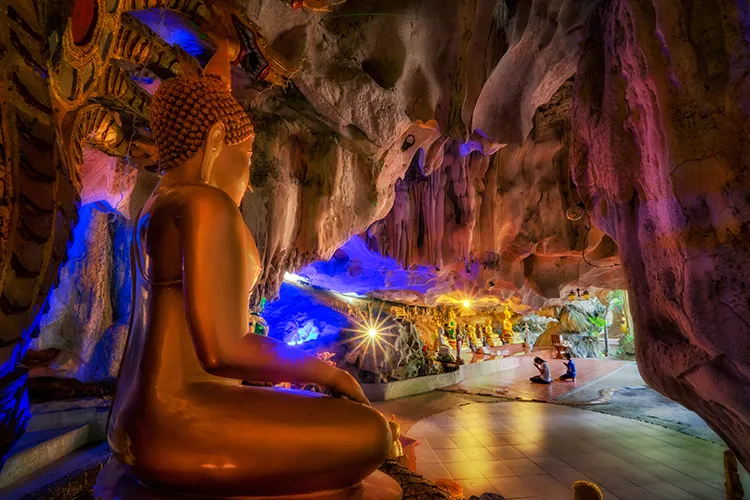
Inside the main cavern stands a large Buddha image in the attitude of subduing Mara, surrounded by revered figures such as Luang Pho Sothon, Luang Pu Mun, and Luang Pu Jivaka Komarabhac. Small niches in the cave wall hold incense, candles, and gold leaves pressed by visitors making personal wishes. The faint scent of incense mingles with cool mineral air, creating an atmosphere both sacred and earthly. In one chamber, known as the “Holy Dripping Water Cave,” droplets fall from the ceiling year-round, collecting in a shallow basin. Locals believe the water is auspicious, a gentle reminder that persistence—like drops of water carving stone—can transform even the hardest surface over time.
Exploring the caves requires moderate effort but is manageable for most visitors with proper preparation. Shoes with good traction are essential, and light, breathable clothing is best. Some sections demand ducking beneath low ceilings or stepping carefully on slick rock. A small flashlight is recommended for darker sections, where installed lights are dim or absent. Around the temple grounds live several troops of monkeys—curious but generally calm. It’s wise to secure personal belongings and avoid feeding or teasing them.
The legend of the Naga, the mythical serpent guardian, continues to shape visitors’ imagination. Certain rock formations at the cave entrance resemble the hood of a serpent facing the sky, and when afternoon light hits the mineral surface, it flashes like silver scales. Many stop in silence here, sensing something beyond words. Some say that walking through the long tunnel feels like “passing through one’s own shadow.” The metaphor fits: in the dim tunnel, breath and heartbeat become steady guides. Emerging into daylight, one leaves a small piece of fear behind.
A visit can be comfortably done in half a day. Morning is best for clear light inside the caves, and afternoons are ideal for watching sunlight sweep across the inner courtyard. A one-day itinerary might pair the cave visit with nearby attractions such as Khao Chamao Waterfall or forest trails in the national park. Even with its accessibility, time feels suspended once you step inside—no traffic noise, no signals, only the rhythm of water and the quiet patience of stone.
Getting There: From Rayong City, head toward Khao Chamao District on Route 3377, then follow local signs for “Wat Tham Khao Prathun.” The final few kilometers are a mix of paved and gravel roads, winding through orchards and small villages. Regular cars can reach the temple in normal weather. At the entrance, a small parking area and local shops provide refreshments, and staff can advise on water levels or tour routes for the day.
In essence, Wat Tham Khao Prathun bridges faith and wilderness without embellishment. Here, you can witness sunlight move through stone, listen to water carve time drop by drop, and watch tiny plants thrive on sheer rock faces. The experience teaches that peace is not distant—it lies just beyond the noise of thought. The dark tunnel is not a place of fear but a lesson in trust, and the bright courtyard beyond reminds every traveler that light is always waiting once we take the next step forward.
| Name | Wat Tham Khao Prathun |
| Location | Moo 4, Ban Khlong Yang, Khao Noi Subdistrict, Khao Chamao District, Rayong Province, Thailand |
| Characteristics | A cave temple within limestone cliffs, featuring a seasonal water tunnel, stalactites, and a sunlit courtyard in the valley. It combines spiritual and natural exploration. |
| Period | Established as a contemporary temple in the late 20th century on the site of an ancient natural cave. |
| Key Evidence | Phaya Naga Cave entrance, the underwater tunnel, stalactite and stalagmite formations, dripping-water basins, and the central courtyard. |
| Name Origin | From the Thai word “Prathun,” meaning “hood” or “canopy,” referring to the curved rock shape resembling a boat’s hood catching sunlight. |
| Travel | Drive from Rayong City toward Khao Chamao, then follow signs to the temple. The last section is a gravel road accessible by regular cars. Check weather and water levels before visiting. |
| Current Status | Open for visitors and worship year-round. Exploration routes vary by season (boat tours in the rainy season, walking paths in the dry season). |
| Nearby Attractions (Distance) | Khao Chamao–Khlong Plakang Waterfall (~20–30 km), Khao Chamao Visitor Center Trails (~20 km), Wat Boonyawas (~25 km) |
Frequently Asked Questions
Q: When is the best time to visit Wat Tham Khao Prathun?
A: For boat rides through the tunnel, visit during the rainy season when water levels are high. For walking exploration, come in the dry months when the cave floor is accessible.
Q: Is the cave very dark? Should I bring a flashlight?
A: Some areas are dim even with installed lights. A small flashlight or headlamp is recommended for safety and to better observe the cave formations.
Q: Can children and the elderly enter the cave?
A: Yes, if accompanied and physically able. Choose a season and route that match the visitor’s capability. During the rainy season, take care when boarding boats; in the dry season, watch for slippery or low sections.
Q: Is there an entrance or boat fee?
A: Entry to the temple is generally free. Boat rides, when available, may charge a small fee that varies by day or local management. Check with on-site staff for current details.
Q: Are parking and food stalls available?
A: Yes. There’s a parking area near the entrance and small local stalls selling drinks and snacks, especially during weekends or holidays. Bringing personal water is still recommended.
Q: What should I wear for cave exploration?
A: Comfortable, breathable clothing and shoes with non-slip soles. Avoid sandals or flat shoes. Bring a waterproof phone pouch and a compact flashlight for convenience.
Q: Is there phone signal or internet inside the cave?
A: Mobile signals are weak or absent in most cave areas. Inform someone of your plans in advance and follow all safety guidelines from the local guides.
Q: Are there any animals or safety concerns?
A: Wild monkeys occasionally roam the area. Keep your belongings secure, avoid feeding or provoking them, and maintain a respectful distance for safety.
 Wat Tham Khao Prathun Map
 Category:
  Group:
  Last Update: 5 MonthAgo
Comment
 Nearby Attractions
| Keyword (Advance) |
 Region
|
 Muang Rayong(