
 Home
Home North(
 Chiang Mai(


Rating: 5/5 (1 votes)
 |
|  Map
Map 
 Have Map
  No Map
Nakhon Pathom attractions
Attractions in Thailand
Open Days: Daily
Opening Hours: 07:00–18:00
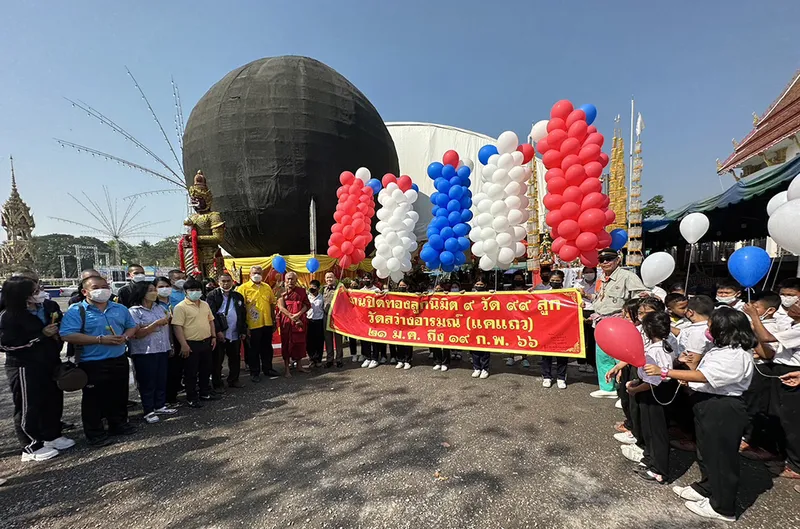
Wat Phai Lom Luk Nimit Gold Leaf Ceremony is one of the most significant Buddhist traditions in Thailand, clearly reflecting the deep faith of Thai Buddhists. When this ceremony takes place at an important temple such as Wat Phai Lom in Nakhon Pathom, it creates a vibrant atmosphere both religiously and culturally. Wat Phai Lom is a royal temple located in the city center of Nakhon Pathom, not far from Phra Pathom Chedi, making it easily accessible and highly attractive to locals, pilgrims, and cultural tourists alike.
The core of this tradition lies in the concept of the “Luk Nimit,” sacred boundary stones used to define the consecrated area (Phatthasima) of a Buddhist ordination hall. This boundary is essential for conducting monastic rituals such as ordination ceremonies. Therefore, the act of applying gold leaf to Luk Nimit is not merely symbolic but represents a direct contribution to the structural and spiritual foundation of the temple.
Traditionally, there are 9 Luk Nimit stones: 1 principal stone and 8 surrounding stones placed around the ordination hall. Many participants believe that applying gold leaf to all 9 stones brings great merit, enhances fortune, stabilizes life, and accumulates spiritual benefits. While beliefs may vary slightly across regions, the shared understanding is that this ceremony holds deep spiritual meaning and is a rare opportunity compared to regular merit-making.
Wat Phai Lom itself is an important temple in Nakhon Pathom, not only because of its royal status but also due to its strong connection with the local community and its historical association with Luang Por Phun. The temple remains active and continues to welcome visitors daily. The current acting abbot is Phra Kru Palad Sittiwat (Luang Phi Namfon), demonstrating that the temple plays an active role in present-day religious life.
What makes the Luk Nimit ceremony particularly unique is the blend of religious ritual and traditional Thai temple fair atmosphere. Visitors often begin by paying respect to the Buddha image, making merit, and purchasing gold leaf to apply to each Luk Nimit stone. Some come to make wishes, others dedicate merit to ancestors, while many seek to improve their fortune. Regardless of individual intentions, all contributions ultimately support the temple and Buddhism.
The typical sequence of participation starts with paying respect to sacred objects in the temple, followed by purchasing offerings or gold leaf. Participants then proceed to apply gold leaf to each Luk Nimit stone in sequence. Many take this time for meditation or silent prayer, making the experience more meaningful than routine merit-making. After completing the ritual, visitors often continue with donations, offering alms, or contributing to temple restoration projects.
One of the most notable aspects of this ceremony is the connection between “personal merit” and “collective merit.” Individuals may come with personal wishes, but their contributions support the construction and maintenance of the ordination hall, benefiting the wider Buddhist community. This dual purpose is a key reason why the Luk Nimit ceremony remains widely popular.
The atmosphere at Wat Phai Lom during the event also reflects strong community involvement. Alongside religious activities, there are local markets, food stalls, souvenirs, and entertainment typical of Thai temple fairs. Elderly visitors focus on merit-making, families enjoy the fair environment, and working adults see it as both a spiritual and relaxing experience.
From a cultural perspective, this tradition highlights the role of temples as social centers in Central Thailand. Temples are not only places for religious rituals but also spaces for community interaction, social bonding, and cultural preservation. The coexistence of religious ceremonies and festive activities enhances accessibility for all age groups and ensures the temple remains central to community life.
Wat Phai Lom also benefits from its strategic location in Nakhon Pathom city. Nearby attractions include Phra Pathom Chedi, the night market, Nakhon Pathom Railway Station, Sanam Chan Palace, and Central Nakhon Pathom. This makes it convenient for visitors to combine merit-making with sightseeing in a single trip.
For tourists, the Luk Nimit ceremony is particularly fascinating because it is a living tradition rather than a staged cultural performance. Visitors can observe real practices such as applying gold leaf, making offerings, and participating in rituals, gaining a deeper understanding of Thai Buddhism beyond theoretical knowledge.
This event also serves as an educational opportunity for younger generations, helping them understand concepts like Luk Nimit, Phatthasima, and temple consecration through real-life experience rather than textbooks alone.
Getting There Wat Phai Lom is located at 2 Thesa Road, Phra Pathom Chedi Subdistrict, Mueang Nakhon Pathom District, Nakhon Pathom 73000. Travelers from Bangkok can drive via Phetkasem Road into Nakhon Pathom city. The temple is centrally located and easily accessible. Visitors traveling by train can get off at Nakhon Pathom Railway Station and continue by local transport or a short ride to the temple.
Visitors are advised to dress modestly, wear comfortable shoes, and allow at least half a day for the experience, especially during peak periods. Taking time to participate in each activity enhances both the spiritual and cultural experience.
In summary, the Luk Nimit gold leaf ceremony at Wat Phai Lom is a significant Central Thai tradition that reflects religious devotion, social unity, and cultural continuity. The temple’s accessibility, importance, and active role in the community make it an ideal place to experience this living tradition.
| Place Name | Wat Phai Lom Royal Monastery |
| Overview | An important temple in Nakhon Pathom known for major merit-making events and Luk Nimit ceremonies |
| Highlights | Central location, strong religious significance, popular merit-making destination |
| History | Historic temple near Phra Pathom Chedi |
| Current Abbot | Phra Kru Palad Sittiwat (Luang Phi Namfon) |
| Address | 2 Thesa Road, Phra Pathom Chedi, Mueang Nakhon Pathom, Nakhon Pathom 73000 |
| Coordinates | 13.8189204, 100.0662965 |
| Travel | Accessible via Phetkasem Road or Nakhon Pathom Railway Station |
| Opening Hours | Daily 07:00–18:00 |
| Nearby Attractions | 1. Phra Pathom Chedi Night Market – 1.1 km 2. Nakhon Pathom Railway Station – 1.2 km 3. Central Nakhon Pathom – 2.6 km 4. Sanam Chan Palace – 2.4 km 5. Woon Khun U – 200 m |
| Nearby Restaurants | 1. Butter P – 200 m – 086-924-6394 2. The Pho by Wirat Pho – 93 m – 088-956-4563 3. Pa Weng Restaurant – 500 m – 098-285-4096 4. Nai Chua Moo Daeng – 1.1 km – 034-242-564 5. M Salad Cafe – 1.8 km – 062-195-4924 |
| Nearby Accommodations | 1. Xen Hotel – 1.7 km – 034-900-500 2. Hop Inn – 1.7 km – 02-659-2899 3. Mida Dhavaravati – 1.6 km – 034-966-700 4. Ratchaphruek Pavilion – 2.2 km – 034-280-299 5. The Proud Hotel – 2.2 km – 034-255-555 |
| Contact | 034-250-078 |
Frequently Asked Questions (FAQ)
Q: What is the Luk Nimit gold leaf ceremony?
A: It is a Buddhist merit-making ritual where participants apply gold leaf to sacred boundary stones used to define the ordination hall.
Q: How many Luk Nimit stones are there?
A: There are 9 stones: 1 main stone and 8 surrounding stones.
Q: Where is Wat Phai Lom located?
A: It is located in Nakhon Pathom city, near Phra Pathom Chedi.
Q: What time is the temple open?
A: The temple is open daily from 07:00 to 18:00.
Q: What should visitors do at the event?
A: Visitors typically apply gold leaf, make donations, offer alms, and enjoy the temple fair atmosphere.
 Wat Phai Lom Luk Nimit Gold Leaf Ceremony Map
 Category:
  Group:
  Last Update: 47 MinuteAgo
Comment
 Nearby Attractions
| Keyword (Advance) |
 Facebook Fanpage
 Region
 Historical Sites and Monuments(
 Landmarks and Memorials(
 Royal Palace(
 Museums(
 Art Gallery(
 Educational Places
 Educational Gardens, Farm(
 University
 Places of Worship
 Temple(
 Other religious and spiritural sites(
 Research and Development
 Royal Project(
 Suburban Living
 Village, Community(
 Local Market(
 Floating Market(
 Nature and Wildlife
 River, Canal(
 Other natural attractions(
 Entertainment and Agricultural
 Animal camps and shows(
 Stadium(
 Farm, Parks, Gardens and Ecotourism(
 Waterpark(
 Theater(
 Outdoor and Adventure Activities(
 Spas and Wellness
 Spas and Wellness(