
 Home
Home North(
 Chiang Mai(


Rating: 3.4/5 (11 votes)
 |
|  Map
Map 
 Have Map
  No Map
Kanchanaburi attractions
Attractions in Thailand
Open Days: Daily
Opening Hours: 07:00 – 17:00
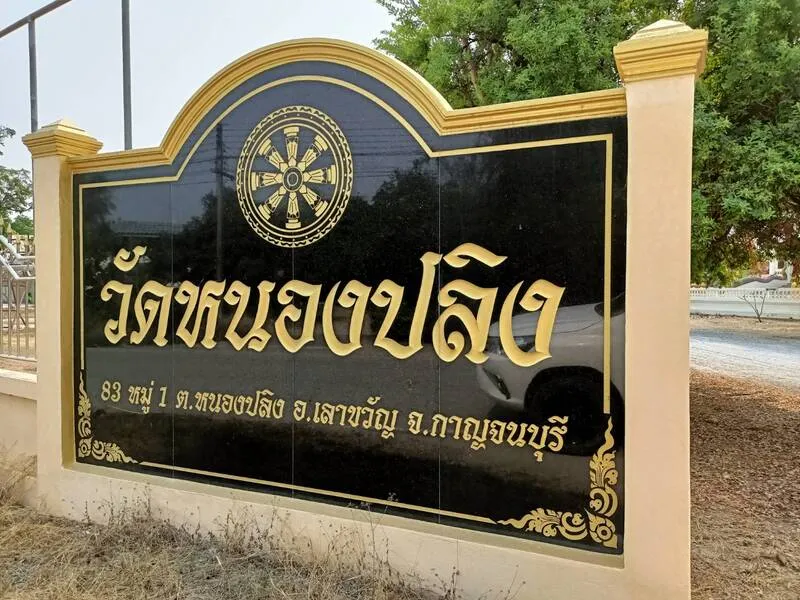
Wat Nong Pling in Huai Krachao District, Kanchanaburi, is the subdistrict’s local temple that still serves as a community hub, and it also houses an “ancient stupa” that lets you read the area’s deep past in a single place. It suits travelers who want a calm, culture-and-history-focused Kanchanaburi stop—quick to visit, yet memorable in a meaningful way.
Wat Nong Pling is a local temple that many people might drive past without noticing, but if you park and walk in with intention, you will find a place where you can “read the community” within a short walking radius—everyday local life, the temple’s role as a center for merit-making and ceremonies, and, most importantly, an ancient stupa that locals commonly describe as a remnant connected to the Ayutthaya era. That single element shifts a visit from routine worship to an encounter with a living timeline.
What makes a subdistrict temple in the provinces compelling is that it is not an isolated religious site separated from real life. It functions as a “social structure” that supports relationships across the entire subdistrict—major holy days, ordinations, funerals, dedicating merit, community meetings, and even the quiet process of younger generations learning etiquette and respect for sacred spaces through repeated practice in everyday life. When a temple is the subdistrict’s main temple, its value is not only the scale of buildings, but the continuity of use and the trust the community places in it to hold both joy and grief.
Wat Nong Pling is located in Don Sa Lab Subdistrict, Huai Krachao District, Kanchanaburi. In the tourist imagination, Kanchanaburi is often told through nature and famous landmarks, yet the province also carries layers of history and culture scattered quietly across rural districts. In places like this, a temple becomes a “memory keeper” for the community—memories of people who migrated and settled, village expansion, agricultural life, economic adaptation, and rituals that help residents feel grounded on familiar roots even as the outside world changes quickly.
In terms of local history, Wat Nong Pling is documented as a long-established temple, with records noting its founding year and the later granting of a royal boundary (wisungkhamsima). Details like these reflect a “systematic” temple with an organized monastic space. That continuity enables the temple to support community rites comprehensively—both the standard practices of Thai Buddhism and the more intimate rhythms of a close-knit rural area where people know each other well and mutual support is strong. A stable temple, in this sense, becomes an emotional guarantee for local residents: no matter what happens, there is always a shared center to return to.
The core reason to visit Wat Nong Pling for those interested in history is the “ancient stupa.” A stupa is one of the most powerful symbols of time. It does not need a long explanatory sign to make visitors sense that this place carries a past longer than the generations walking here today. Old stupas often show both change and continuity at once. Change appears in the surrounding environment and in how the community adapts through different eras. Continuity appears in the shared agreement that the stupa is something to respect, to care for, and to pass on so future generations can see it. When locals say the stupa traces back to the Ayutthaya era, the most important meaning is not locking in an exact year, but affirming that “this place is old enough to be a community heritage,” and that affirmation is what motivates collective care for the sacred space.
To appreciate an ancient stupa in a rural temple, you do not need a specialist’s eye—you need a respectful attitude. Walk slowly, look at proportions and the base, notice materials used to maintain or reinforce certain parts, and observe how the stupa sits in relation to the main worship areas. A stupa’s placement within the temple layout is rarely random; it is often positioned as a focal point of faith at the local scale. If you happen to see residents paying respects or making merit, observe their gestures quietly. You will understand that the old stupa is not merely “an old object to look at,” but a place where belief still functions in everyday life.
Looking at Wat Nong Pling as a subdistrict temple, another important point is how it supports “gathering” across age groups. Children and teenagers may see the temple as a quiet space or a place they attend during merit-making events. Adults and elders may see it as a place to steady the mind, a source of spiritual support, and a venue that holds kinship ties together through life-cycle ceremonies. These roles make the temple feel like a community heart that beats all the time, not only on major festival days. Even on ordinary days, it remains a shared space where people can come to pray, make small offerings, or simply find calm.
The atmosphere of a rural temple in Kanchanaburi often feels “unhurried,” unlike large city temples that can be crowded and driven by a clear tourist rhythm. Wat Nong Pling suits visitors who want to spend a little time with themselves, walk simply, and then continue onward. Many people may not stay long, but they often leave with a sense of stillness and a clearer understanding that a community can truly endure because it has a shared center like this—especially when that center holds visible traces of age that make residents feel they stand on a place with a supported past, not floating amid constant change.
Etiquette matters in any temple because respect is not only personal; it is also respect for the community that belongs to the place. Dress modestly, avoid sleeveless tops and shorts/skirts above the knee, and remove shoes before entering worship areas. Near Buddha images or the stupa, avoid climbing or touching fragile parts, especially if the stupa is old. Repeated touching by many visitors can cause gradual wear and damage over time. Photography is fine, but be careful not to disturb people who are praying, and avoid using flash in inappropriate areas.
As cultural travel, Wat Nong Pling offers a simple lesson: “small places can carry big meaning.” An ancient stupa inside a subdistrict temple is like a piece of the past embedded in the present. It reminds us that history is not only in museums or famous archaeological sites; it is also distributed across living places where people carry on daily life. That is the charm of slow travel in the provinces. When you give time to a place outside the mainstream, you often gain deeper understanding, because you see the relationship between sacredness and everyday life as something natural, not staged for display.
Getting There to Wat Nong Pling is best by private car, since the temple is in a rural district area of Kanchanaburi. Having your own vehicle makes route planning flexible, especially if you want to continue to other stops in Huai Krachao or nearby districts. Drive at a moderate speed on rural roads, and be cautious in rainy weather or when agricultural vehicles and trucks may appear. If you do not have a private car, hiring local transport or asking your accommodation to help arrange a ride can reduce uncertainty—especially if you need a dependable return time in the late afternoon.
If you want a calm atmosphere and time to observe the stupa’s details, mornings are typically quieter and more comfortable. Afternoons work well for travelers who want a gentle stop between routes. In either case, allow enough time to pray and walk respectfully rather than rushing in and out, because the more time you give a place like this, the more meaning it tends to return.
| Name | Wat Nong Pling, Don Sa Lab Subdistrict, Huai Krachao District, Kanchanaburi |
| Address | Don Sa Lab Subdistrict, Huai Krachao District, Kanchanaburi |
| Place Summary | A rural subdistrict temple in Kanchanaburi that the community actively uses for merit-making and ceremonies, featuring an ancient stupa as a key historical marker. Ideal for a calm cultural visit. |
| Highlights |
1) An ancient stupa within the temple grounds, inviting visitors to read the community’s deep past
2) The subdistrict’s central temple role, supporting major ceremonies and everyday spiritual life
3) A quiet rural atmosphere suited to slow, respectful walking
4) A cultural side of Kanchanaburi that feels rooted in real local life rather than check-in tourism
|
| Abbot / Temple Head (Latest) | Phra Maha Bunrod Mahawiro |
| Contact Number (Verified) | 034-571-302 |
| Facilities | Worship areas, temple yard / parking space depending on the on-site layout |
| Current Status | Open for visits and worship |
| Nearby Attractions (Approx. Distance) |
1) Wat Sa Long Ruea (Huai Krachao) – approx. 10 km
2) Wat Ban Krab (Don Sa Lab) – approx. 15 km
3) Huai Krachao Town Services / Market Area – approx. 12 km
4) Wat Khao Rak (Don Sa Lab) – approx. 18 km
5) Wat Thip Sukontharam (Huai Krachao / near main routes) – approx. 25 km
|
| Nearby Restaurants (Approx. Distance + Phone) |
1) Krua Ban Khwan (Huai Krachao) – approx. 15 km – 087-179-1721
2) Krua Sam Phu Yai Khot Saep (Huai Krachao) – approx. 15 km – 082-249-5616
3) Krua- Restaurant (Don Sa Lab) – approx. 12 km – 086-325-6533
4) Prik Kaeng Ros Ded @ Don Sa Lab Market – approx. 12 km – 092-584-4802
|
| Nearby Accommodations (Approx. Distance + Phone) |
1) Green View Resort (Huai Krachao) – approx. 15 km – 086-169-6864
2) Phu Aiyara Resort (Huai Khayeng) – approx. 25 km – 081-810-9075
3) The Cawley Farm and Resort (Huai Krachao area / nearby) – approx. 30 km – 086-564-5278
|
Frequently Asked Questions (FAQ)
Q: Is Wat Nong Pling open every day, and when is the best time to visit?
A: The temple is generally open daily for worship. For a calmer atmosphere, mornings are recommended, while afternoons suit travelers stopping along a route. Please follow temple etiquette carefully.
Q: Where is the ancient stupa, and how should visitors view it respectfully?
A: The ancient stupa is within the temple grounds. Walk quietly, avoid climbing or touching fragile parts, and do not disturb people who are praying or making merit.
Q: What does it mean that this is a subdistrict’s main temple?
A: A subdistrict’s central temple often hosts major merit-making events and life-cycle ceremonies (ordinations, funerals) and serves as a shared community space. It supports both spiritual life and local social ties.
Q: Is Wat Nong Pling suitable for cultural travel in Kanchanaburi?
A: Yes. It is especially suitable for travelers who want to see authentic community life and traces of deep local history in a quiet rural setting.
Q: How should visitors dress and behave at Wat Nong Pling?
A: Dress modestly, avoid sleeveless tops and shorts/skirts above the knee, remove shoes in worship areas, keep your voice low, and avoid disturbing worshippers. Flash photography near sacred areas should be avoided.
 Wat Nong Pling Map
 Category:
  Group:
  Last Update: 2 MonthAgo
Comment
 Nearby Attractions
| Keyword (Advance) |
 Facebook Fanpage
 Region
 Art, Culture and Heritage
 Historical Sites and Monuments(
 Landmarks and Memorials(
 Art, Craft Centres, Tradition(
 Museums(
 Art Gallery(
 University
 Church(
 Other religious and spiritural sites(
 Research and Development
 Royal Project(
 Suburban Living
 Village, Community(
 Local Market(
 Nature and Wildlife
 National Parks and Marine Reserves(
 Mountain (Doi)(
 Dam, Reservoir, Lake(
 Waterfalls(
 Hot Springs(
 Caves(
 River, Canal(
 Other natural attractions(
 Entertainment and Agricultural
 Zoos and Aquariums(
 Animal camps and shows(
 Farm, Parks, Gardens and Ecotourism(
 Cinema(
 Outdoor and Adventure Activities(
 Travel Articles, Recipes
 Travel Review, Food Review(