

 Home
Home Chiang Mai(




Rating: 3.6/5 (10 votes)
 |
|  Map
Map 
 Have Map
  No Map
Ang Thong attractions
Attractions in Thailand
Open Days: Open daily
Opening Hours: 08.00 – 19.00
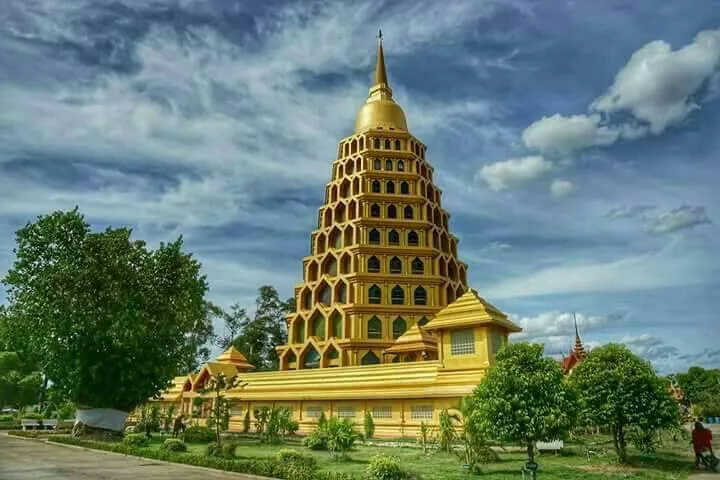
Wat Tha It, Ang Thong is a long-established temple in Pho Thong District, known for its strong local history and its striking landmark architecture. The temple’s signature highlight is the radiant golden stupa called “Phra That Chedi Si Pho Thong,” which rises prominently and can be seen from afar, leaving many visitors with an unforgettable first impression. Located in Ban Tha It, Bang Phlap Subdistrict, the temple suits travelers who enjoy temple-hopping, cultural sightseeing, and community stories connected to traditional crafts and the construction heritage of Ang Thong.
Wat Tha It lies along Highway 3064, roughly around kilometer markers 7 to 8 according to local accounts. This makes it convenient to reach by private car and ideal for a day trip or a multi-temple route in Ang Thong. The atmosphere within the temple grounds feels open and airy around the main courtyard and important buildings. At the same time, the golden chedi acts like a visual “marker” that invites visitors to walk closer and appreciate the grand proportions and details of a modern structure built with a clear intention: to serve Buddhism and to remain a lasting spiritual center for the local community.
Local information states that the temple was established in 1761 (B.E. 2304). What makes the story of Wat Tha It especially compelling is the origin of the name “Tha It.” The area is traditionally understood to have been a place where bricks were molded and fired for major construction projects nearby, particularly for Wat Khun Inthapramun. The community therefore tied the place-name directly to the practical role of transporting bricks. In other words, it was a “brick landing” or a place where bricks were gathered and moved before being used at the destination. When a temple was later founded here, its name preserved the community’s memory and identity as “Wat Tha It,” offering a vivid reflection of local livelihoods and craft knowledge through a name that still communicates its roots clearly today.
As you enter the temple, the most prominent sight is “Phra That Chedi Si Pho Thong,” the shimmering golden chedi that dominates the backdrop of the grounds. This gives Wat Tha It a distinctive identity compared with many neighboring temples, because the chedi is not simply a decorative structure. It was created with a clear religious purpose: to enshrine sacred relics and to become a place where Buddhist devotees can use “seeing” as a bridge to faith. For many visitors, merely spotting the chedi from a distance naturally inspires the desire to come closer, pay respects, and quiet the mind in a way that aligns with Thai temple-going traditions.
In terms of principal Buddha images, Wat Tha It houses revered images known by familiar local names. The main Buddha image in the ordination hall is called “Luang Pho Phet,” and the principal image in the viharn is called “Luang Pho Khao.” Local information describes them as Ayutthaya-period Buddha images, more than 200 years old, enshrined within a “Viharn Maha Ut.” The presence of two principal images, each remembered through simple community names, reflects how closely the temple is woven into local life. Such everyday naming often develops through real use in community worship and daily conversations, reinforcing the sense that the temple is truly “of the people,” not merely a tourist stop.
Worship at Luang Pho Phet and Luang Pho Khao is commonly done with calm respect. Visitors typically begin with a wai, set an intention, and then offer flowers, incense, and candles as appropriate to the temple setting. Many people take time to stand quietly and observe the proportions and lines of these older Buddha images, sensing the devotion and skill of past craftsmen. The atmosphere of the Viharn Maha Ut is often described as solemn and still, making it well-suited for slowing down before continuing to the chedi courtyard and other areas of the temple.
For many travelers, the core experience at Wat Tha It is seeing “Phra That Chedi Si Pho Thong” up close and understanding the story behind its construction. Local information states that around 1992 (B.E. 2535), Phra Khru Sukhontha Silakhun (Luang Pho Hom) initiated the idea to build a new chedi within the temple grounds. The structure was planned with a width of 40 meters and a height of 73 meters, designed with a blend of Sri Lankan, Ayutthaya, and Rattanakosin artistic influences. The chedi has an octagonal form, featuring a bell-shaped body and 32 finial rings. The main objectives were to replace an older chedi that had deteriorated over time and to enshrine sacred relics—specifically, relics described as part of the Buddha’s neck region—along with various Buddha images inside the chedi. The chedi was intended as a lasting religious treasure and a reminder of the Buddha’s teachings on moral discipline, meditation, and wisdom.
Local information further states that around 1995 (B.E. 2538), as construction was beginning, Luang Pho Hom made a solemn vow dedicating the project as royal merit-making in a period of concern for the King’s health. The chedi is said to have received the gracious royal name “Phra That Chedi Si Pho Thong,” and it is also stated that Her Royal Highness Princess Maha Chakri Sirindhorn presided over its opening in 2000 (B.E. 2543). These events frame the chedi not only as a large architectural work, but also as a “record of faith” linking community devotion, temple history, and significant moments in modern Thai society.
From an artistic perspective, the chedi’s visual strength comes from its octagonal geometry and the layered composition of the bell section and numerous finial rings, creating a tall, dignified silhouette from afar. The golden surface reflects light differently throughout the day—soft and calm in the morning, more radiant under strong afternoon light, and especially dimensional near sunset when shadows add depth. For visitors who enjoy photographing architecture, early morning and late afternoon are often the most rewarding times to capture the chedi against the sky with rich contrast and presence.
Walking around the chedi reveals the careful rhythm of the base and the upward-leading lines designed to guide the eye continuously toward the pinnacle. This is a form of architectural “language” that naturally encourages visitors to look upward and enter a more contemplative mood. In many Thai temples, architecture functions as a bridge between faith and experience; at Wat Tha It, that effect is immediate due to the chedi’s scale and unmistakable prominence.
Beyond admiring the chedi, Wat Tha It works well for travelers who want both serenity and a meaningful story. A practical visit sequence is to begin by paying respects to Luang Pho Phet in the ordination hall, continue to the viharn to worship Luang Pho Khao, and then proceed to the chedi area. This order keeps the visit unhurried and allows visitors to “get to know” the temple through both its sacred images and its defining architectural landmark in one complete experience.
If you come primarily for photography, it helps to observe temple etiquette: keep noise low, avoid inappropriate poses near Buddha images or within sacred buildings, and dress respectfully—especially when entering the ordination hall or viharn. This ensures cultural tourism remains smooth and considerate toward the temple community, while preserving the quiet atmosphere that is central to the appeal of temple visits in Ang Thong.
Getting There Wat Tha It is easiest to reach by private car. Follow Highway 3064 and look for the temple entrance around kilometer markers 7 to 8 as indicated in local information. The temple is in Ban Tha It, Bang Phlap Subdistrict, Pho Thong District. From Ang Thong town, you can drive toward Pho Thong District and connect to Highway 3064. The route is generally straightforward and suitable for families, seniors, and visitors who prefer a temple visit that does not require long walking distances. Park only in designated areas within the temple grounds or where your vehicle will not obstruct internal traffic flow.
Overall, Wat Tha It stands out for its clearly rooted origin story reflected in its name and community background, as well as for the golden Phra That Chedi Si Pho Thong that serves as a major Ang Thong landmark. A visit offers multiple dimensions at once: religious devotion, local historical memory, and appreciation of a modern monumental structure built with the intention of becoming a lasting Buddhist heritage site. With about 1 to 2 hours, most visitors can comfortably complete worship, a full chedi walk-around, and photography without rushing.
| Place Summary | A historic temple founded in 1761 (B.E. 2304) in Pho Thong, Ang Thong, best known for the golden “Phra That Chedi Si Pho Thong” and the revered Buddha images “Luang Pho Phet” and “Luang Pho Khao.” |
| Highlights | Phra That Chedi Si Pho Thong (40 m wide, 73 m high, octagonal chedi with 32 finial rings) / the local origin story behind the name “Tha It” / worship at Luang Pho Phet and Luang Pho Khao |
| Address | Ban Tha It, Bang Phlap Subdistrict, Pho Thong District, Ang Thong, Thailand |
| Open Days | Open daily |
| Opening Hours | 08.00 – 19.00 |
| Abbot (Latest) | Phra Khru Phaisarn Silawat (Thanjaro) |
| Contact Number | 0-3524-6076-7 |
| Travel | Follow Highway 3064 and look for the entrance around km 7–8 (local information). The temple is in Ban Tha It, Bang Phlap, Pho Thong, Ang Thong. |
| Current Status | Open for visits and worship during operating hours |
| Facilities | On-site parking (as designated) / open courtyard for walking around the chedi |
| Fees | No admission fee stated (donations welcome) |
| Nearby Attractions (Approx. Distance) | 1) Wat Khun Inthapramun – 10 km 2) Wat Muang (Big Buddha) – 25 km 3) Wat Chaiyo Worawihan – 22 km 4) Wat Pa Mok Worawihan – 20 km 5) Ban Bang Sadet Royal Court Doll Center – 18 km |
| Nearby Restaurants (Approx. Distance + Phone) | 1) Sombat Pochana (Ang Thong) – 18 km – 035-611-003 2) Pae Ang Thong (Ang Thong) – 18 km – 035-611-301 3) Baan Lop Tawan Cafe (Ang Thong) – 17 km – 035-525-975 4) Wooden House Angthong – 17 km – 061-012-6668 5) Krua Pla Too (Ang Thong) – 19 km – 081-858-3363 |
| Nearby Hotels (Approx. Distance + Phone) | 1) Pho Thong Inn (Pho Thong) – 12 km – 035-691-139 2) Centerplace Angthong (Pho Thong) – 13 km – 092-691-3355 3) Ang Thong Hotel (Mueang Ang Thong) – 18 km – 035-611-767 4) Bualuang Boutique Resort (Mueang Ang Thong) – 19 km – 035-949-850 5) MaPak Homestay (Pho Thong) – 14 km – 092-254-5496 |
Frequently Asked Questions (FAQ)
Q: Where is Wat Tha It located?
A: Wat Tha It is in Ban Tha It, Bang Phlap Subdistrict, Pho Thong District, Ang Thong, Thailand.
Q: When was Wat Tha It founded?
A: Local information states the temple was founded in 1761 (B.E. 2304).
Q: Why is it called “Wat Tha It”?
A: The name is linked to local accounts that the area was associated with molding, firing, and transporting bricks for major construction projects, making it known as a “brick landing” or transport point (“Tha It”).
Q: What is the main highlight of Wat Tha It?
A: The key highlight is the golden stupa “Phra That Chedi Si Pho Thong,” which has become the temple’s most recognizable landmark.
Q: How large is Phra That Chedi Si Pho Thong?
A: Local information describes it as 40 meters wide and 73 meters high, octagonal in form, with 32 finial rings.
Q: Where are Luang Pho Phet and Luang Pho Khao enshrined?
A: Luang Pho Phet is the principal Buddha image in the ordination hall, while Luang Pho Khao is the principal image in the viharn (Viharn Maha Ut).
Q: Is Wat Tha It open every day?
A: Yes. It is open daily from 08.00 to 19.00.
Q: What should visitors wear when visiting the temple?
A: Dress respectfully, especially when entering sacred buildings such as the ordination hall or viharn (for example, sleeves and appropriate-length pants or skirt).
Q: What time is best for photographing the golden chedi?
A: Early morning and late afternoon are usually best, when the light is softer and creates stronger depth and dimension on the golden surface.
Q: How much time should I plan for a visit?
A: Most visitors can see the main areas comfortably in about 1 to 2 hours.
 Wat Ta It Map
 Category:
  Group:
  Last Update: 7 HourAgo
Comment
 Nearby Attractions
| Keyword (Advance) |
 Region
|
 Muang Ang Thong(