

 Home
Home Chiang Mai(




Rating: 2.6/5 (8 votes)
 |
|  Map
Map 
 Have Map
  No Map
Ang Thong attractions
Attractions in Thailand
Open Days: Open Daily
Opening Hours: 08.00 – 17.00
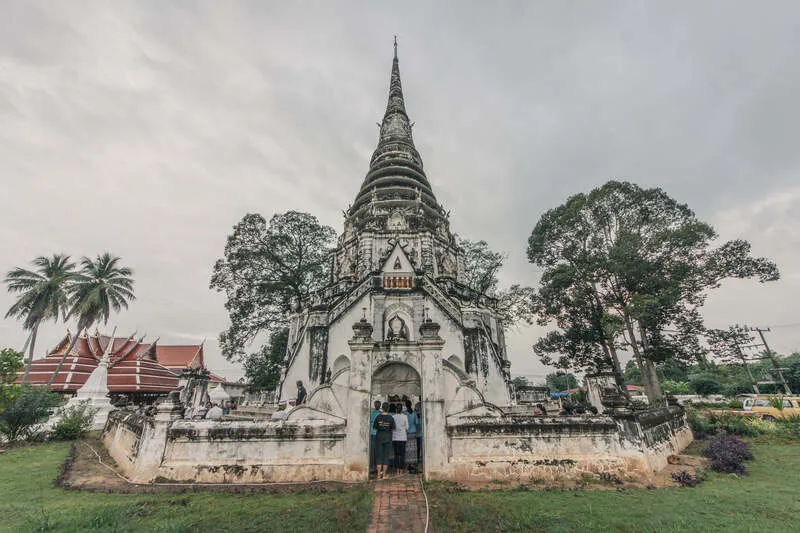
Wat Chulamani, Ang Thong Province is an ancient temple of historical and architectural importance in Ang Thong. It is located in Ongkharak Subdistrict, Pho Thong District, Ang Thong Province. The temple is considered an important heritage site that reflects the development of Thai sacred art from the late Ayutthaya era through the early Rattanakosin period. What makes Wat Chulamani distinctive is not only its age, but also the way it preserves clear characteristics of Ayutthaya-style architecture, especially the pointed-arch openings carved into the walls. This feature is strongly associated with late Ayutthaya artistic design. In addition, the temple complex contains a large stupa estimated to be about 38 meters tall, regarded as the largest stupa in Ang Thong Province, which has made the temple a key destination for visitors interested in history, art, and Thai cultural heritage.
The historical background of Wat Chulamani is closely connected to a major turning point in Thai history: the fall of Ayutthaya in 1767. After the Burmese army destroyed the capital, many monks and local people fled to safer areas. When peace gradually returned, a monk who survived the conflict is believed to have come back to the area of present-day Ongkharak and began establishing a new temple as a religious center for the community. For this reason, Wat Chulamani is commonly understood to have been founded after the fall of Ayutthaya and has served as a spiritual and cultural anchor for local residents for a long time.
In its earliest phase, Wat Chulamani may have started as a small community temple built with local materials. Over time, it was gradually developed and restored, particularly during the early Rattanakosin period when the country became more stable again. Several permanent structures were constructed, including the large stupa that remains the temple’s most prominent landmark today. Restoration and construction in different periods have left Wat Chulamani with a layered artistic identity, showing continuity from late Ayutthaya traditions into early Rattanakosin architectural expression.
One of the most notable features of Wat Chulamani is the Ayutthaya-style architecture seen in its historic structures, especially the pointed-arch openings in the walls. Similar arch forms can be found in important Ayutthaya temples. These openings not only help bring light and ventilation into the buildings, but also function as a significant artistic element that adds elegance and rhythm to the architecture. The design of these pointed arches suggests a strong artistic connection between Wat Chulamani and major Ayutthaya sites such as Wat Mahathat and Wat Ratchaburana, which feature comparable architectural language.
The large stupa within the temple grounds is considered the most important monument of Wat Chulamani. Estimated at around 38 meters in height, it is regarded as the largest stupa in Ang Thong Province. The structure has a bell-shaped form rising from a substantial base. It is generally thought to have been built during a period when Thai art began absorbing external influences, particularly from Chinese and Western culture, resulting in a visual character that differs from purely traditional Ayutthaya stupas. This blend reflects broader artistic transitions taking place from the late Ayutthaya era into the early Rattanakosin period.
Another remarkable structure at Wat Chulamani is its wooden sermon hall (sala kan parian), built during the reign of King Rama V. This hall stands out as an example of traditional Thai craftsmanship and vernacular engineering. Its roof is designed in multiple descending tiers, and it has no decorative ceiling, allowing visitors to see the complex wooden framework clearly. The structure demonstrates the skill of Thai carpenters who were able to create a large-scale building using smaller timber than what was typically used for halls of similar size.
Because of these construction techniques, the wooden sermon hall is not only a functional space for religious gatherings but also a valuable case study of traditional Thai structural problem-solving. Building a large hall from smaller timber requires precise understanding of load distribution, joint connections, and overall balance. This makes the hall an important piece of cultural knowledge that deserves careful preservation as part of Thailand’s architectural heritage.
Within the temple grounds, there are additional historic structures that help tell the story of the temple and the surrounding community. Some of these elements have been registered as ancient monuments by the Fine Arts Department, which highlights Wat Chulamani’s significance as a cultural heritage site of national value. Registration also supports appropriate conservation so that these monuments can remain as tangible historical evidence for future generations.
Today, Wat Chulamani continues to function as a religious and cultural center for the community of Ongkharak. Local residents still come regularly to make merit and participate in Buddhist activities. At the same time, the temple has become an important cultural tourism destination in Ang Thong. Visitors who are interested in history and architecture often come here to study ancient artistic features and to experience the atmosphere of an old riverside-region temple within Thailand’s central plain.
Getting There Reaching Wat Chulamani is convenient from Bangkok and nearby provinces. If traveling by private car from Bangkok, take the Asia Highway (Highway 32) toward Ang Thong. After arriving in Ang Thong town, turn onto the Ang Thong–Wiset Chai Chan road (Highway 3454) and continue for about 8 kilometers to Ongkharak Subdistrict, where Wat Chulamani is located. Travelers can also take a van or bus service on the Bangkok–Ang Thong route, then connect by local songthaew (shared pickup taxi) or motorcycle taxi from Ang Thong town to the temple area.
| Place Summary | An ancient temple in Ang Thong featuring Ayutthaya-style architecture, a major 38-meter stupa, and a wooden sermon hall from the reign of King Rama V. |
| Highlights | Largest stupa in Ang Thong (about 38 m) / Wooden sermon hall from Rama V / Ayutthaya architectural elements |
| Address | Ongkharak Subdistrict, Pho Thong District, Ang Thong Province |
| Temple Abbot / Caretaker | Phra Khru Wibun Worakan |
| Nearby Tourist Attractions | 1) Wat Muang – 18 km 2) Wat Chaiyo Worawihan – 12 km 3) Wat Pa Mok Worawihan – 15 km 4) Sala Daeng Market – 10 km 5) Ban Bang Sadet Royal Doll Center – 11 km |
| Popular Restaurants Nearby | 1) Sombat Phochana – 9 km – 035-611003 2) Krua Ban Suan – 7 km – 081-9426788 3) Pae Ang Thong – 10 km – 035-611301 4) Krua Roi Kratha – 8 km – 080-9282859 5) Ban Khanom Jeen Restaurant – 8 km – 081-9472210 |
| Popular Accommodations Nearby | 1) Centerplace Angthong – 10 km – 092-6913355 2) Pho Thong Inn – 7 km – 035-691139 3) Ang Thong Hotel – 9 km – 035-611667 4) N.J. Resort – 12 km – 089-0829508 5) Bualuang Boutique Resort – 14 km – 035-949850 |
Frequently Asked Questions (FAQ)
Q: Where is Wat Chulamani located?
A: It is located in Ongkharak Subdistrict, Pho Thong District, Ang Thong Province.
Q: When was Wat Chulamani founded?
A: It is commonly believed to have been established after the fall of Ayutthaya in 1767.
Q: How tall is the main stupa at Wat Chulamani?
A: The stupa is estimated to be about 38 meters tall and is regarded as the largest in Ang Thong Province.
Q: What is special about the wooden sermon hall?
A: Built during the reign of King Rama V, it showcases traditional Thai carpentry with a multi-tiered roof and an exposed wooden structural framework.
Q: What type of trip is Wat Chulamani best for?
A: It is ideal for cultural and historical travel, especially for visitors interested in Thai temple architecture and heritage sites.
 Wat Chulamani Map
 Category:
  Group:
  Last Update: 4 HourAgo
Comment
 Nearby Attractions
| Keyword (Advance) |
 Region
|
 Muang Ang Thong(