

 Home
Home Chiang Mai(




Rating: 3.6/5 (5 votes)
 |
|  Map
Map 
 Have Map
  No Map
Ang Thong attractions
Attractions in Thailand
Open Days: Daily
Opening Hours: 08:00 – 17:00
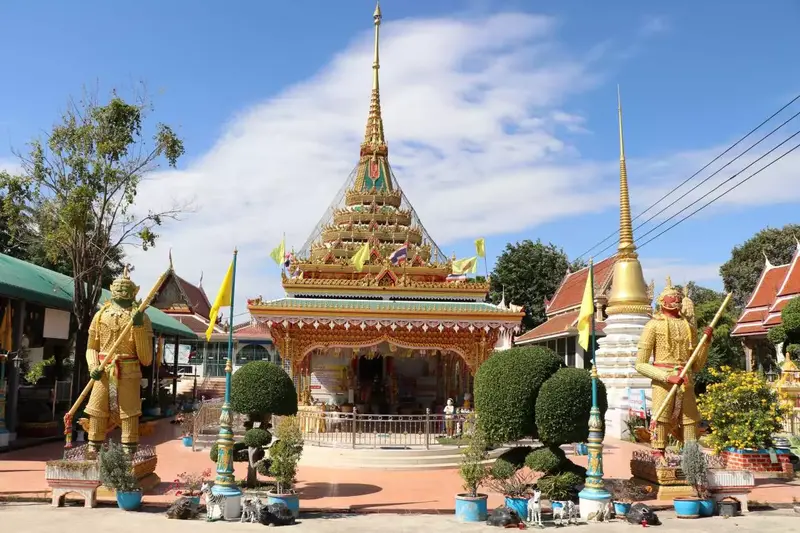
Wat Thanon (Ang Thong) is located in Phong Pheng Subdistrict, Pa Mok District, Ang Thong, on the Chao Phraya River corridor where riverside temples historically functioned as the community’s core — a place of worship, learning, local governance, and shared memory. The temple’s atmosphere is typically calm and shaded, with large trees and a traditional monastic compound that still feels like a lived-in local temple rather than a stage set for tourism. For travelers who want a quieter cultural stop in Ang Thong (and who enjoy temples where living belief is still visible), Wat Thanon is a strong option.
Wat Thanon is widely described as an old temple established around the Thonburi period (circa 1780). That timing matters in the lower-central plain because the late Ayutthaya-to-Thonburi transition reshaped communities along the river: people rebuilt livelihoods around waterborne trade, farming, and temple-centered social life. In this landscape, the Chao Phraya was not merely scenery — it was an economic artery and a cultural script. Temples like Wat Thanon grew as “river institutions”: they anchored merit-making calendars, supported local education, and offered spiritual certainty in a region where floods, harvest cycles, and river commerce determined daily rhythms.
The temple’s signature sacred object is Luang Pho Phra Phuttha Ramphueng, a large wooden Buddha image in the contemplative posture (Pang Ramphueng). The figure stands in a dignified upright stance with hands joined at the chest, a posture commonly interpreted as reflection, mindful consideration, and inner steadiness. Devotees often come here to pray for clarity in decision-making, stability in work and family matters, and the kind of calm focus that helps them navigate uncertainty. The statue is enshrined inside the main hall (viharn), and the space tends to encourage quiet worship — less about spectacle, more about concentration.
Local oral tradition adds a distinctive riverside legend to the temple’s identity: a raft drifted in front of Wat Thanon and would not float onward. The abbot of the time, Phra Thong Yu, investigated, performed a ritual invocation, and discovered the wooden Buddha image on the raft. After bringing the image ashore and enshrining it, the community came to know it as Luang Pho Phra Phuttha Ramphueng. Stories of sacred images arriving by water are common along the Chao Phraya basin, and they serve as cultural proofs of belonging: the river delivers not only trade and crops, but also sacred presence — and the community receives it together.
One of Wat Thanon’s best-known folk rituals is the “egg-standing” luck rite. Visitors attempt to stand a chicken egg upright on the ground in front of the sacred image. If the egg stands successfully, many interpret it as a favorable sign for luck, opportunity, or the specific wish they have made. If it does not, some devotees return to make additional merit and try again on another visit. When wishes are fulfilled, offerings commonly include boiled eggs, garlands, or performance offerings (such as dance/drama) as a form of gratitude. Whether one views it as faith, tradition, or a playful test of patience, the rite is a living example of how Thai popular Buddhism blends doctrine, local custom, and community psychology into a single worship experience.
Another notable sacred object is the “Floating Buddha Footprint” (Roi Phra Phutthabat Loi Fa), a wooden carved footprint mounted on the ceiling of the preaching hall (sala). Its placement forces visitors to look upward, a small but meaningful gesture in temple space: the gaze rises, attention lifts, and reverence becomes physical. The footprint is described as over a century old, and it is respected as a protective and auspicious symbol, especially for those praying for safety and favorable outcomes.
Architecturally, Wat Thanon retains classic central-Thai temple character: traditional-style monk residences, ornamental greenery, older stupas around the older ordination hall area, and guardian giant sculptures at the gate that visually mark the boundary between everyday space and sacred space. Taken together, these elements make the temple particularly suitable for travelers who enjoy “reading” a place through its layout and objects — not only taking photos, but noticing how belief is built into the environment.
Annual temple life at Wat Thanon aligns with the standard merit-making cycle of river communities: major Buddhist holy days, Songkran merit-making and elder blessings, and Kathin ceremonies after the rains retreat. For visitors, the most visible differences are often on weekends and Buddhist holy days, when worship traffic increases and the atmosphere becomes more communal. If you want a quieter visit, weekday mornings are typically more relaxed; if you want to see local faith in motion, weekends and festival periods are the more revealing window.
Getting There From Bangkok, take the Si Rat Expressway and connect to Highway 32 (Asia Road) toward Ang Thong. Then use the Pa Mok – Bang Ban route (Rural Road 3501). After passing Pa Mok municipal market, continue roughly 7 km to Wat Thanon. Public transport options include buses or vans from Mo Chit to Pa Mok, then a local songthaew or motorcycle taxi to the temple (typically 15–20 minutes onward travel depending on traffic).
| Place Name | Wat Thanon |
| Address | Phong Pheng Subdistrict, Pa Mok District, Ang Thong, Thailand |
| Place Summary | A historic riverside community temple in Ang Thong, best known for Luang Pho Phra Phuttha Ramphueng (a large wooden contemplative Buddha image), the egg-standing luck rite, and a ceiling-mounted carved Buddha footprint. |
| Key Highlights | Luang Pho Phra Phuttha Ramphueng (wooden Pang Ramphueng image, over 2 m tall), egg-standing luck rite, Floating Buddha Footprint on the preaching hall ceiling, traditional Thai temple compound and guardian giant sculptures. |
| Estimated Establishment Period | Thonburi Period (circa 1780) |
| Abbot (Latest) | Phra Baidika Wichian Sumangalo |
| Contact Number | +66 35 52 5880 |
| Nearby Tourist Attractions (Approx. Driving Distance) | 1) Wat Pa Mok Worawihan – approx. 10 km – Tel. 035-661-286 2) Wat Chaiyo Worawihan – approx. 22 km – Tel. 089-987-2500 3) Wat Ton Son (Ang Thong) – approx. 25 km – Tel. 035-611-198 4) Wat Khun Inthapramun – approx. 30 km – Tel. 035-691-406 5) Wat Muang (Ang Thong) – approx. 35 km – Tel. 035-631-556 |
| Popular Restaurants Nearby (Approx. Driving Distance) | 1) Pinto Restaurant (Pa Mok) – approx. 8 km – Tel. 035-662-589 2) Krua Khun Kung Phae Rim Nam (Ang Thong) – approx. 22 km – Tel. 083-039-1999 3) Kway Teow Thang Khong Khai Luak (Pa Mok) – approx. 9 km – Tel. 064-926-5244 4) Lek Ban Ro Restaurant (Ang Thong) – approx. 20 km – Tel. 035-612-070 5) Lamoon Cafe & Restaurant (Ang Thong) – approx. 21 km – Tel. 092-392-2505 |
| Popular Accommodations Nearby (Approx. Driving Distance) | 1) Bualuang Hotel Ang Thong – approx. 20 km – Tel. 035-611-116 (or 080-922-4040) 2) Hornokhook Resort Ang Thong – approx. 28 km – Tel. 084-941-2502 3) Blue House Ang Thong – approx. 20 km – Tel. 080-640-9465 4) Ratchaphruek DC Resort Ang Thong – approx. 22 km – Tel. 035-610-800 (or 080-193-3277) 5) Jumbo Villa Homestay & Resort – approx. 30 km – Tel. 085-944-1244 (or 082-3244-565) |
Frequently Asked Questions (FAQ)
Q: Where is Wat Thanon located?
A: Wat Thanon is in Phong Pheng Subdistrict, Pa Mok District, Ang Thong, within the Chao Phraya riverside cultural corridor.
Q: What is the main highlight of Wat Thanon?
A: The main highlight is Luang Pho Phra Phuttha Ramphueng, a large wooden Buddha image in the contemplative posture (Pang Ramphueng), enshrined in the main viharn.
Q: What is the egg-standing ritual?
A: Devotees try to stand an egg upright in front of the sacred image as a folk luck sign. If successful, many interpret it as a favorable omen for luck or the wish they made.
Q: What is the Floating Buddha Footprint and where can I see it?
A: It is a carved wooden Buddha footprint mounted on the ceiling of the preaching hall (sala). Visitors look up to pay respect and pray for protection and auspicious outcomes.
Q: Is Wat Thanon suitable for a quiet cultural visit?
A: Yes. The temple is typically calm and shaded, and it is best for visitors who want a slower riverside temple atmosphere rather than a crowded tourist complex.
 Wat Thanon Map
 Category:
  Group:
  Last Update: 2 HourAgo
Comment
 Nearby Attractions
| Keyword (Advance) |
 Region
|
 Muang Ang Thong(