

 Home
Home Chiang Mai(


























Rating: 4.2/5 (5 votes)
 |
|  Map
Map 
 Have Map
  No Map
Ratchaburi attractions
Attractions in Thailand
Open Days: Open Daily
Opening Hours: 08:00 – 17:00
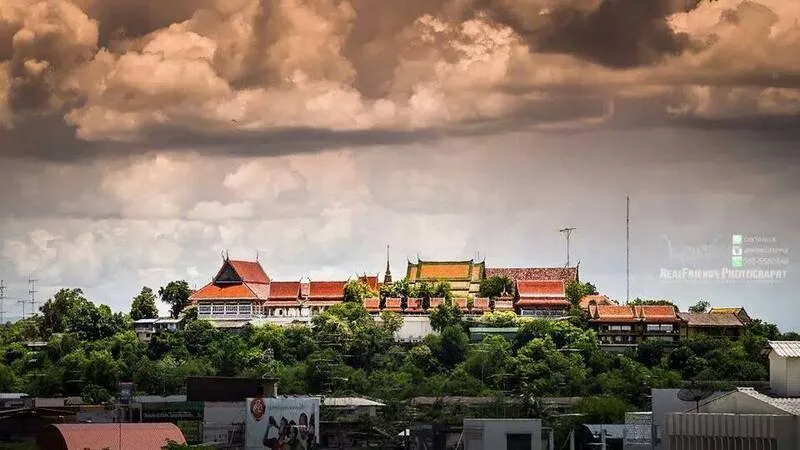
Wat Khao Wang, Ratchaburi, commonly known simply as “Khao Wang,” is one of the most important landmarks in Ratchaburi Province. It stands out for its rich combination of history, religion, architecture, and panoramic city views. Its appeal lies not only in being a hilltop temple where visitors can enjoy a wide view over Ratchaburi, but also in being a place layered with multiple periods of history. From its early identity as a well-known hill, to the royal command for the construction of a palace during the reign of King Chulalongkorn, to its later transition from royal property into monastic land and eventually an active temple, Wat Khao Wang has become a destination for travelers, worshippers, and those interested in Thai history alike.
When people talk about attractions in Ratchaburi, many may think of old markets, ceramic art, Khao Ngu Stone Park, or important temples in the city. Yet if one place were to represent the image of Ratchaburi most clearly, Wat Khao Wang would almost always be among the first mentioned. One key reason is its very distinctive setting. The temple stands on Khao Sattanat, a small hill rising about 44 meters above the surrounding area, located roughly 2 kilometers west of the city center. This makes it highly accessible, and there is even a road for cars all the way to the top. Visitors can therefore go up to pay respect, admire the historic buildings, and take in the sweeping city view without having to spend much time climbing as they would at similar hilltop sites elsewhere.
What makes Wat Khao Wang especially interesting is that it allows readers and visitors to understand Ratchaburi from several perspectives at once. In the religious sense, it is a serene temple ideal for worship and quiet reflection. In the historical sense, it is a place closely connected to royal initiatives during the reign of King Rama V and tied to the political and administrative history of Ratchaburi. In the tourism sense, it is one of the city’s most notable viewpoints. And in terms of conservation, Wat Khao Wang is a fine example of how a historic place can remain truly alive, rather than being left as a silent monument people simply pass by. It continues to function as a temple, a community space, and a destination that people still visit regularly.
The name “Khao Wang,” which local people commonly use, reflects the site’s background very well. The hill was originally called “Khao Sattanat,” but later came to be known as “Khao Wang” because a royal palace was built on its summit. This simple, familiar name is therefore more than a geographical nickname. It carries the memory of the site’s past within it. Whenever people mention Khao Wang, they are in effect referring to the hill that once housed a royal palace, and when they mention Wat Khao Wang, they are speaking of a temple that grew directly from the foundations of that historic space.
In terms of historical background, the area on Khao Sattanat was already significant before the palace was built during the reign of King Rama V. There is information indicating that an earlier temple had already existed on the hill. Later, King Chulalongkorn commanded the construction of a royal palace here in 1873. The idea of building a palace on a hill in an important provincial city reflected the vision of the Thai royal court during a period when Siam was adapting to modernity. At that time, Ratchaburi was an important city in terms of strategy, administration, and transportation. The palace on the hill therefore reinforced the city’s importance and demonstrated the value seen in a landscape that could function both as a royal residence and as a commanding vantage point over the city.
Although Wat Khao Wang is now known primarily as a temple, a closer look reveals that the dimension of the “palace” has never disappeared from the memory of the place. What makes it different from ordinary temples is its history as a royal hilltop palace. This gives the site traces of royal use in the past, interwoven with its present religious function. That feeling gives Wat Khao Wang a distinctive character unlike many other hilltop temples. Visitors do not simply feel that they are visiting a temple with a viewpoint, but rather a place layered with multiple periods of history.
An important event often mentioned alongside the history of Khao Wang is that King Chulalongkorn visited the palace only once, in 1877, in order to receive the Portuguese ambassador. After that, he did not stay there again during the rest of his reign. This gives the place an especially interesting historical dimension. Even though it was not used continuously as a royal residence, it still played a role in an event that linked Ratchaburi with international relations at the time. The fact that the palace on this hill once served as a venue for receiving a foreign diplomatic mission means that Khao Wang was not merely an architectural feature of the city, but also a stage for diplomatic history during the era when Siam was opening itself more fully to the outside world.
As time passed and the role of the palace declined, the area on Khao Sattanat entered another major period of transition. During the reign of King Prajadhipok, the land was dedicated to the Buddhist monastic order. After that, devoted supporters helped restore parts of the buildings and adapted various palace residences for Buddhist use, turning them into structures such as an ordination hall, monks’ residences, and spaces for monastic activities. Eventually, the site was elevated into a temple. This is central to understanding Wat Khao Wang, because it did not begin as a newly built temple on empty land. Instead, it gradually grew by inheriting a historic site and giving that site a renewed life in a new role.
The adaptation of former palace buildings and grounds into components of a temple reflects a particularly interesting aspect of Thai society: conservation through continued use, rather than preservation in complete separation from everyday life. As long as people continue to use the place, as long as monks reside there, and as long as worshippers and visitors keep coming, the site retains the force that sustains its care. Wat Khao Wang is therefore a clear example of how historical heritage can continue to exist in harmony with religious life and community life.
One of the first things visitors notice upon arriving at Wat Khao Wang is the atmosphere created by the open view over Ratchaburi. From this elevated position on Khao Sattanat, people can see the city from a very different perspective than they do at street level. Houses, roads, and the broader city landscape unfold calmly below. At certain times of day, soft sunlight falls across the city, while a gentle breeze moves across the hilltop. This creates a special feeling of being both peaceful and open at the same time. For those who enjoy visiting temples but want more than the experience of simply paying respect, Wat Khao Wang is particularly rewarding, because it offers both the serenity of a temple and the beauty of a panoramic viewpoint in the same place.
From a tourism perspective, Wat Khao Wang is clearly accessible and well suited to different kinds of travelers. The first group is those who wish to make merit and worship, as the temple offers a calm atmosphere conducive to that purpose. The second group is those interested in history and architecture, as they can see a place rooted in a former royal palace. The third group is made up of people who enjoy scenic viewpoints, since the summit offers broad views and excellent photo opportunities. Finally, it is also suitable for families and older visitors because cars can drive to the top, meaning a hilltop temple visit does not become too physically demanding.
Another reason Wat Khao Wang is worth visiting is that it can be enjoyed on different time scales. If you have limited time, you can simply go up to pay respect and enjoy the view in a short visit. But if you have more time, the place is equally suitable for a slower experience: walking through the grounds, observing the historic architecture, noticing the temple’s details, and letting your eyes follow the cityscape below. Because Wat Khao Wang is not simply an activity-based attraction but also an atmosphere-based one, it is especially rewarding for travelers who enjoy absorbing a place rather than rushing through a checklist of destinations.
Those who love history often appreciate Wat Khao Wang on a deeper level, because the site connects several different eras in a very natural way. It stretches from the period when the hill already had an earlier temple, through the construction of the royal palace in the reign of King Rama V, through its role in receiving a foreign ambassador, through its transformation into monastic land during the reign of King Rama VII, and finally into its present status as a royal temple. Looking at these phases together, it becomes clear that Wat Khao Wang is not a place frozen in one period of time, but one that has changed its role according to the country’s and society’s circumstances. Yet through every transformation, its core significance to people has remained.
Today, Wat Khao Wang remains an active temple. Monks reside there, religious activities continue, and it is well known among those who come to make merit or visit Ratchaburi. This continued life is highly important because it ensures that the place does not feel dry or reduced to being a tourist attraction alone. Those who go up the hill can feel that it is a genuine place of faith, not just a scenic point to visit briefly before going back down. That living quality is exactly what gives Wat Khao Wang a depth of charm beyond historical sites that retain only an outer shell.
Another aspect that makes Wat Khao Wang especially attractive is its location close to the city center, which allows it to connect easily with other places. Travelers planning a city itinerary in Ratchaburi can begin the day by going up to Wat Khao Wang for worship and views, then continue on to other sites in town, whether important temples, museums, old markets, cafés, or local restaurants. This makes Wat Khao Wang not an isolated destination that requires a separate trip, but rather a central landmark that fits naturally into a broader Ratchaburi itinerary.
For those concerned about transportation, Wat Khao Wang is remarkably convenient compared with many hilltop temples and viewpoints. It lies only about 2 kilometers from the city center, and there is a road all the way to the summit. Driving is therefore the most convenient option, especially for those planning to visit several places in one day. Travelers without private cars can also use local transport or ride-hailing services from the city center, since the distance is short. This ease of access makes Wat Khao Wang suitable for nearly all kinds of visitors, from solo travelers and couples to families and senior groups.
Getting There If you start from central Ratchaburi, head west toward Khao Wang. In about 2 kilometers, you will reach the entrance road leading up the hill. Cars can drive directly to the top, which saves a great deal of time and effort. Those using a private vehicle should drive carefully on the uphill road, especially during weekends or holidays when traffic may be heavier than usual. Travelers using public transportation can first arrive in Ratchaburi town and then continue by local hired transport or ride-hailing service to the temple. This approach works well for visitors who want to explore the city without renting a car.
The best times to visit Wat Khao Wang are usually in the morning and late afternoon. In the morning, the atmosphere is fresh and the weather is generally more comfortable, making it a pleasant time for worship and for viewing the city before the heat builds up. In the late afternoon, the light becomes softer, the city below looks more gentle, and the breeze on the hill is usually pleasant, making it especially enjoyable for looking out over the city or taking photographs. For those who want an experience that feels both peaceful and visually rewarding, choosing the right time of day matters, because much of Khao Wang’s charm lies in its atmosphere and in how the city looks from above at different hours.
For those who appreciate old temples, Wat Khao Wang feels distinctly different from newly built temples. The atmosphere here carries a quiet sense of age and memory. Visitors do not need to know every historical detail in advance to feel that the place has passed through many layers of time. The buildings and surrounding grounds possess a calmness that does not need to be artificially created. Combined with the view over the city below, this makes a visit to Wat Khao Wang feel like a genuine pause from the rush of daily life.
For families, Wat Khao Wang is also a strong choice because it appeals to different age groups. Older visitors can reach the top relatively easily, children can enjoy seeing the city from above while learning about the place, and working adults can enjoy both a relaxing atmosphere and beautiful photo spots without having to travel far out of town. This flexibility makes Wat Khao Wang suitable both for a short stop and for serving as a central point in a one-day Ratchaburi itinerary.
In terms of meaning, Wat Khao Wang also reflects the relationship between the monarchy, the city of Ratchaburi, and Buddhism. From the royal initiative to build a palace on the hill during one period, to the later dedication of the area as monastic land, the site represents a transition from royal space to a place of public faith. That is precisely why Wat Khao Wang has a value that goes far beyond being simply a beautiful temple or a scenic viewpoint.
Those who want to contact the temple directly, whether to ask about group visits, merit-making, or other details, often look for information about the site’s administrators and contact channels. Today, Wat Khao Wang is a royal temple, and it has an abbot responsible for overseeing its affairs. This information adds completeness to travel planning, especially for tour groups, senior groups, or visitors with a particular intention to make merit, because it allows them to coordinate in advance more easily.
Purely in terms of experience, visiting Wat Khao Wang is not something that should be rushed. In fact, the less hurried the visit, the better. This is a place best absorbed slowly rather than treated as a quick check-in. The more time visitors spend looking over the city from above, letting time slow down, reading signs, or learning about the site’s history, the more meaningful the visit becomes. Those who enjoy cultural travel often remember Wat Khao Wang fondly because it offers both story and feeling, not just outward beauty.
A visit to Wat Khao Wang can also be extended into other experiences in Ratchaburi. Those who want to continue with historical attractions can go on to Wat Mahathat Worawihan or the Ratchaburi National Museum. Those interested in local art and creative culture can continue into the ceramic district or cafés in town. Nature lovers might then plan an afternoon visit to Khao Ngu Stone Park. Because Wat Khao Wang connects so naturally to several other destinations, it serves almost like a gateway into exploring Ratchaburi as a whole.
For those seeking a place that helps them understand Ratchaburi more deeply, Wat Khao Wang is an excellent answer. It offers not only a beautiful elevated view of the city, but also a clear sense of how one city can hold multiple layers of history within it. This small hill near the town center was once a temple, then a palace, and later became a temple again in a renewed sense. These transitions did not erase its earlier memories. Instead, they made the place more meaningful over time.
Viewed as a whole, Wat Khao Wang, Ratchaburi, is an exceptionally complete destination for travelers who love temples, history, and scenic viewpoints. It has a strong location, easy access, a compelling story, a clear identity, and convenient links to nearby places. Whether one comes to make merit, admire the view, study history, or simply spend quiet time with another side of Ratchaburi, Wat Khao Wang consistently offers a worthwhile experience.
What keeps Wat Khao Wang in people’s minds to this day is that the site does not need to rely on anything flashy to attract attention. Instead, it draws people in through the strength of its story and the authenticity of its atmosphere. Many visitors remember Khao Wang for its simplicity and quiet weight — a place where the city seems wider, the past clearer, and one’s own mind calmer. Having such a place so close to the city adds a deeper charm to Ratchaburi and ensures that Wat Khao Wang remains a landmark not to be overlooked.
If one had to describe Wat Khao Wang in a single sentence, it would be a place that brings together an old temple, a former royal palace, and a city viewpoint in one harmonious setting. Yet anyone who actually visits will find that what the place offers goes far beyond that brief definition. Every step on this hill is supported by historical context, every city view is enriched by atmosphere, and every moment of quiet within the temple turns the visit into more than simply passing through. It becomes a chance to pause with a place of genuine significance.
So whether you are a temple enthusiast, a history lover, a photographer, or simply someone looking for an easy-to-reach and meaningful attraction in Ratchaburi town, Wat Khao Wang answers all of those purposes. It is not merely one more destination on a provincial travel list, but a place that clearly tells the identity of Ratchaburi through its landscape, architecture, historical narrative, and present-day role. If you have the chance to visit Ratchaburi, Wat Khao Wang is a place worth giving more than just a brief stop, because the more time you spend with it, the more clearly its value reveals itself.
| Name | Wat Khao Wang Royal Temple |
| Location | Khao Sattanat, Na Mueang Subdistrict, Mueang Ratchaburi District, Ratchaburi Province |
| Address | Khao Wang Area, Na Mueang Subdistrict, Mueang Ratchaburi District, Ratchaburi 70000 |
| Place Summary | An important temple in Ratchaburi located on Khao Sattanat, or Khao Wang. The area was formerly associated with a royal palace built during the reign of King Rama V before later becoming monastic land and eventually being established as a temple. |
| Highlights | 1. A hilltop temple with a history linked to a former royal palace 2. Panoramic views over Ratchaburi city 3. Easy access with a road for vehicles all the way to the top 4. Suitable for merit-making, sightseeing, and historical exploration 5. One of the major landmarks of central Ratchaburi |
| History | King Chulalongkorn ordered the construction of a royal palace on Khao Sattanat in 1873 and stayed there in 1877 to receive the Portuguese ambassador. Later, during the reign of King Rama VII, the area was dedicated as monastic land before parts of the buildings were restored and adapted for religious use, eventually becoming a temple. |
| Period | The site originally had an earlier temple and became especially significant during the early Rattanakosin period through the reign of King Rama V before transitioning into its later role as a temple. |
| Name Origin | The name “Khao Wang” comes from the hill once being the location of a royal palace, while the hill’s original name was “Khao Sattanat.” |
| Current Abbot / Overseer | Phra Phawan Wihan Kit (Thongyoi Sanyamo) |
| Getting There | From central Ratchaburi, head west for about 2 km. There is a road all the way to the top, making it convenient for private vehicles. Visitors can also use local hired transport or ride-hailing services from the city center. |
| Current Status | An active temple that remains open for worship, visits, and group coordination. |
| Temple Contact Number | 0 3233 7177 |
| Zone | Central Ratchaburi / Khao Wang / Na Mueang Area |
| Nearby Attractions | 1. Ratchaburi National Museum – Approx. 2 km – City Center Zone – Tel. 0 3232 1513 2. Wat Mahathat Worawihan – Approx. 3 km – City Center Zone – Tel. 06 2238 8893 3. Tao Hong Tai Ceramic Factory – Approx. 3 km – Chedi Hak Zone – Tel. 08 6344 9292 4. Khao Ngu Stone Park – Approx. 8 km – Khao Ngu Zone – Tel. 0 3239 1308 5. Wat Nong Hoi – Approx. 15 km – Khao Raeng Zone – Tel. 0 3220 6873 |
| Nearby Restaurants | 1. Kobua Thai Restaurant Khao Wang Ratchaburi – Approx. 1 km – Khao Wang Zone – Tel. 09 7041 1055 2. Kuay Tiew Ong Mangkon, Chedi Hak Branch – Approx. 2 km – Chedi Hak Zone – Tel. 08 9254 6456 3. Potta – Approx. 2 km – City Center Zone – Tel. 08 1562 2632 4. Opo Chiffon Cake Ratchaburi – Approx. 2 km – Na Mueang Zone – Tel. 0 3231 3448 5. Kuay Tiew Khai Ratchaburi Khao Wang – Approx. 2 km – Khao Wang Zone – Tel. 08 1869 7733 |
| Nearby Accommodations | 1. Citywan Ratchaburi – Approx. 1 km – City Center Zone – Tel. 09 6939 7991 2. Napa Ratchaburi Hotel – Approx. 2 km – Na Mueang Zone – Tel. 06 5229 2249 3. Centara Life Wisma Hotel Ratchaburi – Approx. 2 km – City Center Zone – Tel. 0 3232 6555 4. Sleep by Me Ratchaburi – Approx. 3 km – City Center Zone – Tel. 06 5956 6158 5. Sans Hotel Ratchaburi – Approx. 3 km – Na Mueang Zone – Tel. 0 3291 3244 |
| Facilities | Road access to the top, viewpoint area, parking area depending on site conditions, merit-making area, scenic rest points |
Frequently Asked Questions (FAQ)
Q: Where is Wat Khao Wang, Ratchaburi located?
A: Wat Khao Wang is located on Khao Sattanat, locally known as Khao Wang, in Na Mueang Subdistrict, Mueang Ratchaburi District, Ratchaburi Province. It is about 2 kilometers west of the city center.
Q: Is Wat Khao Wang a temple or a palace?
A: Today it is a temple, but the site is historically connected to a royal palace built during the reign of King Chulalongkorn, giving it both religious and historical significance in one place.
Q: Why is Wat Khao Wang historically important?
A: Khao Wang is historically important because King Chulalongkorn ordered the construction of a royal palace there in 1873, and he later stayed there in 1877 to receive the Portuguese ambassador. During the reign of King Rama VII, the area was then dedicated as monastic land and later developed into a temple.
Q: What are the highlights of Wat Khao Wang?
A: The highlights of Wat Khao Wang include its status as a hilltop temple linked to a former royal palace, panoramic views over Ratchaburi city, convenient access, and a peaceful atmosphere suitable for both worship and relaxation.
Q: Can visitors drive up to Wat Khao Wang?
A: Yes. There is a road for vehicles all the way to the top, making it convenient for visitors of all ages, including elderly travelers and those who may not wish to walk uphill for a long distance.
Q: What is the best time to visit Wat Khao Wang?
A: Morning and late afternoon are usually the best times to visit, as the weather is more comfortable, the light is beautiful, and the city view from above is especially pleasant.
Q: Who is the current abbot of Wat Khao Wang?
A: The current abbot listed in this article is Phra Phawan Wihan Kit (Thongyoi Sanyamo).
Q: What number should I call to contact Wat Khao Wang?
A: The contact number used in this article is 0 3233 7177. It is recommended to call ahead if you need details about group visits or additional information.
 Tel: 032337177
 Fax: 032312725
 Wat Khao Wang Map
 Category:
  Group:
  Last Update: 7 HourAgo
Comment

Photo Gellery(3) 
 Thank you photo(3) from: Naran Utsaha
|
|
|
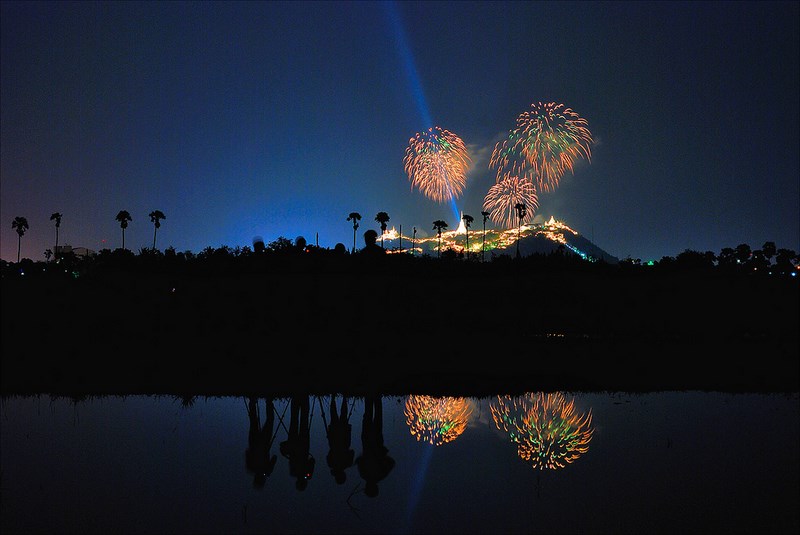
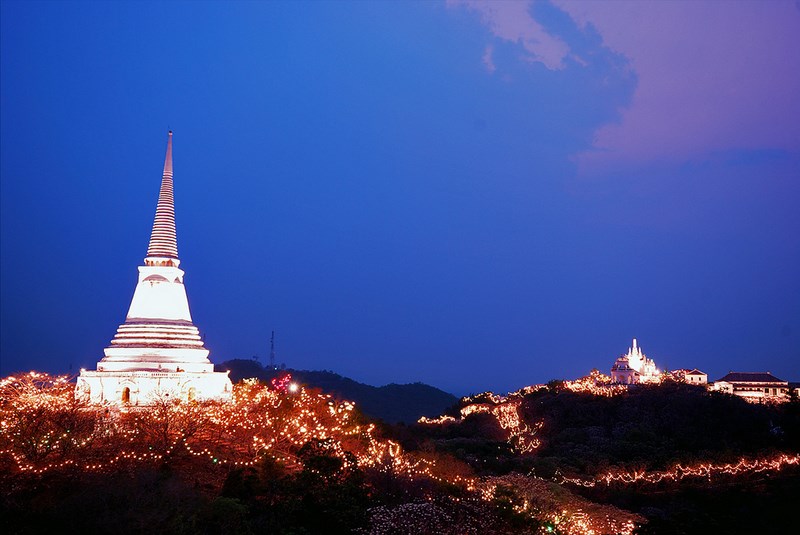
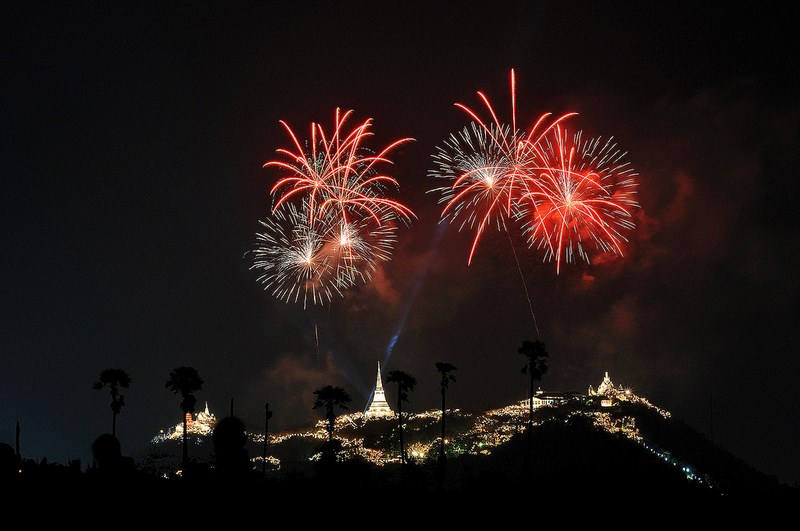
 | ● Photographer: Naran Utsaha ● Link: facebook.com/naran.utsaha ● Ref: pixpros.net |
● Copyright Photography. (800*500)
● View full size images from the photographer.
● View full size images from the photographer.
 Nearby Attractions
| Keyword (Advance) |
 Facebook Fanpage
 Region
 Art, Culture and Heritage
 Historical Sites and Monuments(
 Landmarks and Memorials(
 Art, Craft Centres, Tradition(
 Museums(
 Art Gallery(
 Educational Places
 Educational Gardens, Farm(
 University
 Other religious and spiritural sites(
 Research and Development
 Royal Project(
 Suburban Living
 Village, Community(
 Local Market(
 Floating Market(
 Nature and Wildlife
 National Parks and Marine Reserves(
 Mountain (Doi)(
 Dam, Reservoir, Lake(
 Waterfalls(
 Hot Springs(
 Caves(
 Flower Field(
 River, Canal(
 Other natural attractions(
 Entertainment and Agricultural
 Zoos and Aquariums(
 Animal camps and shows(
 Farm, Parks, Gardens and Ecotourism(
 Waterpark(
 Outdoor and Adventure Activities(
 Shopping
 Shopping and Night Market(
 Spas and Wellness
 Spas and Wellness(
 Travel Articles, Recipes
 Travel Review, Food Review(