

 Home
Home Chiang Mai(






















Rating: 4/5 (6 votes)
 |
|  Map
Map 
 Have Map
  No Map
Ratchaburi attractions
Attractions in Thailand
Open Days: Open daily
Opening Hours: It is advisable to contact the temple directly before visiting
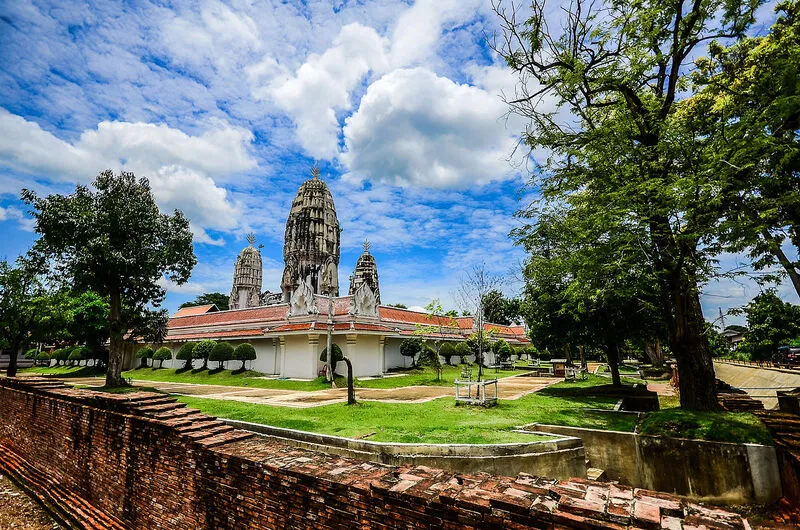
Wat Mahathat Worawihan, Ratchaburi, also known locally as Wat Na Phra That and Wat Phra Si Rattana Mahathat, is an ancient royal temple in the heart of Ratchaburi. It preserves layers of artistic and architectural heritage spanning the Dvaravati period, Khmer or Lopburi influence, and the Ayutthaya period. Its most remarkable highlights are the principal prang and subsidiary prangs, the main viharn housing Phra Mongkhon Buri and the guardian Buddha images of the city, mural paintings inside the prang, the reclining Buddha image, and the historical temple atmosphere that clearly reflects the old identity of Ratchaburi.
Wat Mahathat Worawihan, Ratchaburi is one of the most important ancient temples in Ratchaburi Province. Its value extends far beyond being simply a place of worship, as it also reflects the history of Ratchaburi through ancient monuments, architecture, and Buddha images from several different periods that remain preserved within a single temple complex. As soon as visitors enter the temple grounds, they can sense that this is not an ordinary modern temple, but rather a place that tells the story of an old city, political power, cosmological beliefs, and artistic traditions that were built, restored, and passed down across many eras.
Many local residents of Ratchaburi still know this temple by its older names, “Wat Na Phra That” and “Wat Phra Si Rattana Mahathat.” These names reflect the temple’s original role as the central temple of the city, corresponding to the nature of Mahathat temples in many important Thai cities, where they often served as spiritual centers and key focal points in the urban layout. Wat Mahathat Worawihan in Ratchaburi is likewise located in what was considered the heart of the old city, which explains why it remains one of the province’s most significant historical monuments.
Some scholars believe that the temple’s origins date back to the Dvaravati period, associated with the establishment of old Ratchaburi around the 15th–16th Buddhist centuries. Later, a Khmer or Lopburi-style religious structure was built over the earlier remains. When the earlier structure deteriorated or changed over time, a new prang in the form most clearly visible today was constructed in the early Ayutthaya period. What makes Wat Mahathat Worawihan especially fascinating is this genuine “historical layering,” visible in its structural remains, architecture, and artistic features.
From the outside, the temple’s prang is the first feature that immediately draws the attention of visitors. The principal prang stands prominently in the center of the courtyard, accompanied by subsidiary prangs arranged around it in a way that reflects the Khmer cosmological concept of the center of the universe. This layout is not only meaningful in religious terms, but also demonstrates the role of Ratchaburi as an important city that once received strong cultural influence from outside and later adapted those influences into its own local identity.
The principal prang is approximately 24 meters high and stands on the same base as the subsidiary prangs to the south, west, and north. On the eastern side, there is a projecting porch with stairs leading up to the prang base. This arrangement allows viewers to appreciate both the ceremonial and architectural dimensions of the monument at the same time. The base, central body, and upper section are decorated with stucco patterns that, despite the passage of time, still reveal the refinement of ancient craftsmanship. When sunlight falls across the old stucco and brick surfaces, the details of the prang become even more striking and full of character.
Inside the principal prang are interconnected chambers, and one particularly important feature is the mural painting that reflects artistic work from the Ayutthaya period. The upper walls depict rows of former Buddhas within radiant niches, while the lower sections illustrate episodes from the life of the Buddha. These murals mean that the prang is not only an impressive monument from the outside, but also a place of great interior artistic value for anyone interested in Thai art history.
Around the base of the prang is a surrounding walkway, allowing visitors to take time examining the monument from different angles. The beauty of Wat Mahathat Worawihan is therefore not the kind of beauty that can be fully appreciated at a glance. Instead, the more closely one looks, the more one discovers the skill of ancient artisans, evidence of restoration, and the coexistence of sacred meaning and archaeological significance within the same place.
Another highly important part of the temple is the Main Viharn, which houses Phra Mongkhon Buri, a stucco Buddha image in the Mara-Vijaya posture from the early Ayutthaya period. This Buddha image has a Sukhothai-style face, a long torso, and short knees, features that art historians often identify as characteristic of early Ayutthaya sculpture. Phra Mongkhon Buri is not only the principal Buddha image of the viharn, but also carries civic significance, as it is connected to the ancient belief in protecting the city.
Behind Phra Mongkhon Buri is another Buddha image facing west, positioned back-to-back with the main image. This arrangement is commonly interpreted as the “guardian Buddha of the city,” intended to protect against danger from both front and rear. This belief reflects the worldview of Ayutthaya-period people, who saw temples and Buddha images not only as spiritual refuges, but also as sources of protection, stability, and security for the wider community.
In front of the main viharn stands a sacred enclosure wall constructed of laterite, which strongly enhances the atmosphere of the ancient temple. The laterite here is not merely a building material, but also physical evidence of historical construction techniques. It immediately conveys the age of the site as soon as one passes through it. The more slowly visitors walk through the temple, the more they realize that every part of the grounds is connected to broader historical narratives.
In addition to the main viharn, the temple also has a cloister surrounding the prang courtyard, where Buddha images from several different periods are enshrined, including examples from the Dvaravati, Lopburi, and Ayutthaya eras. Walking through this cloister feels like moving through layers of Thai art history in a single place. Even visitors without deep prior knowledge can still sense the differences in style among the images, while those with a strong interest in art history will find it especially rewarding to observe distinctions in facial forms, body proportions, bases, and materials.
In front of the prang is also a building that houses a stucco reclining Buddha image created during the Ayutthaya period. This reclining Buddha is another highlight that visitors should not miss, as it broadens the identity of Wat Mahathat Worawihan beyond the commonly remembered image of the prang alone. The stucco craftsmanship of the reclining image demonstrates the skill of Ayutthaya artisans, and when considered together with the other elements within the temple, it becomes even clearer that this site is truly an important center of artistic heritage in Ratchaburi.
Another interesting feature is the museum displaying various types of jars and pottery. Although many visitors already associate Ratchaburi with its famous dragon jars, seeing these objects displayed within the temple grounds adds another cultural dimension to the visit. It is no longer just about paying respects or admiring ancient monuments, but also about connecting with the local identity of Ratchaburi, which is well known for its ceramic traditions. This makes Wat Mahathat Worawihan suitable for pilgrims, history enthusiasts, and cultural travelers alike.
Viewed as a whole, Wat Mahathat Worawihan possesses several layers of significance. The first is its historical value as an important temple of ancient Ratchaburi. The second is its artistic value, since elements of Dvaravati, Khmer or Lopburi, and Ayutthaya art appear together in one place. The third is its spiritual value, because it remains a functioning temple actively used by the local community for religious practice, rather than becoming an archaeological site separated from everyday life.
For general visitors, the charm of Wat Mahathat Worawihan lies in the feeling that one can “read the city of Ratchaburi through a single temple.” Almost every corner of the temple opens up into larger themes, whether the relationship between city and religion, the influence of Khmer culture on western Thailand, the continuity of restoration in the Ayutthaya period, or the role of Buddha images as symbols of protection for the city.
This temple is also especially suitable to visit together with other important attractions in downtown Ratchaburi, as it is located not far from the Ratchaburi National Museum and can easily be combined with visits to Wat Chong Lom Royal Monastery, the Ratchaburi City Pillar Shrine, Khao Kaen Chan, or Khao Ngu Stone Park. It is therefore ideal for a half-day or full-day itinerary in the city, especially for travelers who want a trip that combines culture, history, and the atmosphere of an old provincial town.
In terms of atmosphere, Wat Mahathat Worawihan feels different from mountain temples or market temples, because its appeal lies more in its “weight of history” than in dramatic tourist presentation. If visited in the morning or late afternoon, the light brings out the textures of old brick, stucco, and laterite beautifully, making the prang and viharn appear solemn, peaceful, and dimensional. It is especially suitable for those who enjoy photographing old architecture and for those who appreciate reading stories through real places.
Getting There From Bangkok, visitors can conveniently take Phetkasem Road to Ratchaburi city, then continue into the city area and follow the road toward Khao Ngu in Na Mueang Subdistrict. The temple is located within the municipal area of Ratchaburi and is close to several important landmarks of the old city. If using the same route as the one to the Ratchaburi National Museum, it is easy to turn into the temple. This makes it convenient for both private-car travelers and those planning to explore several sites in central Ratchaburi in a single day.
Visitors with limited time can spend about 45 minutes to 1 hour touring the main highlights of the temple. However, those who want to fully absorb the details of the prang, main viharn, cloister, reclining Buddha, and museum should allow at least 1.5 hours. Wat Mahathat Worawihan is not a place to rush through. The more time one spends within the site, the more clearly its historical value and artistic beauty reveal themselves.
For anyone looking for an attraction in Ratchaburi that offers history, tranquility, and meaningful stories to discover, Wat Mahathat Worawihan is one place that deserves serious time and attention. It is not merely an old temple tied to the city’s past, but a place that concretely shows how Ratchaburi grew, changed, and preserved its identity through religion, art, and the memories of its people over many centuries.
| Name | Wat Mahathat Worawihan |
| Other Names | Wat Na Phra That, Wat Phra Si Rattana Mahathat |
| Type | Third-class royal monastery, Worawihan category, under the Maha Nikaya sect |
| Address | No. 7, Khao Ngu 2 Road, Na Mueang Subdistrict, Mueang Ratchaburi District, Ratchaburi 70000 |
| Place Summary | An important ancient temple of Ratchaburi, preserving artistic and architectural layers from the Dvaravati period, Khmer or Lopburi influence, and Ayutthaya. Its highlights include the principal prang and subsidiary prangs, the main viharn, Phra Mongkhon Buri, mural paintings, and the reclining Buddha image. |
| Highlights | 1. Principal prang approximately 24 meters high 2. Three subsidiary prangs on the same base 3. Main viharn housing Phra Mongkhon Buri and the guardian Buddha images of the city 4. Mural paintings inside the prang 5. Cloister with Buddha images from several historical periods 6. Ayutthaya-period reclining Buddha image 7. Jar and pottery museum |
| History / Period | It is believed to have originated in the Dvaravati period, later overlaid with Khmer or Lopburi-style religious architecture, and subsequently rebuilt with an early Ayutthaya-style prang. |
| Current Custodian / Abbot | Phra Thammapanyaphon (Phaibun Chinwangso, Pali 7) |
| Open Days | Open daily |
| Opening Hours | It is advisable to contact the temple directly before visiting |
| Entrance Fee | Free admission |
| Zones Within the Temple | 1. Principal prang and subsidiary prang zone 2. Main viharn zone 3. Cloister around the prang courtyard 4. Reclining Buddha zone 5. Jar and pottery museum zone 6. Monastic and religious activity zone |
| Facilities | Parking area, walking areas around the ancient monuments, worship area, architectural photo spots, restrooms inside the temple |
| Getting There | Take Phetkasem Road into Ratchaburi city, then continue to Khao Ngu 2 Road in Na Mueang Subdistrict. The temple is near the Ratchaburi National Museum and is suitable for visiting as part of a multi-stop city itinerary. |
| Verified Contact Numbers | 1. Temple office: 062-238-8893 2. Women’s assembly office: 061-951-6142 3. Pali studies office: 083-134-4140 4. Abhidhamma studies office: 089-411-4743 5. Abhidhamma studies office: 087-662-9519 |
| Nearby Attractions | 1. Ratchaburi National Museum, approximately 300 m 2. Ratchaburi City Pillar Shrine, approximately 900 m 3. Wat Chong Lom Royal Monastery, approximately 1.5 km 4. Khao Kaen Chan, approximately 3 km 5. Khao Ngu Stone Park, approximately 8 km |
| Nearby Restaurants | 1. Krua Mon Khai Restaurant, approximately 1.8 km 2. 5 Phalang Rice Porridge, approximately 2.1 km 3. Khun Maem Egg Noodles, approximately 2.3 km 4. Inlaya Ratchaburi, approximately 14 km, Tel. 096-879-4875 5. Khum Damnoen Restaurant, approximately 17 km, Tel. 032-241-444, 032-245-444 |
| Nearby Accommodations | 1. Space 59 Hotel, approximately 1.4 km 2. Rachabhura Hotel, approximately 2.5 km, Tel. 032-919-999 3. Navela Hotel Ratchaburi, approximately 5 km, Tel. 032-206-599, 032-206-899 4. Tai-Shan Suites, approximately 1.7 km 5. Khum Damnoen Resort, approximately 18 km, Tel. 032-241-444, 032-245-444 |
Frequently Asked Questions (FAQ)
Q: Where is Wat Mahathat Worawihan, Ratchaburi located?
A: The temple is located at No. 7, Khao Ngu 2 Road, Na Mueang Subdistrict, Mueang Ratchaburi District, Ratchaburi Province. It is within the municipal area of Ratchaburi and is easily accessible from the city center.
Q: Does Wat Mahathat Worawihan have other names?
A: Yes. Locals commonly call it Wat Na Phra That, and another name for it is Wat Phra Si Rattana Mahathat.
Q: What is the main highlight of Wat Mahathat Worawihan?
A: Its main highlights are the ancient principal prang and subsidiary prangs, the main viharn housing Phra Mongkhon Buri and the guardian Buddha images of the city, the mural paintings inside the prang, and the Ayutthaya-period reclining Buddha image.
Q: In which period was Wat Mahathat Worawihan built?
A: Scholars believe the temple site originated in the Dvaravati period, was later rebuilt in Khmer or Lopburi style, and eventually overlaid with an early Ayutthaya-style prang.
Q: What can visitors see inside the temple?
A: Inside the temple, visitors can see the principal prang, subsidiary prangs, the main viharn, the cloister, Buddha images from different periods, the reclining Buddha image, and a museum displaying jars and pottery.
Q: Who is Wat Mahathat Worawihan suitable for?
A: It is suitable for pilgrims, history lovers, architecture enthusiasts, and travelers who want to explore downtown Ratchaburi through culture and heritage.
Q: How much time should visitors spend at Wat Mahathat Worawihan?
A: A brief visit to the main highlights takes about 45 minutes to 1 hour, but for a fuller appreciation of the historical and artistic details, at least 1.5 hours is recommended.
 Tel: 032321597 ,032326669
 Wat Mahathat Worawihan Map
 Category:
  Group:
  Last Update: 8 HourAgo
Comment
 Nearby Attractions
| Keyword (Advance) |
 Facebook Fanpage
 Region
 Art, Culture and Heritage
 Historical Sites and Monuments(
 Landmarks and Memorials(
 Art, Craft Centres, Tradition(
 Museums(
 Art Gallery(
 Educational Places
 Educational Gardens, Farm(
 University
 Other religious and spiritural sites(
 Research and Development
 Royal Project(
 Suburban Living
 Village, Community(
 Local Market(
 Floating Market(
 Nature and Wildlife
 National Parks and Marine Reserves(
 Mountain (Doi)(
 Dam, Reservoir, Lake(
 Waterfalls(
 Hot Springs(
 Caves(
 Flower Field(
 River, Canal(
 Other natural attractions(
 Entertainment and Agricultural
 Zoos and Aquariums(
 Animal camps and shows(
 Farm, Parks, Gardens and Ecotourism(
 Waterpark(
 Outdoor and Adventure Activities(
 Shopping
 Shopping and Night Market(
 Spas and Wellness
 Spas and Wellness(
 Travel Articles, Recipes
 Travel Review, Food Review(