
 Home
Home North(
 Chiang Mai(


Rating: 3.3/5 (7 votes)
 |
|  Map
Map 
 Have Map
  No Map
Nakhon Pathom attractions
Attractions in Thailand
Open Days: Daily
Opening Hours: Monday-Friday 9:00 AM-5:30 PM / Saturday-Sunday and Public Holidays 8:30 AM-6:00 PM
Thai Human Imagery Museum in Nakhon Pathom Province is located at 43/2 Moo 1, Borommaratchachonnani Road (Pinklao-Nakhon Chai Si), Kilometer 31, Khun Kaeo Subdistrict, Nakhon Chai Si District. It is one of Thailand’s best-known private museums dedicated to Thai art and culture, and it is an excellent destination for visitors who want to learn about Thai history, Buddhism, literature, and traditional ways of life through remarkably lifelike sculpture. Although the name includes the word “wax,” the figures on display are actually made from fiberglass. Their soft visual texture, refined finish, and striking realism have become one of the museum’s most distinctive features.
The museum was founded from the vision of Khun Duangkaew Pittayakornsilp and a group of Thai artists who wanted to create a place that would promote, preserve, and pass on Thai art, culture, and traditions to future generations in a way that people could truly connect with. The project began in 1982 and officially opened on June 14, 1989. Behind the success of the museum was more than 10 years of research, experimentation, and artistic development to create figures that were highly realistic while still suitable for Thailand’s climate. Choosing fiberglass instead of traditional wax was therefore not just a change of material, but an artistic innovation that offered beauty, durability, and long-term display quality.
The importance of the Thai Human Imagery Museum lies not only in the impressive craftsmanship of Thai artists, but also in its role as a public learning space that makes Thai history and culture easier to understand. Visitors do not need to rely only on imagination or written descriptions, because they can see people, events, and scenes brought to life through near life-size figures. This makes learning feel more natural, engaging, and memorable than reading from books alone.
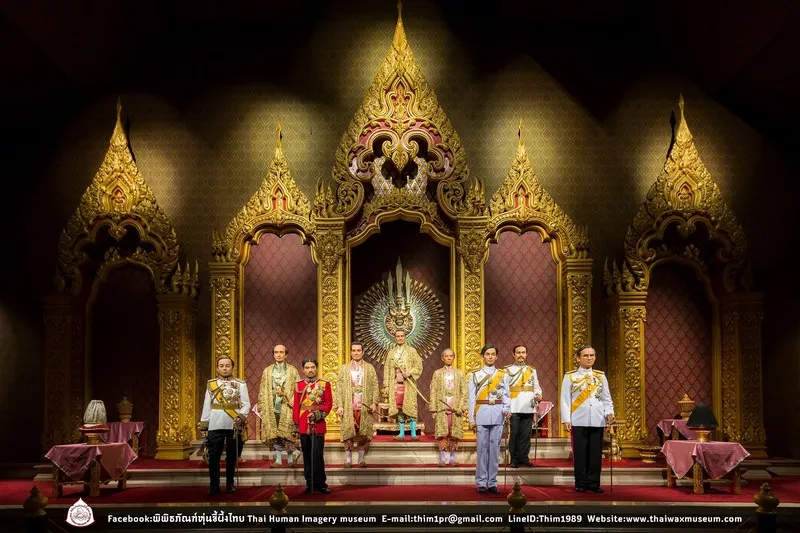
The museum building has 2 floors. The ground floor contains 7 permanent exhibition rooms, which form the core of the museum’s storytelling. Major display sets include revered Buddhist monks, former kings of the Chakri Dynasty, scenes from everyday Thai life such as Thai chess and family life, and the abolition of slavery, which powerfully reflects a major turning point in Thai history. Together, the exhibitions on the ground floor cover religion, royal history, local wisdom, and social life in Thailand.
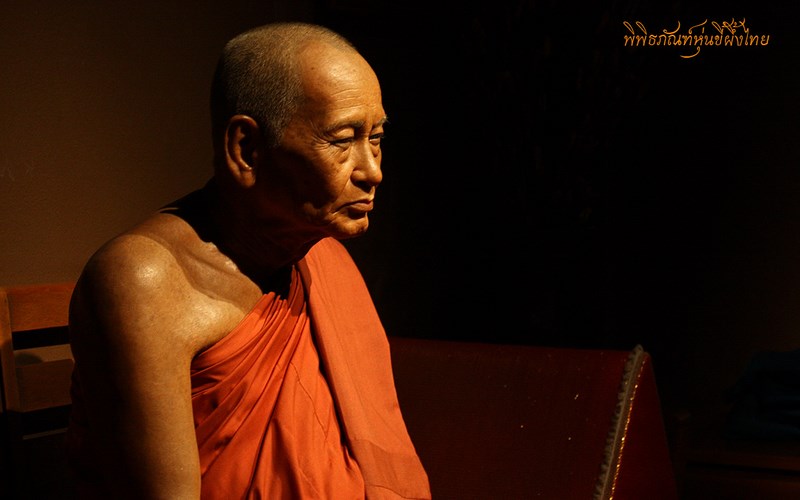
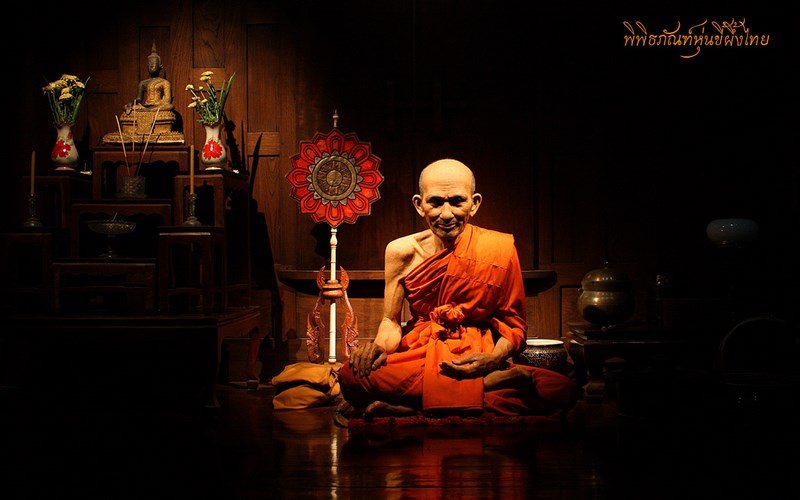
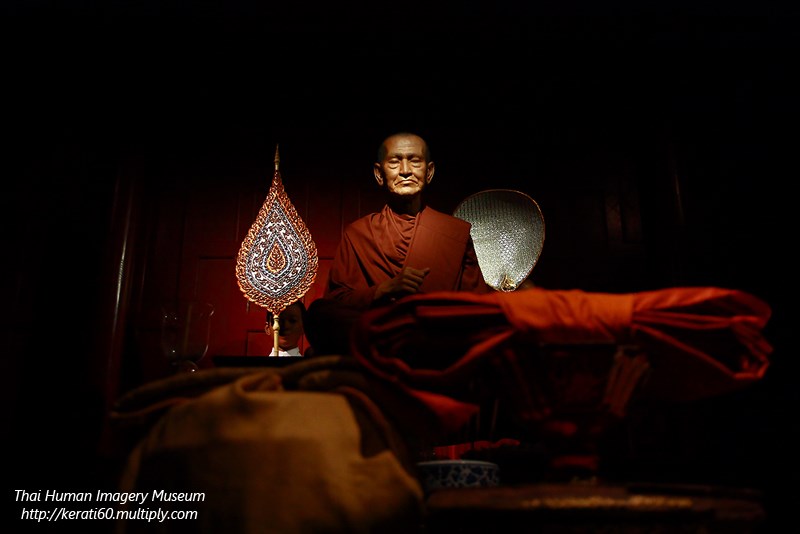
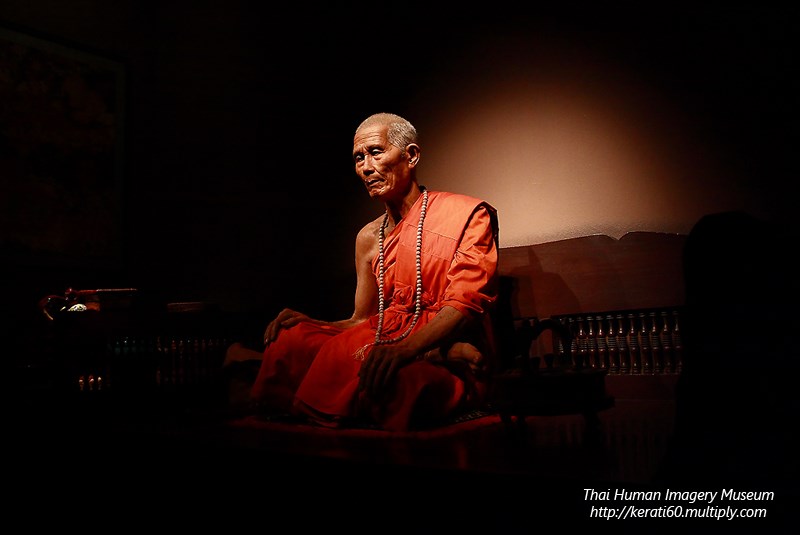
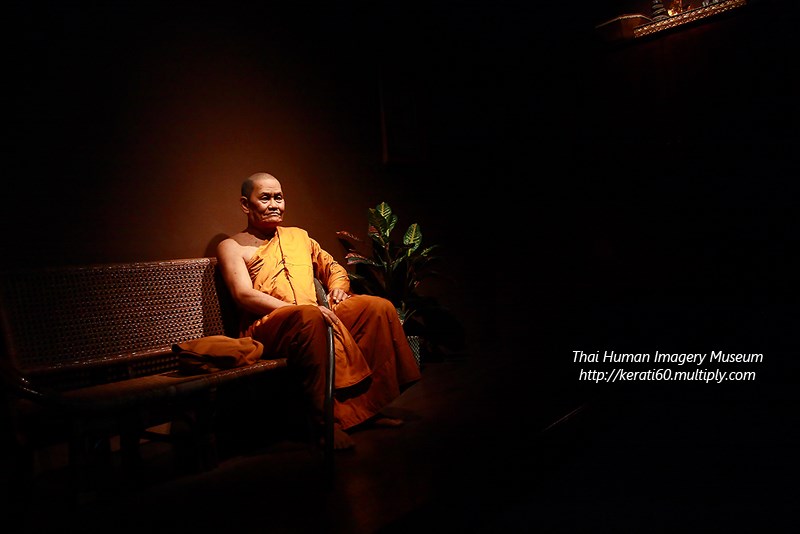
The gallery of revered Buddhist monks is one of the most memorable parts of the museum. Each figure conveys calm facial expressions, posture, and character with remarkable sensitivity, creating an atmosphere of reverence and peace that feels very different from looking at photographs or paintings. This section allows the museum not only to preserve the memory of important figures in Thai Buddhism, but also to help younger generations connect more closely with Thailand’s religious heritage.
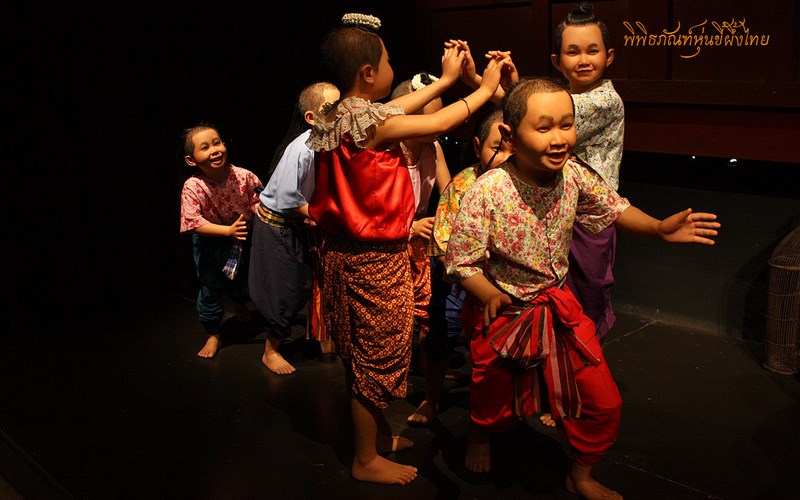
The display of former Chakri kings presents the dignity and continuity of Thai national history through carefully arranged and respectfully created sculptures. Meanwhile, the exhibition titled “A Corner of Life” opens a window into Thai society in a more intimate way, showing scenes of Thai family life, traditional play, and daily activities. This gives the museum a strong balance between major historical themes and the everyday lives of ordinary people.
The abolition of slavery is another especially powerful display that often makes visitors stop and spend extra time observing it. The scene captures a historic period of social change in Thailand with great emotional force. The expressions, poses, and composition of the figures transform history from a simple sequence of events into something emotionally immediate and human. This is one of the museum’s great strengths, making Thai history easier to understand and far more vivid.
On the upper floor, visitors will find temporary or rotating exhibitions, allowing the museum to stay dynamic and continue presenting new perspectives over time. Current and notable themes include Thai master musicians, important figures of the world, the Thai literary classic Phra Aphai Mani, traditional Thai children’s games, and Thai history. Each exhibition has its own charm, and together they expand the museum’s role beyond simply being a place to view lifelike human figures.
The section on Thai master musicians highlights that Thai musical heritage survives not only through melodies, but also through the people who created, preserved, and passed down this artistic tradition. The gallery of world figures broadens the perspective by linking Thai history to wider international contexts. The Phra Aphai Mani display brings one of Thailand’s best-known literary works to life in a form that is much easier to visualize and appreciate, while the traditional children’s games exhibition evokes memories of older ways of life and helps younger visitors understand a culture of play rooted in community and human connection.
The museum’s greatest highlight is the quality of its craftsmanship. The fiberglass figures are extremely realistic, yet they never feel stiff or lifeless. The eyes, facial expressions, hands, skin tones, and costumes are rendered in such fine detail that visitors often feel as though they are standing face to face with real people. The softness many visitors mention comes from the skill of the Thai artists, who have achieved a perfect balance between realism and artistic delicacy.
The overall atmosphere of the museum is calm, orderly, and ideal for an unhurried visit. It is suitable for many types of visitors, including families looking for an educational outing, students interested in history, religion, Thai literature, and the arts, as well as international travelers who want to understand Thailand through exhibitions that are visually clear and easy to appreciate. To explore the museum comfortably, visitors should allow at least 1-2 hours, and those who enjoy reading details or studying every gallery carefully may wish to spend longer.
Travel The most convenient way to reach the Thai Human Imagery Museum is by private car. From Bangkok, take Borommaratchachonnani Road, also known as the Pinklao-Nakhon Chai Si route, and continue past the Phutthamonthon junction toward Nakhon Chai Si. After crossing the Nakhon Chai Si River bridge, continue for about 3 kilometers and the entrance to the museum will be on the right-hand side. For those using public transportation, buses on the Bangkok-Nakhon Pathom route or vans heading to Nakhon Chai Si or Nakhon Pathom can be used, and visitors can ask to get off near the museum.
For visitor information, the museum is open every day. From Monday to Friday, it opens from 9:00 AM to 5:30 PM. On Saturdays, Sundays, and public holidays, it opens from 8:30 AM to 6:00 PM. The verified admission fee for foreign visitors is 300 baht for adults and 150 baht for children. Inside, there are 2 floors of exhibition space, parking facilities, and basic visitor amenities, making the museum suitable for a day trip from Bangkok or as an important stop on a wider journey through the Nakhon Chai Si-Sam Phran area.
Overall, the Thai Human Imagery Museum is far more than a place that simply houses sculptures. It is a cultural space where Thai history, Buddhism, literature, and collective memory are brought vividly back to life before the eyes of visitors. For travelers looking for a cultural attraction near Bangkok that offers knowledge, emotional impact, and a close view of the beauty of Thai artistic craftsmanship, this museum is one of the places truly worth experiencing in person.
| Place Name | Thai Human Imagery Museum |
| Location Summary | A private cultural museum in Nakhon Chai Si District, displaying lifelike fiberglass figures that present Thai religion, history, royalty, literature, and everyday life. |
| Highlights | Highly realistic fiberglass figures by Thai artists, 7 permanent exhibition rooms, exhibitions on Buddhism, Thai history, and literature, and convenient access from Bangkok. |
| History / Period | The project began in 1982 and officially opened on June 14, 1989. |
| Address | 43/2 Moo 1, Borommaratchachonnani Road (Pinklao-Nakhon Chai Si), Km.31, Khun Kaeo Subdistrict, Nakhon Chai Si District, Nakhon Pathom 73120, Thailand |
| Coordinates | 13.7728, 100.2080 |
| Travel | By private car, take Borommaratchachonnani Road past Phutthamonthon, cross the Nakhon Chai Si River bridge, then continue დაახლოებით 3 km and the museum will be on the right. Public buses and vans on the Bangkok-Nakhon Pathom or Bangkok-Nakhon Chai Si routes can also stop near the museum. |
| Open Days / Opening Hours | Monday-Friday 9:00 AM-5:30 PM / Saturday-Sunday and Public Holidays 8:30 AM-6:00 PM |
| Admission Fee | Foreign visitors: Adults 300 baht / Children 150 baht |
| Facilities | Parking, visitor information for disabled guests, and 2 floors of exhibition space. |
| Zones | Ground floor: 7 permanent exhibition rooms including revered monks, Chakri kings, scenes of Thai life, and the abolition of slavery. Upper floor: rotating exhibitions such as Thai master musicians, important world figures, Phra Aphai Mani, Thai children’s games, and Thai history. |
| Nearby Attractions | 1. Wat Rai Khing – about 10 km 2. Don Wai Floating Market – about 12 km 3. Sampran Riverside – about 15 km 4. Jesada Technik Museum – about 19 km 5. Phutthamonthon – about 23 km |
| Nearby Restaurants | 1. Som Kaew – about 2 km Tel. 02-889-4152 2. DuBua Café – about 7 km Tel. 097-024-0842 3. Sampran Riverside – about 15 km Tel. 034-322-588 4. Little Tree Garden Café – about 16 km Tel. 081-824-4119 5. Simple Plan x River – about 17 km Tel. 061-269-2945 |
| Nearby Accommodations | 1. RK Riverside Resort & Spa – about 4 km Tel. 034-109-299, 065-506-9299 2. Sampran Riverside – about 15 km Tel. 034-322-588 3. Mida Grande Hotel Dhavaravati Nakhon Pathom – about 28 km Tel. 093-383-5515, 034-966-700 4. Trendy Hotel – about 29 km Tel. 082-365-4445 5. Diary Suite Hotel – about 30 km Tel. 081-849-9650 |
| Main Contact Number | 034-332-607, 090-404-0304 |
Frequently Asked Questions (FAQ)
Q: Where is the Thai Human Imagery Museum located?
A: It is located at 43/2 Moo 1, Borommaratchachonnani Road, Km.31, Khun Kaeo Subdistrict, Nakhon Chai Si District, Nakhon Pathom Province, and it is quite easy to reach from Bangkok.
Q: Is the Thai Human Imagery Museum open every day?
A: Yes. It is open daily. Monday-Friday the museum is open from 9:00 AM to 5:30 PM, and on Saturdays, Sundays, and public holidays it is open from 8:30 AM to 6:00 PM.
Q: Why does the museum use fiberglass instead of traditional wax?
A: Thailand’s hot and humid climate is not ideal for traditional wax figures, so the museum developed fiberglass figures that remain highly realistic while being more durable.
Q: What can visitors see inside the museum?
A: Visitors can see revered Buddhist monks, former Chakri kings, scenes of Thai life, the abolition of slavery, Thai master musicians, important world figures, Phra Aphai Mani, Thai children’s games, and exhibitions on Thai history.
Q: How much time should I allow for a visit?
A: Most visitors should allow at least 1-2 hours. Those who want to explore every gallery in detail may wish to stay longer.
Q: Who is this museum suitable for?
A: It is suitable for families, students, visitors interested in Thai art and culture, history lovers, and international travelers who want an easy-to-understand introduction to Thailand through visual exhibitions.
Q: How much is the admission fee?
A: For foreign visitors, the verified admission fee is 300 baht for adults and 150 baht for children.
 Tel: 034332061, 034332607
 Fax: 034332061
 Thai Human Imagery Museum Map
 Category:
  Group:
  Last Update: 11 HourAgo
Comment

Photo Gellery(6) 
 Thank you photo(3) from: Zoxmox
|
|
|
 |
● Photographer: Zoxmox ● Link: pixpros.net/forums/showthread.php ● Ref: pixpros.net |
Thank you photo(3) from: M60
|
|
|
 |
● Photographer: M60 ● Link: kerati60.multiply.com ● Ref: pixpros.net |
● Copyright Photography. (800*500)
● View full size images from the photographer.
● View full size images from the photographer.
 Nearby Attractions
| Keyword (Advance) |
 Region
|
 Muang Nakhon Pathom(