
 Home
Home North(
 Chiang Mai(


Rating: 4.5/5 (4 votes)
 |
|  Map
Map 
 Have Map
  No Map
Nakhon Pathom attractions
Attractions in Thailand
Open Days: Daily
Opening Hours: 07.00–18.00
Wat Thap Yai Thao in Nakhon Pathom Province is an old temple in Nong Pak Long Subdistrict that has long been deeply connected to the local community. It serves not only as a center of Buddhist practice but also as a place of faith closely tied to the local legend of “Yai Thao,” a figure remembered in the beliefs of the villagers. This temple holds value not only as a religious site but also as a reflection of shared memories and stories passed down through generations in the Thap Yai Thao community.
The name of the temple is closely linked to the village name and local folklore. According to stories passed down through generations, this area was once used as a military encampment during ancient battles, led by a woman known as Yai Thao. As a result, the area became known as “Thap Yai Thao,” meaning the army camp of Yai Thao, and this name was later adopted by the temple. The story is also associated with nearby locations such as Wat Thap Luang, which villagers often mention together, adding layers of historical memory, legend, and belief to the surrounding landscape.
Wat Thap Yai Thao was established in 1870 (B.E. 2413) by villagers of Thap Yai Thao who built the temple as a religious center for the community. Over time, monks began residing here, and the temple has continued to be maintained and supported. It belongs to the Maha Nikaya sect. Its long history contributes to a traditional temple atmosphere that is simple, peaceful, and closely integrated into the daily lives of local residents.
The most well-known feature of the temple is the statue of Yai Thao located at the entrance. Locals often refer to it simply as the “Grandmother statue.” It is regarded as a sacred figure where visitors come to pray for blessings. People commonly pray for success in work, financial luck, health, and personal goals. When their wishes are fulfilled, they return to make offerings such as eyeglasses, knives, swords, or betel nuts, reflecting a living tradition of local spiritual practices.
In addition to the Yai Thao statue, the temple also houses a statue of Luang Por Somphong, a former abbot who was highly respected by the local community. His legacy continues through the memories of villagers, making the temple not only a place of legend but also a place of real historical connection within the community.
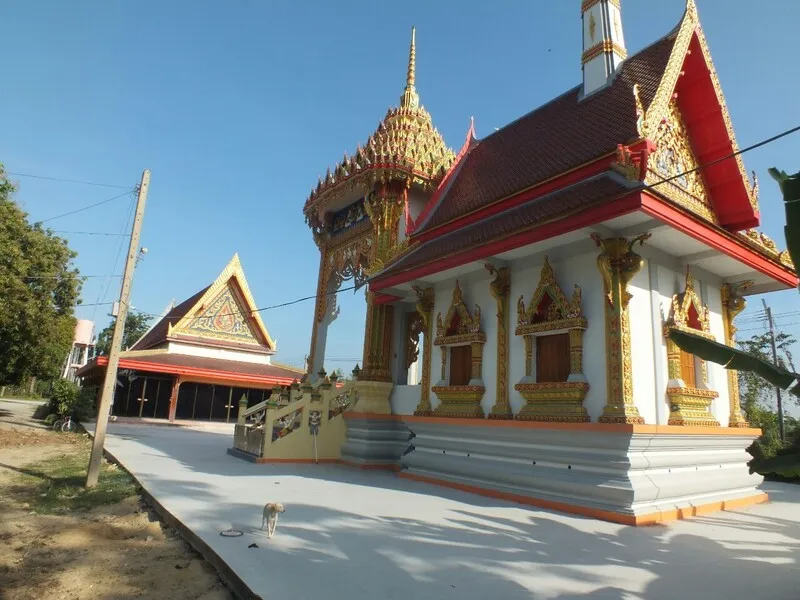
Another highlight of the temple is the ordination hall (Ubosot), designed in the style of the Ayutthaya period. The building is painted white with a red glazed tile roof and decorated with traditional Thai stucco craftsmanship. Although not large in scale, it reflects a refined elegance that blends well with the peaceful surroundings.
The atmosphere of Wat Thap Yai Thao is calm and welcoming. Visitors will see that the temple remains an active part of daily life for the local community, where people come to make merit, pray, and participate in religious activities. Its simplicity makes it an ideal place for those seeking a peaceful and authentic cultural experience.
The temple also hosts an annual festival each year. During this time, the temple becomes lively with traditional Thai entertainment such as Likay performances, shadow puppetry, outdoor movies, music shows, and various local activities. The funds raised are used to maintain and support the temple, making the event an important part of community life.
Wat Thap Yai Thao is located at 76 Moo 9, Nong Pak Long Subdistrict, Mueang District, Nakhon Pathom Province. It is not far from the city center and is easily accessible by car. Visitors should dress modestly and behave respectfully, especially when visiting the sacred Yai Thao statue.
Getting There From Bangkok, drive toward Nakhon Pathom via Nakhon Chai Si and Ban Phaeo intersections. Follow signs to Suphan Buri. At Malai Man intersection, turn onto Highway 321, continue until you see the sign for Wat Thap Yai Thao, then turn in and drive about 1 kilometer. The temple will be on the left.
Overall, Wat Thap Yai Thao is a temple with cultural, historical, and spiritual significance. It may not be a large or famous landmark, but its unique legend and strong local faith make it a meaningful destination for travelers seeking a deeper cultural experience in Nakhon Pathom.
| Name | Wat Thap Yai Thao |
| Overview | A historic local temple in Nong Pak Long, known for the legend of Yai Thao and its sacred statue |
| Highlights | Yai Thao statue, Ayutthaya-style Ubosot, local spiritual traditions |
| Established | 1870 |
| Abbot | Phra Khru Silasutthikhun |
| Address | 76 Moo 9, Nong Pak Long, Mueang Nakhon Pathom, Nakhon Pathom, Thailand |
| Coordinates | 13.8672501, 99.9832826 |
| Travel | Best accessed by private car via Highway 321 |
| Open Days | Daily |
| Opening Hours | 07.00–18.00 |
| Nearby Attractions | 1. Phra Pathom Chedi (12 km) 2. Sanam Chan Palace (11 km) 3. Wat Rai Khing (18 km) 4. Lam Phaya Floating Market (20 km) 5. Thai Human Imagery Museum (19 km) |
| Nearby Restaurants | 1. Daeng Seafood Restaurant (13 km) Tel. 034-900-111 2. Lung Rong Kitchen (12 km) Tel. 081-944-4565 3. Nakhon Pathom Red Pork Rice (12 km) Tel. 034-251-234 4. Hanging Leg Noodle Restaurant (14 km) Tel. 034-270-222 5. Baan Rim Khlong Restaurant (15 km) Tel. 089-123-4567 |
| Nearby Accommodations | 1. Mida Grande Hotel Nakhon Pathom (13 km) Tel. 034-966-699 2. River Hotel Nakhon Pathom (12 km) Tel. 034-241-000 3. Well Hotel Nakhon Pathom (14 km) Tel. 034-100-200 4. Silver Woods Hotel (13 km) Tel. 034-900-555 5. The Park Hotel Nakhon Pathom (12 km) Tel. 034-252-222 |
Frequently Asked Questions (FAQ)
Q: Where is Wat Thap Yai Thao located?
A: It is located in Nong Pak Long, Mueang District, Nakhon Pathom Province.
Q: What is this temple known for?
A: It is known for the sacred Yai Thao statue and local belief in making wishes.
Q: What can visitors see here?
A: Visitors can see the Yai Thao statue, Luang Por Somphong statue, and the Ayutthaya-style ordination hall.
Q: What do people usually pray for?
A: People commonly pray for success, wealth, health, and personal achievements.
Q: Is this temple suitable for tourists?
A: Yes, it is suitable for cultural tourism and peaceful visits with authentic local atmosphere.
 Mobile: 0866289878
 Wat Thap Yai Thao Map
 Category:
  Group:
  Last Update: 13 HourAgo
Comment
 Nearby Attractions
| Keyword (Advance) |
 Region
|
 Muang Nakhon Pathom(