
 Home
Home North(
 Chiang Mai(


Rating: 4.1/5 (7 votes)
 |
|  Map
Map 
 Have Map
  No Map
Kanchanaburi attractions
Attractions in Thailand
Open Days: Open daily
Opening Hours: 08:00 – 17:00
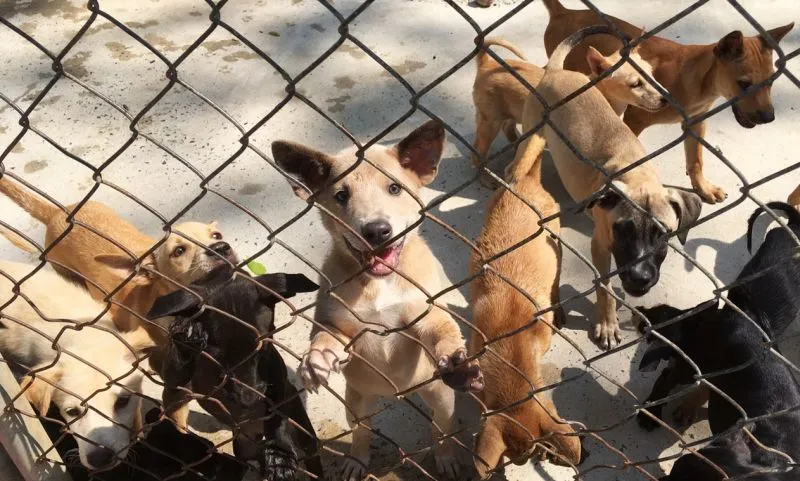
Kanchanaburi Pet Zoo is an animal welfare shelter and a learning space focused on animal welfare, located in Ban Phu Pradu, Nong Bua Subdistrict, Kanchanaburi Province. What makes this place distinct is that it is not a “zoo” in the usual sense of an animal display attraction for entertainment. Instead, it serves as a care facility for animals that have had limited opportunities, especially a large number of dogs and cats, as well as common domestic livestock such as cattle, buffaloes, goats, and sheep. In Kanchanaburi’s context—where rural communities and a tourism city coexist—sites like this play an important role as a safety net for abandoned animals, helping reduce stray animal problems and creating practical ways for the public to participate constructively through adoption, volunteering, and appropriate resource support.
This shelter relocated from Thung Si Kan and allocated roughly 38 rai to accommodate the care of a large number of animals. A move of this kind reflects practical needs related to space and management, such as zoning for new quarantine areas, caring for sick animals, disease isolation, sanitation, food management, and environmental design that reduces animal stress. Seeing an animal shelter through an academic lens makes it clear that large-scale animal care must rely on well-defined animal welfare principles—from reliable access to food and clean water, safe shelter, and medical care when needed, to allowing animals to express natural behaviors appropriately and minimizing fear and suffering. All of this requires personnel, budget, hygiene systems, and long-term operational discipline.
From a learning perspective, Kanchanaburi Pet Zoo works well as an “outdoor classroom” for students, university learners, and people interested in nature and society, because it connects multiple disciplines in a tangible way. It links basic biology—animal behavior and introductory physiology—to environmental science and public health topics such as sanitation, organic waste management, vector control, and preventing disease transmission between animals and humans. It also connects to social studies and civic education through themes of responsible pet ownership, reducing abandonment, and the role of volunteers and communities in addressing stray animal issues more sustainably.
Observing animals in a shelter differs from observing pets at home or animals in a conventional zoo, because learners can see the “diversity of animal life contexts,” ranging from animals that are social and comfortable with people to those that fear humans, injured animals, elderly animals, or animals requiring specialized rehabilitation. In naturalist and animal behavior terms, observing stress signals—such as unusually frequent barking/howling, repetitive pacing, hiding, loss of appetite, or aggression—can become a practical lesson about environmental conditions and appropriate management. Learners can also practice simple scientific note-taking, such as time budgets (time–behavior records), responses to stimuli, or comparing how daily routines relate to calmness, provided this is done under rules that do not disturb the animals and do not increase safety risks.
Another topic suitable for deeper academic expansion is “community-level animal population management.” Animal shelters often work alongside spay/neuter programs and vaccination to control stray populations, reduce rabies risk, and decrease conflict between people and animals. In the bigger picture, taking animals in for care alone cannot solve the problem if there are no measures to reduce new births and prevent abandonment. For this reason, places like this have value in public policy and education: they allow learners to see an interconnected “system” from upstream to downstream factors—owner behavior, access to veterinary services, spay/neuter efforts, school-based education, law enforcement related to animal cruelty, and the development of a culture of responsible adoption.
For animal lovers, Kanchanaburi Pet Zoo offers “hands-on ways to help.” One key pathway, based on available information, is the ability to adopt dogs every day. Adoption from a shelter should be understood as shared responsibility rather than simply “taking one home out of pity.” Prospective adopters should assess readiness in terms of time, costs, home suitability, and family members, as well as the ability to bring the animal for health checks, vaccinations, spay/neuter (if not already done), and ongoing behavior training. Animals with histories of stress or abandonment may need time to adjust and require caregivers with patience and understanding. Preparing a safe space at home, setting feeding routines, house-training, and gradually building trust are essential to successful adoption and to preventing repeat abandonment.
The public health dimension is another area that can be expanded with meaningful value for readers, especially families bringing children for outdoor learning. A shelter with many animals must prioritize infection prevention and hygiene, such as handwashing before and after contact, avoiding touching the face (eyes, nose, mouth) while on site, avoiding contact with animals that have wounds or appear ill, wearing closed-toe shoes, and ensuring children follow rules strictly. Basic learning about zoonoses (diseases transmissible from animals to humans) helps learners understand that caring for animals must be paired with responsibility and safety—knowledge that matters in a world where human–animal interactions are increasingly close.
From an environmental and resource management viewpoint, Kanchanaburi Pet Zoo is an example of a site that must manage substantial “daily resources,” such as animal feed, clean water, medicines, cleaning supplies, waste-handling areas, and drainage systems. For students of environmental science, this raises systems questions such as how organic waste is managed to prevent odors and vector attraction, how much water is needed per day for cleaning and whether safe reduction or reuse strategies exist, how green space and ventilation reduce animal stress, and what infrastructure helps limit pathogen spread in high-density animal care areas. These topics can be developed into learning activities and projects that respect ethics, do not disturb animals, and do not interfere with staff operations.
A high-quality visit should prioritize “learning and supporting” rather than “taking photos,” because many shelter animals may be emotionally vulnerable. Loud noises, chasing, or attempting to pick up animals without permission can increase stress and raise accident risk. For group visits—such as schools or organizations—advance coordination is recommended to receive appropriate guidelines and to avoid disrupting feeding schedules or medical routines. Visitors can also support in suitable forms, such as donating pet food, medicines, blankets, cleaning tools, or contributing to treatment costs through the shelter’s designated channels. However, it is best to rely on up-to-date needs shared directly by caretakers, so support is targeted and not redundant.
The location in Ban Phu Pradu, Nong Bua Subdistrict, also reflects the relationship between rural communities and large-scale animal care. Shelters outside town often benefit from more space for zoning, reduced noise impact on communities, and better opportunities to design stress-reducing environments. At the same time, they face logistical challenges such as transporting feed and medical supplies, volunteer travel, access to veterinarians, and handling emergencies. Understanding these constraints helps supporters view the shelter as a system and assist in ways aligned with real operational needs, rather than adding burdens through emotion-driven actions.
In responsible tourism terms, Kanchanaburi Pet Zoo can be a meaningful stop that adds depth to a Kanchanaburi trip—especially for families who want children to learn compassion and responsibility, or for students in biology and environmental fields who want to learn from real-world settings. The key is to align visitor behavior with the place’s values: respect animal well-being, do not feed animals without guidance, do not provoke animals into panic, and help keep the area clean. This form of visiting is not focused on excitement, but on “meaning” and “perspective change,” which often becomes a more lasting experience.
For those looking to adopt a dog or cat, shelters can help match animals to real-life contexts because caretakers often know basic temperament information, such as animals that are people-friendly, those that need quieter homes, those that require space to run, or animals suitable for families with children. Still, adopters should view adoption as a “long-term commitment” and be ready for annual health care, parasite prevention, vaccinations on schedule, and basic discipline training. Successful adoption not only transforms an animal’s life but also reduces pressure on the shelter system and helps the facility continue caring for other animals.
In short, traveling to Kanchanaburi Pet Zoo can follow the route described in available information: take Highway 3229 to around kilometer markers 16–17, then turn off and continue approximately 3 kilometers inward. Most visitors start from Kanchanaburi town, which is often described as about 20 kilometers away. Morning to early afternoon is recommended because the weather is less harsh and the visit can be calmer. If you plan to volunteer or donate, it is best to prepare a list and ask caretakers for the latest needs in advance so your support has the highest practical value.
Getting There If traveling by private car, set your destination to Ban Phu Pradu, Nong Bua Subdistrict, then take Highway 3229 toward the area around kilometer 16–17. Follow the signposted junction/turnoff and continue about 3 kilometers to the shelter. Drive carefully and reduce speed when entering community zones and near the facility for the safety of people, animals, and other road users.
| Place Name | Kanchanaburi Pet Zoo (Animal Welfare Shelter) |
| Location | Ban Phu Pradu, Nong Bua Subdistrict, Mueang Kanchanaburi District, Kanchanaburi Province |
| Address (Reference) | 117 Moo 7, Nong Bua Subdistrict, Mueang Kanchanaburi District, Kanchanaburi 71190 |
| Coordinates | 14.014558, 99.389321 |
| Place Summary | An animal welfare shelter and learning space focused on animal welfare. It cares for many dogs and also cats, cattle, buffaloes, goats, and sheep. Open to visitors, and dog adoption is available according to the shelter’s procedures. |
| Key Highlights | 1) A shelter focused on caring for and rehabilitating abandoned animals 2) Suitable for educational visits about animal welfare, sanitation, and responsible pet ownership 3) Supports dog adoption as a pathway to reducing stray animal issues long term |
| Key History | It is described as an animal welfare shelter that relocated from Thung Si Kan and uses about 38 rai to support large-scale animal care. |
| Nearby Attractions (Approx. Distance) | 1) Bridge over the River Kwai – 22 km 2) Kanchanaburi War Cemetery (Don Rak) – 20 km 3) JEATH War Museum – 23 km 4) Wat Tham Suea (Tha Muang) – 28 km 5) Surasi Camp / Army Camp Zoo Area – 18 km |
| Nearby Restaurants (Approx. Distance + Verified Tel.) | 1) Keeree Tara Restaurant – 22 km, Tel. 034-513-855 2) Keeree Tara Riverside – 22 km, Tel. 034-518-888 3) On’s Thai Issan – 21 km, Tel. 087-364-2264 4) Krua Khun Toom – 21 km, Tel. 089-996-2514 5) The Village Farm To Cafe’ – 26 km, Tel. 034-540-599 |
| Nearby Accommodations (Approx. Distance + Verified Tel.) | 1) U Inchantree Kanchanaburi – 22 km, Tel. 034-521-584 2) Felix River Kwai Resort – 23 km, Tel. 034-551-000 3) Dheva Mantra Resort – 24 km, Tel. 034-615-999 4) Mida Resort Kanchanaburi – 30 km, Tel. 034-919-606 5) Natee The Riverfront Hotel – 21 km, Tel. 034-518-777 |
| Contact | Tel. 034-532-112 Mobile 081-914-3444 |
Frequently Asked Questions (FAQ)
Q: What kind of place is Kanchanaburi Pet Zoo?
A: It is an animal welfare shelter focused on caring for, rehabilitating, and finding homes for animals—especially dogs and cats, along with some domestic livestock—and it is not primarily an entertainment-based zoo.
Q: Can I adopt a dog here?
A: Available information indicates that dog adoption is possible every day. It is recommended to contact the shelter directly for the latest conditions and steps, including guidance on adjustment after adoption.
Q: Is it suitable for school field trips?
A: Yes. It is particularly suitable for learning about animal welfare, responsible pet ownership, sanitation, and prevention of animal-to-human disease transmission. Advance coordination is recommended to tailor activities to age level and group size.
Q: How should visitors behave to avoid disturbing animals?
A: Speak quietly, do not chase animals, do not attempt to pick up animals without permission, do not feed animals unless caretakers advise, and help keep the area clean.
Q: What should I prepare if I want to support or volunteer?
A: Ask caretakers about current needs first, then prepare items that are truly needed such as pet food, medical supplies, blankets, or cleaning tools, and wear closed-toe shoes while bringing personal drinking water.
Q: What is the easiest way to get there?
A: From Kanchanaburi town, take Highway 3229 to around kilometer 16–17, then turn off and continue about 3 kilometers to the Ban Phu Pradu area in Nong Bua Subdistrict.
 Tel: 034532112
 Mobile: 0819143444
 Kanchanaburi Pet Zoo Map
 Category:
  Group:
  Last Update: 2 MonthAgo
Comment
 Nearby Attractions
| Keyword (Advance) |
 Facebook Fanpage
 Region
 Art, Culture and Heritage
 Historical Sites and Monuments(
 Landmarks and Memorials(
 Art, Craft Centres, Tradition(
 Museums(
 Art Gallery(
 University
 Places of Worship
 Temple(
 Church(
 Other religious and spiritural sites(
 Research and Development
 Royal Project(
 Suburban Living
 Village, Community(
 Local Market(
 Nature and Wildlife
 National Parks and Marine Reserves(
 Mountain (Doi)(
 Dam, Reservoir, Lake(
 Waterfalls(
 Hot Springs(
 Caves(
 River, Canal(
 Other natural attractions(
 Animal camps and shows(
 Farm, Parks, Gardens and Ecotourism(
 Cinema(
 Outdoor and Adventure Activities(
 Travel Articles, Recipes
 Travel Review, Food Review(