
 Home
Home North(
 Chiang Mai(


Rating: 4/5 (5 votes)
 |
|  Map
Map 
 Have Map
  No Map
Kanchanaburi attractions
Attractions in Thailand
Open Days: Every day
Opening Hours: Open all day (recommended 06.00 – 18.00 for safer mountain driving and for morning fog / sunrise–sunset light)
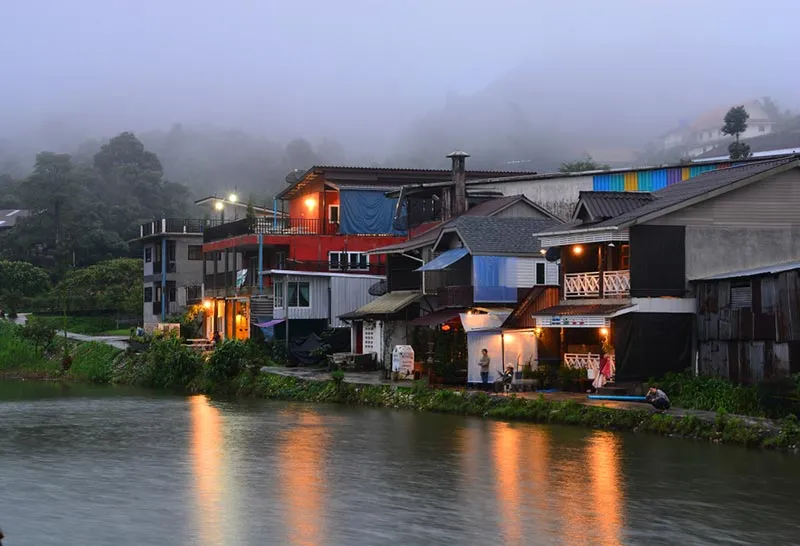
Pilok Mine (E-Tong Village – Pilok Subdistrict) in Kanchanaburi is a destination that wins with atmosphere rather than construction. It is a borderland area shaped by mining history, high mountains, winding roads, and mist that arrives without an appointment. Many people call it a “village in the mist,” but if you look deeper, Pilok Mine is also a place that clearly reveals how a border economy has changed over time—from the era of tin and wolfram mining along the Tenasserim Range to an era in which people travel here for quiet, cool air, and the simple rhythm of a small community set within serious, unpolished terrain. It suits travelers who want to leave the city behind and spend time with mountains and silence—not necessarily for a long trip, but long enough to truly slow down.
Pilok Mine is located in Pilok Subdistrict, Thong Pha Phum District, Kanchanaburi, along Highway 3272, about 70 kilometers west of Thong Pha Phum town. This route is both the charm and the challenge: it is a mountain road with intense curves, widely known among travelers as the “399 curves.” Reaching Pilok Mine is not simply driving from point A to point B. It is a gradual climb from town into the mountains, through cooler air, denser green forest, and road sections that demand steady focus on the steering wheel. The most beautiful destinations in Pilok almost always come with a condition: you must drive carefully.
What sets Pilok Mine apart from many other mountain destinations is its “historical identity” that still feels tangible in the area. The name “Pilok Mine” was not invented by tourism marketing; it is tied to real economic activity from the past. This area was once bustling with mining, especially tin and wolfram, which were found in large quantities along the Tenasserim Range—a border ridge between Thailand and Myanmar. Where there is mining, there are workers, shops, transportation, settlements, and stories that settle into the landscape. Some visitors come for the mist, but others end up more impressed by a different realization: that the “beautiful mist” floats over ground that once demanded hard work, and today’s beauty is possible because nature has gradually reclaimed parts of the mountains and forest.
When people talk about E-Tong Village, which many use as the center of a Pilok trip, the image is usually wooden houses arranged along the hillside, a small bridge, and easy photo corners that feel simple yet charming. In reality, the village’s core charm is not props or check-in spots—it is the feeling that you are far enough from chaos to hear the wind more clearly, to see the sky change color more distinctly, and to return to a more basic pace of living: waking early for mist, eating simple food, strolling through the village, buying small items from local shops, and sitting down to rest, without pushing yourself to pack the day with activities. Pilok rewards those who do not rush more than those who chase check-ins.
Pilok’s climate is another reason people keep coming back. Because the area sits high in the mountains and near the Tenasserim forest zone, temperatures are often cooler than the lowlands for much of the year—especially from the late rainy season into the cool season. Mornings and late afternoons are particularly comfortable. Mist can form easily after rain or when humidity is high, but Pilok’s mist is never guaranteed on any given day. What you can do is plan smartly: travel in seasons with a higher chance of mist and build “buffer time” into your schedule so nature can decide how much mist you will get. Expecting a perfect blanket of fog can lead to disappointment, but traveling with an open mind ensures other beauty will show up instead—lush forest, the sound of waterfalls, or evening light that softens the mountainsides into a gentler scene.
One thing many articles mention but rarely explain well is that “driving up to Pilok is not only difficult—it requires the right mindset.” The 399 curves can sound intimidating, but most standard vehicles can make it up if the car is in good condition, the driver is not careless, and mountain-driving techniques are applied: use low gears when climbing and descending to support engine braking, avoid overtaking in blind spots, never cut into the oncoming lane on curves, take breaks to reduce fatigue, and accept a slower pace with discipline. The truly risky moments often occur in rain, thick fog, or on wet, slippery pavement, because mountain weather can change quickly. Overconfidence is more dangerous than steep slopes. If you get motion sickness easily, bring medicine and plan safe stops at viewpoints or rest areas so your body can adapt. Arriving without forcing your body is the best way to start the trip well—even before you enter the village.
Once you arrive in Pilok, many people begin by walking around the village, because it is the easiest way to “ease into the right mode.” You will pass small shops selling everyday items, snacks, and local souvenirs. Some are tiny cafes that rely on cool air and mountain scenery more than elaborate decoration. Some are simple eateries serving single-plate meals that may not be flashy but feel straightforward and satisfying. The best approach is to walk slowly, notice the details of wooden houses, observe real local life, and recognize that although tourism exists here, community life is still the main core. Walking without disturbing residents, dressing appropriately, and keeping noise low helps preserve Pilok’s “livable” atmosphere, so it is not overwhelmed by tourist energy.
From a mining-history perspective, what is fascinating is that mining in mountain terrain was never just “digging ore.” It was an entire system: transport routes, labor, tools, water management, and temporary or permanent settlements for workers. Traces of the mining era may still appear in many forms—place names, local stories, and certain locations where the environment still hints at former mining activity. Even if much has been reclaimed by nature, knowing that “this used to be a mine” adds depth to the journey. You stop seeing Pilok as only a fog backdrop and begin to see it as a landscape once driven by labor and resources, now adapting toward community-based tourism. This transition is worth studying and offers a powerful lesson: a place can live through multiple chapters, as long as people and nature can keep supporting each other.
One activity that makes a Pilok trip feel more “complete” is exploring nearby nature spots—waterfalls, viewpoints, and cool-climate agriculture areas such as Pilok Hill, located on the route from Thong Pha Phum up toward Pilok, about 32 kilometers from Thong Pha Phum. Stops like this add variety. In addition to fruit trees and ornamental plants suited to cool weather, they also break up the winding drive so you do not push yourself through the whole ascent in one exhausting stretch. Well-chosen stops help both the driver and the vehicle stay fresh, so you reach Pilok with enough energy to enjoy the destination rather than feeling drained.
If you love waterfalls, Pilok offers experiences that are “beautiful but require walking,” because some waterfalls can only be reached on foot, and natural trails may be slippery in the rainy season. Waterfalls often mentioned in this area include Jok Kradin Waterfall and Chet Mit Waterfall. The appeal of mountain waterfalls lies in cold water, deep green forest, and the sense that you are still in a place not made too convenient at the cost of nature. However, nature travel in border mountain areas must treat safety as non-negotiable: wear proper non-slip footwear, bring rain gear or a windbreaker for fast-changing weather, follow site rules, never litter, avoid swimming in dangerous spots, and do not wander off-trail. In the mountains, small mistakes can escalate more easily than in the lowlands.
One highlight that makes many people wake up very early is visiting a high viewpoint such as Nern Chang Suek. This border viewpoint reveals layers of mountains and creates the feeling that you are close enough to the country line to sense the landscape shift with your own eyes. Viewpoints like this are special because “the sky is the main show.” Some days are crystal clear with long views, some days feature mist flowing like a sea of fog, and some days deliver only a soft white blanket filling the valleys—beautiful in a different way. Visiting Nern Chang Suek should be planned with vehicle readiness and good timing, because early mornings can be very cold and visibility may be low. If traveling with seniors or young children, prepare warm layers and plan ascent/descent carefully. Most importantly, respect staff and local caretakers, because border areas also carry security roles. Polite travel behavior is what helps these places remain accessible to visitors.
Another dimension that gives Pilok Mine meaning is that it acts as a clear lesson in responsible travel. The area is small and naturally limited by geography. If too many visitors arrive at once, litter becomes visible quickly, loud noise disrupts the atmosphere immediately, and careless parking or walking into sensitive areas can cause damage faster than in large cities. So traveling Pilok well is not only about choosing the best season; it is also about choosing good behavior: reduce plastic use, pack out your trash, keep voices low, respect local privacy, do not climb into risky spots for photos, and do not drive fast inside the village. Mountain villages often have pedestrians, children, pets, and narrow roads. Good travel means locals can still live well, and nature does not deteriorate because of our visit.
How long should you stay in Pilok Mine? For most people, 2 days 1 night is ideal because it allows a calm drive, relaxed village time, an early morning for mist, and nearby nature stops without rushing. If you can add time and stay 3 days 2 nights, the trip becomes much softer: you can dedicate one day to waterfalls or viewpoints and another to slow village walks, local meals, and genuine rest without thinking you must “cover everything.” That pace matches Pilok best.
Choosing accommodation in E-Tong Village can shape your experience. Most stays are homestays or small lodgings. They may not match large city resorts for luxury, but in exchange you might open your window to mist or step outside directly into the village market zone. Booking ahead is important during peak seasons, especially late rainy season into winter, because room supply is limited. If everything is full, backup options often mean staying down in Thong Pha Phum or nearby areas, which adds extra mountain driving. Staying in the village gives you the fullest Pilok experience, because Pilok is at its best in the pre-dawn and evening hours, not only during the daytime when many people visit briefly and leave.
Food in Pilok—especially in E-Tong Village—is best approached with the mindset of “eat to feel satisfied and eat in a way that fits the place.” There are restaurants and cafes, but not in the variety of a large town. Popular options include simple one-plate meals, made-to-order dishes, barbecue/hot pot, and cafes serving drinks and light desserts. The best recommendation is to eat with understanding: you are in a mountain community with limited capacity. On busy days, food may take longer. Some places may run out of ingredients. The charm is friendliness and simplicity, without needing special dress or ceremony. If you stay patient and respectful toward the people cooking, your experience improves immediately.
For photography lovers, Pilok is easy to shoot because nature provides the elements: mist, soft morning light, wooden houses, narrow hillside roads, and layered mountains. The key technique is time. Morning often brings gentle light and mist, evening gives long shadows and stronger mountain depth, and midday with open skies can be perfect for far-reaching views and detailed landscapes. The important rule is to shoot without disrupting locals: do not block pathways, and do not climb into risky spots. A beautiful image should never come with a cost in safety or the inconvenience of others.
If you are interested in geography and nature, the Tenasserim Range is the backbone that explains Pilok: humid conditions that support frequent mist, relatively rich mountain-forest ecosystems, and the border role that requires oversight in certain areas. With this context, you understand why travel requires caution, why some sites are reached on foot, and why night driving should often be avoided. Traveling Pilok with quality is not only about arriving; it is about adapting to the mountains, respecting nature, and accepting limits—which is exactly why this place remains beautiful.
Another point many people overlook is preparation, which makes the trip smoother in a very practical way: bring a jacket or windbreaker even in the rainy season because temperatures can drop when fog is thick; wear comfortable non-slip shoes because humidity is high; carry a small flashlight or emergency light; prepare some cash because signals and payments may not be consistent everywhere; and bring a power bank because navigation and photography drain batteries quickly in mountain areas. These items do not make travel complicated—they make it easier, safer, and less vulnerable to surprises that can ruin the mood.
If you want your Pilok Mine trip to have “a story” beyond mist photos, try asking yourself questions along the way: Why was mining possible here? Why did a settlement form in this location? Why has it become a destination for city travelers today? These questions help you see Pilok as a place that once worked hard, now using nature as a new kind of resource with care. Seen through that lens, you naturally want to help protect the area—and that is the heart of sustainable travel without needing big words.
Getting There Pilok Mine is in Pilok Subdistrict, Thong Pha Phum District, Kanchanaburi. From Thong Pha Phum town, take Highway 3272 west for about 70 kilometers. The mountain section is highly winding (commonly called the 399 curves). Drive at an appropriate speed, use low gears for descents, keep safe distances, and avoid driving at night or during heavy fog/heavy rain. For breaks, you can stop at places such as Pilok Hill (about 32 kilometers from Thong Pha Phum) or safe roadside rest points to reduce fatigue and motion sickness. Traveling by private car is most convenient. If you do not have a private vehicle, you can travel by public transport to Thong Pha Phum market and then connect with local transport up to E-Tong Village according to local schedules—it is recommended to check routes and contact providers in advance because schedules may vary by season and demand.
In the end, Pilok Mine is a destination that does not require you to “maximize value” by doing endless activities. Its essence is mountains, cool air, and the quiet of a border community. If you give yourself time to breathe more slowly, feel light mist on your skin, hear the forest sounds that are not loud but clear, and see layered mountains on a day when the sky opens, you will understand why many people return to Pilok again—even knowing they must face the winding road one more time.
| Place Name | Pilok Mine (E-Tong Village – Pilok Subdistrict), Thong Pha Phum, Kanchanaburi |
| Place Summary | A mountain and border-community destination with mining roots (tin – wolfram), cool weather, E-Tong Village as a base, viewpoints, and waterfalls. Best suited for a 2D1N or 3D2N relaxing trip. |
| Highlights | Mist village atmosphere and cool air, iconic winding mountain route (399 curves), mining stories along the Tenasserim Range, border viewpoint at Nern Chang Suek, and surrounding nature including waterfalls. |
| Location | Pilok Subdistrict, Thong Pha Phum District, Kanchanaburi, Thailand |
| Address (For Clarity) | E-Tong Village – Pilok Mine area, Pilok Subdistrict, Thong Pha Phum District, Kanchanaburi |
| Current Status | Still a popular Kanchanaburi destination (travel responsibly and drive carefully on the mountain road). |
| Local Reference / Contact | Pilok Subdistrict Administrative Organization (SAO) Tel. 0-3454-0524 |
| Nearby Attractions (With Distance + Phone) | 1) Jok Kradin Waterfall – approx. 5 km – Tel. 089-914-4841, 098-252-0359 2) Nern Chang Suek (Border Patrol Police Base 135) – approx. 20 km – Tel. 034-599-118 3) Thong Pha Phum National Park (Office) – approx. 70 km – Tel. 034-510-979, 098-252-0359 4) Pilok Hill (Stopover point) – approx. 40 km – Tel. 0-3454-0524 (route/area info via Pilok SAO) 5) Somsak Mine (Ban Pa Klen) – approx. 5 km – Tel. 091-890-4986 |
| Nearby Restaurants (With Distance + Phone) | 1) Krua View Sud Daen (E-Tong Village) – approx. 1 km – Tel. 095-606-4606 2) Chao Mueang Shop (Pilok Cake) – approx. 1 km – Tel. 098-408-6509 3) Brume Cafe & Room – approx. 1 km – Tel. 082-258-5456 4) Krua Je Nee (E-Tong Village) – approx. 1 km – Tel. 089-515-3528 5) Nong Atom Moo Jum (Pilok) – approx. 1 km – Tel. 092-529-0870 |
| Nearby Accommodations (With Distance + Phone) | 1) Pilok Hill House – approx. 1 km – Tel. 080-781-5702 2) Pilok Tok Taek Homestay – approx. 1 km – Tel. 080-778-8315 3) Pilok Por Plern Plern Homestay – approx. 1 km – Tel. 081-995-5466, 090-898-0088 4) Mining in Pilok Homestay – approx. 1 km – Tel. 062-363-9128, 065-079-8545 5) Somsak Mine (Ban Pa Klen) – approx. 5 km – Tel. 091-890-4986 |
Frequently Asked Questions (FAQ)
Q: Where is Pilok Mine located in Kanchanaburi?
A: It is in Pilok Subdistrict, Thong Pha Phum District, Kanchanaburi, along Highway 3272 about 70 kilometers west of Thong Pha Phum town.
Q: When is the best time to visit Pilok Mine?
A: Late rainy season into the cool season is often the most comfortable and has a higher chance of mist, but Pilok can be visited year-round. Morning and late afternoon are recommended for cooler weather and better light.
Q: Is the road up to Pilok Mine dangerous?
A: It is a highly winding mountain road (commonly called the 399 curves). Most standard vehicles can manage it if the car is in good condition and the driver stays cautious, drives slowly, uses low gears on descents, and avoids heavy rain or thick fog—especially at night.
Q: What can I do in Pilok besides chasing the mist?
A: Walk around E-Tong Village and enjoy local life, take mountain and mist photos, visit waterfalls such as Jok Kradin, go to viewpoints like Nern Chang Suek, and stop by Pilok Hill on the way to see cool-climate fruit and ornamental plants.
Q: Can I visit Pilok Mine without a private car?
A: Yes. You can travel to Thong Pha Phum market by public transport and then connect with local transport up to E-Tong Village based on local schedules. It is best to check and contact providers in advance because schedules may vary by season and passenger demand.
Q: What should I prepare for a trip to Pilok Mine?
A: Bring a warm layer or windbreaker (weather changes quickly), comfortable non-slip shoes, motion-sickness medicine if needed, a power bank, some cash, and be extra careful when driving during rain or fog.
 Pilok Mine Map
 Category:
  Group:
  Last Update: 2 MonthAgo
Comment

Photo Gellery(6) 
 Thank you photo(6) from: Thanipat