
 Home
Home North(
 Chiang Mai(


Rating: 4.4/5 (5 votes)
 |
|  Map
Map 
 Have Map
  No Map
Kanchanaburi attractions
Attractions in Thailand
Open Days: Open year-round (may be temporarily closed due to weather, safety conditions, or official announcements)
Opening Hours: 08:30 – 16:30 (recommended to arrive before afternoon and allow enough time for onward travel on mountain roads)
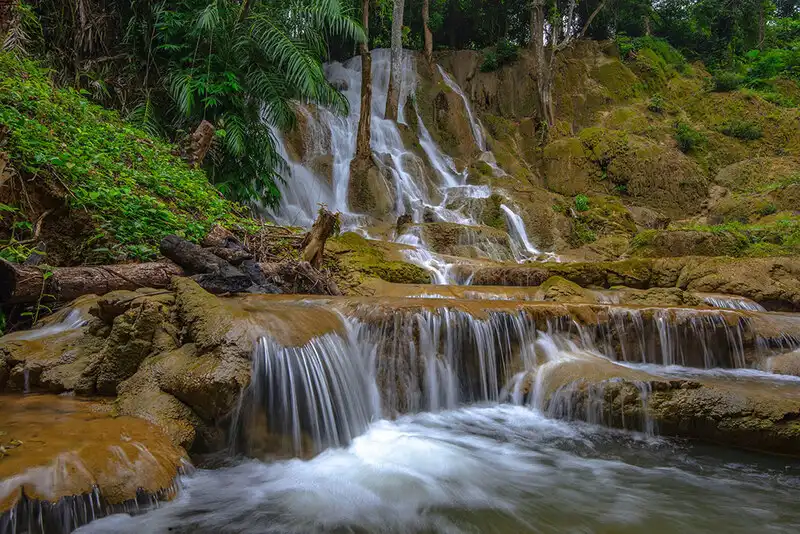
Dai Chong Thong Waterfall is one of Kanchanaburi’s “easy-to-stop yet genuinely beautiful” waterfalls, ideal for travelers driving toward Sangkhlaburi who want a refreshing break without detouring off the main route. The waterfall is located in Sangkhlaburi District, in Prang Phle Subdistrict, and is often mentioned as being within Khao Laem National Park, along Highway 323 around kilometer markers 32–33 on the Thong Pha Phum–Sangkhlaburi road. What makes it memorable is the way the water spreads out and flows in from multiple directions, creating a layered, dynamic look. Instead of a single vertical drop like a high cliff waterfall, it feels more like a soft “curtain of water” that naturally invites you to stop, rinse your face, soak your feet, or take a few photos before continuing the long drive.
In terms of travel intent, Dai Chong Thong Waterfall clearly serves two types of visitors. The first group is those looking for a true “rest stop” along the long, winding mountain stretches of Highway 323. Driving from Kanchanaburi toward Thong Pha Phum and Sangkhlaburi requires time and sustained concentration, so a natural stop where you can genuinely reset—not just a gas station or convenience store—helps reduce accumulated fatigue and makes the rest of the journey feel safer and more comfortable. The second group is visitors who come specifically to enjoy a waterfall experience, since some travel sources describe multiple tiers here, and the way the water fans across limestone surfaces can look especially striking during the rainy season. That is when the waterfall tends to show its strongest character, particularly when the flow is full and the fine mist in the air adds an energetic, cinematic texture to the forest scenery.
Dai Chong Thong Waterfall is often categorized as a place that works perfectly as a “mid-journey nature break” because its signature feature—water spreading and flowing from several directions—becomes visible as soon as you get close. Some official-style tourism descriptions also frame it as a roadside waterfall that feels rewarding precisely because you do not have to trek deep into the forest, yet you still get the cool, humid air, the authentic sound of running water, and the shaded atmosphere of a green corridor. In some accounts, the waterfall is described as reaching tens of meters in height at certain points, and as a naturally beautiful spot for stopping, photographing, and playing in the water only in areas that are clearly safe after assessing conditions on site.
The beauty of Dai Chong Thong Waterfall becomes even more apparent once you understand what “limestone waterfall” really implies. Limestone surfaces can develop algae and slippery biofilm more easily than some other rock types, especially in consistently wet and humid environments. That means the rocks can be extremely slick, particularly in the rainy season when the flow is stronger and humidity remains high. If you plan to step into the water or walk across wet stone to find photo angles, wearing water shoes or footwear with reliable grip is strongly recommended. Avoid rushing or running on wet limestone. One of the most common accidents at limestone waterfalls is not only from strong water but from slipping on surfaces that appear harmless until you step on them.
Another reason Dai Chong Thong Waterfall is worth stopping for is the feeling of being “in a real forest” even though it is considered roadside-accessible. The surrounding area is often described as shaded by dense trees, and once the water sound becomes dominant, it can partially mask road noise and shift your mood from “driving” to “traveling” in a matter of minutes. For content creators, this type of waterfall also offers strong visual variety in a short time. You can shoot the flowing lines of water as they spread like ribbons, capture the misty texture, or focus on close-up limestone patterns shaped by nature—all without a long hike.
In terms of access, Dai Chong Thong Waterfall is described in multiple sources as being along Highway 323 around kilometer markers 32–33, slightly before Kroeng Krawia Waterfall, with a sign at the entrance. The commonly repeated guidance is to turn in from the highway, follow a short access track, and then walk further to reach the waterfall itself. One published travel report summarizes the approach as entering for roughly 500 meters, then continuing along a further turn, followed by an additional walk of around 600 meters to reach the falls. This suggests it is not a “park and immediately arrive” waterfall like some roadside spots, but it is still a relatively light walk and fits well as a stopover compared with true deep-trek waterfalls.
Getting There If you start from Kanchanaburi town, drive along Highway 323 toward Thong Pha Phum, then continue on the same route toward Sangkhlaburi. The advantage is that you do not need complicated route changes, since the waterfall sits close to the main road corridor. However, drive cautiously on mountain curves and continuous bends, and avoid arriving too late in the day. Even if the national park area generally operates until late afternoon, walking in and then continuing the drive toward Sangkhlaburi in low light increases risk due to reduced visibility and fatigue after long-distance driving. A safer plan is to arrive in the morning or early afternoon, take a reasonable break, and continue without rushing.
Many travelers ask how much preparation is needed because the phrase “roadside waterfall” makes it sound effortless. The practical answer is that it is fairly easy, but you should still bring basic items suited to a limestone waterfall near a forest-and-reservoir environment: footwear with grip, a waterproof pouch for phone or camera, a small towel, drinking water, and insect repellent. In the rainy season, mosquitoes and insects increase noticeably. If you are traveling with children, keep activities conservative and safe—such as soaking feet or staying in shallow areas where adults can stand—and do not let children walk on slippery rocks without close supervision. Even areas that look safe can hide slick patches or deeper pockets that are not obvious at first glance.
Seasonality matters here. Many travel sources strongly imply that the rainy season is the most impressive time because the water volume is higher and the curtain-like spread becomes more dramatic. At the same time, the rainy season is also the highest-risk period due to slippery rocks, rapidly changing water levels, and sudden heavy rain typical of Western Thailand’s forest zones. If you want a balance between beauty and safety, late rainy season into early cool season is often ideal because the waterfall can still look strong while conditions tend to be more stable and comfortable for walking. In the dry season you can still stop for a nature break, but the flow may be reduced, and some sections may show more rock than falling water—which can still be beautiful for those who enjoy limestone structure and texture.
For photography, Dai Chong Thong Waterfall is rewarding without heavy gear because the natural composition does most of the work: water lines create leading paths, trees form organic frames, and limestone adds texture. A simple approach is to shoot in the morning or early afternoon to avoid harsh light, and watch for mist that can fog your lens, especially in high humidity. Carry a lens cloth and waterproof protection, and do not place bags close to the stream unprotected. Splash and sudden rain are common, and equipment damage can happen quickly if you underestimate how fast conditions change.
If your goal is a well-rounded Sangkhlaburi trip, Dai Chong Thong Waterfall can function as a “first pause that smooths the whole journey.” After stopping here, you can continue into Sangkhlaburi for key highlights such as walking the Mon Bridge in the evening, experiencing the Songkaria River lifestyle, visiting Wat Wang Wiwekaram, or planning a next-day trip to the Three Pagodas Pass. When timed well, the waterfall becomes more than a quick photo stop—it becomes a strategic rest that helps you arrive in town less exhausted, which noticeably improves the quality of the rest of your trip, especially on days with long driving and continuous curves.
From a responsible-travel perspective, roadside waterfalls often face the same issue: litter from frequent short stops. The best practical rule is to take back everything you bring in, especially plastics and food waste. Avoid using soap or shampoo in the stream, and keep noise levels low, since these spaces are shared by different visitor types—drivers taking a quick break, families, and people who simply want quiet time listening to the water. Prioritizing safety is equally important. After water activities or rain, roads can be slick and your body more fatigued. A good nature trip is one where you return safely with great memories, without taking unnecessary risks.
In summary, Dai Chong Thong Waterfall conveniently matches several popular search intents at once, including “waterfall in Sangkhlaburi,” “Kanchanaburi waterfall for water play,” and “Highway 323 stopover.” It combines an accessible location, cool shade, a forest atmosphere, and a distinctive spread of water that sets it apart from typical roadside waterfalls. If you have a bit more time, walk slowly, explore different angles carefully, choose safe spots, and you will understand why many travelers consider it one of the most worthwhile “stop-and-enjoy” waterfalls along the Thong Pha Phum–Sangkhlaburi route.
| Place Name | Dai Chong Thong Waterfall |
| Address | Prang Phle Subdistrict, Sangkhlaburi District, Kanchanaburi (along Highway 323 around km 32–33; within Khao Laem National Park) |
| Place Summary | A national-park roadside waterfall known for water spreading like a curtain from multiple directions, ideal for a nature break and photos on the way to Sangkhlaburi |
| Highlights | Limestone waterfall, curtain-like multi-direction flow, accessible from Highway 323, great stopover spot, most dramatic in rainy season |
| Best Time To Visit | Rainy season is most impressive (but slippery and higher flow) / Late rainy season to early cool season is often the best balance |
| Key Notes | Location and access guidance (km 32–33; short drive-in plus a walk) are described across multiple travel sources; some sources cite park hours and fee references |
| Name Origin | A local place name (“Dai Chong Thong”); for maximum consistency, follow on-site signage and official announcements |
| Travel Summary | Drive along Highway 323 (Thong Pha Phum–Sangkhlaburi), turn in near km 32–33, then walk about 500–600 m (actual distance depends on parking and trail condition) |
| Current Status | Generally open to visitors (may close temporarily due to weather or safety announcements) |
| Verified Contact Number | Khao Laem National Park: 034-510-431 |
| Nearby Tourist Attractions With Distance | 1) Kroeng Krawia Waterfall — approx. 2 km 2) Sangkhlaburi Town — approx. 43 km 3) Mon Bridge — approx. 45 km 4) Wat Wang Wiwekaram — approx. 45 km 5) Three Pagodas Pass — approx. 61 km |
| Popular Restaurants Nearby With Distance And Phone | 1) Krua Thammachat (Sangkhlaburi) — approx. 45 km — 085-295-5833 2) Ounrak Vegetarian Restaurant & Bakery — approx. 45 km — 034-595-006 3) Garden Home Western Bar — approx. 45 km — 034-595-614 4) Songkaria River Hut & Resort Restaurant — approx. 45 km — 034-595-023 5) Krua Rim Sanam (Sangkhlaburi) — approx. 45 km — 034-595-176 |
| Popular Accommodations Nearby With Distance And Phone | 1) Samprasob Resort — approx. 45 km — 085-811-8711 2) Sangkla Resort — approx. 45 km — 085-181-5777 3) Songkaria River Hut & Resort — approx. 45 km — 092-994-2492 4) P Guest House — approx. 45 km — 081-450-2783 5) Phuthara Resort (Sangkhlaburi) — approx. 45 km — 081-006-0432 |
| Facilities | Basic parking/trail access depending on conditions; bring drinking water and essentials |
| Fees | Based on published national-park fees (if updated, follow on-site/park announcements) |
Frequently Asked Questions (FAQ)
Q: Where is Dai Chong Thong Waterfall located?
A: It is along Highway 323 on the Thong Pha Phum–Sangkhlaburi route, in Prang Phle Subdistrict, Sangkhlaburi District, Kanchanaburi. It is often described around km 32–33 and within Khao Laem National Park.
Q: Do I need to walk far to reach the waterfall?
A: It is generally accessible, but you typically need to walk from the parking/entrance area. Many sources mention an approach walk of around 500–600 meters, depending on parking point and trail condition.
Q: Which season is best for visiting Dai Chong Thong Waterfall?
A: The rainy season is often the most dramatic because the flow is stronger and the curtain-like spread is clearer, but the rocks are slippery. Late rainy season to early cool season is usually a safer, more comfortable balance.
Q: Is it safe to play in the water?
A: You can enjoy the water in clearly safe, shallow areas when conditions are suitable. Avoid strong currents and slippery limestone surfaces, and do not enter the water during heavy rain or rapidly rising water levels.
Q: How is Dai Chong Thong Waterfall different from Kroeng Krawia Waterfall?
A: Both are in the same corridor, but Dai Chong Thong is remembered for water spreading like a multi-direction curtain, while Kroeng Krawia is another easy roadside stop known for limestone tiers and quick access.
Q: Who should I contact for the latest conditions?
A: Contact Khao Laem National Park at 034-510-431 to check the latest announcements about weather, temporary closures, and safety guidance before you go.
 Dai Chong Thong Waterfall Map
 Category:
  Group:
  Last Update: 2 MonthAgo
Comment
 Nearby Attractions
| Keyword (Advance) |
 Facebook Fanpage
 Region
 Art, Culture and Heritage
 Historical Sites and Monuments(
 Landmarks and Memorials(
 Art, Craft Centres, Tradition(
 Museums(
 Art Gallery(
 University
 Places of Worship
 Temple(
 Church(
 Other religious and spiritural sites(
 Research and Development
 Royal Project(
 Suburban Living
 Village, Community(
 Local Market(
 National Parks and Marine Reserves(
 Mountain (Doi)(
 Dam, Reservoir, Lake(
 Hot Springs(
 Caves(
 River, Canal(
 Other natural attractions(
 Entertainment and Agricultural
 Zoos and Aquariums(
 Animal camps and shows(
 Farm, Parks, Gardens and Ecotourism(
 Cinema(
 Outdoor and Adventure Activities(
 Travel Articles, Recipes
 Travel Review, Food Review(