
 Home
Home Chiang Mai(






Rating: 4.4/5 (5 votes)
 |
|  Map
Map 
 Have Map
  No Map
Lop Buri attractions
Attractions in Thailand
Open Days: Every day
Opening Hours: 08:00 – 17:00
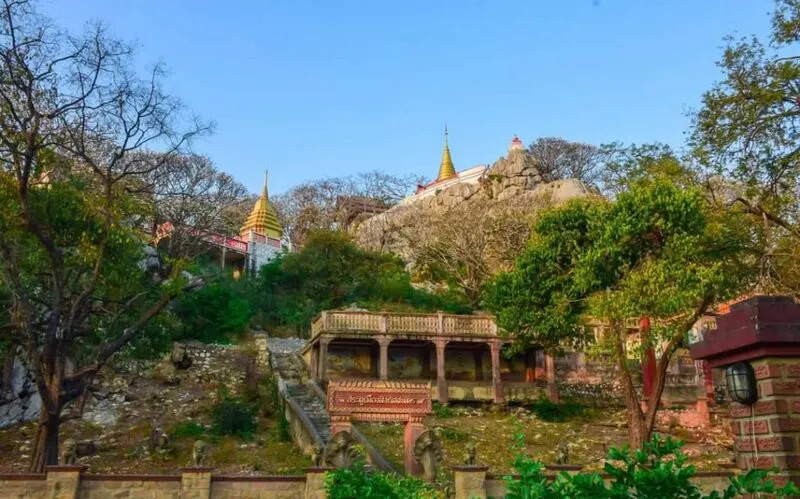
Wat Tham Tako, or Wat Tham Tako Phutthasopha is a hillside temple in Khao Samo Khon Subdistrict, Tha Wung District, Lopburi Province, with a distinctive identity shaped by the close fusion of sacred architecture, nature, and deeply rooted local faith. The temple stands at the foot of a hill, surrounded by large trees that spread their shade across the grounds, giving the whole area a cool, peaceful, and calm atmosphere from the moment visitors arrive. The character of the temple is clearly different from that of temples on flat land, because it combines the qualities of a rural temple, a cave temple, and a mountain temple in one place.
The feature that has made Wat Tham Tako Phutthasopha widely known is “Tham Tako,” a meditation cave that holds both spiritual importance and symbolic significance as the heart of the temple. The cave takes its name from a tako tree that once stood in front of it. Although that original tree no longer exists today, the name has continued and has become the defining identity by which people immediately remember this temple. The name Tham Tako is therefore not merely a place name, but also a trace of memory that still survives in both the landscape and the awareness of local people.
The temple’s position on the hillside allows visitors to feel the changing character of the site very clearly, from the lower section of the temple where religious activities are conducted and visitors are welcomed, to the higher levels of the hill where sacred structures and important worship points are located. Because of this mountain setting, a visit to Wat Tham Tako Phutthasopha is not just a matter of walking in, paying respects, and leaving. It is instead an experience of gradually moving through the route, the terrain, and the rhythm of the place itself.
In terms of the temple’s background and development, detailed evidence of its original founding date is not preserved in the same way as for major urban temples. However, what can be confirmed is that the temple is closely connected to the Khao Samo Khon area, which has long been an important historical and archaeological zone of Lopburi. The temple also became a place where religious objects, cultural artifacts, and old local items were gathered and preserved, eventually leading to the development of the Wat Tham Tako Phutthasopha Museum. This gives the temple significance not only as a religious site, but also as a bridge linking the community, faith, and historical knowledge.
One of the reasons why Tham Tako carries greater spiritual weight than an ordinary cave is that inside it there is a platform believed to be the place where Luang Pho Phao, a revered monk greatly respected by the people of Lopburi, once practiced Vipassana meditation. This detail gives the cave a meaning beyond that of a natural rock formation, turning it into a place closely associated with an important religious figure in local memory. Those who enter the cave therefore do not simply come to look at a natural site, but rather enter with a sense of reverence, composure, and a desire to experience the atmosphere of a place once used for real spiritual practice.
Inside Tham Tako, there are also several Buddha images enshrined alongside the meditation platform of Luang Pho Phao, making the cave function much like a vihara or sacred chamber in its own right. The atmosphere inside the cave is noticeably quieter, cooler, and calmer than the outer temple grounds, making it especially suitable for sitting quietly, paying respects, or simply spending time with one’s thoughts in silence. The differences in temperature, light, and sound between the outside and the inside of the cave allow visitors to immediately sense that this is a place naturally suited to meditation practice rather than simply being a scenic cave attraction.
Wat Tham Tako Phutthasopha is also notable for preserving a large number of old cultural objects and artifacts. Within the temple are earthenware vessels, ceramic wares, and other historical items that have been carefully collected and displayed in museum form. These objects add another layer of depth to the temple, because visitors do not merely encounter sacred images and natural surroundings, but also traces of the way of life, beliefs, and history of the Khao Samo Khon community that have accumulated over many generations.
The Wat Tham Tako Phutthasopha Museum is therefore an essential element that elevates the temple beyond being only a destination of religious devotion. It is also a place of learning for the local community. The objects on display demonstrate that the surrounding area is significant not only in Buddhist terms, but also in relation to archaeology and broader community history. Those interested in cultural heritage can clearly feel that this is a temple with real substance, not merely a beautiful or peaceful place.
Another striking feature of the temple is the stupa placed upon a Chinese junk, known as the “Ruea Makkhasat Stupa,” which stands on the mountaintop. This architectural form gives Wat Tham Tako Phutthasopha a very distinctive image, because a ship-shaped stupa carries deep symbolic meaning in terms of crossing over, journeying onward, and guiding life toward the shore of truth and Dhamma. The fact that the stupa is located on the highest point of the hill reinforces the sense that the summit is both a sacred destination and a symbolic goal in itself.
It has been mentioned that the Ruea Makkhasat Stupa at Wat Tham Tako Phutthasopha is similar in form to the one at Wat Khao Wongkot, but that the one here was built earlier. This detail makes the temple’s uniqueness even more compelling from the perspective of architectural comparison, because it suggests that the idea of a ship-shaped stupa on a hilltop was not merely an unusual design, but part of an established tradition with historical importance in the construction of religious monuments in this area.
From the perspective of landscape, Wat Tham Tako Phutthasopha enjoys a great advantage because the grounds are still covered by many large trees. This greenery softens the rocky character of the hillside terrain and adds a gentler charm to walking through the temple. Visitors do not feel as though they are entering only a dry rocky hillside, but rather a place where nature embraces the sacred architecture in a harmonious way. As a result, the temple is suitable both for those who wish to come and worship and for those who simply want to rest their eyes, settle their minds, and spend time in a peaceful setting.
In terms of its importance today, Wat Tham Tako Phutthasopha does not function only as a place for merit-making or religious tourism. It also plays a clear social role. The temple cares for underprivileged children and orphans in the area and also supports a charitable school for them. The image of the temple therefore goes beyond that of a cave temple or a heritage site. It is also a temple with a concrete social mission, and those who come to make merit here can feel that their support has a direct impact on people’s lives in the present.
The latest verified information states that Phra Khru Samu Phonthep Chantachoto is the abbot of Wat Tham Tako Phutthasopha. His name appears in connection with the care of underprivileged children and the ongoing administration of temple activities, making it appropriate to treat this as current and reliable information for the article. Having a clearly identified abbot also helps readers understand that the temple is actively cared for, socially engaged, and very much alive in the present, rather than being merely an old temple with only a historical story behind it.
Getting There to Wat Tham Tako Phutthasopha is best done by private car, because the temple is located in Khao Samo Khon Subdistrict, Tha Wung District, Lopburi Province. Driving makes it easy to combine the visit with other temples in the Khao Samo Khon cluster, such as Wat Bandai Sam Saen, Wat Khao Samo Khon, and other temples in the same area. Once at the temple, visitors can begin exploring the lower grounds, Tham Tako, the museum, and the higher point where the Ruea Makkhasat Stupa stands.
In terms of contact information, the temple maintains communication through its official website and official page, making it convenient for interested visitors to check details in advance. This is especially useful for those who want to visit the museum, sponsor meals for the children, or ask about specific activities on particular days. Contacting the temple before traveling makes planning much more precise, because the temple includes both sacred areas and spaces connected with the children’s home and the museum, each of which may have different arrangements depending on the day.
For general visitors, the temple is open every day, with verified visiting hours of 08:00–17:00. However, if the main purpose of the trip is to visit the museum, it is best to call ahead, because museum visits may require prior coordination, especially for group visits or for specific purposes such as historical study or content production.
Visitors should dress modestly and prepare suitable footwear for walking on hillside paths, because the temple includes flat areas, cave areas, and higher elevated points. It is also best to allow enough time for the visit and avoid rushing. Those who plan to enter the cave should be careful with uneven surfaces and move respectfully, because the cave area carries strong spiritual meaning and is not merely a scenic viewpoint or a photo spot.
Overall, Wat Tham Tako Phutthasopha is a temple with many layers of value in one place, from its cave-temple character, art objects, and museum, to the memory of Luang Pho Phao, the Ruea Makkhasat Stupa, and its present social role. This makes it especially suitable for visitors who are not looking for just a quick temple stop, but rather a place that offers history, calm, and meaningful learning at the same time.
If you are planning a trip around Lopburi focused on cave temples, hillside temples, or living heritage sites, Wat Tham Tako Phutthasopha is one destination that should not be overlooked. It offers far more than photogenic scenery or a shaded atmosphere. It gives visitors the sense of entering a place where faith, nature, and the memory of the local community still remain closely interwoven to this day.
| Summary | Wat Tham Tako Phutthasopha is a hillside temple in Khao Samo Khon Subdistrict, Tha Wung District, Lopburi Province. It is known for its meditation cave, museum, and the Ruea Makkhasat Stupa on the mountaintop. |
| Highlights | Tham Tako, Luang Pho Phao’s meditation platform, Buddha images inside the cave, the museum of old artifacts, the Ruea Makkhasat Stupa, and the shaded atmosphere under large trees. |
| History / Period | The Khao Samo Khon area has historical importance across many periods, and the temple museum was systematically developed during 2010–2011. |
| Current Abbot / Temple Caretaker | Phra Khru Samu Phonthep Chantachoto |
| Address | Wat Tham Tako Phutthasopha, Khao Samo Khon Subdistrict, Tha Wung District, Lopburi Province 15180 |
| Getting There | Travel by private car into the Khao Samo Khon area of Tha Wung District, then follow the signs to the temple. |
| Open Days | Every day |
| Opening Hours | 08:00 – 17:00 |
| Fees | No admission fee |
| Facilities | Parking area, museum, worship points, uphill walking path |
| Zones | Tham Tako, museum, Ruea Makkhasat Stupa, hillside area |
| Nearby Attractions | 1. Wat Bandai Sam Saen, 1 km 2. Wat Khao Samo Khon, 2 km 3. Wat Lai, 6 km 4. Phra Narai Ratchaniwet, 18 km 5. San Phra Kan, 19 km |
| Nearby Restaurants | 1. Krua Mae Sawan, 3 km. Tel. 092-649-9935 2. Pim Nom Niao Shop, 5 km. Tel. 063-172-0381 3. Jirapha Grilled Chicken, Tha Wung, 7 km. Tel. 061-530-7252 4. Baan Suan Lopburi Restaurant, 12 km. Tel. 081-780-5643 5. Tha Hin Larb Ped Restaurant, 14 km. Tel. 089-801-6224 |
| Nearby Accommodations | 1. Saithong Resort Lopburi, 10 km. Tel. 081-853-3233 2. Sabai Hotel Lopburi, 18 km. Tel. 036-426-809 3. Lopburi Inn Resort, 20 km. Tel. 036-412-300 4. Nett Hotel Lopburi, 19 km. Tel. 036-422-608 5. MDR Hotel Lopburi, 21 km. Tel. 036-412-555 |
| Main Contact Number | 090-501-0146, 081-095-0322, 089-802-0245 |
Frequently Asked Questions (FAQ)
Q: Where is Wat Tham Tako Phutthasopha located?
A: The temple is located in Khao Samo Khon Subdistrict, Tha Wung District, Lopburi Province 15180, and is a hillside temple within the historical Khao Samo Khon area.
Q: What is the main highlight of Wat Tham Tako?
A: Its main highlights are Tham Tako, the meditation platform associated with Luang Pho Phao, the museum of old artifacts, and the Ruea Makkhasat Stupa on the mountaintop.
Q: Why is it called “Tham Tako”?
A: Because there used to be a tako tree in front of the cave. Although the original tree is no longer there, the cave has continued to carry the same name.
Q: What time does Wat Tham Tako open?
A: The temple is open every day from 08:00 to 17:00, but visitors who want to see the museum should contact the temple in advance.
Q: Is there an entrance fee?
A: Verified information states that there is no admission fee for the museum.
Q: Who is the abbot of Wat Tham Tako Phutthasopha?
A: The latest verified information identifies Phra Khru Samu Phonthep Chantachoto as the abbot of Wat Tham Tako Phutthasopha.
Q: Who is this temple suitable for?
A: It is suitable for worshippers, cave-temple travelers, people interested in local museums, and those who want to visit a temple that currently plays an active role in supporting underprivileged children.
 Wat Tham Tako (Wat Tham Tako Phutthasopha) Map
 Category:
  Group:
  Last Update: 11 HourAgo
Comment
 Nearby Attractions
| Keyword (Advance) |
 Facebook Fanpage
 Region
 Art, Culture and Heritage
 Historical Sites and Monuments(
 Landmarks and Memorials(
 Royal Palace(
 Art, Craft Centres, Tradition(
 Museums(
 Historical Houses and The Ancient City(
 University
 Other religious and spiritural sites(
 Suburban Living
 Village, Community(
 Floating Market(
 Nature and Wildlife
 National Parks and Marine Reserves(
 Mountain (Doi)(
 Dam, Reservoir, Lake(
 Waterfalls(
 Hot Springs(
 Caves(
 Flower Field(
 Entertainment and Agricultural
 Zoos and Aquariums(
 Farm, Parks, Gardens and Ecotourism(
 Outdoor and Adventure Activities(