
 Home
Home Chiang Mai(






Rating: 4.1/5 (7 votes)
 |
|  Map
Map 
 Have Map
  No Map
Lop Buri attractions
Attractions in Thailand
Open Days: Daily
Opening Hours: 07.00 - 18.00
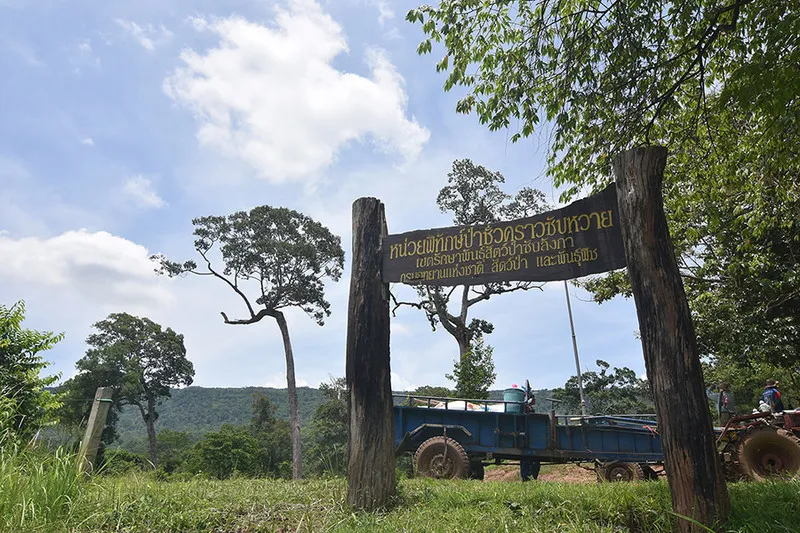
Sub Langka Wildlife Sanctuary, Lopburi Province, is one of the most important natural areas in Central Thailand. It is not only a vast and still-abundant forest, but also a protected area that serves as a watershed, a habitat for wildlife, and a highly valuable natural learning site. This area is located around Ban Langka Chuem and covers Lam Sonthi Subdistrict and Kut Ta Phet Subdistrict in Lam Sonthi District, Lopburi Province. With a total area of approximately 96,875 rai, it is considered one of the largest protected areas and plays a major role in the ecosystem of Lopburi.
The landscape of Sub Langka is a plain within a valley, surrounded by the Phang Pheoi mountain range, with Khao Ruak on the western side. The elevation ranges from about 140 to 846 meters above mean sea level. These variations in altitude create a highly diverse environment, including foothills, valleys, shaded forest, streams, and natural rock formations. This diversity allows Sub Langka to support a greater variety of plant and animal life than many other natural areas.
The significance of Sub Langka Wildlife Sanctuary begins with its role as the watershed forest of the Lam Sonthi River, an essential natural resource for both the ecosystem and the communities surrounding it. A healthy watershed forest absorbs rainfall, slows runoff, and effectively retains moisture in the soil. When the forest remains strong, the water system remains stable, and when the water system is balanced, biodiversity in the area is sustained as well. Sub Langka therefore has value not only as a natural attraction, but also as vital natural infrastructure for the entire watershed.
Another reason why Sub Langka stands out as a conservation area is that it serves as a food source and habitat for many species of wildlife, especially the serow, one of Thailand’s protected wild animals. The fact that serow can still be found living in this area reflects that the ecosystem of Sub Langka remains suitable for wildlife that depend on specific environmental conditions. Serow are typically associated with rocky mountains, steep terrain, and relatively undisturbed forest. Their continued presence in Sub Langka is therefore a meaningful indicator of the area’s ecological richness.
In addition to larger wildlife, Sub Langka Wildlife Sanctuary is also home to many smaller wild animals. Visitors who walk the nature trails quietly may have the chance to see turtles, various bird species, and small creatures moving around water sources or under the shade of large trees. The appeal of Sub Langka does not lie only in searching for large animals, but in experiencing the rhythm of the forest as a whole, including small wildlife, native plants, rock formations, water, and air, all blending into a complete natural system.
For travelers, Sub Langka is a highly suitable destination for those who want to experience nature at a deeper pace. This is not the kind of place where a short walk is enough. Instead, it is a place that allows visitors to gradually absorb the atmosphere of the forest, listen to the sounds of water, birds, and wind, and understand the value of a protected forest that has retained its quality. A trip to Sub Langka is therefore ideal for hikers, students, nature study groups, and anyone who wants to experience the true forest landscape of Lopburi beyond simple photography or check-in tourism.
One of the main highlights of Sub Langka Wildlife Sanctuary is its 2 designated nature study trails, each offering a distinct experience. The first is the Huai Phrik–Pha Phueng Waterfall–Tham Pha Phueng trail, which has a round-trip distance of about 3,200 meters and takes around 2 hours 30 minutes to complete. The strength of this trail lies in its balance between scenic beauty and a level of challenge that is not too demanding, making it suitable for beginner nature travelers who want to start walking in a real forest environment.
Along the Huai Phrik trail, visitors will pass Pha Phueng Waterfall. Although it is not a large waterfall, it has considerable charm due to its shaded surroundings filled with large trees and its peaceful, cool atmosphere. This waterfall serves as a resting point, a scenic stop, and a place that helps visitors feel they are moving deeper into the forest step by step. The beauty of Pha Phueng Waterfall is not in the dramatic size of its stream, but in the harmony of water, rocks, and forest around it, which together create a memorable atmosphere.
If visitors continue walking quietly and carefully, they may have the chance to see small wild animals such as turtles or various forest birds along the trail. Experiences like this are the true charm of Sub Langka, because they cannot be staged like activities in the city. They arise from respectful travel, moving slowly, and genuinely paying attention to the surroundings.
The main destination along this route is Tham Pha Phueng, which adds another dimension to the trip by combining ordinary forest walking with rocky terrain, cliffs, and a natural cave. Before reaching the viewpoint over the Chan Pha grove, visitors need to be more cautious because some sections involve sharp rocks and a certain amount of climbing. This part of the trail makes Sub Langka more than just an easy forest walk, offering a moderate challenge for those who want a closer encounter with nature.
The Chan Pha grove is another botanical highlight of Sub Langka. Chan Pha is a plant with a beautiful form and a highly distinctive appearance. When it grows together among rocky terrain and cliffs, it creates a scene that clearly differs from an ordinary forest. During the late rainy season and early winter, this area also offers a chance to see lady’s slipper orchids blooming at the same time, a sight many nature travelers look forward to. Seeing these orchids in their natural habitat is a meaningful experience both visually and educationally.
The starting point of the Huai Phrik trail is at Huai Mae Phrik, about 9 kilometers from the wildlife sanctuary office. This section is reached by dirt road, and some parts may become muddy, especially during the rainy season. A vehicle in good condition and suitable for rural roads is therefore necessary. If visitors come as a group and do not have an appropriate vehicle, they can arrange to use local farm trucks operated by villagers. This not only improves access, but also helps distribute income to the local community in a very direct way.
The second nature study trail is “Huai Pradu,” which differs from the first trail because it begins with a bamboo raft trip. One raft can hold around 35 people before reaching the starting point of the walking trail, which is approximately 1,500 meters long and takes about 1 hour 30 minutes in total. This trail is therefore suitable for those who want a more varied experience, as it combines both water-based activity and a short forest walk in a single trip.
Along the Huai Pradu route, visitors can see Tham Samui Kui and Tham Phra Nok, which add geological and landscape interest to the trip. Walking this trail feels different from the Huai Phrik route because it includes several stages of travel, from rafting to walking into the forest and then exploring the character of natural caves. It is therefore well suited to educational groups that want to experience several forms of nature within a manageable amount of time.
The overall atmosphere of Sub Langka feels quiet, peaceful, and genuinely natural. It is not an empty silence, but a silence filled with the sounds of nature all around, including rustling leaves, birdsong, flowing water, and the footsteps of the visitors themselves. These elements make a trip to Sub Langka not about rushing to reach a destination, but about slowly spending time in the forest and allowing nature to reveal itself through small details along the way.
Those planning to visit Sub Langka Wildlife Sanctuary should prepare appropriately for the nature of the area. Secure footwear suitable for hiking is essential, because many parts of the route include slippery rocks, damp paths, and sections where visitors must climb over sharp stone. Inappropriate footwear can significantly increase the risk of slipping or injury. In addition, mosquito repellent, drinking water, hats, and basic hiking necessities should always be prepared in advance.
Just as important as equipment is the mindset of the visitor. Sub Langka is a protected area, not a tourist site where people can move freely without considering impact. Visitors should therefore keep the area clean, avoid leaving rubbish behind, refrain from collecting plants or disturbing wildlife, avoid excessive noise, and strictly follow staff instructions. A good nature trip is not only about seeing beautiful things, but about leaving without causing damage to the natural environment.
Getting There to the Sub Langka Wildlife Sanctuary office can be done via Highway 205 from Chai Badan toward Lam Sonthi for approximately 31 kilometers. From there, a junction leads into Kut Ta Phet Subdistrict, and the road continues for about 37 kilometers to the office area. Travel by private car is the most convenient option, because the sanctuary lies quite deep inside and some internal routes are not suitable for ordinary travel, especially if visitors want to reach the starting points of certain nature study trails.
Overall, Sub Langka is an excellent destination for those who want to see a different side of Lopburi’s natural landscape. Many people may associate Lopburi with its old city, sunflower fields, or attractions in the city center, but Sub Langka shows that the province also contains rich forest, nature trails, caves, waterfalls, and conservation value of a very high level. A visit here is therefore not just a change of scenery, but a chance to experience another side of Lopburi that is deeper, quieter, and more meaningful than many people expect.
Sub Langka Wildlife Sanctuary is therefore much more than a natural attraction. It is a place where the roles of watershed forest, wildlife habitat, field learning site, and eco-tourism destination come together in one landscape. Those who travel here do not return with only beautiful photos, but also with a clearer understanding of why protecting a single forest can matter so deeply for wildlife, water, forest, community, and the future of Thailand’s natural heritage.
| Summary | A large wildlife sanctuary in Lam Sonthi District, Lopburi Province, covering approximately 96,875 rai. It is an important watershed forest and a habitat for wildlife, including the serow. |
| Highlights | A rich natural forest with 2 nature study trails, waterfalls, caves, Chan Pha groves, and seasonal opportunities to see lady’s slipper orchids. |
| History / Period | A protected wildlife area with an important role in safeguarding the Sub Langka forest, one of Lopburi’s key forest landscapes and a watershed area of the Lam Sonthi basin. |
| Address | 45 Moo 7, Kut Ta Phet Subdistrict, Lam Sonthi District, Lopburi 15190 |
| Coordinates | 15.5956, 101.3510 |
| Getting There | Take Highway 205 from Chai Badan to Lam Sonthi for about 31 km, then turn into Kut Ta Phet Subdistrict and continue for around 37 km to the sanctuary office. Some internal sections are dirt roads, so a suitable vehicle is recommended. |
| Facilities | Nature study trails, hiking starting points, rafting access on some routes, and advance coordination with local farm trucks for group visits. |
| Zones | Sanctuary office zone, Huai Mae Phrik / Huai Phrik zone, Pha Phueng Waterfall zone, Tham Pha Phueng zone, Huai Pradu zone, and Tham Samui Kui / Tham Phra Nok zone. |
| Nearby Tourist Attractions | 1. Pa Sak Jolasid Dam — approximately 60 km 2. Lopburi Sunflower Fields — approximately 55 km 3. Wat Khao Wong Phrachan — approximately 70 km 4. Wang Kan Lueang Waterfall — approximately 80 km 5. Khao Somphot — approximately 65 km |
| Nearby Restaurants | 1. Sudarat Restaurant (PTT Lam Sonthi) — 081-994-8167, 081-745-1582 2. PunThai Coffee Lam Sonthi 1 — 061-031-3488 3. Je Noi Fish Maw Soup, RN Yard Market — 096-007-5182 4. Hong Yok D100,000d, Chai Badan — 081-291-9389, 091-262-9102 5. Krua Lung Buem, Chai Badan — 089-089-8489 |
| Nearby Accommodations | 1. Narai Grand Lopburi — 086-337-0870 2. Ban Rim Nam Resort Lopburi — 080-536-1989 3. JRD Resort Lopburi — 085-936-8088 4. Lopburi Palm Resort — 081-593-7919 5. Privacy Residence Lopburi — 092-607-8787, 090-983-7703 |
| Main Contact Number | 0 3645 1936 |
Frequently Asked Questions (FAQ)
Q: Where is Sub Langka Wildlife Sanctuary located?
A: It is located in Lam Sonthi District, Lopburi Province, covering Lam Sonthi Subdistrict and Kut Ta Phet Subdistrict, with the sanctuary office located in Kut Ta Phet.
Q: What is the main highlight of Sub Langka?
A: The main highlight of Sub Langka is its rich watershed forest, 2 nature study trails, waterfalls, caves, Chan Pha groves, and its role as a habitat for the protected serow.
Q: How many hiking trails are there in Sub Langka?
A: There are 2 main trails: the Huai Phrik–Pha Phueng Waterfall–Tham Pha Phueng trail and the Huai Pradu trail, each offering different experiences and natural highlights.
Q: What type of travelers is Sub Langka suitable for?
A: It is suitable for nature travelers, hikers, people interested in ecosystems and plant life, and anyone who wants to experience a real forest landscape in a peaceful setting.
Q: What should I prepare before visiting Sub Langka?
A: You should prepare secure hiking shoes, mosquito repellent, drinking water, and the essential equipment needed for nature trails, especially if the ground is slippery or rocky.
Q: Do I need permission before entering the area?
A: Yes. You should contact the sanctuary staff in advance to request permission and confirm current details about access, trail conditions, and activities available during your visit.
Q: Is it possible to see wildlife in Sub Langka?
A: Yes. Visitors may see small animals such as turtles and many bird species along the nature trails, while the protected serow still lives in the area, although sightings depend on timing and natural conditions.
 Website: www.dnp.go.th
 Tel: 025620760
 Sub Langka Wildlife Sanctuary Map
 Category:
  Group:
  Last Update: 15 HourAgo
Comment
 Nearby Attractions
| Keyword (Advance) |
 Facebook Fanpage
 Region
 Art, Culture and Heritage
 Historical Sites and Monuments(
 Landmarks and Memorials(
 Royal Palace(
 Art, Craft Centres, Tradition(
 Museums(
 Historical Houses and The Ancient City(
 University
 Places of Worship
 Temple(
 Other religious and spiritural sites(
 Suburban Living
 Village, Community(
 Floating Market(
 Mountain (Doi)(
 Dam, Reservoir, Lake(
 Waterfalls(
 Hot Springs(
 Caves(
 Flower Field(
 Entertainment and Agricultural
 Zoos and Aquariums(
 Farm, Parks, Gardens and Ecotourism(
 Outdoor and Adventure Activities(