
 Home
Home Chiang Mai(





Rating: 5/5 (1 votes)
 |
|  Map
Map 
 Have Map
  No Map
Lop Buri attractions
Attractions in Thailand
Open Days: Please contact in advance before visiting
Opening Hours: Please contact in advance before visiting
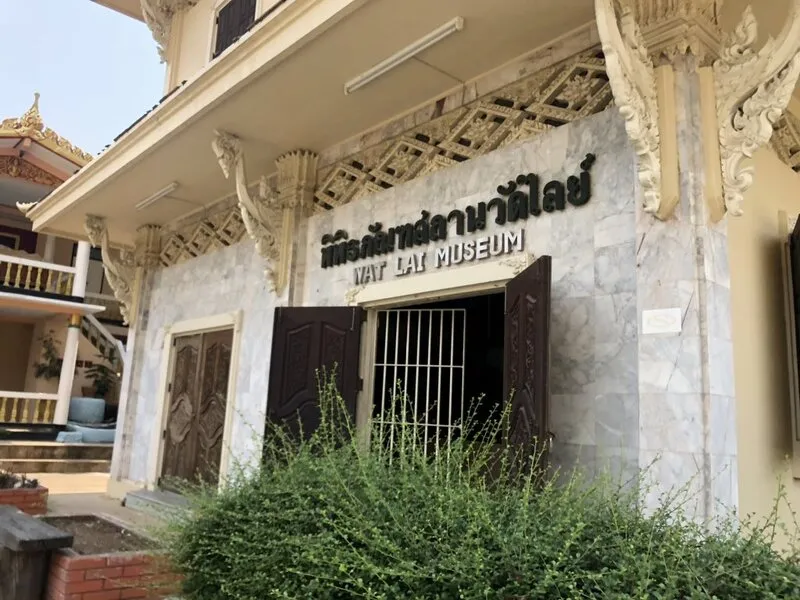
Wat Lai Museum is located within Wat Lai in Khao Samo Khon Subdistrict, Tha Wung District, Lopburi Province. It is a large two-story temple museum of great importance for learning about the history, art, Buddhism, and cultural way of life of communities in the central river basin. This place is not only a repository of antiquities, but also a space that clearly explains the relationship between temples, communities, rivers, and ancient cities in this region. As soon as visitors step into the museum, they can experience both the atmosphere of an ancient temple and the traces of living history through its extensive displays.
Wat Lai is an old temple dating back to the early Ayutthaya period and is situated beside the Bang Kham River, which in the past was an important waterway linking various ancient cities in the central region. As a result, the temple and the surrounding community were closely connected to ancient settlement networks. The location of the temple therefore carries meaning beyond geography alone, reflecting the role of Wat Lai as a religious and cultural center for riverbank communities over a long period of time.
The origin of Wat Lai Museum began with the collection of antiquities by the abbot of Wat Lai during the years 1929 to 1944. Later, in the period of Phra Khru Sathit Bunyaphisan, abbot of Wat Lai from 1978 to 1987, a museum building was formally constructed and the objects were systematically arranged for display. The museum therefore reflects the dedication of the monks and the local community to preserving the cultural heritage of the area so that it would not disappear over time.
The museum building is a large two-story structure that allows a wide variety of objects to be displayed in organized categories. The atmosphere inside feels calm and simple, yet full of historical value. Those interested in antiquities, art objects, and old Buddhist materials will find that each display case offers not only visual beauty in craftsmanship, but also a deeper connection to the story of Wat Lai and Thai society in the past.
The upper floor of the museum mainly displays objects related to Buddhism and is considered the section that most clearly reflects the identity of this historic temple. The exhibits include black-and-gold lacquered scripture cabinets, folding-book manuscripts, ancient Buddha images in both metal and carved stone, and brass ritual objects such as a large holy water vessel. These items reveal the world of religion in the past, from education and the preservation of scriptures to ritual practice and artistic craftsmanship associated with faith.
The upper floor also contains traditional Thai musical instruments from Wat Lai, initiated by Phra Khru Suphutthisunthon, or Luang Pho Lek. This group of exhibits is especially meaningful because it shows that the temple did not function only as a place for religious ceremonies, but also as a center for the transmission of art and culture. In addition, there are brass betel sets and mortars that reflect traditional Thai ways of life, hospitality, and the tastes of people in earlier times.
The lower floor of the museum is another highly interesting section because it gathers various types of antiquities and arranges them into categories, such as ritual conch shells, golden ceremonial trees, cabinets of ancient coins, silverware, opium pipes, antique lamps, and a large mother-of-pearl inlaid furniture set. These objects broaden the visitor’s perspective from the religious sphere to the social, economic, and cultural life of people in the past.
One of the most important highlights on the lower floor is a set of photographs taken by King Chulalongkorn when he visited Wat Lai. These photographs are of great historical value because they record both the villagers who came to welcome the royal visit and the bamboo bridge in front of the temple on the side facing the Bang Kham River. This collection allows visitors to visualize the atmosphere of the temple and the community in the past in a very concrete way, and it further emphasizes that Wat Lai once played an important role within the riverbank communities of the central region.
At the center of the room are displays of earthenware from different eras, glazed ceramics from Chiang Mai kilns, painted pedestal plates, a phra chulai cabinet or gold head covering of the Buddha image of Phra Si Ariyamettrai, benjarong painted ceramic cabinets, blue-and-white porcelain display cabinets, ceramic figurines, and lacquerware decorated with gold leaf. This group of objects greatly expands the dimensions of Wat Lai Museum, because it reflects not only the sacredness or age of the temple, but also the development of artistic traditions, craftsmanship, and the tastes of Thai society across different periods.
Overall, Wat Lai Museum is a place of layered value, serving at once as a religious learning center, a community museum, a repository of antiquities, and a space connecting local history with the wider history of the central region. The objects preserved inside the building ensure that the story of Wat Lai does not remain only in oral tradition, but becomes history that can be clearly seen and directly experienced.
Wat Lai is also distinguished by its devotion to Phra Si Ari or Phra Si Ariyamettrai, an important Buddha image that has made the temple widely known. This devotion has not existed only in the past, but continues into the present through the temple’s traditions and important events. Visiting Wat Lai Museum is therefore not simply a matter of viewing old objects, but also of experiencing a sacred place that continues to hold meaning for local people.
In terms of cultural tourism, Wat Lai Museum has a strong advantage because visitors can explore more than one dimension in a single destination, including the museum itself, the old temple, the art of the viharn, the riverside atmosphere, and the stories of local traditions. A visit here is therefore highly suitable for those interested in a genuinely educational trip, including general tourists, students, researchers, and lovers of Thai historical art and culture.
Phra Khru Samu Phonthep Chantachoto, in the role of acting abbot of Wat Lai, reflects that the temple continues to be cared for and remains active in religious activities today. In addition, the continued presence of contact information and visiting details in Thailand’s museum database further shows that Wat Lai Museum remains a learning destination that can still be visited with prior coordination.
Getting There If traveling by private car, take Highway 311 on the Lopburi–Sing Buri route, then turn onto Highway 3028 at the traffic light intersection around kilometer 18. Continue for approximately 6 kilometers to reach Wat Lai. For those traveling by public transport, several bus routes have been mentioned as passing through this area, including the Lopburi–Tha Khlong route, the Khok Samrong–Ban Mi route, and the Sing Buri–Ban Mi route. However, before traveling, it is advisable to check the current bus schedule with the transport provider for convenience.
For travelers planning a history- and culture-focused trip to Lopburi, Wat Lai Museum is a highly worthwhile destination because it provides insight into the history of an old temple, the riverside way of life, Buddhist devotion, and the development of Thai art through a large number of authentic objects. A visit here is therefore not just about looking at old things inside display cases, but about gaining a deeper understanding of Lopburi’s past through a real place that still remains alive today.
| Place Summary | Wat Lai Museum is a two-story temple museum inside Wat Lai, housing numerous antiquities, art objects, and old household items connected to the history of an ancient temple from the early Ayutthaya period. |
| Highlights | A two-story museum building, black-and-gold lacquered scripture cabinets, folding-book manuscripts, ancient Buddha images, the gold head covering or phra chulai of Phra Si Ariyamettrai, historical photographs, and antique ceramics from various periods. |
| History / Period | The museum originated from the antiquities collection of Phra Khru Suphutthisunthon during 1929–1944 and later developed into a museum building in the time of Phra Khru Sathit Bunyaphisan. It was formally established as a museum in 1987, while Wat Lai itself dates back to the early Ayutthaya period. |
| Current Caretaker or Abbot | Phra Khru Samu Phonthep Chantachoto (Acting Abbot of Wat Lai) |
| Address | Wat Lai, Khao Samo Khon Subdistrict, Tha Wung District, Lopburi Province 15150 |
| Coordinates | 14.911782, 100.465720 |
| Getting There | By private car, use Highway 311 from Lopburi to Sing Buri, then turn onto Highway 3028 at the traffic light intersection around km 18 and continue for about 6 km. Mentioned public transport routes include Lopburi–Tha Khlong, Khok Samrong–Ban Mi, and Sing Buri–Ban Mi. |
| Open Days | Please contact in advance before visiting |
| Opening Hours | Please contact in advance before visiting |
| Admission Fee | Free of charge |
| Zones | Upper floor: religious and Buddhist art objects Lower floor: various antiquities such as ritual conch shells, silverware, mother-of-pearl furniture, historical photographs, earthenware, ceramics, and lacquerware |
| Nearby Tourist Attractions | 1. Wat Phra Non Chaksi Worawihan 11 km 2. Wat Na Phra That 11 km 3. King Narai’s Palace 19 km 4. Phra Prang Sam Yot 20 km 5. San Phra Kan 20 km |
| Nearby Restaurants | 1. Paiboon Grilled Chicken – Sing Buri Original Crispy Skin Chicken 5 km Tel. 099-104-0362 2. Pad Thai Bang Mon 8 km Tel. 062-329-3531 3. Mae La Grilled Fish 8 km Tel. 036-813-701, 080-910-8563 4. Kesara Cafe & Bakery, City Branch near Vocational College 7 km Tel. 098-046-3168 5. Nai Hua Korean Grilled Pork 8 km Tel. 089-850-5285 |
| Nearby Accommodations | 1. The Charlotte Smart Hotel 25 km Tel. 064-979-2905 2. HOP INN Lopburi 26 km Tel. 036-422-666 3. O2 Hotel Lopburi 27 km Tel. 064-967-7474 4. Rongrak Resort 33 km Tel. 089-194-2808 5. Thiw Phai Resort 34 km Tel. 099-241-7993 |
| Main Contact Number | 08-9802-0245 |
Frequently Asked Questions (FAQ)
Q: Is Wat Lai Museum still open?
A: Based on the latest verified information, there is no evidence that it has permanently closed or relocated. Visitors should contact the temple in advance before every visit.
Q: What is interesting inside Wat Lai Museum?
A: Inside the museum are black-and-gold lacquered scripture cabinets, folding-book manuscripts, ancient Buddha images, brassware, silverware, historical photographs, antique ceramics, and many other important art objects.
Q: Why is Wat Lai important?
A: Wat Lai is an ancient temple dating back to the early Ayutthaya period. It is located beside the Bang Kham River and is important in terms of art, Buddhism, and devotion to Phra Si Ari.
Q: Is there an entrance fee for Wat Lai Museum?
A: Verified information indicates that there is no admission fee, but visitors should contact the temple before visiting.
Q: How do I get to Wat Lai Museum?
A: If driving from Lopburi, take Highway 311 and turn onto Highway 3028, then continue for approximately 6 kilometers to reach Wat Lai.
Q: Who is currently responsible for Wat Lai?
A: The latest verified information names Phra Khru Samu Phonthep Chantachoto as the acting abbot of Wat Lai.
 Tel: 036489105
 Wat Lai Museum Map
 Category:
  Group:
  Last Update: 2 DayAgo
Comment
 Nearby Attractions
| Keyword (Advance) |
 Facebook Fanpage
 Region
 Historical Sites and Monuments(
 Landmarks and Memorials(
 Royal Palace(
 Art, Craft Centres, Tradition(
 Historical Houses and The Ancient City(
 University
 Places of Worship
 Temple(
 Other religious and spiritural sites(
 Suburban Living
 Village, Community(
 Floating Market(
 Nature and Wildlife
 National Parks and Marine Reserves(
 Mountain (Doi)(
 Dam, Reservoir, Lake(
 Waterfalls(
 Hot Springs(
 Caves(
 Flower Field(
 Entertainment and Agricultural
 Zoos and Aquariums(
 Farm, Parks, Gardens and Ecotourism(
 Outdoor and Adventure Activities(