
 Home
Home Chiang Mai(






Rating: 3.8/5 (5 votes)
 |
|  Map
Map 
 Have Map
  No Map
Lop Buri attractions
Attractions in Thailand
Open Days: Daily
Opening Hours: 08.00–17.00
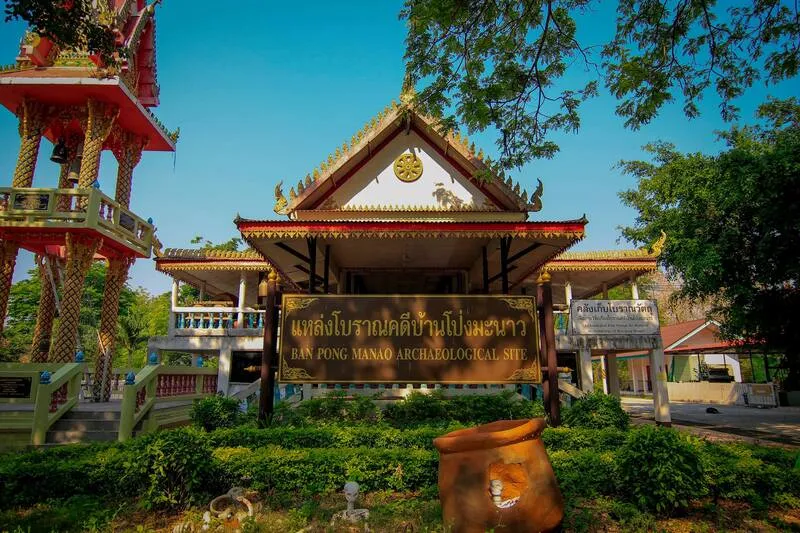
Pong Manaow Museum is located in Village No. 7, Huai Khun Ram Subdistrict, Phatthana Nikhom District, Lopburi Province. It is one of the most important archaeological learning sites in Lopburi and the central region of Thailand. The area is known for discoveries of prehistoric human remains dating back approximately 2,500–3,000 years. The significance of this place is not only as a community museum but also as a location where visitors can closely explore the past of human civilization through ancient human skeletons, archaeological artifacts, and evidence of prehistoric daily life excavated directly from the site.
Pong Manaow has been recognized as a significant prehistoric archaeological site because researchers discovered as many as 13 ancient human skeletons buried within the same burial pit. Such a discovery carries considerable academic importance. Rather than finding scattered artifacts alone, archaeologists uncovered actual human remains together with objects related to daily life and burial rituals. The presence of multiple skeletons in a single archaeological context provides valuable insight into burial practices, beliefs, and the social structure of ancient communities.
The archaeological site is estimated to be around 2,500–3,000 years old and is often described as belonging to a period similar to the “Late Ban Chiang Era.” During this time, humans were already using various materials together, including pottery, polished stone tools, and bronze tools. This chronological context makes Pong Manaow Museum particularly significant because it does not only reveal the history of a local area in Lopburi, but also connects to the broader development of prehistoric civilizations in Thailand.
Many types of artifacts were discovered at Pong Manaow, and each object helps archaeologists understand how ancient people lived. Pottery vessels reflect the knowledge of producing containers for everyday use. Polished stone axes indicate technological development and tool usage related to survival activities. Meanwhile, socketed bronze axes demonstrate early metallurgical advancement, representing an important technological milestone in prehistoric society. The discovery of these objects together with human skeletons provides a clearer and more comprehensive picture of life in the past.
The charm of Pong Manaow Museum lies in its ability to make archaeology—a subject that might seem distant to many people—accessible and understandable. Visitors do not simply see ancient objects displayed in glass cases; they also learn about the context of their discovery and gain an overview of how people lived thousands of years ago through carefully curated historical and archaeological exhibits. The museum therefore acts as a bridge connecting academic knowledge with the experiences of visitors who are curious about the origins of human civilization.
From a historical perspective, Pong Manaow is important evidence showing that the Lopburi region was inhabited long before the well-known historical periods associated with ancient cities and temples. The discoveries here expand the historical narrative of Lopburi beyond famous landmarks such as Phra Prang Sam Yot, King Narai’s Palace, or historic temples in the city center. Instead, they reveal that human settlement in this region dates back thousands of years.
Another fascinating aspect of the museum is its connection with the local community. A community museum is not merely a place for preserving artifacts, but also a tool for creating knowledge and pride among local residents. When people learn that their homeland was once the site of an ancient human settlement with national archaeological significance, a sense of responsibility and desire for preservation naturally develops. Pong Manaow Museum therefore represents an example of how archaeological knowledge can integrate with tourism, education, and community conservation.
The museum also received the Outstanding Award in the Central Region Cultural Tourism Category at the Thailand Tourism Awards in 2008. This recognition confirms the value of the site as a cultural tourism destination. The award reflects not only the uniqueness of the artifacts displayed, but also the museum’s role as a learning center that contributes to tourism development in the region.
In terms of atmosphere, Pong Manaow Museum offers a distinctive experience because visitors feel as if they are exploring a learning site rooted directly in the original excavation area rather than a typical exhibition hall detached from its archaeological context. This allows visitors to easily connect what they see in the museum with the surrounding landscape and community. The experience therefore feels more meaningful than simply viewing artifacts in display cases, as it reminds visitors that the stories from thousands of years ago actually happened on this very land.
Verified visitor information indicates that the museum is open daily from 08.00 to 17.00 and admission is free. This makes it an ideal destination for family trips, educational excursions for students, or anyone interested in history and archaeology. Visitors can also contact the Huai Khun Ram Subdistrict Administrative Organization for additional information before traveling, making it easier to plan a visit in advance.
Getting There From Lopburi city, visitors can travel along the Lopburi–Khok Tum–Phatthana Nikhom–Wang Muang route, which is the same road leading to Suan Maduea Waterfall. The site is located approximately 26.5 kilometers from Pasak Chonlasit Dam, making it a convenient stop on a travel route around the Phatthana Nikhom area and the Pasak Dam region. There is no direct public transportation to the museum, so traveling by private car is the most convenient option.
For travelers who want to explore Lopburi beyond its popular city landmarks, Pong Manaow Museum is a destination worth visiting. The museum offers an opportunity to understand the ancient roots of human life in the Lopburi area through real archaeological evidence, including skeletons, pottery, tools, and excavation records. Visiting the site is therefore not merely about viewing ancient artifacts, but about experiencing a deeper layer of history that predates the historic cities and recognizing the importance of archaeological heritage that continues to serve as a valuable learning resource today.
| Place Summary | A community museum and prehistoric archaeological site in Lopburi, distinguished by the discovery of 13 ancient human skeletons and several types of archaeological artifacts. |
| Highlights | 13 ancient human skeletons found in the same burial pit, pottery vessels, polished stone axes, socketed bronze axes, and an archaeological site dating back around 2,500–3,000 years. |
| History / Period | A prehistoric archaeological site approximately 2,500–3,000 years old, associated with a period close to the Late Ban Chiang Era. |
| Address | Wat Pong Manaow, Village No. 7, Huai Khun Ram Subdistrict, Phatthana Nikhom District, Lopburi Province 15140 |
| Getting There | From Lopburi city, take the Lopburi–Khok Tum–Phatthana Nikhom–Wang Muang route, the same road leading to Suan Maduea Waterfall. Traveling by private car is the most convenient option, and there is no direct public transportation. |
| Open Days | Daily |
| Opening Hours | 08.00–17.00 |
| Admission Fee | Free of charge |
| Zones | Ancient human skeleton display zone, pottery display zone, stone and bronze tool zone, and an interpretation zone explaining the community archaeological site. |
| Nearby Tourist Attractions | 1. Wat Pong Manaow – 0.1 km 2. Suan Maduea Waterfall – 20 km 3. Pasak Chonlasit Dam – 27 km 4. Khok Salung Floating Train Viewpoint – 35 km 5. Phatthana Nikhom Sunflower Fields – 35 km |
| Nearby Restaurants | 1. Krua Lung Sawai – 9 km Tel. 081 852 4037 2. Krua Baan Suan Phatthana Nikhom – 11 km Tel. 081 780 5665 3. Baan Suan Rim Nam Restaurant – 12 km Tel. 089 801 2144 4. Phatthana Nikhom Boat Noodle Restaurant – 10 km Tel. 089 744 6128 5. Pasak Chonlasit Dam Restaurant – 27 km Tel. 036 494 258 |
| Nearby Accommodations | 1. Pasak Hillside Resort – 26 km Tel. 036 494 222 2. Home Sweet Home Resort – 24 km Tel. 089 742 6644 3. Phusakthan Resort – 25 km Tel. 081 948 9645 4. Rai Fhun Pen Jing Resort – 28 km Tel. 081 947 3666 5. Sweet Home Resort – 22 km Tel. 081 780 2046 |
| Main Contact Number | 036 704 024 |
Frequently Asked Questions (FAQ)
Q: Is Pong Manaow Museum still open?
A: Yes. It is open to visitors daily, and there is currently no evidence that the museum has permanently closed or relocated.
Q: What is the main highlight of Pong Manaow Museum?
A: The main highlight is the discovery of 13 ancient human skeletons in the same burial pit, together with pottery, polished stone axes, and socketed bronze axes.
Q: How old is the Pong Manaow archaeological site?
A: The site is estimated to be around 2,500–3,000 years old and is associated with a period close to the Late Ban Chiang Era.
Q: Is there an admission fee for Pong Manaow Museum?
A: No. Admission is free of charge.
Q: What time does Pong Manaow Museum open?
A: The museum is open daily from 08.00 to 17.00.
Q: How do I get to Pong Manaow Museum?
A: The museum is best reached by private car. From Lopburi city, take the Lopburi–Khok Tum–Phatthana Nikhom–Wang Muang route, which is the same road leading to Suan Maduea Waterfall. There is no direct public transportation.
 Tel: 036451009, 036459457
 Mobile: 0812947790
 Pong Manaow Museum Map
 Category:
  Group:
  Last Update: 1 DayAgo
Comment
 Nearby Attractions
| Keyword (Advance) |
 Facebook Fanpage
 Region
 Historical Sites and Monuments(
 Landmarks and Memorials(
 Royal Palace(
 Art, Craft Centres, Tradition(
 Historical Houses and The Ancient City(
 University
 Places of Worship
 Temple(
 Other religious and spiritural sites(
 Suburban Living
 Village, Community(
 Floating Market(
 Nature and Wildlife
 National Parks and Marine Reserves(
 Mountain (Doi)(
 Dam, Reservoir, Lake(
 Waterfalls(
 Hot Springs(
 Caves(
 Flower Field(
 Entertainment and Agricultural
 Zoos and Aquariums(
 Farm, Parks, Gardens and Ecotourism(
 Outdoor and Adventure Activities(