
 Home
Home Chiang Mai(






Rating: 4/5 (4 votes)
 |
|  Map
Map 
 Have Map
  No Map
Lop Buri attractions
Attractions in Thailand
Open Days: Wednesday - Sunday
Opening Hours: 09.00 - 16.00
King Narai National Museum The meaning of visiting this place lies not only in walking through galleries of antiquities displayed in cases, but in stepping into a real historical setting that was once part of King Narai’s Palace. Lopburi, in that era, played a highly important role in the politics, diplomacy, and culture of the Ayutthaya Kingdom. King Narai National Museum is therefore much more than an ordinary museum, because what visitors see is not separated from the site itself, but closely connected through historic buildings, the former royal palace, and antiquities that explain the story of Lopburi in a deeper and more systematic way.
This museum is located within the grounds of Phra Narai Ratchaniwet in Lopburi Province, a royal palace commissioned by King Narai the Great and used as a secondary royal residence during parts of his reign. The fact that the museum stands within the same area as the palace makes the visit especially distinctive, because visitors are not simply viewing ancient objects detached from their original context. Instead, they are reading history through a real place that still preserves the atmosphere of the royal court of the past. For those interested in Lopburi as a historic city, this museum is often regarded as one of the province’s most important destinations.
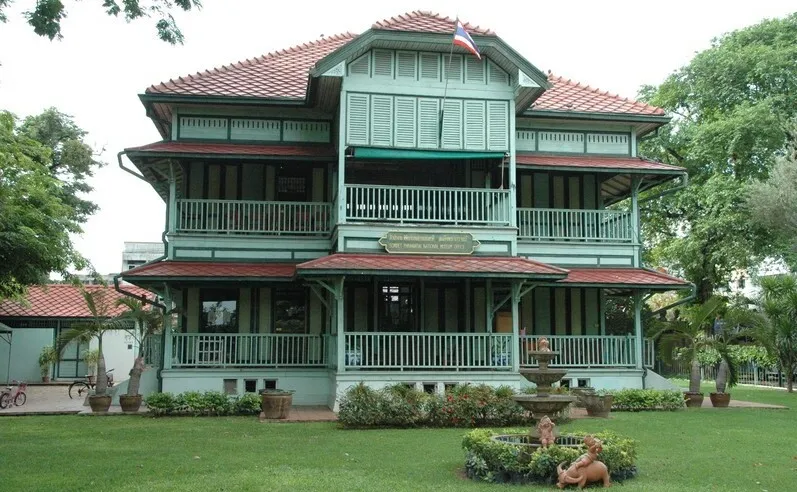
Another major distinction of King Narai National Museum is its use of several historic buildings within the palace complex as exhibition spaces, including Phiman Mongkut Hall, Chanthara Phisan Hall, and the Phra Prathiap Building Group. Each of these buildings functions as much more than a backdrop to the museum. They play an important role in helping visitors understand how the antiquities, artworks, and exhibitions on display are connected to Lopburi. When objects are shown in spaces that once carried real political and royal significance, the museum experience becomes far richer and more layered than that of a museum housed in a modern building.
In historical terms, King Narai National Museum is of exceptional importance because it is the third national museum established in Thailand. It was first founded in 1924 under the name “Lopburi Museum” before later developing into King Narai National Museum. The establishment of a museum in this location clearly reflects the fact that Lopburi possesses such a rich body of archaeological and historical evidence that it required a dedicated place to collect, preserve, and interpret the city’s story in a serious and systematic manner. For a long time, this museum has therefore served as a central repository of Lopburi’s historical memory.
Viewed in a broader perspective, Lopburi is not a city whose importance belongs only to the reign of King Narai. It is a city with a long and continuous history spanning many eras, from prehistory, Dvaravati, Lopburi or Khmer influence, Ayutthaya, and Rattanakosin. The antiquities and artworks displayed in the museum are therefore highly valuable, because they allow visitors to see the continuity of the city in terms of art, belief, politics, and culture. Anyone who explores the museum attentively will quickly understand that Lopburi is a city layered with history, and that its value does not rest on the royal palace or a single monument alone.
Phiman Mongkut Hall is one of the most striking buildings within the museum grounds, with its elegant architecture and its important role as a gallery for exhibitions on the history of Lopburi. This building allows visitors to appreciate both the beauty of the structure itself and the historical content presented inside. Its appeal lies in the fact that it serves simultaneously as both a “historical object” and a “container of stories.” Those who walk through the interior can clearly feel that viewing exhibitions in such a setting is very different from reading history in a book, because the place itself intensifies the story and makes it come alive.
Chanthara Phisan Hall is another key space for understanding King Narai the Great and the wider context of this royal palace. This building deepens the museum experience by connecting it directly with the king who played such an important role in Thai history, especially in terms of relations between the Ayutthaya court and the outside world. Lopburi in King Narai’s era was not merely a secondary city, but a strategic center and an important hub of diplomatic activity. Exploring the area of Chanthara Phisan Hall therefore helps visitors see Lopburi more clearly as a historical city whose significance extended far beyond what many people may have previously realized.
The Phra Prathiap Building Group further completes the museum’s interpretive landscape, as it connects the story of the antiquities with everyday life, the identity of Lopburi, and the relationship between people and their city. Visitors therefore do not encounter only narratives about the royal court or kings, but also gain insight into the development of local communities, artistic forms that reflect cultural roots, and the transformation of the city from one era to another. The Phra Prathiap Building Group is especially valuable in storytelling terms because it prevents history from being limited to important individuals alone and instead expands it to include society as a whole.
The antiquities and artworks displayed within the museum are another essential reason this place holds such high value. Those interested in Thai art, archaeology, or the history of ancient cities will find that many of the objects on display help explain Lopburi’s development in each period in a concrete way. These include Buddha images, inscriptions, ancient utilitarian objects, and artistic evidence directly linked to Lopburi culture. Seeing such materials within the context of Phra Narai Ratchaniwet further reinforces the understanding that Lopburi’s value does not lie only in architecture, but in being a city of genuinely complex historical depth.
The atmosphere of walking through this museum has a unique charm. Unlike museums in large cities, which are often housed in enclosed modern buildings, this place has a distinctly “museum within a royal palace” character. The wide palace grounds, old walls, rows of historic buildings, and the landscape of old Lopburi surrounding the site all make visitors feel that they are moving through an authentic space of the past rather than an artificially created exhibition venue. That sensation greatly elevates the viewing experience, because the stories presented in the museum are no longer merely information, but something physically anchored in the real place before one’s eyes.
Another aspect that sets King Narai National Museum apart from ordinary sightseeing in Lopburi is that it serves as an excellent “starting point” for understanding the old city. If travelers begin at the museum and then continue to sites such as Phra Prang Sam Yot, San Phra Kan, Vichayen House, or Prang Khaek Shrine, their overall picture of Lopburi becomes much clearer. The monuments outside cease to be simply ruined architecture and instead become part of a historical narrative that the visitor has already begun to understand through the museum.
In terms of its present-day importance, King Narai National Museum plays a role beyond being merely a place to display antiquities. It is also a space that preserves Lopburi’s shared memory in a form that both residents and visitors can genuinely access. A city with many monuments requires a place that explains the meaning of those monuments, and this museum is the heart of that explanation. It helps connect the past with the present, makes history accessible to younger generations, and adds greater depth to Lopburi’s cultural tourism.
For travelers interested in history, this is a destination that should not be missed. It offers knowledge, architectural beauty, and a broader understanding of the city as a whole. Those who enjoy museums will find high-quality displays, those who appreciate palaces and monuments will experience a real royal complex, and those who like to read the history of cities will gain a broader and deeper understanding of Lopburi than they would from seeing only a few of its most popular attractions.
Practical information for visitors is also worth knowing before the trip. King Narai National Museum is open Wednesday through Sunday from 09.00 to 16.00 and closed on Monday, Tuesday, and public holidays. Admission for Thai visitors is 30 baht, and the museum’s main contact number is 036-411458. Those planning a visit should check the latest information with the museum again before departure, especially during long holiday periods or major festivals, to be certain that the site is open as expected.
Getting There King Narai National Museum is located within Phra Narai Ratchaniwet on Sorasak Road, Tha Hin Subdistrict, Mueang Lopburi District, Lopburi Province, in the heart of the old city area. It is easily accessible from the town center and is well connected to other important sites. If traveling by private car, visitors can head directly to Phra Narai Ratchaniwet. Those arriving by train or bus can continue by local transport once they reach the old town area, or even explore on foot along the historical route, since many of the main attractions are located quite close to one another. Planning a visit here is therefore especially suitable for either a half-day or full-day itinerary within Lopburi town.
| Summary | King Narai National Museum is a national museum located within Phra Narai Ratchaniwet in Lopburi Province. It displays antiquities, artworks, and exhibitions on the history of Lopburi inside genuine historic buildings of the royal palace. |
| Highlights | Its main highlight is the opportunity to view the museum within a real royal palace setting, using important buildings such as Phiman Mongkut Hall, Chanthara Phisan Hall, and the Phra Prathiap Building Group as exhibition spaces. This gives the visit both the dimension of historical objects and the dimension of an authentic place at the same time. |
| History / Period | Established in 1924 under the name “Lopburi Museum,” it was the third national museum in Thailand before later developing into King Narai National Museum. |
| Managing Authority | Fine Arts Department |
| Address | Sorasak Road, Tha Hin Subdistrict, Mueang Lopburi District, Lopburi Province 15000 |
| Coordinates | 14.79998611, 100.60973306 |
| Getting There | Located within Phra Narai Ratchaniwet in Lopburi’s old city area, it is easy to reach from the town center and can be combined with nearby historical attractions in the same trip. |
| Open Days / Opening Hours | Wednesday - Sunday, 09.00 - 16.00 |
| Admission Fee | Thai visitors: 30 baht |
| Facilities | There are exhibition spaces inside museum buildings and throughout the palace grounds, along with direct contact channels to the museum office. |
| Zones | Phiman Mongkut Hall, Chanthara Phisan Hall, the Phra Prathiap Building Group, and other areas within Phra Narai Ratchaniwet |
| Nearby Attractions | 1) Prang Khaek Shrine, approximately 0.3 km 2) Vichayen House, approximately 0.4 km 3) Phra Prang Sam Yot, approximately 0.5 km 4) San Phra Kan, approximately 0.7 km 5) Wat Nakhon Kosa, approximately 0.7 km |
| Nearby Restaurants | 1) Nom-Cup-D, approximately 0.1 km, Tel. 092-624-6663 2) Baan Sahai Cafe, approximately 0.2 km, Tel. 090-924-7147 3) FLEEK Cafe, approximately 0.2 km, Tel. 095-492-3100 4) Pad Thai Nai Yot (Na Suan Racha), approximately 0.2 km, Tel. 086-013-2543, 094-281-4952 5) Rad Na Chao Kao Nakhon Sawan, approximately 0.3 km, Tel. 081-946-8272 |
| Nearby Accommodations | 1) Nett Hotel, approximately 0.9 km, Tel. 036-411738, 094-3508211 2) Home Place Lopburi, approximately 1.5 km, Tel. 036-770585, 089-2405885 3) Windsor Park Resort, approximately 1.5 km, Tel. 036-422-554, 036-411-689 4) Lopburi Inn Resort, approximately 3.5 km, Tel. 036-420777 5) HOP INN Lopburi, approximately 4.0 km, Tel. 063-205-7368 |
| Main Contact Number | 036-411458 |
Frequently Asked Questions (FAQ)
Q: Where is King Narai National Museum located?
A: It is located within Phra Narai Ratchaniwet on Sorasak Road, Tha Hin Subdistrict, Mueang Lopburi District, Lopburi Province.
Q: On which days is King Narai National Museum open?
A: It is open from Wednesday to Sunday, 09.00 - 16.00, and closed on Monday, Tuesday, and public holidays.
Q: How much is the admission fee for King Narai National Museum?
A: The admission fee for Thai visitors is 30 baht.
Q: What can visitors see inside King Narai National Museum?
A: The museum displays antiquities, artworks, and exhibitions within important buildings of Phra Narai Ratchaniwet, such as Phiman Mongkut Hall, Chanthara Phisan Hall, and the Phra Prathiap Building Group.
Q: What makes this place different from an ordinary museum?
A: Its main distinction is that visitors can see the displays inside authentic historical buildings of King Narai’s royal palace, which gives the museum experience both the dimension of exhibitions and the atmosphere of a real historical place at the same time.
Q: What places should visitors continue to after this museum?
A: Visitors can easily continue exploring Lopburi’s old city area, including Phra Prang Sam Yot, San Phra Kan, Vichayen House, Wat Nakhon Kosa, and Prang Khaek Shrine.
Q: How should visitors prepare for a trip to the museum?
A: Visitors should check the latest opening days before traveling, dress politely, allow enough time to explore multiple buildings, and plan a connected itinerary with nearby historical sites in Lopburi’s old town.
 King Narai National Museum Map
 Category:
  Group:
  Last Update: 2 DayAgo
Comment
 Nearby Attractions
| Keyword (Advance) |
 Region
|
 Muang Lop Buri(