
 Home
Home North(
 Chiang Mai(


Rating: 4.6/5 (5 votes)
 |
|  Map
Map 
 Have Map
  No Map
Chiang Mai attractions
Attractions in Thailand
Open Days: generally daily (some areas/camping zones may close seasonally or by safety announcement)
Opening Hours: generally 08:30 – 16:30 (based on the office/welfare shop operating zone; please check the latest notice before traveling)
Mae Tho National Park is a “Chiang Mai travel / Northern Thailand travel” kind of place that fits people who like nature with real elevation, deep valleys, and that unmistakable feeling of “this is a true watershed forest.” The landscape here is mostly rugged mountain ranges spanning the Hod and Mae Chaem areas, with rising elevation that allows multiple forest types to exist side by side — from dry dipterocarp and mixed deciduous forests to pine forests, dry evergreen forests, and hill evergreen forests. Once you arrive, it feels less like a staged photo stop and more like a living ecosystem doing its daily work: protecting headwaters, shaping local climate, and quietly teaching visitors how humans and mountains continuously adapt to each other.
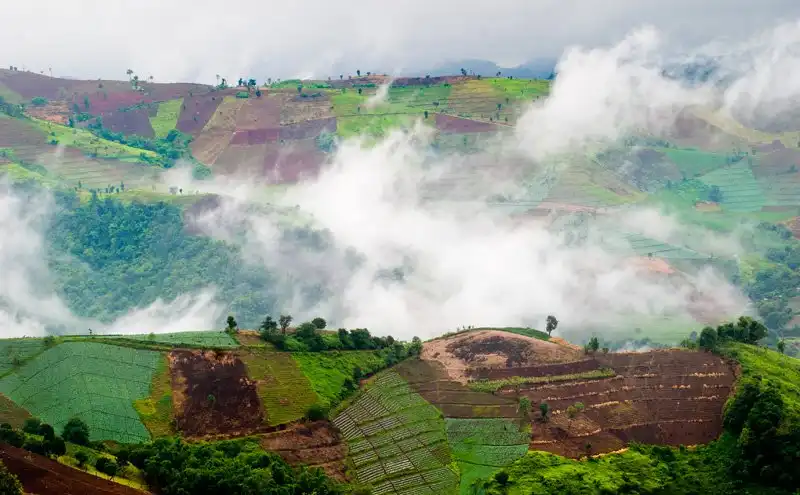
The main rule for visiting a park like this is simple: don’t rush. Mae Tho isn’t at its best when you try to tick every pin on a map. It becomes rewarding when you give time to the valley views, the soundscape of the forest, and the way the highlands change their mood with wind, light, and season. On clear days, the viewpoint near the park office often makes people pause longer than expected because the layered ridgelines and the natural contours look like lines the landscape has drawn for you. In some parts of the year — especially during the rainy season — you may see terraced rice fields belonging to highland communities curling through the valley like a slow river of green. And if visibility is truly sharp, some people talk about catching a far-off sightline toward the Doi Inthanon area on exceptionally clear days. It’s the kind of place where “doing nothing” can still feel like a very good use of time.
When people want a single highlight that makes the trip feel complete, waterfalls are often the most direct answer — because that’s when forest and water show their power without needing any interpretation. Mae Aeb Waterfall is frequently mentioned for its shaded, refreshing atmosphere and that “real forest waterfall” feeling, rather than a waterfall designed mainly as a photo backdrop. The safest way to visit waterfalls in national parks is to let the season set the rules. After rain, water levels can rise quickly, rock surfaces become noticeably slick, and certain spots may be unsuitable for wading or standing too close to the falls. If you go when the flow is high, think of it as watching nature at work, not challenging it.
Another aspect that sets Mae Tho apart from a casual park stroll is rafting on the Salak Hin River for visitors who want something more active. It’s the kind of activity that puts your body into the geography — not just your camera. Routes often take a few hours, and difficulty changes directly with water levels and season. If you plan to do this, choose an operator with complete safety gear, guides who understand river conditions, and the discipline to postpone or cancel when conditions aren’t suitable. Mountain rivers can change personality faster than most people expect from simply looking at the riverbank.
From a nature perspective, Mae Tho feels like “several forests in one place” because elevation and ridge structure create shifts in temperature and moisture that continually reshape the vegetation. Mornings can feel colder than many visitors expect, especially on exposed ridgelines and wind channels through valleys. That’s why layering — a light base plus a windbreaker — is nearly always worth it. If you enjoy birdwatching or simply hope to spot wildlife, the most reliable principle is: go early, stay quiet, respect distance. Encounters come from timing and stillness far more than luck, and chasing or calling animals for photos usually ends with nothing gained and the forest disturbed.
For safety, keep three things in mind. First, weather and mountain roads: if rain is heavy or fog is thick, give yourself extra time and avoid forcing late-night driving. Second, water-based areas like waterfalls and rivers: watch for flash floods, hidden currents, and slippery rock — especially in places that look “shallow and easy” but can still knock you off balance. Third, staying on designated paths: headwater forests can be fragile, and one wrong step can crush young plants or trigger erosion. The most professional way to travel here is the simplest: everyone returns safely, and you leave the lightest footprint possible.
Getting There the easiest, low-risk approach is to use Hod town as your base and then enter the park via routes recommended by park staff. Hod has more food and accommodation choices, and it’s practical for stocking up and checking weather before heading into true nature territory. If you’re traveling from Chiang Mai city, build in time — especially for mountain sections and possible fog. Make sure your vehicle is ready (brakes, tires, lights). And if your group plans river activities, confirm seasonal conditions and requirements with the operator in advance — it reduces the chance of a wasted trip and improves overall safety.
Overnight stays in a park like Mae Tho are best approached with a “self-reliant” mindset: bring essential bedding and food, and don’t expect resort-style convenience. The core value here is being in the forest, not being surrounded by facilities. Because some areas can close seasonally (often during the rainy season for safety and ecosystem recovery), always check the latest announcements before you go. If a closure is in effect, it’s usually there for a reason — and checking ahead can save both time and disappointment.
| Place Name | Mae Tho National Park |
| Location | Covers Hod District and Mae Chaem District, Chiang Mai (recommended base: Hod town) |
| Highlights | Mountain ranges and multi-type forests; a true watershed area; suitable for viewpoints, waterfalls, and seasonal rafting |
| Recommended Season | October – March (comfortable weather) / rainy season: check notices and beware slippery roads – flash floods |
| Current Status | Open for visitors (some areas may close seasonally or by safety announcement) |
| Contact Number | 089-526-0116 |
| Nearby Attractions With Distance | Ob Luang National Park (30 km) Tel. 081-602-1290 Bo Kaeo Pine Tree Garden (40 km) Tel. 053-248-604 Doi Bo Luang Forest Park (45 km) Tel. 092-586-9215 Hod Town (service area) (25 km) Tel. 053-461-111 Doi Inthanon National Park (75 km) Tel. 053-286-729 Mae Aeb Waterfall (inside the park) (5 km) Tel. 089-526-0116 |
| Popular Restaurants Nearby With Distance | Good Morning Hod (25 km) Tel. 087-180-8402 Coffee Ngeggee (25 km) Tel. 098-257-9091 Pakasin (25 km) Tel. 082-870-7144 Bai Fern Coffee (25 km) Tel. 084-378-9807 Hip Home at Hod (25 km) Tel. 085-259-0605 Hip Home at Hod (25 km) Tel. 090-247-5698 |
| Popular Accommodations Nearby With Distance | Hotel Hod (Star Home Hod) (25 km) Tel. 053-461-348 Hotel Hod (Star Home Hod) (25 km) Tel. 089-955-3534 Huen Hug Hod The Resort (25 km) Tel. 085-030-7356 Hip Home at Hod (25 km) Tel. 085-259-0605 Bo Kaeo Pine Tree Garden (40 km) Tel. 053-248-604 Doi Bo Luang Forest Park (45 km) Tel. 092-586-9215 |
| Facilities | Viewpoint area, nature trails (subject to site readiness), basic services near the office, welfare shop/coordination point (operating hours may change seasonally) |
Frequently Asked Questions (FAQ)
Q: What is the best time to visit Mae Tho National Park?
A: October to March is usually the most comfortable for hiking and viewpoints. In the rainy season, check park notices first because roads can be slippery, water levels can rise quickly, and some areas may close for safety.
Q: How should I prepare if I want to do rafting?
A: Choose an operator with full safety gear and guides who understand river conditions. Wear standard equipment (life jacket and helmet), and don’t insist on going after heavy rain or when the water is strong.
Q: Can I do a day trip, or should I stay overnight?
A: A day trip works if you focus on a viewpoint and a short walk. If you want a slower pace, multiple spots, or river activities, staying in Hod town makes planning and safety much easier.
Q: Is Hod a good base for visiting the park?
A: Yes. Hod has more restaurants and accommodation options, which is useful for supplies, weather checks, and entering the park without rushing.
Q: What are the top safety concerns at Mae Tho?
A: The big three are mountain roads and fog, slippery rocks and flash-flood risk after rain, and leaving designated trails (which can increase the risk of getting lost and damaging sensitive headwater areas).
 Tel: 053818384
 Mae Tho National Park Map
 Category:
  Group:
  Last Update: 3 MonthAgo
Comment
 Nearby Attractions
| Keyword (Advance) |
 Region
|
 Muang Chiang Mai(