
 Home
Home North(
 Chiang Mai(


Rating: 3.8/5 (5 votes)
 |
|  Map
Map 
 Have Map
  No Map
Chiang Mai attractions
Attractions in Thailand
Open Days: Saturday–Sunday
Opening Hours: 07.00–17.00 (recommended 07.00–11.00 for the best selection and an easier walk)
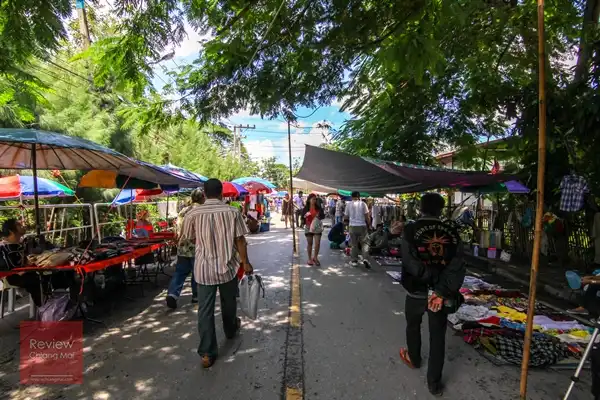
Kad Lang Prince If you grew up in Chiang Mai, or studied/worked around the Ping River area, you may remember this name as a “second-hand walking street” that once stretched behind Prince Royal’s College along Bamrungrat Road — the kind of place where goods were laid out simply on the ground, bargaining was part of the rhythm, and you could stumble upon something unexpectedly interesting every few steps, like flipping through other people’s memory drawers one by one. Today, though, if you come only expecting the original location, you might feel a little confused, because the old area has been discontinued, and the heart of what people call “Kad Lang Prince” has shifted to the Nong Hoi zone. Many locals refer to it clearly as the “Nong Hoi second-hand market” or the “Pracharrath Nong Hoi second-hand market.” The upside is a larger space, a more walkable layout, and enough vendors gathering together that it still feels like a paradise for second-hand lovers — just with the scene changing from a roadside stretch in town to a market ground that can handle more people and more goods.
What makes a second-hand market like this a true part of “urban culture” isn’t only the low prices or the thrill of rare finds. It’s the space where city people bring items from their homes, small businesses, relocations, or changing eras of household tools, and give them a second life with someone else. In a fast-growing city, there are constant waves of moving, changing jobs, renovating, opening–closing shops — so a lot of usable items naturally flow into the second-hand ecosystem. Markets like this become meeting points for a community-style circular economy: things don’t have to be new, they just need to be worth it, workable, and right for the person who’s looking.
Another charm is the market’s “language of buying and selling.” Here, bargaining isn’t tension — it’s usually a conversation to figure out whether you’re truly interested, what flaws the item has, whether it can be fixed, and what price feels fair for both sides. If you approach politely, speak honestly, and avoid pushing the price down in a way that feels disrespectful, good deals tend to happen naturally — especially for bulky items or things that are hard to transport. Sellers often want their goods to move on to someone ready to take care of them.
In the Nong Hoi version of Kad Lang Prince, the variety is a big part of the fun — from household items like tables, cabinets, beds, kitchenware, bowls and ceramics, woodwork, metalwork, and home decor, to bicycles, motorbikes, car parts, tools, vintage collectibles, old toys, cameras, film, vinyl, books, door handles, lamps, and more. Some days you may not plan to buy anything, yet you walk away with “ideas” for decorating your home or setting up a shop. That’s why this kind of second-hand market becomes a playground for people who love redesigning, repairing, assembling, and collecting things with stories — not just buying brand-new items from malls.
If you want to shop smart, think like a serious second-hand curator: check structure before looks. For furniture, inspect legs, rot, termite marks, and mold. For electronics, look at cables, plugs, overall condition, and ask to test if possible. For car parts and tools, check model codes, sizes, and completeness. For collectibles, watch for repair marks or items that have been “beautified” to sell at a higher price. If something needs fixing, estimate repair costs in your head before you negotiate — so you don’t end up buying cheap but paying too much to restore it.
Getting There If you’re driving, it’s best to set your map pin to “Nong Hoi second-hand market” or “Pracharrath Nong Hoi second-hand market” and go early for easier parking and a more comfortable walk. A common approach is to enter the Nong Hoi area in Chang Phueak Subdistrict, near the Chiang Mai International Exhibition and Convention Centre (CMECC). If you’re staying in town or around Nimman, ride-hailing apps are convenient. And if you plan to buy large items, prepare a transport plan (pickup truck/delivery service), or at least bring rope, straps, a cloth bag, and tape — because many second-hand items come without packaging designed for carrying.
A popular trick among regulars is to “choose your time based on your goal.” If you want nicer items before they get picked over, go very early. If you want better bargaining power, go later in the morning or toward afternoon, when vendors may prefer to clear stock rather than haul it back — especially for big items. If you’re the type who likes strolling for the atmosphere and reading the city, leave yourself time to walk slowly. Great second-hand markets let “happy accidents” do their work: you find something you never meant to look for, then suddenly it feels exactly right.
If you want a simple comparison with other market styles in Chiang Mai: Kad Lang Prince/Nong Hoi stands out for practical goods, parts, collectibles, and its feel as a “citywide clearing ground” where almost anything can appear. If you prefer craft-forward, chill vibes with lots of cafes, Jing Jai Market offers a different atmosphere focused more on handmade items, food, and lifestyle. Warorot Market (Kad Luang) shines as a daily local market known for food and souvenirs. Tha Phae and Wua Lai walking streets are more about handicrafts, gifts, and evening strolls rather than “second-hand treasure hunting.” So the best starting point depends on one question: do you want to “buy things,” or do you want to “read the city”? For value buys and truly unexpected finds, Nong Hoi is the most direct answer. For pretty city-walk energy and easy snacking, you can hop to the other markets afterward in the same day.
In the end, markets like this are charming because they remind us that value doesn’t come only from being new — it comes from being able to “continue.” In a tourist city like Chiang Mai, where people constantly arrive and leave, move in and move out, second-hand markets become places where many layers of city life meet. If you walk with intention, you may bring home useful items — and also a new perspective that Chiang Mai isn’t only temples, cafes, and mountains. It also has small community economies powered by reuse, repair, exchange, and the quiet trust between strangers who talk for just a few minutes, yet help an object begin a brand-new story.
| Place Name | Kad Lang Prince (Nong Hoi Second-Hand Market / Pracharrath Nong Hoi Second-Hand Market) |
| Location | Nong Hoi zone, Chang Phueak, Mueang Chiang Mai, Chiang Mai (near Chiang Mai International Exhibition and Convention Centre – CMECC) |
| Key Features | Second-hand market for used goods, vintage items, collectibles, and parts; enjoyable to browse; bargaining is common; wide variety |
| Recommended Time | Morning (07.00–11.00) for the best selection and fewer crowds |
| Key Context | The market spirit of the original “Kad Lang Prince” has shifted to Nong Hoi, keeping the second-hand culture alive with a larger, more walkable space |
| Name Origin | A long-standing nickname from the original location behind Prince Royal’s College on Bamrungrat Road; the name remains in local memory even after the move |
| Travel | Pin “Nong Hoi second-hand market” and go early for easier parking; plan transport if buying bulky items |
| Current Status | Primarily open on Saturday–Sunday (hours may vary with season and weather; check before you go) |
| Nearby Attractions | Chiang Mai International Exhibition and Convention Centre (CMECC) – 2 km Wat Ched Yot – 3 km Nimmanhemin Road – 5 km MAYA Lifestyle Shopping Center – 5 km Chiang Mai Zoo – 7 km |
| Popular Restaurants Nearby | Khao Soi Mae Sai – 5 km – Tel. 053-213-284 Tong Tem Toh (Nimman) – 6 km – Tel. 098-418-6755 Huen Phen – 8 km – Tel. 053-814-548 The Riverside Bar & Restaurant – 9 km – Tel. 053-243-239 Huen Muan Jai – 6 km – Tel. 053-404-998 |
| Popular Accommodations Nearby | ibis Styles Chiang Mai – 5 km – Tel. 053-908-888 Novotel Chiang Mai Nimman Journeyhub – 5 km – Tel. 052-012-777 ibis Chiang Mai Nimman Journeyhub – 5 km – Tel. 052-004-700 Chiangmai Grandview Hotel & Convention Center – 6 km – Tel. 053-220-100 Holiday Garden Hotel & Resort Chiang Mai – 7 km – Tel. 053-211-333 |
Frequently Asked Questions (FAQ)
Q: Where is Kad Lang Prince located now?
A: The original area behind Prince Royal’s College on Bamrungrat Road has been discontinued. Today, the main market atmosphere and vendors have largely shifted to the Nong Hoi zone, which many locals still casually call “Kad Lang Prince.”
Q: Which days is it open, and what time is best to visit?
A: It is commonly open on Saturday–Sunday from 07.00–17.00. For the best finds and a more comfortable walk, 07.00–11.00 is recommended.
Q: Is it expensive, and can you bargain?
A: Prices are generally approachable, and bargaining is normal — especially for large items or pieces that need repair. Polite, reasonable negotiation usually works best.
Q: What should I watch out for when buying second-hand items?
A: Check structure and function before appearance. Look for rot, termites, mold, wiring issues, cracks, missing parts, and signs of heavy repair. For collectibles, watch for altered or “made-to-look-better” items.
Q: Is there delivery service for bulky purchases?
A: It depends on the vendor and the item. Some sellers can help arrange transport case by case, but it’s smart to prepare your own plan (pickup truck/delivery) and bring straps or rope.
Q: If I want other market styles in Chiang Mai, where should I go next?
A: For crafts and cafe vibes, try Jing Jai Market. For local daily market food and souvenirs, go to Warorot Market. For evening strolls and gifts, head to Tha Phae or Wua Lai walking streets.
 Kad Lang Prince Map
 Category:
  Group:
  Last Update: 3 MonthAgo
Comment
 Nearby Attractions
| Keyword (Advance) |
 Region
|
 Muang Chiang Mai(