
TL;DR: Educational Places of Northeastern in Mukdahan
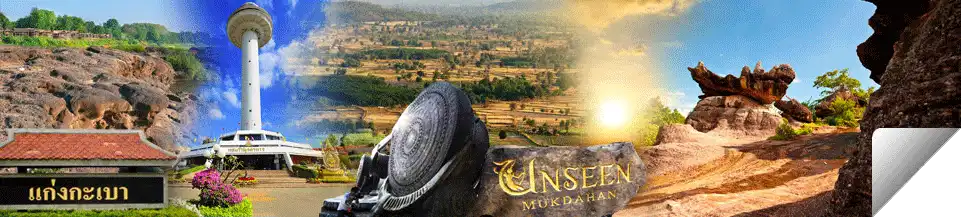

Educational Places
Academic Tourism Attractions represent a form of travel that combines enjoyment with learning. It is not limited to relaxation or entertainment alone, but also provides opportunities for travelers to develop knowledge, understanding, and new perspectives through real experiences at various places such as museums, libraries, learning centers, educational farms and gardens, as well as science and technology institutions.
The concept of academic tourism has gained increasing popularity in Thailand, as it aligns with the behavior of modern travelers who seek more than just photography or leisure. Instead, they look for “value” in their journeys, including knowledge, inspiration, and experiences that can be applied in real life.
Thailand has strong potential for developing academic tourism due to its rich cultural, historical, and local wisdom resources. Each region has its own unique identity that can be effectively conveyed through educational destinations.
The northern region of Thailand stands out for learning experiences related to Lanna culture, local arts, and nature. Examples include community learning centers, local museums, and botanical gardens, where visitors can gain knowledge about both history and the environment at the same time.
The northeastern region (Isan) is known for its local wisdom, such as weaving, pottery making, and agricultural lifestyles. Academic tourism sites in this region are often community-based learning centers or archaeological sites that reflect the foundations of human civilization.
The central region, especially Bangkok, serves as the hub of large-scale museums and learning centers, such as national museums, science centers, and art galleries. These places present knowledge across multiple fields, from history and art to modern technology.
The southern region highlights learning about marine environments and natural ecosystems. Examples include marine research centers, aquariums, and coastal ecosystem learning sites, which help raise awareness about environmental conservation.
The types of academic tourism attractions in Thailand are diverse, including educational museums, public libraries, science centers, agricultural learning sites, and cultural centers. Each type plays a role in delivering knowledge in different ways.
Another key strength of academic tourism is experiential learning, such as scientific experiments, agricultural activities, or workshops. These experiences allow visitors to gain a deeper understanding of the subject matter.
From a tourism perspective, the development of these learning destinations also helps generate income for local communities and supports local economies, especially in rural areas that can be sustainably developed into agricultural or cultural learning hubs.
Travel to academic tourism destinations in Thailand is convenient. Most are located in cities or near major attractions and can be accessed by private car, public transportation, trains, or urban transit systems, making them suitable for families and student groups.
In conclusion, academic tourism attractions in Thailand offer a meaningful travel option for modern travelers who seek both enjoyment and knowledge. They not only enhance the value of travel experiences but also contribute to social development and lifelong learning.
| Region | Type Of Attraction | Example Provinces | Core Knowledge | Highlights | Suitable For |
| Northern Region | Museums, cultural centers, botanical gardens | Chiang Mai, Chiang Rai | Lanna art, nature | Culture + environment | Students, cultural travelers |
| Northeastern Region | Archaeological sites, community learning centers | Khon Kaen, Ubon Ratchathani | Local wisdom, lifestyle | Real community learning | Local culture enthusiasts, researchers |
| Central Region | Museums, science centers | Bangkok, Pathum Thani | Science, technology | Modern and accessible | Families, children |
| Southern Region | Aquariums, environmental centers | Phuket, Songkhla | Marine ecosystems | Nature-based learning | General tourists |
Frequently Asked Questions (FAQ)
Q: What is academic tourism?
A: It is tourism that combines learning with enjoyment, such as visiting museums or learning centers.
Q: How is it different from general tourism?
A: It focuses more on learning rather than just entertainment.
Q: Who is it suitable for?
A: It is suitable for all ages, especially students and families.
Q: Is there an entrance fee?
A: Some places are free, while others charge admission.
Q: How long should a visit take?
A: Approximately 2–4 hours per location.
Q: Can children really learn from it?
A: Yes, many places offer interactive activities designed for learning.
Q: How should visitors prepare?
A: Research the location in advance and choose based on interests.
Q: Which region is the best?
A: Each region has its own strengths depending on your interests.
Q: Is it suitable for family trips?
A: Yes, it is ideal for families as it combines learning and shared experiences.


