

 Home
Home Chiang Mai(










Rating: 4.6/5 (5 votes)
 |
|  Map
Map 
 Have Map
  No Map
Chiang Mai attractions
Attractions in Thailand
Open Days: Recommended to contact/arrange in advance before visiting (this is an operational area within the national park zone)
Opening Hours: Recommended daytime visit 08.30–16.30 (hours may vary depending on field operations/season)
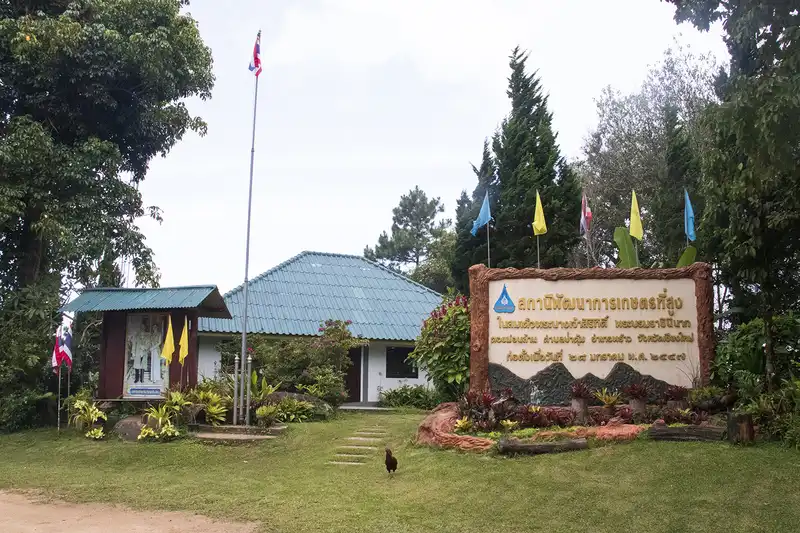
Mon Lan Highland Agriculture Development Center is a strong answer for anyone looking for a truly quiet “Chiang Mai retreat”—no crowding, no noise—while also seeing how highland development work actually happens on the ground. Mon Lan is located at Moo 11, Pa Tum Subdistrict, Phrao District, Chiang Mai, within Si Lanna National Park. It is also commonly referred to alongside the name “Royal Initiative Highland Agricultural Development Station, Doi Mon Lan,” which reflects the area’s dual identity: a scenic viewpoint and a long-term, carefully managed mountain resource area that requires consistent, detailed stewardship.
The story of Mon Lan begins with a highland landscape that once supported multiple ethnic communities, where agriculture formed the core of daily life. At one point in the area’s history, shifting cultivation of upland rice and maize was common, along with crops that later became a major challenge across many northern highland regions, and forest gathering for subsistence. As pressure on natural resources increased, forests gradually degraded, soils became exhausted, and some areas turned into alang-alang (Imperata) grasslands. This affected both ecological fertility and settlement stability, leading to migration during certain periods. Later, new communities settled in the area, and land management became more structured—moving toward development and restoration approaches that aim to keep both “people sustained and forests resilient” at the same time.
Mon Lan’s terrain is steep and mountainous, and “Doi Mon Lan” is a standout peak in this zone. Commonly cited elevation is around 1,695–1,696 meters above sea level, making the overall climate noticeably cooler than the lowlands—especially from late rainy season into early winter and through the winter months. Early mornings can bring thick fog, strong winds, and sudden temperature drops. What draws many visitors is the wide-open sunrise and sunset viewpoints, and on clear days you may also see distant landmarks such as Doi Luang Chiang Dao, Mae Ngat Dam, and a broad panorama of Phrao town.
From a traveler’s perspective, Mon Lan feels wonderfully “just right.” You don’t need many activities—standing in the wind, watching the light shift, and letting time slow down can feel like a full reset. For anyone interested in development work, the area is also a living example of balancing land use with watershed and forest protection. Visiting isn’t only about beautiful views; it’s a reminder that “highlands aren’t empty space” where anything can happen without consequences. Restoration has to be holistic—soil, water, forest, livelihoods, and everyday wellbeing all move together.
Water is another reason Mon Lan matters. It is often described as the headwaters for several important streams, such as Huai Kon and Huai Mae Saluam, which ultimately feed into the Mae Ngat water system. This is why watershed protection is taken seriously here, and why many routes leading toward the summit reference “watershed management units.” As a visitor, it helps to carry a little extra respect for the place: keep noise low, leave no trash, and avoid behavior that disrupts people who work or live in the area.
If you want to stay overnight, Mon Lan offers both camping areas and some forms of accommodation (services can vary depending on season and management conditions). Camping fees commonly reported by visitors are often in the range of a few tens of baht per person per night, and in some periods there may be limited equipment rental. For certainty, it’s best to check or reserve through official national park channels or the area’s contact point before you go—especially in winter and long-holiday periods when demand is higher. Nights on the ridge can be colder than expected, so pack proper warm layers, a flashlight or headlamp, grippy footwear, insect repellent, and enough food and water, since summit-area shops may not be as available as at more commercialized destinations.
Getting There There are multiple ways up to Mon Lan, but the commonly referenced approach loops through Phrao District and then connects to local roads. Two main route patterns are often described. The first route goes from Chiang Mai to Phrao via Highway 1001 (around 94 km), then heads toward Wiang Pa Pao along part of Highway 1150 before turning onto the ascent via Ban Khun Chae. You’ll pass reference points such as the Mae Pun Luang Royal Project / watershed management areas, reach the Mae Saluam watershed management unit, and then continue on a final dirt-road section of about 2.5 km to the Mon Lan area. Another pattern also uses the connector from Phrao town toward Wiang Pa Pao and turns into Ban Khun Chae similarly. Many sources summarize the distance as roughly “about 40 km from Phrao town to Mon Lan,” but the final stretch is seasonal dirt/gravel. Use a well-maintained vehicle, drive slowly, watch for potholes and ruts, and avoid traveling during heavy rain or in full darkness.
When is the best time to visit? Simply put: when you want real quiet and especially cool air. Late rainy season into early winter often brings fog and dramatic views, but also higher risk of slippery roads. Winter tends to offer clearer skies more often, making it ideal for stargazing and crisp morning light. If sunrise is your goal, arrive before dawn and add buffer time—fog and road conditions regularly make the trip longer than expected. And if you’re not rushing back, waiting through late-afternoon light into sunset is beautiful too, because Mon Lan shines in its “wide panorama” where you can clearly watch mountains change color as the day turns.
| Name | Mon Lan Highland Agriculture Development Center (Doi Mon Lan) |
| Location | Moo 11, Pa Tum Subdistrict, Phrao District, Chiang Mai (Si Lanna National Park) |
| Highlights | Wide panoramic summit views; ideal for sunrise–sunset; cool climate; camping area/rest points; part of a highland development and watershed stewardship area |
| Period | Royal Initiative / highland development approach (project establishment information exists at area level) |
| Key Evidence / Notes | Located within Si Lanna National Park; supported by national park camping information/booking systems for nature-based visitation |
| Name Origin | “Mon Lan” refers to the local ridge/peak area and has become the commonly used name for the viewpoint and development area today |
| Getting There | Chiang Mai to Phrao via Highway 1001, then connect to Highway 1150 and turn up via Ban Khun Chae; pass Royal Project/watershed management points to the Mae Saluam watershed management unit, then continue on the final dirt-road section about 2.5 km (Phrao town to Mon Lan is often described as approx. 40 km) |
| Current Status | A nature destination within the national park and a watershed stewardship/operational area (recommended to check conditions and reserve in advance) |
| Contact Number | 083-321-8313 |
| Nearby Attractions with Distance | Mae Pun Luang Royal Project — approx. 10–25 km Mae Saluam watershed management unit — approx. 0–3 km Huai Kon Reservoir (Pa Nai/Phrao route zone) — approx. 25–55 km Wat Klang Wiang (Phrao) — approx. 35–50 km Mae Ngat Somboon Chon Dam — approx. 70–110 km Note: Distances are approximate, referenced from the commonly cited “Phrao town–Mon Lan about 40 km” and route waypoints; please verify exact distances on a map before traveling. |
| Nearby Restaurants | Rain Tree Cafe’ — approx. 35–55 km — tel. 087-660-0933 Khrua Khao Sen (Phrao) — approx. 35–55 km — tel. 065-445-6393 Chuu Cafe (Pa Nai Subdistrict) — approx. 35–60 km — tel. 088-261-3150 Suan Phrao Cafe — approx. 35–60 km — tel. 090-584-8737 Yoong-Ka-Nom (Phrao) — approx. 35–60 km — tel. 086-181-7584 |
| Nearby Accommodations | Phrao Camping Village — approx. 35–55 km — tel. 091-564-2641 Phrao Boutique Hotel — approx. 35–55 km — tel. 094-412-3466 Pause Pausa Resort & Café — approx. 35–55 km — tel. 095-540-5410 Chan Nuan Resort & Homestay — approx. 35–55 km — tel. 081-180-8616, 089-137-9991 Mon Saeng Chan Homestay — approx. 35–55 km — tel. 095-446-0556 |
| Facilities | Camping area, toilets (at service points), viewpoint, overnight/rest area services in some periods (recommended to check in advance) |
| Fees | Camping fees are often reported around 30 THB/person/night (may change depending on conditions/season); recommended to confirm in advance |
Frequently Asked Questions (FAQ)
Q: Who is Mon Lan best for?
A: It’s best for travelers who want quiet rest, cool weather, wide mountain views, and a slower-paced trip—especially campers, stargazers, and anyone who loves sunrise and sunset light on a ridge.
Q: How far is Mon Lan from Phrao town?
A: Many sources describe it as approximately 40 km, but the final section is seasonal dirt/gravel, so you should add extra time and drive carefully.
Q: Do I need a 4WD vehicle?
A: Not always, but in heavy rain or when the road is slippery with deep ruts, a higher-clearance, well-maintained vehicle helps a lot. Avoid traveling up or down in full darkness.
Q: What should I do if I want to catch sunrise?
A: Arrive before dawn and add buffer time, since fog and road conditions often slow travel. Bring warm layers and a flashlight/headlamp, and plan your parking/viewpoint spot for safety.
Q: Are there restaurants and accommodations nearby?
A: Options are more concentrated around Phrao town and along the access route. The summary table lists popular choices with contact numbers, and it’s recommended to verify opening times and exact distances on a map before you go.
 Mon Lan Highland Agriculture Development Center Map
 Category:
  Group:
  Last Update: 18 HourAgo
Comment
 Nearby Attractions
| Keyword (Advance) |
 Region
|
 Muang Chiang Mai(