

 Home
Home Chiang Mai(










Rating: 3.8/5 (4 votes)
 |
|  Map
Map 
 Have Map
  No Map
Chiang Mai attractions
Attractions in Thailand
Open Days: Generally every day
Opening Hours: 08:00 – 20:00 (Hours may change depending on local announcements/season. Please check before visiting.)
Doi Saket Hot Spring in Ban Pong Kum, Pa Miang Subdistrict, Doi Saket District, Chiang Mai, feels more like a quiet stop “in the middle of a valley” than a staged tourist attraction. The hot spring emerges in a low-lying alluvial plain used as rice fields, sitting between mountain ridges, so the backdrop naturally becomes a mix of paddies, a clean mountain horizon, and a thin veil of steam drifting in the air. What makes the place unmistakable is the strong sulfur smell—you don’t have to imagine it. Just getting closer is enough to realize this is a hot spring that’s genuinely “alive” and working the way nature intended.
From a geology perspective, the area is associated with a sequence of orthoquartzite and sandstone interbedded with shale (Permo–Carboniferous in age). It is also influenced by major fault trends striking N20W and N70E, which effectively provide pathways for subsurface heat and circulating groundwater to rise toward the surface. As the hot water is pushed upward, you can see steady steam, bubbling activity, and a noticeable release of gas emerging together with the hot spring water.
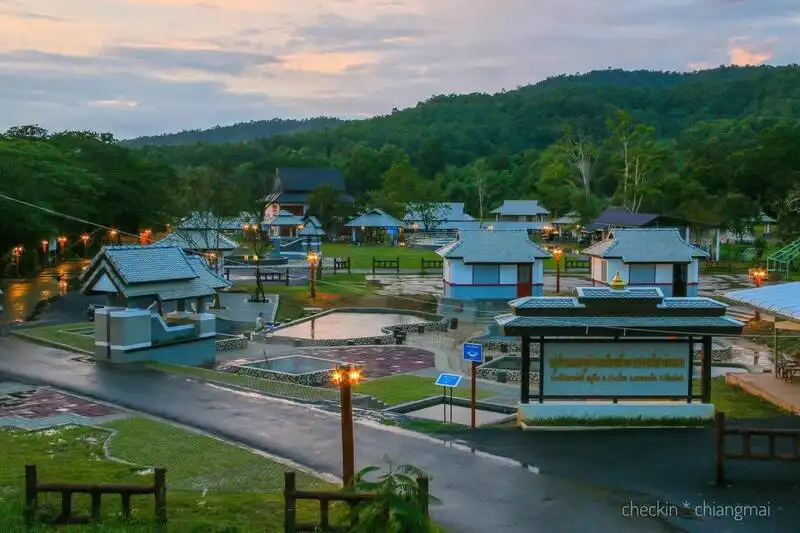
Physically, the Doi Saket Hot Spring occurs in 2 main groups, located about 400 meters apart. The most recognizable scene is the main vent area enclosed by a metal barrier for safety. It is not recommended to enter the main boiling pool directly because the temperature is extremely high and can be dangerous. Instead, visitors are generally encouraged to use designated service areas such as foot-soaking zones or managed soaking rooms (depending on how the site is operated at the time). This approach makes the visit more comfortable while reducing risk in a very practical way.
On the geochemical side, what most people remember first is the “strong sulfur smell,” caused by gas rising with the hot spring water. The surrounding area also shows hydrothermal alteration minerals, particularly silica and carbonate. Together, these features give the hot spring a distinct personality—visible steam, a unique atmosphere unlike ordinary water sources, and the constant soft bubbling sound that makes the landscape feel strangely alive.
One of the most popular activities here is boiling eggs in a smaller, designated hot pool prepared for visitors. Locals often provide small woven baskets with a rope so you can lower eggs into the water and cook them to your preferred doneness. It’s not just a fun snack; it adds a simple, memorable ritual to the visit and helps support local community crafts and small vendors (please use only the designated spots and follow staff guidance for safety).
Hot spring soaking is commonly associated with rest and relaxation because warm water can ease tension and make the body feel lighter. Still, if we speak about health in a straightforward way, hot springs are not a guaranteed “cure” for everyone. The clearest benefit is usually comfort—relaxation, reduced stress, and a more eased feeling afterward. The experience is comparable to gentle hydrotherapy in the sense that it can help you feel less stiff and more relaxed, but it should be done in moderation. Avoid soaking too long, and if you have underlying conditions (such as high blood pressure, heart conditions, or pregnancy), it is wise to consult a medical professional or choose a lighter option like foot soaking.
Getting There If you start from Chiang Mai city, you can generally drive toward Doi Saket District and continue to Pa Miang Subdistrict, then follow local signs/maps to Ban Pong Kum. A private vehicle is the most convenient option because the final stretch is a community road through a valley. Drive carefully, especially during the rainy season when roads may be slippery and visibility can be limited. If you plan to soak, visiting in the morning or early afternoon is usually more comfortable for weather, better for photos, and safer for driving back before dark.
To keep the trip smooth, consider bringing a towel, a change of clothes, non-slip walking shoes, and your own drinking water. If you’re traveling with children or elderly visitors, it’s best to stay within designated areas, avoid getting too close to the boiling vents, and keep a close eye on footing because humidity and steam can make surfaces more slippery than expected. Respecting the community rules also matters—don’t litter, keep noise reasonable, and help preserve the calm atmosphere so the place remains a shared space of rest for everyone.
In the end, the charm of Doi Saket Hot Spring isn’t about grand, dramatic scenery like a major commercial attraction. It’s about something more real—subsurface heat you can actually see, sulfur in the air that confirms nothing here is “manufactured,” and a valley-and-rice-field backdrop that turns a simple warm soak into a quiet moment you remember. If you want a restorative trip without going far, this is one of those answers that sits closer than you might think.
| Name | Doi Saket Hot Spring (Ban Pong Kum, Pa Miang, Doi Saket, Chiang Mai) |
| Location | Ban Pong Kum, Pa Miang Subdistrict, Doi Saket District, Chiang Mai |
| Key Characteristics | A natural hot spring in an alluvial plain within a valley, surrounded by rice fields and mountains; strong sulfur smell; egg-boiling spot; soaking/foot-soaking services depending on local operation |
| Period | Natural hot spring site (no fixed founding year confirmed from verifiable references) |
| Key Evidence | Boiling vents with steam and gas bubbles; strong sulfur odor; silica and carbonate alteration minerals; 2 spring groups about 400 meters apart |
| Name Origin | Named after Doi Saket District and its natural hot spring features |
| Travel | Drive from Chiang Mai toward Doi Saket District, then continue to Pa Miang and Ban Pong Kum via signs/maps; private car recommended; best visited morning–afternoon |
| Current Status | Open (recommended to check latest updates before visiting, especially during heavy rain) |
| Contact Number | 091-769-0002, 081-027-3047 |
| Nearby Attractions (Approx. Distance) | Ban Mae Kampong (17 km) | Wat Kanthaphrueksa, Mae Kampong (17 km) | Mae Kampong Waterfall (19 km) | The Giant Chiang Mai (20 km) | San Kamphaeng Hot Springs (27 km) |
| Popular Restaurants Nearby (Approx. Distance / Phone) | Chom Nok Chom Mai (17 km) Tel. 081-847-8043 | Mae Kampong Rim Than (17 km) Tel. 080-121-3751 | Pirunya Coffee, Mae Kampong (17 km) Tel. 084-712-7555 | Lung Pood & Pa Peng Coffee (17 km) Tel. 082-889-8280 | Sai Ua Mae Nim (17 km) Tel. 089-263-5765 |
| Popular Accommodations Nearby (Approx. Distance / Phone) | Him Doi Home, Mae Kampong (17 km) Tel. 095-448-3935 | Portare.home, Mae Kampong (17 km) Tel. 061-824-1845 | Huen Ui, Mae Kampong (17 km) Tel. 096-641-6169 | Oon Valley Farmstay (14 km) Tel. 064-001-0014 | The Giant Chiang Mai (20 km) Tel. 086-776-2946 |
| Facilities | Egg-boiling area | Soaking/foot-soaking services (depending on operation and time) | Community vendors (availability may vary) |
| Fees | Egg-boiling basket commonly listed at 20 THB/basket (subject to change) | Some soaking services are listed as Adult 100 THB / Child 50 THB per 30 minutes (please confirm before use) |
Frequently Asked Questions (FAQ)
Q: Is Doi Saket Hot Spring open every day?
A: Generally, yes. However, it’s best to check the latest updates before visiting, especially during heavy rain or when operations change.
Q: What are the opening hours?
A: Commonly listed hours are 08:00 – 20:00, but schedules may change. Please confirm before you go.
Q: Can I soak in the main boiling pool?
A: No. It is extremely hot and dangerous. Use only designated soaking or foot-soaking areas provided on site.
Q: Is egg boiling available here?
A: Yes. There is typically a designated egg-boiling spot with baskets and ropes for safe use. Follow on-site instructions for safety.
Q: Can soaking in a hot spring cure illnesses?
A: Hot springs are widely used for relaxation and easing muscle tension, but they should not be viewed as a guaranteed medical cure. If you have health conditions, consult a professional and soak in moderation.
Q: When is the best time to visit?
A: Morning to early afternoon is usually the most comfortable for weather and visibility, and it’s safer for driving back before dark. The cool season often feels especially pleasant.
 Doi Saket Hot Spring Map
 Category:
  Group:
  Last Update: 16 HourAgo
Comment
 Nearby Attractions
| Keyword (Advance) |
 Region
|
 Muang Chiang Mai(