
lovethailand home >South Travel Attractions >Yala Travel Attractions >Muang Yala >Yala > Asura Rice Stirring
TL;DR: Asura Rice Stirring, open This is not a permanent tourist site; it is held around the 10th day of, hours Activity times are set by each local community.

Asura Rice Stirring
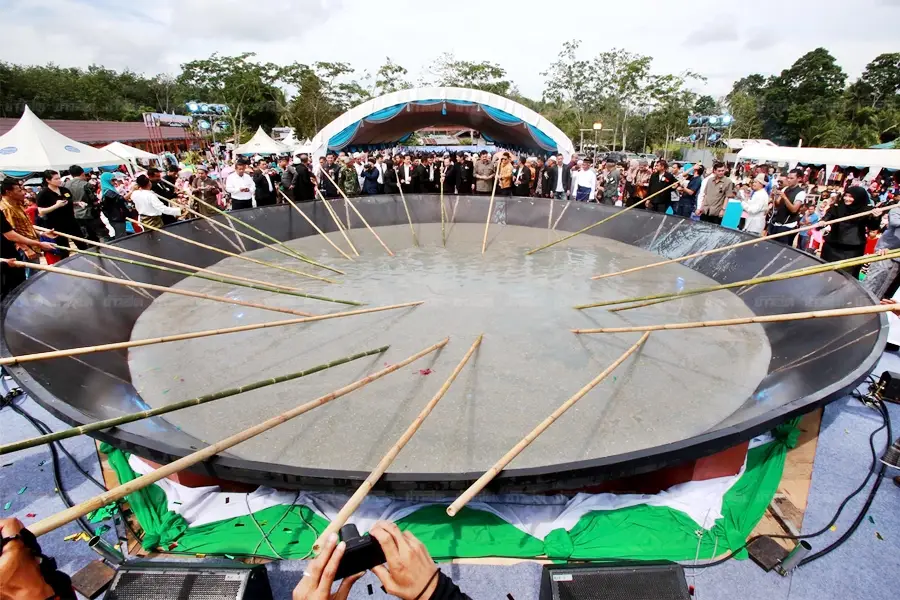
Open Days: This is not a permanent tourist site; it is held around the 10th day of Muharram in the Islamic calendar.
Opening Hours: Activity times are set by each local community.
Asura Rice Stirring in Yala Province is one of the most meaningful Muslim cultural traditions in Thailand’s southern border provinces. It is practiced around the 10th day of Muharram, the first month of the Islamic calendar. Because the Islamic calendar is lunar, the Gregorian date changes every year. For the 1448 AH cycle, Ashura in Thailand fell in late June 2026, and the tradition continued to be practiced in Yala through community activities, mosques, Tadika schools, local organizations, and province-level cultural events.
The word “Asura” is connected with the 10th day of Muharram. In the southern Thai cultural context, it also refers to the act of combining many edible ingredients into one shared dish. The food is commonly called Khao Asura, Khanom Asura, or Bubur Suro. It can be savory or sweet, depending on local preference. Common ingredients include rice, banana, papaya, taro, sweet potato, pumpkin, beans, coconut milk, sugar, salt, spices, herbs, and other locally available ingredients. These are peeled, chopped, pounded, mixed, and slowly stirred in a large pan until they become a single thick mixture.
The origin of Asura rice stirring is linked to an Islamic story about Prophet Nuh. During a great flood, people lost property, farmland, and food supplies. Many faced food shortages. Prophet Nuh asked those who still had edible food to bring it together, combine it, cook it, and share it so everyone could eat. This story gives Asura rice a meaning that goes beyond food. It represents mutual help, collective survival, generosity, and the fair sharing of what a community has.
In Yala Province, Asura rice stirring has special cultural importance because Yala is home to many Thai Muslim communities and has a strong southern border identity shaped by religion, language, food, and community life. The activity is not only about making a traditional dish. It is a gathering space for children, young people, adults, elders, religious leaders, village leaders, women’s groups, schools, and local agencies. Everyone can contribute in some way, from preparing firewood and cooking equipment to cutting ingredients, pounding spices, stirring the mixture, saying the du’a, and distributing the food.
The heart of the tradition is participation. The ingredients do not usually come from one household alone. One family may bring rice, another may bring banana, another may bring pumpkin, another may bring beans, while others contribute coconut milk, firewood, utensils, or labor. When everything is placed into one large pan, Asura rice becomes a living symbol of community life. Different contributions are mixed into one dish, just as different people in the community work together as one.
The process usually begins when the host or organizing group announces where and when the Asura rice stirring will take place. On the appointed day, villagers bring raw ingredients to the activity site. Common ingredients include papaya, banana, taro, sweet potato, pumpkin, rice, beans, and seasonal produce. People then help peel, cut, and prepare everything into small pieces so the ingredients cook evenly. The seasoning mixture may include garlic, galangal, lemongrass, shallots, coriander, cumin, salt, sugar, and coconut milk. Coconut milk is squeezed and used as the main liquid that binds the ingredients together.
After the ingredients are ready, a large pan is placed over the stove. Coconut milk is added first and heated until it boils. Coarsely pounded spices and seasoning are then mixed in. The prepared ingredients are gradually added, and the stirring begins. Several people use long wooden paddles to keep the mixture moving so it does not stick to the bottom of the pan. The process takes strength, patience, and coordination. In some communities, the stirring may take around 4 to 7 hours, depending on the amount of ingredients, the size of the pan, and the local recipe.
When the mixture becomes thick, soft, and dry enough, it is transferred to trays and spread evenly. Savory versions may be topped with thin strips of omelet, shrimp, shredded spiced beef, shredded spiced fish, coriander, or sliced shallots. Sweet versions use more sugar and usually reduce the use of meat and strong spices. Once the Asura rice cools, it is cut into pieces and shared among the people who joined the event and other members of the community.
Before the food is distributed, a respected person or religious leader usually leads the du’a. This gives the activity a spiritual dimension beyond cooking. After the prayer, the Asura rice is shared with participants, neighbors, elders, children, and local residents. This final act of sharing is one of the clearest expressions of the tradition. Those who can contribute ingredients or labor do so, while others still receive the food as part of the community’s shared generosity.
Socially, Asura rice stirring strengthens relationships between generations. Children and young people learn how to prepare ingredients, use traditional tools, assist elders, and understand the meaning of sharing. Elders pass down recipes, stirring techniques, stories, and religious meaning. Community leaders use the activity to strengthen ties among households, mosques, schools, and local institutions. Visitors who observe the event see a living cultural practice, not a staged performance created only for tourism.
In Yala, Asura activities can take place at different levels. Some are small community gatherings held at mosques or village spaces. Some are organized by schools. Others are held jointly by communities and local government agencies. Province-level events may include Asura competitions, interfaith or community relationship activities, and cultural conservation programs. These forms show that the tradition continues to adapt to modern society while preserving its core values of cooperation, sharing, and unity.
Travelers who want to learn about Asura rice stirring in Yala should understand that it is not a fixed attraction with standard opening hours. It is a cultural activity held by local communities during Muharram. The best way to plan a visit is to follow announcements from Yala Provincial Cultural Office, Yala City Municipality, local administrative organizations, schools, mosques, or provincial public relations channels before and during Muharram. Visitors should dress modestly, respect religious spaces, ask before photographing people, and observe the activity with courtesy.
Getting There is easiest by using Yala city as a base. Travelers can reach Mueang Yala by private car, intercity bus, or the southern railway line. Yala Railway Station is located in the city and connects conveniently with the old market area, Yala Central Mosque, Yala City Pillar Shrine, and Suan Khwan Mueang. From the city, travelers can continue by local transport or private vehicle to the community hosting the activity that year. Checking the exact local schedule before traveling is essential because different communities may hold the activity on different days within the Muharram period.
The atmosphere of Asura rice stirring in Yala is one of its greatest attractions. A large pan is set in an open community space. People take turns stirring with long wooden paddles. Conversations, laughter, the smell of coconut milk, spices, and slowly cooked ingredients fill the area. The dish is made with physical effort as much as with ingredients. Every turn of the paddle reinforces the bonds between people who share the work.
Another important feature is the flexibility of the recipe. Each community has its own version. Some prefer a savory style with strong spices. Some make a sweeter version with coconut milk and sugar. Some add meat or fish, while others focus on tubers, banana, pumpkin, and beans. These variations make Asura rice a food that reflects local resources, family memory, and community identity. Tasting Asura rice in different communities is a way to understand culture through flavor.
As a southern border tradition, Asura rice stirring also helps explain Yala’s multicultural society. Yala is a province where people of different religions and cultural backgrounds live together. Although Asura rice stirring is rooted in Thai Muslim tradition, its values of cooperation, generosity, and respect are universal. When communities, schools, government agencies, and local residents join the activity, it becomes a platform for peaceful coexistence and mutual understanding.
Asura rice stirring in Yala is therefore a complete cultural lesson in religion, food, community history, and social values. Khao Asura is not just a festival dish. It is a food of unity, created by bringing small contributions from many households into one large shared meal. Its origin speaks of sharing during hardship, while its modern meaning lies in preserving community harmony, kindness, and pride in Yala’s local cultural identity.
| Name | Asura Rice Stirring in Yala Province |
| Activity Area | Thai Muslim communities, mosques, Tadika schools, and local organizations in Yala Province |
| Cultural Information Contact Address | Yala Provincial Cultural Office, Yala Provincial Hall, Sukyang Road, Sateng Subdistrict, Mueang Yala District, Yala Province 95000, Thailand |
| Coordinates | No single coordinate; the tradition is held in multiple communities across Yala Province. |
| Period | The 10th day of Muharram in the Islamic calendar; the Gregorian date changes every year. |
| Highlights | Ingredients from many households are cooked together in a large pan, followed by du’a and the sharing of the food with the community. |
| History | The tradition is linked to the story of Prophet Nuh, when food was gathered and cooked together during a time of hardship so everyone could eat. |
| Name Origin | Asura is connected with the 10th day of Muharram and, in local tradition, refers to combining many ingredients into one shared dish. |
| Distinctive Features | The dish is stirred by many people for several hours, can be savory or sweet, and is shared after the du’a. |
| Common Ingredients | Rice, banana, papaya, taro, sweet potato, pumpkin, beans, coconut milk, sugar, salt, garlic, galangal, lemongrass, shallots, coriander, cumin, and local ingredients |
| Main Areas / Zones | Ingredient preparation area, stove and pan area, stirring area, du’a area, cutting and food distribution area |
| Organizer / Caretaker | Community hosts, religious leaders, village leaders, mosques, schools, local agencies, and Yala Provincial Cultural Office for province-level events |
| Main Contact Number | Yala Provincial Cultural Office Tel. 073-203511 |
| Travel Information | Travel to Mueang Yala by car, bus, or train, then check the exact host community before continuing to the activity site. |
| Current Status | Still actively practiced in Yala through community, school, mosque, and inter-community cultural activities. |
| Nearby Tourist Attractions | 1. Yala Central Mosque 1 km 2. Yala City Pillar Shrine 1 km 3. Suan Khwan Mueang 1 km 4. Yala Clock Tower Roundabout 1 km 5. Yala Learning Park 1 km 6. Wat Khuhaphimuk 7 km |
| Nearby Restaurants | 1. 3 Siblings Halal 2 km, Tel. 098-463-0663, 081-306-8789 2. Yasmeen Tea 2 km, Tel. 088-799-9300, 073-222-300 3. FUSHKA Suan Khwan Mueang Yala 2 km, Tel. 066-130-7178 4. Sathani Khao Soup 2 km, Tel. 098-136-9261 5. Kadah Suan Khwan Mueang 2 km, Tel. 084-855-6481 6. Melaya Restaurant 2 km, Tel. 062-229-9095 |
| Nearby Accommodations | 1. Yala Rama Hotel 1 km, Tel. 073-221-990-2 2. Park View Yala Hotel 1 km, Tel. 073-217-002 3. The Linux Garden Hotel Yala 2 km 4. MinimalYala 2 km 5. THE24 Residence Yala 2 km 6. Singgah Homestay Yala 1 km |
Frequently Asked Questions (FAQ)
Q: When is Asura rice stirring in Yala held?
A: It is held around the 10th day of Muharram in the Islamic calendar. The Gregorian date changes every year.
Q: What does Asura rice stirring mean?
A: It represents unity, sharing, and community cooperation through the act of combining many ingredients into one shared dish.
Q: Is Asura rice savory or sweet?
A: It can be either savory or sweet, depending on the recipe and the ingredients used by each community.
Q: Who organizes Asura rice stirring in Yala?
A: It is usually organized by local communities, religious leaders, mosques, schools, local agencies, and Yala Provincial Cultural Office for larger events.
Q: Can travelers observe the activity?
A: Travelers can observe community events that are open to visitors. They should check the local schedule, dress modestly, and respect the activity area.
Q: What ingredients are commonly used?
A: Common ingredients include rice, banana, papaya, taro, sweet potato, pumpkin, beans, coconut milk, sugar, salt, spices, and local produce.
Q: Why is du’a said before the food is shared?
A: The du’a is a prayer asking for blessings before the food is distributed among participants and community members.
Q: Where can travelers ask for cultural event information in Yala?
A: Travelers can contact Yala Provincial Cultural Office at 073-203511 or check with local authorities in the community they plan to visit.
 Category: ●Art, Culture and Heritage
 Group: ●Art, Craft Centres, Tradition
Last Update : 7 DayAgo
 Last Update : 7 DayAgo
 Landmarks and Memorials(1)
Art, Craft Centres, Tradition(2)
Landmarks and Memorials(1)
Art, Craft Centres, Tradition(2)
 Museums(2)
 Educational Places
 Educational Gardens, Farm(1)
 Places of Worship
 Temple(6)
 Mosque(2)
 Other Sacred Sites(3)
 Suburban Living
 Village, Community(4)
 Nature and Wildlife
 National Parks and Marine Reserves(2)
 Mountain (Doi)(5)
 Dam, Reservoir, Lake(5)
 Waterfalls(13)
 Hot Springs(2)
 Caves(7)
 River, Canal(4)
 Islands(1)
 Other natural attractions(8)
 Entertainment and Agricultural
 Stadium(1)
 Farms, Parks and Ecotourism(4)
 Outdoor and Adventure Activities(1)
 Travel Articles, Recipes
 Travel Review, Food Review(2)


