
lovethailand home >South Travel Attractions >Yala Travel Attractions >Muang Yala >Yu Po > Wat Walukaram
TL;DR: Wat Walukaram is located at Ban Khlong Sai Nai, Village No. 5, Yupo Subdistrict, Mueang Yala District, Yala Province, open Daily, hours 08:00 – 17:00.
Wat Walukaram
Open Days: Daily
Opening Hours: 08:00 – 17:00
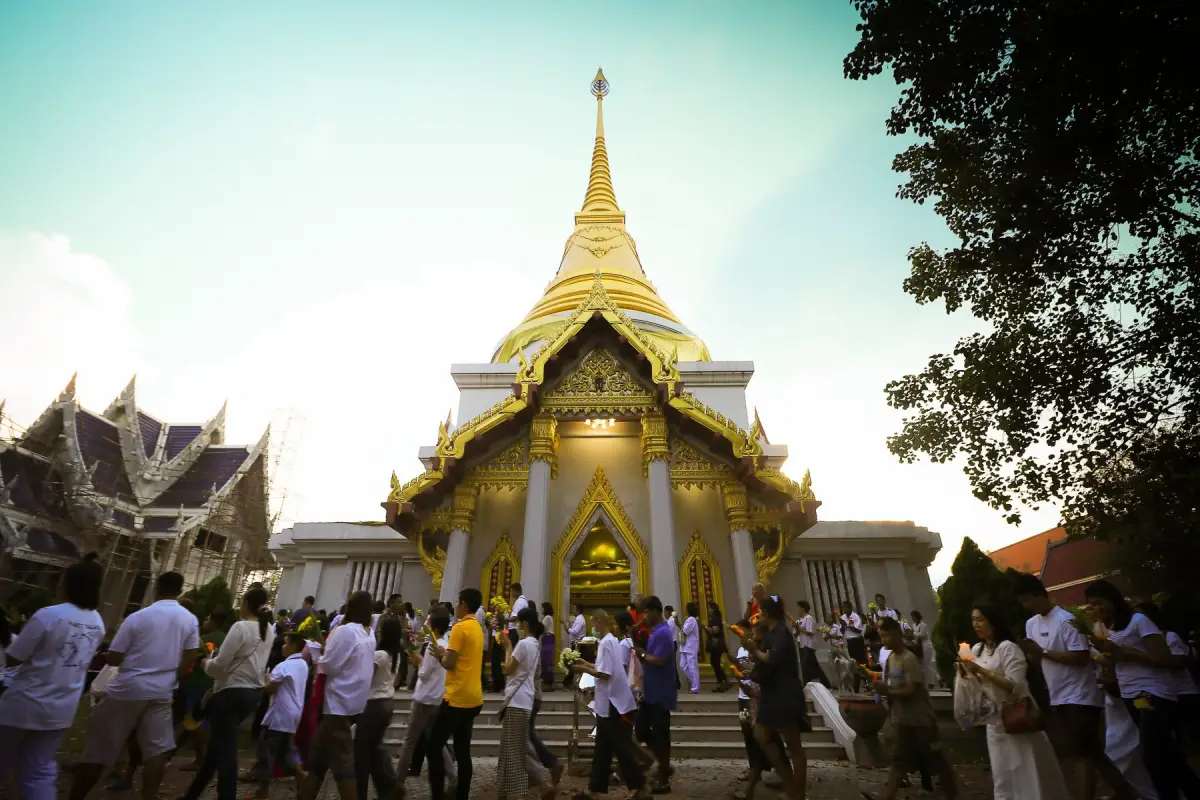
Wat Walukaram, also known as Wat Khlong Sai Nai, in Yala Province is a private Buddhist temple under the Mahanikaya order. It is located at Ban Khlong Sai Nai, Village No. 5, Yupo Subdistrict, Mueang Yala District, Yala Province. Locally, the temple is also known as Wat Tao. Wat Walukaram is an important religious site for the Khlong Sai Nai community and reflects Buddhist community life in Thailand’s southern border region. It is not a large commercial tourist temple. Its value lies in its local history, its role as a community temple, its connection with education, its continued Buddhist activities, and its position within the multicultural landscape of Yupo Subdistrict.
The temple is best understood as a living community temple rather than a conventional sightseeing attraction. It stands in Yupo, an area where Buddhist and Muslim communities live together and where local life is connected with agriculture, markets, roads, schools, and village networks. Wat Walukaram serves as a religious center for Buddhists in Ban Khlong Sai Nai, while also forming part of the wider shared landscape of the community. A visit here gives travelers a quieter and more grounded understanding of Yala beyond the province’s better-known landmarks.
The local name Wat Khlong Sai Nai comes from the village where the temple is located. The official name Wat Walukaram also carries a meaning connected with sand and a temple compound, making it strongly related to the local place name. The temple’s names therefore preserve both formal Buddhist identity and community memory. For visitors, knowing all three names — Wat Walukaram, Wat Khlong Sai Nai, and Wat Tao — helps identify the same place clearly when asking local residents for directions.
The original information for this article states that Wat Walukaram is located at Ban Khlong Sai Nai, Village No. 5, Yupo Subdistrict, Mueang Yala District, Yala Province, and is well known as Wat Tao. This information remains central to the article because it reflects the way the temple is identified by local people. A formal name alone may not be enough for travelers using local directions, while the community name and nickname help connect the temple with its real setting.
According to temple history records, Wat Walukaram was founded in 1938. Muen Rak Chaiman and Mr. Kuea Nualnak purchased land together to establish the temple in Ban Khlong Sai Nai. At that time, creating a temple was a major act of community faith. A temple was not only a place for religious ceremonies, but also a gathering place, a learning space, a center of merit-making, and a spiritual anchor for Buddhists in the village.
The temple land covers about 15 rai, with one additional monastic land plot of 4 rai. The temple stands on lowland terrain. Its surroundings are described as clean, shaded, and orderly. This setting supports the character of a community temple, where people come to make merit, listen to Dharma, join annual ceremonies, gather with neighbors, and use the temple as a shared religious and social space.
Important structures at Wat Walukaram include the sermon hall, monks’ residences, and ceremonial areas. The sermon hall measures 10 meters wide and 15 meters long and was built in 1959. It functions as a space for Dharma listening, merit-making, receiving laypeople, and organizing community activities. The monks’ residences support the monks who stay at the temple and care for Buddhist duties. These spaces are essential to the life of a working community temple.
In recent years, Wat Walukaram has also been associated with a natural ordination area or open-air ordination zone. Reports from Yala Provincial Office of Buddhism mention the ceremony to install a white jade Buddha image in the open-air ordination area and the ceremony to raise the ceremonial umbrella above the principal Buddha image in the natural ordination area. These activities show that the temple continues to develop its sacred spaces and remains a living center of faith for monks, patrons, disciples, and local residents.
The current abbot of Wat Walukaram is Phra Khru Winaithon Pawee Chawiwanano. He appeared in a 2026 report by Yala Provincial Office of Buddhism as the monastic chair of the umbrella-raising ceremony for the principal Buddha image in the temple’s natural ordination area. This confirms that the temple remains under active monastic care and continues to hold important Buddhist ceremonies.
Temple history records list earlier abbots, including Phra Khong, who served from 1938 to 1942; Phra Athikan Yot Intawaro, who served from 1946 to 1979; and Phra Yam Itthipanyo, who served from 1979 onward. More recent local records also refer to Phra Athikan Thanong Chirapanyo and Phra Athikan Pawee, now known as Phra Khru Winaithon Pawee Chawiwanano. Together, these names show the continuity of monastic leadership at Wat Walukaram across generations.
The temple has also played a role in local education. Historical records state that the temple allowed government authorities to establish a primary school in the temple area. This reflects the wider role of Thai temples in many communities, where temples have served not only religious functions but also educational and social functions. Wat Walukaram therefore belongs to a pattern in which Buddhism, learning, and community development are connected.
Its educational role makes Wat Walukaram important beyond religious ceremonies. When children grow up near a temple, school, homes, and a community market, they encounter religion, learning, and daily life in the same local environment. The temple becomes part of the cultural surroundings that shape community identity, rather than a place visited only on Buddhist holy days.
Wat Walukaram remains connected with regular Buddhist activities throughout the year. These include Buddhist holy days, almsgiving, Dharma listening, Magha Puja, Asalha Puja, Buddhist Lent, the end of Buddhist Lent, Kathin, forest robe offerings, and meditation or religious practice. Repeated activities like these keep the relationship between monks and laypeople alive. A community temple remains meaningful because local people return to it again and again throughout the yearly religious cycle.
In 2024, Yala Provincial Office of Buddhism joined an activity to offer supplies for meditation and religious practice during Magha Puja at Wat Walukaram. In 2026, the temple appeared in reports about the installation of a white jade Buddha image and the umbrella-raising ceremony for the principal Buddha image in the natural ordination area. These recent activities show that the temple is still active as a Buddhist religious site in Yala.
Wat Walukaram is also connected with Chak Phra, or the southern Buddhist procession held after the end of Buddhist Lent. In this tradition, a Buddha image is placed on a decorated ceremonial structure or Buddha boat and pulled in procession so that people can make merit and preserve local Buddhist culture. Wat Walukaram, or Wat Khlong Sai Nai, has appeared in connection with Yala’s Chak Phra procession, showing that the temple is part of a broader Buddhist network beyond its village.
Chak Phra means more than a procession. It is linked with the Buddhist story of the Buddha returning from Tavatimsa Heaven. Temples and communities prepare decorated Buddha boats, organize processions, make merit, listen to sermons, and join cultural activities. In Yala, the tradition includes Buddha-boat gatherings, boat contests, drum competitions, local food exhibitions, student performances, and Dharma preaching. Through this tradition, temples across the province gather as part of a shared Buddhist cultural event.
The wider setting of Ban Khlong Sai Nai is also important. The community is known for Khlong Sai Nai Community Market, located along Highway 418 on the Yala–Pattani route. The market sells local food, traditional snacks, vegetables, fruits, agricultural products, and community-made goods from Yupo Subdistrict. It began operating in August 2011 and was later promoted as a Talat Tong Chom, or selected community market, in 2022. This market gives Ban Khlong Sai Nai a strong identity as a community of temple life, food, agriculture, and local economic activity.
Combining a visit to Wat Walukaram with Khlong Sai Nai Community Market gives travelers a more complete view of the area. Visitors can pay respect at the temple, observe the atmosphere of a working community temple, and then visit the market when it is open to see local food and agricultural products. This type of route is better suited to slow community travel than quick sightseeing.
Yupo Subdistrict is multicultural, with Buddhist and Muslim residents living in the same wider community. Local life includes Thai Buddhist traditions as well as Muslim traditions. Wat Walukaram is the Buddhist spiritual center of Ban Khlong Sai Nai, while the surrounding community includes markets, homes, roads, schools, and livelihoods shared by different groups. This setting makes the temple useful for understanding how religious spaces exist within the broader social landscape of Yala.
Getting to Wat Walukaram is easiest by private car or motorcycle. From central Yala, travel toward Yupo Subdistrict and continue to Ban Khlong Sai Nai, Village No. 5. The route connects with Highway 418, the Yala–Pattani road. Travelers arriving by train can get off at Yala Railway Station and continue by hired vehicle or local transport to Yupo. Because Wat Walukaram is a community temple rather than a major commercial attraction, visitors unfamiliar with the route should use map navigation and confirm directions with local residents when approaching the village.
Getting There from Yala city is straightforward. Travel from central Yala toward Yupo Subdistrict, then follow the route to Ban Khlong Sai Nai and Highway 418. The destination is Wat Walukaram at Ban Khlong Sai Nai, Village No. 5. Daytime travel is recommended because it is easier to identify local roads, find parking, and continue to nearby sites such as the community market, Wat Yuparam, Wat Chomphu Sathit, and central Yala attractions.
Visitors should behave respectfully because Wat Walukaram is an active community temple. They should dress modestly, keep their voices low, avoid entering monks’ residences or private areas without permission, avoid touching Buddha images or temple objects inappropriately, and park without blocking community access. Respectful conduct matters because the temple is used by local residents for real Buddhist practice and community activities.
For families, Wat Walukaram can be a useful educational stop. Children can learn what a sermon hall is, why monks’ residences are part of a temple, how a temple can support a school, and why traditions such as Chak Phra are important in southern Thailand. Learning from a real community temple helps young visitors see that religion, local history, education, and community life are closely connected.
Visitors interested in local history should understand Wat Walukaram through five key themes: its foundation in 1938, the role of Muen Rak Chaiman and Mr. Kuea Nualnak in purchasing land, the community name Wat Khlong Sai Nai, its educational role, and its continued Buddhist activities today. Seen through these themes, the temple becomes more than a quick merit-making stop. It becomes an entry point into the history of Ban Khlong Sai Nai.
For cultural travelers, Wat Walukaram can be visited together with Wat Yuparam and Wat Chomphu Sathit, both also located in Yupo Subdistrict. Wat Yuparam is an old temple of Ban Yupo, Wat Chomphu Sathit is connected with Ban Thung Yamu, and Wat Walukaram is tied to Ban Khlong Sai Nai. Visiting these three temples together gives a clearer picture of the Buddhist temple network in Yupo and shows how village temples preserve religious life in different communities.
A practical half-day route can begin in Yala city, continue to Wat Walukaram, stop at Khlong Sai Nai Community Market, and then continue to Wat Yuparam or Wat Chomphu Sathit. Travelers can then return to central Yala for Yala Learning Park, Yala City Pillar Shrine, Suan Khwan Mueang, or Wat Khuha Phimuk. This route allows visitors to see Yala at village, subdistrict, and city levels in one trip.
Dining options near Wat Walukaram include local food at Khlong Sai Nai Community Market when the market is operating, plus restaurants in Sateng Nok and central Yala. Because Ban Khlong Sai Nai is quieter than the city center, travelers should plan meals ahead. Returning to central Yala provides more choices, including halal restaurants, tea shops, cafés, made-to-order restaurants, and family dining options.
Accommodation for visitors to Wat Walukaram is best found in Mueang Yala District, especially in Sateng, Sateng Nok, municipal road areas, Si Bamrung Road, Jongrak Road, and near Yala Railway Station. Staying in the city makes it easier to reach the temple, find food, use transport, and continue to other attractions. Travelers can stay in central Yala and visit Yupo as a half-day or one-day route.
Visitors should not expect Wat Walukaram to be a fully commercialized attraction with extensive tourist facilities. It is a community temple whose value lies in its history, calm atmosphere, and real local use. The best way to experience it is to pay respect quietly, observe the temple environment, understand the story of Ban Khlong Sai Nai, and treat local residents and the temple space with consideration.
Compared with Yala’s major landmarks, Wat Walukaram has a different kind of value from Wat Khuha Phimuk. Wat Khuha Phimuk tells the story of ancient Buddhist heritage, Srivijaya influence, and a cave temple. Wat Walukaram tells the story of a village temple, community faith, local education, a community market, and the Chak Phra tradition at the local level. Visiting both major sacred sites and village temples gives a more complete understanding of Yala.
From a conservation perspective, Wat Walukaram should be seen as living local heritage. Preserving the temple means caring not only for its buildings and grounds, but also for its name, history, founders, monks, Buddhist ceremonies, Chak Phra tradition, and the next generation’s connection with Ban Khlong Sai Nai. As long as local people continue to make merit, join ceremonies, and use the temple as a shared spiritual space, Wat Walukaram remains meaningful in the present.
In summary, Wat Walukaram in Yala Province is an important community temple of Ban Khlong Sai Nai in Yupo Subdistrict. Founded in 1938 through the joint effort of local leaders and villagers, the temple covers about 15 rai and includes a sermon hall, monks’ residences, an open-air ordination area, a principal Buddha image area, and community activity spaces. It is connected with local education, Buddhist practice, Chak Phra, and Khlong Sai Nai Community Market. Visitors who want to understand Yala beyond major landmarks should see Wat Walukaram as a doorway into Buddhist faith, village memory, and multicultural community life in the southern border region.
| Name | Wat Walukaram, Or Wat Khlong Sai Nai |
| Local Name | Wat Tao |
| Location | Ban Khlong Sai Nai, Village No. 5, Yupo Subdistrict, Mueang Yala District, Yala Province |
| Address | Ban Khlong Sai Nai, Village No. 5, Yupo Subdistrict, Mueang Yala District, Yala Province 95000, Thailand |
| Coordinates | 6.6243163, 101.2406986 |
| Place Type | Private Buddhist Temple Under The Mahanikaya Order |
| Highlights | A community temple of Ban Khlong Sai Nai, locally known as Wat Khlong Sai Nai and Wat Tao, with a clean, shaded, and orderly temple environment. |
| History / Period | Founded in 1938 by Muen Rak Chaiman and Mr. Kuea Nualnak, who jointly purchased land to establish the temple in Ban Khlong Sai Nai. |
| Name Origin | Local people call it Wat Khlong Sai Nai after the village. The official name Walukaram is also connected with sand and a temple compound. |
| Temple Land | Temple land of about 15 rai, with one additional monastic land plot of 4 rai. |
| Setting | Lowland community setting in Ban Khlong Sai Nai, with clean, shaded, and orderly surroundings. |
| Current Abbot | Phra Khru Winaithon Pawee Chawiwanano |
| Earlier Abbots In Temple Records | Phra Khong, Phra Athikan Yot Intawaro, and Phra Yam Itthipanyo |
| Caretaker / Related Groups | Wat Walukaram, Yala Sangha community, Yala Provincial Office of Buddhism, and Ban Khlong Sai Nai community. |
| Main Areas / Zones | Sermon hall, monks’ residences, open-air ordination area, principal Buddha image area, temple courtyard, merit-making area, and community activity space. |
| Important Structures | Sermon hall measuring 10 meters wide and 15 meters long, built in 1959, and four monks’ residences. |
| Important Buddha Images / Recent Sacred Objects | White jade Buddha image and the principal Buddha image in the natural ordination area. |
| Traditions / Regular Activities | Buddhist holy days, almsgiving, Dharma listening, Magha Puja, Buddhist Lent, candle offerings, the end of Buddhist Lent, Kathin, forest robe offerings, meditation practice, and the southern Buddhist Chak Phra tradition. |
| Educational Role | The temple previously allowed government authorities to establish a primary school in the temple area to support community education. |
| Facilities | Worship area, hall, temple courtyard, religious ceremony space, community activity area, and parking within or near the temple grounds. |
| Open Days | Daily |
| Opening Hours | 08:00 – 17:00 |
| Travel Information | From central Yala, travel to Yupo Subdistrict and continue to Ban Khlong Sai Nai, Village No. 5. The route connects with Highway 418, the Yala–Pattani road. Train travelers can get off at Yala Railway Station and continue by local transport or hired vehicle. |
| Current Status | Still active as a Buddhist temple with monastic care, merit-making, religious ceremonies, and community activities in Ban Khlong Sai Nai. |
| Nearby Tourist Attractions | 1. Khlong Sai Nai Community Market About 1 km 2. Wat Yuparam, Yupo Subdistrict About 5 km 3. Wat Chomphu Sathit, Yupo Subdistrict About 6 km 4. Yala Learning Park About 11 km 5. Yala City Pillar Shrine About 11 km 6. Suan Khwan Mueang Yala About 12 km 7. Wat Khuha Phimuk About 18 km |
| Nearby Restaurants | 1. Khlong Sai Nai Community Market About 1 km 2. Sky House Tea Sateng Nok About 7 km, Tel. 080-968-9551, 092-351-9715 3. Regular Shop Sateng Nok Branch About 7 km, Tel. 080-707-1090 4. Half a Noon About 9 km, Tel. 088-786-8497 5. The Yum By Salaza About 9 km, Tel. 087-295-2875 6. Sao Mon Made-To-Order & Breakfast, Anamai Sateng Nok Road About 9 km, Tel. 082-359-0137 |
| Nearby Accommodations | 1. 999 Yala Hotel About 8 km, Tel. 073-222-630, 099-616-1876 2. Nibong Resort About 10 km, Tel. 073-224-341, 099-312-5548 3. @INN YRU About 11 km, Tel. 062-182-2662 4. Park View Yala Hotel About 12 km, Tel. 073-217-002 5. Yala Rama Hotel About 12 km, Tel. 073-212-563, 073-212-815, 073-212-841 6. Yala Grand Palace Hotel About 12 km |
Frequently Asked Questions (FAQ)
Q: Where is Wat Walukaram in Yala Province located?
A: Wat Walukaram is located at Ban Khlong Sai Nai, Village No. 5, Yupo Subdistrict, Mueang Yala District, Yala Province 95000.
Q: Does Wat Walukaram have other names?
A: Yes. Local people also know it as Wat Khlong Sai Nai and Wat Tao.
Q: Why is Wat Walukaram important?
A: Wat Walukaram is a Mahanikaya community temple founded in 1938. It serves as a Buddhist spiritual center for Ban Khlong Sai Nai and remains connected with merit-making, local ceremonies, education, and community life.
Q: Who is the current abbot of Wat Walukaram?
A: The current abbot is Phra Khru Winaithon Pawee Chawiwanano, who appears in recent Buddhist activity reports from 2026.
Q: What are the opening hours of Wat Walukaram?
A: Wat Walukaram is open daily from 08:00 to 17:00.
Q: What main areas are inside Wat Walukaram?
A: Main areas include the sermon hall, monks’ residences, open-air ordination area, principal Buddha image area, temple courtyard, merit-making area, and community activity space.
Q: What traditions is Wat Walukaram connected with?
A: The temple is connected with Buddhist holy days, Magha Puja, Buddhist Lent, candle offerings, Kathin, meditation practice, and the southern Buddhist Chak Phra tradition after Buddhist Lent.
Q: What places can visitors see near Wat Walukaram?
A: Nearby places include Khlong Sai Nai Community Market, Wat Yuparam, Wat Chomphu Sathit, Yala Learning Park, Yala City Pillar Shrine, Suan Khwan Mueang Yala, and Wat Khuha Phimuk.
 Category: ●Places of Worship
 Group: ●Temple
Last Update : 2 WeekAgo
 Last Update : 2 WeekAgo
 Click to Access the Navigation Map GPS
 Art, Culture and Heritage
 Landmarks and Memorials(1)
 Art, Craft Centres, Tradition(2)
 Museums(2)
 Educational Places
 Educational Gardens, Farm(1)
Temple(6)
Educational Gardens, Farm(1)
Temple(6)
 Mosque(2)
 Other Sacred Sites(3)
 Suburban Living
 Village, Community(4)
 Nature and Wildlife
 National Parks and Marine Reserves(2)
 Mountain (Doi)(5)
 Dam, Reservoir, Lake(5)
 Waterfalls(13)
 Hot Springs(2)
 Caves(7)
 River, Canal(4)
 Islands(1)
 Other natural attractions(8)
 Entertainment and Agricultural
 Stadium(1)
 Farms, Parks and Ecotourism(4)
 Outdoor and Adventure Activities(1)
 Travel Articles, Recipes
 Travel Review, Food Review(2)


