
lovethailand home >South Travel Attractions >Yala Travel Attractions >Muang Yala >Sateng Nok > Wat Trimit
TL;DR: Wat Trimit is located at Ban Kue Lae Ma, Village No. 9, Sateng Nok Subdistrict, Mueang Yala District, Yala Province, open Daily, hours 08:00 – 17:00.

Wat Trimit
Open Days: Daily
Opening Hours: 08:00 – 17:00
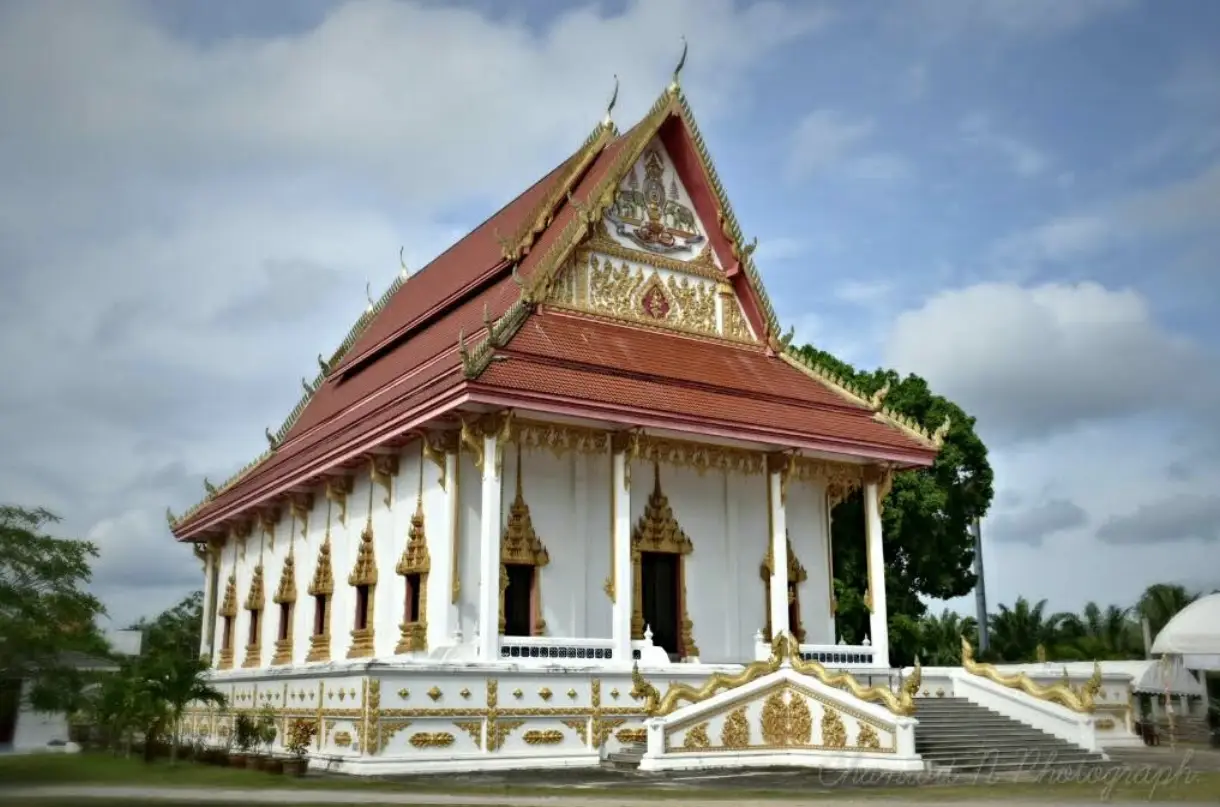
Wat Trimit in Yala Province is a Dhammayut Buddhist temple located at 1-2 Thetsaban 4 Road, Village No. 9, Ban Kue Lae Ma, Sateng Nok Subdistrict, Mueang Yala District, Yala Province. It is an important community temple for Buddhists in Sateng Nok and the wider Yala area. Wat Trimit is not a large-scale tourist temple built around dramatic architecture or ancient ruins. Its value lies in its community history, its foundation through the faith of Buddhist residents in Yala and nearby provinces, its status as a Dhammayut temple, its important principal Buddha image, and its continuing role as an active place of Buddhist practice.
Wat Trimit is suitable for visitors who want to make merit, pay respect to Buddha images, learn about community temples in the southern border region, and understand the role of Buddhism in Yala’s multicultural society. The temple stands in Sateng Nok, an urban community area connected with central Yala. It is accessible from government areas, markets, schools, and main roads in Mueang Yala District. For local Buddhists, the temple functions as a spiritual center for Buddhist holy days, major religious festivals, merit-making activities, Kathin ceremonies, Buddhist Lent activities, and moral development programs organized by communities and government agencies.
The history of Wat Trimit began in 1972 through the faith of Buddhists in Yala and surrounding provinces. Supporters donated funds to purchase land for the temple. The original land was connected with Mr. Suthee Boonsawat, Mr. Uean Kaew Sangkhaichai, and Mr. Pairat Phongsuwansiri. Several plots were combined to form a temple site large enough for monastic buildings and community religious activities. The construction was directed by Phra Phisit Winaikan, later known as Phra Thep Yanamethi, Sura Bhuripanyo, an honorary provincial ecclesiastical leader for Pattani, Yala, and Narathiwat in the Dhammayut order.
Before it became Wat Trimit, the site was known as Yala Thaksinaram Monastic Residence and was officially opened on 24 July 1972. It later received permission to build a temple on 14 October 1976 and was officially established as a Buddhist temple on 26 May 1977 under the name Wat Trimit. The name reflects cooperation and friendship among people of faith who helped establish the temple in Sateng Nok. What began as a small monastic residence developed into a recognized Buddhist temple with a clear legal and religious status.
Wat Trimit later received its royal grant of Wisungkham Sima on 2 September 2010, and the ceremony for embedding boundary stones and consecrating the Sima boundary was held on Monday, 30 May 2011. This was an important milestone because a Sima boundary is essential for formal monastic acts, especially ceremonies performed by monks according to Buddhist discipline. The completed ordination hall and Sima boundary strengthened the temple’s role as a full Buddhist institution serving both monks and the local Buddhist community.
The first abbot of Wat Trimit was Phra Khru Wutthi Thammaphon, or Wutthi Dhammathajo, from Wat Yala Thammaram in Sateng Nok. He was appointed on 27 July 1977 and later became an ecclesiastical district leader for Pattani, Yala, and Narathiwat in the Dhammayut order. He passed away on 4 December 1998. The temple is currently under the care of Phra Khru Worayanakovit, or Somkhuan Yanavaro, who serves as acting abbot. This continuity of monastic care has allowed Wat Trimit to remain active as a place of worship and community religious activity.
The most important sacred object at Wat Trimit is the principal Buddha image in the ordination hall. It has a lap width of 99 inches and was created by Buddhists from Yala and nearby provinces as a royal merit offering to King Bhumibol Adulyadej, Rama IX, on the occasion of his 72nd birthday anniversary in 1999. The casting ceremony was held in front of the ordination hall on 9 May 1999. Somdet Phra Nyanasamvara, the Supreme Patriarch, gave the image the name Phra Phuttha Thai Mongkhon Chaloem Phra Chonmaphansa.
Phra Phuttha Thai Mongkhon Chaloem Phra Chonmaphansa is the spiritual heart of Wat Trimit. The image was created through collective devotion and carries the meaning of auspiciousness, royal gratitude, and community faith. Visitors should begin their visit by paying respect to the principal Buddha image in the ordination hall or the designated worship area, then spend a short moment in quiet reflection. The experience is simple, calm, and rooted in the atmosphere of a living community temple.
Wat Trimit also houses several other sacred objects. These include replicas of Phra Phuttha Chinnarat, meditation-posture Buddha images, Mara-subduing Buddha images, a first-sermon Buddha image, alms-bowl-carrying Buddha images, open-eye Buddha images, Buddha images in the forbidding-relatives and calming-the-ocean postures, attendant disciple images, a life-size statue of Luang Pu Thuat, and a life-size statue of Phra Thep Yanamethi, or Luang Pu Sura Bhuripanyo. These objects reflect devotion to the Buddha, respect for revered monks, and memory of the senior monk who played an important role in founding the temple.
The temple has the essential buildings and facilities needed for a functioning community temple. These include the ordination hall, sermon hall, multipurpose hall, Buddhist study hall, merit-making hall, abbot’s residence, guest monk residence, monk dormitories, dining building, toilets, groundwater tanks, temple gate, boundary wall, wells, and open areas for community activity. These are not merely structures; they support the full life of the temple, including chanting, Buddhist study, merit-making, monastic residence, community gatherings, and religious ceremonies.
The temple grounds are located on lowland terrain with a stream passing through the area. The setting is closely tied to the Sateng Nok community. Wat Trimit therefore differs from mountain temples or cave temples. Its charm comes from being a city-community temple that local people still use for merit-making, sermons, and annual religious activities. Its location near residential areas makes it part of daily life, not just a place for visitors. It is a merit-making space, a meeting place, a learning space, and a center for preserving Buddhist traditions in Sateng Nok.
In recent years, Wat Trimit has appeared in several community and government activities. These include moral and ethical development programs for civil servants on Buddhist holy days, temple visits and food offerings to monks and novices, Kathin merit-making, public food service, and Buddhist Lent candle offerings organized by Sateng Nok Municipality. These continuing activities confirm that Wat Trimit remains an active religious site rather than a temple that exists only in a registry.
For visitors, Wat Trimit is best experienced as a quiet merit-making temple. A typical visit may take 30 minutes to 1 hour, enough time to pay respect to the principal Buddha image, observe the ordination hall, sermon hall, sacred objects, and the surrounding community atmosphere. The temple’s value is not in staged tourism but in the everyday religious life of the community. A respectful, quiet visit allows travelers to see the temple more deeply.
Wat Trimit is located in Sateng Nok, an area that includes Buddhist temples, Chinese shrines, mosques, communities, schools, government offices, and roads linking to central Yala. This context makes the temple important within Yala’s multicultural society. Buddhism in Yala does not exist separately from other communities; it is one part of a city where people of different religions and cultural backgrounds live together. Understanding Wat Trimit helps visitors understand another side of Yala: the contemporary Buddhist community of the southern border region.
The temple’s name is also meaningful. Trimit suggests friendship and cooperation, which fits the temple’s origin story. The temple was established through cooperation among senior monks, land donors, local representatives, and Buddhist residents. Many short travel listings mention only the address and opening hours, but the temple’s fuller history shows that Wat Trimit is the result of collective faith and shared effort.
Wat Trimit is a useful stop for travelers planning a cultural route in Yala city. Visitors can begin in central Yala, travel to Thetsaban 4 Road in Sateng Nok, pay respect at Wat Trimit, and continue to Keng Hud Ji Shrine, Markaz Yala, Yala Learning Park, Yala City Pillar Shrine, Suan Khwan Mueang, or Wat Khuha Phimuk. This route reveals Yala as a city of Buddhist temples, Chinese shrines, Islamic learning spaces, public learning centers, parks, and important sacred sites.
Getting There from central Yala is straightforward. Travel toward Sateng Nok Subdistrict and continue to Thetsaban 4 Road in Village No. 9, Ban Kue Lae Ma. The destination is Wat Trimit at 1-2 Thetsaban 4 Road. Traveling by private car or motorcycle is the easiest option because the route connects with Rom Klao Road, Sukyang Road, and local roads in Sateng Nok Municipality. Visitors arriving by train can get off at Yala Railway Station and continue by hired vehicle or local transport to the temple.
The best time to visit is during the morning or before dusk, especially in the morning when the weather is more comfortable and the atmosphere is suitable for worship. Visitors who want to join activities on Buddhist holy days or major religious occasions should check community or municipal announcements before traveling. Community temples may hold events such as Buddhist Lent candle offerings, Kathin ceremonies, sermons, candlelight processions, or moral training programs according to the annual Buddhist calendar.
Visitors should dress modestly, keep their voices low, avoid disturbing monks and worshippers, and avoid entering monks’ residences without permission. They should not touch Buddha images or temple objects inappropriately and should park only in areas that do not block community access. These forms of etiquette matter because Wat Trimit is not only a visitor destination. It is a working religious space used by local people in daily life.
Families can use Wat Trimit as a gentle educational stop for children. The temple gives young visitors a chance to learn about Buddhist manners, the principal Buddha image, the ordination hall, the sermon hall, merit-making, and respect for sacred spaces. Visiting a community temple helps children understand that a temple is not only a place for worship, but also a place where local people gather, support one another, and preserve religious culture.
For cultural travelers, Wat Trimit adds depth to the common image of Yala, which is often associated with Betong, Wat Khuha Phimuk, Suan Khwan Mueang, or Yala City Pillar Shrine. Wat Trimit represents a more everyday side of Yala: a contemporary Buddhist community temple founded after 1972 and shaped by the growth of Sateng Nok. Understanding a temple like this helps visitors see that Yala is not only a province of major landmarks, but also a place where smaller religious spaces continue to support community life.
Restaurants near Wat Trimit can be found in Sateng Nok and central Yala. Options include tea shops, cafés, made-to-order restaurants, halal food, and breakfast restaurants. Visitors can pay respect at Wat Trimit and then continue to a nearby restaurant in Sateng Nok or return to central Yala, where there are more dining choices for families and groups. Combining the temple visit with local food makes the trip more connected to the real rhythm of the city.
Accommodation for visitors to Wat Trimit is best found in Mueang Yala District, especially around Sateng, Sateng Nok, Si Bamrung Road, Jongrak Road, Thetsaban roads, and the Yala Railway Station area. These locations provide convenient access to the temple, restaurants, transport, and other city attractions. Travelers who prefer to stay closer to Sateng Nok can choose hotels along local roads in the municipality, while those who want more food and transport options may prefer central Yala.
Wat Trimit can be included in a half-day cultural route together with Keng Hud Ji Shrine, Markaz Yala, and central Yala landmarks. These places show the religious and cultural diversity of Sateng Nok and Yala city. Travelers with more time can continue to Wat Khuha Phimuk, one of the South’s important Buddhist sacred sites, or stop at Suan Khwan Mueang for a green urban rest area. This route combines Buddhist calm, community culture, and the city atmosphere in one trip.
From a local historical perspective, Wat Trimit records the development of the Buddhist community in Sateng Nok during the second half of the 20th century. Building a temple in the southern border region required faith, cooperation, and long-term commitment. The land donation, temple-building permission, official establishment, construction of the principal Buddha image, royal grant of Sima boundary, and consecration ceremony all formed the foundation that gave the temple legal, monastic, and community significance.
Socially, Wat Trimit preserves the rhythm of Buddhist community life in Yala. Annual and recurring activities such as Buddhist holy days, Buddhist Lent, Kathin, forest robe offerings, sermons, food offerings, and community merit-making bring people back to the temple regularly. The relationship between monks and laypeople is built not only during large ceremonies, but also through small acts of merit, temple support, and the ongoing preservation of Buddhist customs.
Architecturally and functionally, Wat Trimit shows the development of a monastic residence into a complete temple. The ordination hall, measuring 17 meters wide and 36 meters long, serves as the central building for monastic ceremonies. The sermon hall supports Dharma talks and community activities. The two-story multipurpose hall accommodates larger events. The Buddhist study hall reflects the temple’s educational role, while the residences and supporting facilities allow monks to live and carry out temple duties continuously. These features make Wat Trimit a fully functioning urban community temple.
One important point for readers is that Wat Trimit does not have a large amount of commercial tourism information online. Its most valuable information comes from local and temple registry sources, which provide systematic details about its foundation, land, key people, abbot history, sacred objects, and buildings. The temple should therefore be presented accurately as a community temple with a clear history, rather than exaggerated as a major commercial tourist attraction. This gives readers information that matches the real nature of the place.
In summary, Wat Trimit in Yala Province is an important Dhammayut community temple for Buddhists in Sateng Nok and Mueang Yala District. It began as Yala Thaksinaram Monastic Residence in 1972, received permission to build a temple in 1976, was officially established as Wat Trimit in 1977, and received its royal grant of Wisungkham Sima in 2010. The temple houses Phra Phuttha Thai Mongkhon Chaloem Phra Chonmaphansa as its principal Buddha image, along with several sacred objects and functional monastic buildings. It remains active through merit-making, sermons, Kathin, Buddhist Lent activities, and moral development programs. Visitors who want to understand Yala through contemporary Buddhist community life should visit Wat Trimit quietly and respectfully.
| Name | Wat Trimit |
| Location | Ban Kue Lae Ma, Village No. 9, Sateng Nok Subdistrict, Mueang Yala District, Yala Province |
| Address | 1-2 Thetsaban 4 Road, Village No. 9, Sateng Nok Subdistrict, Mueang Yala District, Yala Province 95000, Thailand |
| Coordinates | 6.5463716764593, 101.30085958906 |
| Place Type | Private Buddhist Temple Under The Dhammayut Order |
| Highlights | Phra Phuttha Thai Mongkhon Chaloem Phra Chonmaphansa, a 99-inch lap-width principal Buddha image in the ordination hall, and a temple history rooted in community faith. |
| History / Period | Founded as Yala Thaksinaram Monastic Residence in 1972, received permission to build a temple on 14 October 1976, and was officially established as Wat Trimit on 26 May 1977. |
| Name Origin | The name Wat Trimit reflects cooperation among people of faith who helped establish the temple in Sateng Nok community. |
| Key Founder / Related Person | Phra Thep Yanamethi, Luang Pu Sura Bhuripanyo, directed the construction, while Mr. Suthee Boonsawat handled the permission process for building and establishing the temple. |
| First Abbot | Phra Khru Wutthi Thammaphon, or Wutthi Dhammathajo, appointed on 27 July 1977. |
| Acting Abbot | Phra Khru Worayanakovit, or Somkhuan Yanavaro |
| Important Sacred Objects | Phra Phuttha Thai Mongkhon Chaloem Phra Chonmaphansa, Phra Phuttha Chinnarat replicas, meditation-posture Buddha images, Mara-subduing Buddha images, a first-sermon Buddha image, Luang Pu Thuat statue, and Phra Thep Yanamethi statue. |
| Main Areas / Zones | Ordination hall, sermon hall, multipurpose hall, Buddhist study hall, merit-making hall, monk residences, dining building, temple gate, boundary wall, wells, and community activity areas. |
| Facilities | Worship areas, halls, temple courtyard, toilets, wells, ceremonial spaces, and parking within the temple grounds. |
| Open Days | Daily |
| Opening Hours | 08:00 – 17:00 |
| Traditions / Regular Activities | Buddhist holy days, Buddhist Lent candle offerings, Kathin ceremonies, sermons, alms-giving, and moral development activities organized by the community and government agencies. |
| Local Information Contact | Sateng Nok Municipality Tel. 073-202-200 |
| Travel Information | From central Yala, travel to Sateng Nok Subdistrict and continue to Thetsaban 4 Road, Village No. 9, Ban Kue Lae Ma. Train travelers can get off at Yala Railway Station and continue by hired vehicle or local transport. |
| Current Status | Still active as a Buddhist temple with resident monks and regular Buddhist community activities in Sateng Nok. |
| Nearby Tourist Attractions | 1. Keng Hud Ji Shrine About 1.5 km 2. Markaz Yala About 2 km 3. Yala Learning Park About 4 km 4. Yala City Pillar Shrine About 4 km 5. Suan Khwan Mueang Yala About 5 km 6. Wat Khuha Phimuk About 10 km |
| Nearby Restaurants | 1. Wan Moo Sateng Nok About 1.5 km, Tel. 093-719-6027 2. Sky House Tea Sateng Nok About 2 km, Tel. 080-968-9551, 092-351-9715 3. Mami Yah Sateng Nok About 2 km, Tel. 098-844-7361 4. BALLOON About 2 km, Tel. 095-858-6236 5. Sate Na Ho About 3 km, Tel. 093-725-0835 6. Morning kub Yala About 4 km, Tel. 087-477-6571, 086-291-5898, 082-731-1563 |
| Nearby Accommodations | 1. 999 Yala Hotel About 3 km, Tel. 073-222-630 2. Nibong Resort About 4 km, Tel. 073-224-341, 099-312-5548 3. Buri Sateng Hotel About 5 km, Tel. 096-642-9663 4. Park View Yala Hotel About 5 km, Tel. 073-217-002 5. @INN YRU About 5 km, Tel. 062-182-2662 6. Yala Rama Hotel About 5 km, Tel. 073-212-815 |
Frequently Asked Questions (FAQ)
Q: Where is Wat Trimit in Yala Province located?
A: Wat Trimit is located at 1-2 Thetsaban 4 Road, Village No. 9, Ban Kue Lae Ma, Sateng Nok Subdistrict, Mueang Yala District, Yala Province 95000.
Q: Why is Wat Trimit important?
A: Wat Trimit is a Dhammayut community temple founded through the faith of Buddhists in Yala and nearby provinces, and it remains an important religious center for the Sateng Nok community.
Q: When was Wat Trimit founded?
A: It began as Yala Thaksinaram Monastic Residence in 1972, received permission to build a temple in 1976, and was officially established as Wat Trimit on 26 May 1977.
Q: What is the main Buddha image at Wat Trimit?
A: The main Buddha image is Phra Phuttha Thai Mongkhon Chaloem Phra Chonmaphansa, a 99-inch lap-width principal Buddha image created as a royal merit offering to King Rama IX.
Q: What are the opening days and hours of Wat Trimit?
A: Wat Trimit is open daily from 08:00 to 17:00.
Q: How do visitors get to Wat Trimit?
A: From central Yala, travel toward Sateng Nok Subdistrict and continue to Thetsaban 4 Road in Village No. 9, Ban Kue Lae Ma. Train travelers can get off at Yala Railway Station and continue by local transport.
Q: What Buddhist activities are held at Wat Trimit?
A: Activities include Buddhist holy day merit-making, sermons, Buddhist Lent candle offerings, Kathin ceremonies, alms-giving, and moral development programs with the local community and government agencies.
Q: What places can be visited near Wat Trimit?
A: Nearby places include Keng Hud Ji Shrine, Markaz Yala, Yala Learning Park, Yala City Pillar Shrine, Suan Khwan Mueang Yala, and Wat Khuha Phimuk.
 Category: ●Places of Worship
 Group: ●Temple
Last Update : 2 WeekAgo
 Last Update : 2 WeekAgo
 Click to Access the Navigation Map GPS
 Art, Culture and Heritage
 Landmarks and Memorials(1)
 Art, Craft Centres, Tradition(2)
 Museums(2)
 Educational Places
 Educational Gardens, Farm(1)
Temple(6)
Educational Gardens, Farm(1)
Temple(6)
 Mosque(2)
 Other Sacred Sites(3)
 Suburban Living
 Village, Community(4)
 Nature and Wildlife
 National Parks and Marine Reserves(2)
 Mountain (Doi)(5)
 Dam, Reservoir, Lake(5)
 Waterfalls(13)
 Hot Springs(2)
 Caves(7)
 River, Canal(4)
 Islands(1)
 Other natural attractions(8)
 Entertainment and Agricultural
 Stadium(1)
 Farms, Parks and Ecotourism(4)
 Outdoor and Adventure Activities(1)
 Travel Articles, Recipes
 Travel Review, Food Review(2)


