
lovethailand home >South Travel Attractions >Yala Travel Attractions >Muang Yala >Sateng Nok > Keng Hud Jee Shrine
TL;DR: Keng Hud Jee Shrine is located at Thetsaban 4 Road, Sateng Nok Subdistrict, Mueang Yala District, Yala Province 95000, open Daily, hours 08.00 - 17.00.
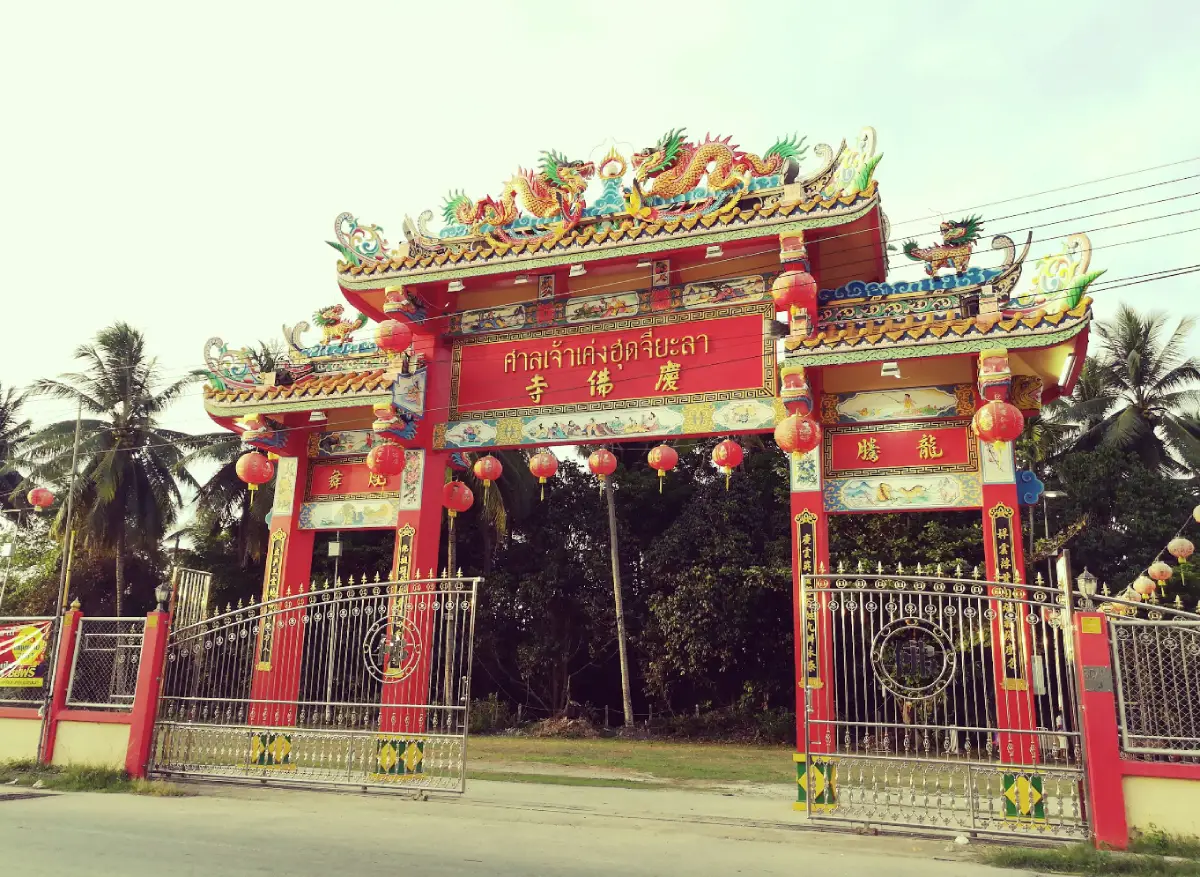
Keng Hud Jee Shrine
Open Days: Daily
Opening Hours: 08.00 - 17.00
Keng Hud Jee Shrine in Yala, also known locally as Wat Heng Jia, is an important Chinese shrine in Sateng Nok Subdistrict, Mueang Yala District, Yala Province. The shrine serves as a spiritual center for Thai-Chinese communities in Thailand’s southern border provinces and welcomes visitors who wish to pay respect to Tai Sia Hud Jow and other Chinese deities. Its main highlights are its role as a living Chinese religious site, its connection with Yala’s multicultural urban identity, and the annual fire-walking procession held every April.
Keng Hud Jee Shrine is located on Thetsaban 4 Road in Sateng Nok, close to Yala city. It is one of the places where the Chinese cultural roots of Yala can still be experienced through daily worship, annual rituals, lion dance activities, and the long-standing relationship between the shrine and the local community. For travelers who want to understand Yala beyond its natural scenery and city landmarks, this shrine offers a valuable look into the Chinese heritage of the southern border region.
The shrine is closely associated with Tai Sia Hud Jow, also known as the Monkey King deity in Chinese belief. This is why many local people call the shrine Wat Heng Jia. Worshippers visit the shrine to pray for good fortune, success in study and work, health, protection, family harmony, and peace of mind. The shrine therefore functions not only as a place of worship but also as a spiritual anchor for people who seek confidence and blessing in everyday life.
Inside the shrine, visitors will find images and statues of several revered Chinese deities. The importance of Keng Hud Jee Shrine lies in the way it keeps Chinese religious culture alive in Yala through daily offerings, festival gatherings, palanquin processions, lion dances, and community-based rituals. It is a sacred place, a cultural learning site, and a social space where generations of local people continue to preserve their inherited traditions.
The shrine’s history is connected with its establishment around 1967 and the beginning of its fire-walking procession around 1969. Over the decades, the annual event has become one of the key Chinese cultural traditions in Yala. The continued practice of this festival gives the shrine a strong identity and makes it an important destination for travelers interested in Chinese shrines and southern Thai cultural diversity.
The most significant event at Keng Hud Jee Shrine is the annual fire-walking procession, usually held in April. The celebration includes religious ceremonies, the invitation of deities onto palanquins, a procession around Yala city, traditional Chinese ceremonial music, blessing flags, lion dance performances, Thai-Chinese cultural shows, and festive decorations around the shrine. The event is not simply a public celebration. It is a cultural statement that affirms the presence and continuity of Chinese heritage in Yala.
The fire-walking ritual reflects faith, discipline, symbolic purification, and the belief in receiving blessings from the deities. During the annual festival, visitors can see the shrine decorated in a traditional Chinese style, worshippers gathering for prayers, palanquins moving through the city, and lion dancers performing as part of the ceremonial atmosphere. The event shows that Chinese culture in Yala is not a static memory but an active tradition maintained by real people in the local community.
Another important part of the shrine’s cultural life is the Golden Lion Dance Troupe of Keng Hud Jee Shrine. The troupe was formed through the support of devotees and local youth. Its activities help turn the shrine into a community learning space where younger generations practice discipline, teamwork, physical coordination, and cultural responsibility. Through lion dance training, local youth participate directly in preserving the shrine’s living heritage.
For cultural travelers, Keng Hud Jee Shrine is suitable for those who want to see Yala from a deeper perspective. Yala is known for its multicultural society, planned urban layout, public parks, and religious diversity. This shrine adds another important layer to that identity by showing the role of Thai-Chinese belief within the southern border provinces. A visit here helps travelers understand how different communities have lived together and maintained their own cultural traditions within the same city.
On ordinary days, the shrine offers a calm atmosphere for worship and quiet cultural observation. Visitors should allow around 30 minutes to 1 hour to walk through the shrine respectfully, pay homage to the main deity, and observe the Chinese architectural and ritual details. The experience is most meaningful when approached with respect, patience, and awareness that the shrine is first and foremost a sacred community space.
Travelers who want to see the annual fire-walking festival should plan their visit for April and check the yearly schedule before traveling. The event attracts worshippers and visitors from Yala and nearby provinces, and parts of the city may be arranged for processions and ceremonies. Visitors should arrive early, stand in safe viewing areas, follow the instructions of local staff or shrine committee members, and avoid blocking the palanquin procession.
Visitor etiquette is important at Keng Hud Jee Shrine. Dress modestly, speak quietly, do not touch deity statues or ritual objects without permission, and avoid intrusive photography during active ceremonies. When photographing people, worshippers, or specific rituals, ask for permission first. The shrine is a place of faith for the local community, not merely a sightseeing stop.
Important areas at the shrine include the worship area for Tai Sia Hud Jow, spaces where other deities are enshrined, Chinese-style entrance and decorative elements, ceremonial areas used during the annual festival, and the gathering area for palanquins during major rituals. The beauty of the shrine lies not only in its architecture but also in its colors, incense, offerings, ceremonial objects, and the care that the community gives to the place.
Getting to Keng Hud Jee Shrine is convenient from Yala city. Travelers using a private car or rental car can navigate to Thetsaban 4 Road in Sateng Nok Subdistrict. The journey from central Yala is short and can easily be combined with nearby attractions such as Yala City Pillar Shrine, Khwan Mueang Park, Yala Clock Tower, and Lim Ko Niao Shrine. Travelers arriving by train can start from Yala Railway Station and continue by local transport or hired vehicle to Sateng Nok.
The area around the shrine is urban, making it practical to include several stops in a half-day itinerary. A good route begins with Keng Hud Jee Shrine, followed by Yala City Pillar Shrine, Khwan Mueang Park, Chang Phueak Ceremonial Ground, and the city center. This route gives visitors a balanced view of Chinese religious life, civic landmarks, green public spaces, and the everyday rhythm of Yala city.
From a community-history perspective, Keng Hud Jee Shrine is a cultural marker of Chinese settlement and Thai-Chinese continuity in Yala. The shrine functions as a ritual center, gathering place, and memory space for the community. Worship, annual ceremonies, lion dance practice, and procession culture are all part of the shrine’s ongoing role in local life.
The shrine is also part of a wider network of Chinese shrines in southern Thailand. Travelers interested in faith-based cultural routes can connect a visit to Keng Hud Jee Shrine with Chinese shrines in nearby provinces such as Pattani, Narathiwat, and Songkhla. For travelers who have only 1 day in Yala city, however, this shrine alone provides a strong introduction to the Chinese cultural presence in the area.
The best time to visit on a normal day is in the morning or late afternoon, when the weather is more comfortable and the light is suitable for observing the shrine’s exterior details. Those who want to experience the most vibrant atmosphere should visit during the annual fire-walking festival in April, when the shrine becomes a lively center of faith, processions, lion dance performances, and communal celebration.
Families traveling with children or elderly visitors should choose a quieter time on ordinary days for a more comfortable visit. The annual festival is more crowded and energetic, making it suitable for visitors who specifically want to observe the procession and ritual atmosphere. When traveling with elderly visitors, avoid the hottest hours and allow enough time for rest.
Keng Hud Jee Shrine helps explain the multicultural character of Yala in a concrete way. The province is home to Buddhist, Muslim, Thai-Chinese, and other cultural communities, and this shrine demonstrates how Chinese belief continues to exist within that shared local landscape. Visiting the shrine gives travelers a clearer understanding of faith, identity, coexistence, and cultural preservation in Yala.
For anyone interested in Chinese traditions in southern Thailand, Keng Hud Jee Shrine should not be overlooked. Its story connects important elements such as Tai Sia Hud Jow, the annual fire-walking procession, palanquins, lion dance, youth participation, and the role of the shrine as a spiritual center. A visit here offers both a travel experience and a deeper cultural context.
In summary, Keng Hud Jee Shrine in Yala is an important Chinese religious site, a place of worship for Tai Sia Hud Jow, a community landmark for Thai-Chinese people in the southern border region, and the center of an annual fire-walking procession. For travelers who want to understand Yala beyond a brief stopover, this shrine is a meaningful destination that brings together religion, culture, community memory, and local identity.
| Name | Keng Hud Jee Shrine, Yala |
| Alternative Name | Wat Heng Jia |
| Location | Thetsaban 4 Road, Sateng Nok Subdistrict, Mueang Yala District, Yala Province 95000 |
| Coordinates | 6.5315094, 101.3132282 |
| Highlights | Important Chinese shrine in Yala, dedicated to Tai Sia Hud Jow, and the center of an annual fire-walking procession held in April |
| History | The shrine was established around 1967, and its fire-walking procession began around 1969 |
| Name Origin | The shrine is associated with Tai Sia Hud Jow, or the Monkey King deity, which is why it is also known as Wat Heng Jia |
| Distinctive Features | Chinese religious site with multiple deities, palanquin processions, lion dance traditions, and annual fire-walking rituals |
| Travel Information | Accessible by private car, rental car, or hired local transport from Yala city. From Yala Railway Station, continue by local vehicle to Thetsaban 4 Road in Sateng Nok |
| Current Status | Open as a Chinese shrine and cultural attraction in Sateng Nok Subdistrict |
| Open Days | Daily |
| Opening Hours | 08.00 - 17.00 |
| Main Areas / Zones | Worship area for Tai Sia Hud Jow, deity enshrinement areas, Chinese-style entrance, ceremonial areas, and palanquin gathering area during the annual festival |
| Important Tradition / Ritual | Annual Keng Hud Jee Shrine fire-walking procession in April, featuring religious ceremonies, palanquins, deity processions, lion dances, and Thai-Chinese cultural performances |
| Local Information Contact | Sateng Nok Town Municipality Tel. 073-202-200 / Golden Lion Dance Troupe of Keng Hud Jee Shrine Tel. 073-213823 |
| Official Website / Official Page | Sateng Nok Town Municipality Website |
| Nearby Tourist Attractions | 1. Yala City Pillar Shrine, about 2 km 2. Khwan Mueang Park, about 3 km 3. Chang Phueak Ceremonial Ground, about 3 km 4. Yala Clock Tower, about 3 km 5. Lim Ko Niao Shrine, Yala, about 4 km 6. Yala Street Art, about 4 km 7. Wat Khuhaphimuk, about 9 km |
| Nearby Restaurants | 1. Lamunlin Martabak Manis, about 1 km, Tel. 081-773-3793 2. Laila Restaurant Yala, about 3 km, Tel. 091-646-6115 3. Mamiyah Sateng Nok, about 2 km, Tel. 098-844-7361 4. Bang Bee Khao Mok & Soup Phang Mueang 4, about 4 km, Tel. 061-229-3212, 063-069-9560 5. Thepwiman Chicken Wing Guay Jub, about 4 km, Tel. 073-213-265, 081-276-9629, 089-655-7629 |
| Nearby Accommodations | 1. Park View Hotel, about 4 km, Tel. 073-217001-5 2. @INN YRU Hotel, about 4 km, Tel. 062-182-2662 3. Yala Grand Palace Hotel, about 4 km, Tel. 073-215711-2 4. Yala Rama Hotel, about 4 km, Tel. 073-212563, 073-212815, 073-212841 5. Boonrapee Residence, about 5 km, Tel. 099-489-9449 6. Metro Hotel, about 4 km, Tel. 073-212-175 |
Frequently Asked Questions (FAQ)
Q: Where is Keng Hud Jee Shrine located?
A: Keng Hud Jee Shrine is located on Thetsaban 4 Road in Sateng Nok Subdistrict, Mueang Yala District, Yala Province.
Q: What are the opening days and hours of Keng Hud Jee Shrine?
A: The shrine is open daily from 08.00 to 17.00.
Q: Which deity is most closely associated with Keng Hud Jee Shrine?
A: The shrine is closely associated with Tai Sia Hud Jow, also known as the Monkey King deity in Chinese belief.
Q: When is the annual fire-walking procession held?
A: The fire-walking procession is held in April every year and includes religious ceremonies, palanquins, lion dances, and Thai-Chinese cultural performances.
Q: How can travelers get to Keng Hud Jee Shrine from Yala city?
A: Travelers can go by private car, rental car, or hired local transport to Thetsaban 4 Road in Sateng Nok. From Yala Railway Station, continue by local vehicle or hired transport.
Q: What should visitors keep in mind when entering the shrine?
A: Visitors should dress modestly, speak quietly, avoid touching deity statues or ritual objects without permission, and avoid blocking ceremonial areas.
Q: What nearby attractions can be visited with Keng Hud Jee Shrine?
A: Nearby attractions include Yala City Pillar Shrine, Khwan Mueang Park, Chang Phueak Ceremonial Ground, Yala Clock Tower, Lim Ko Niao Shrine, Yala Street Art, and Wat Khuhaphimuk.
 Category: ●Places of Worship
 Group: ●Other Sacred Sites
Last Update : 2 WeekAgo
 Last Update : 2 WeekAgo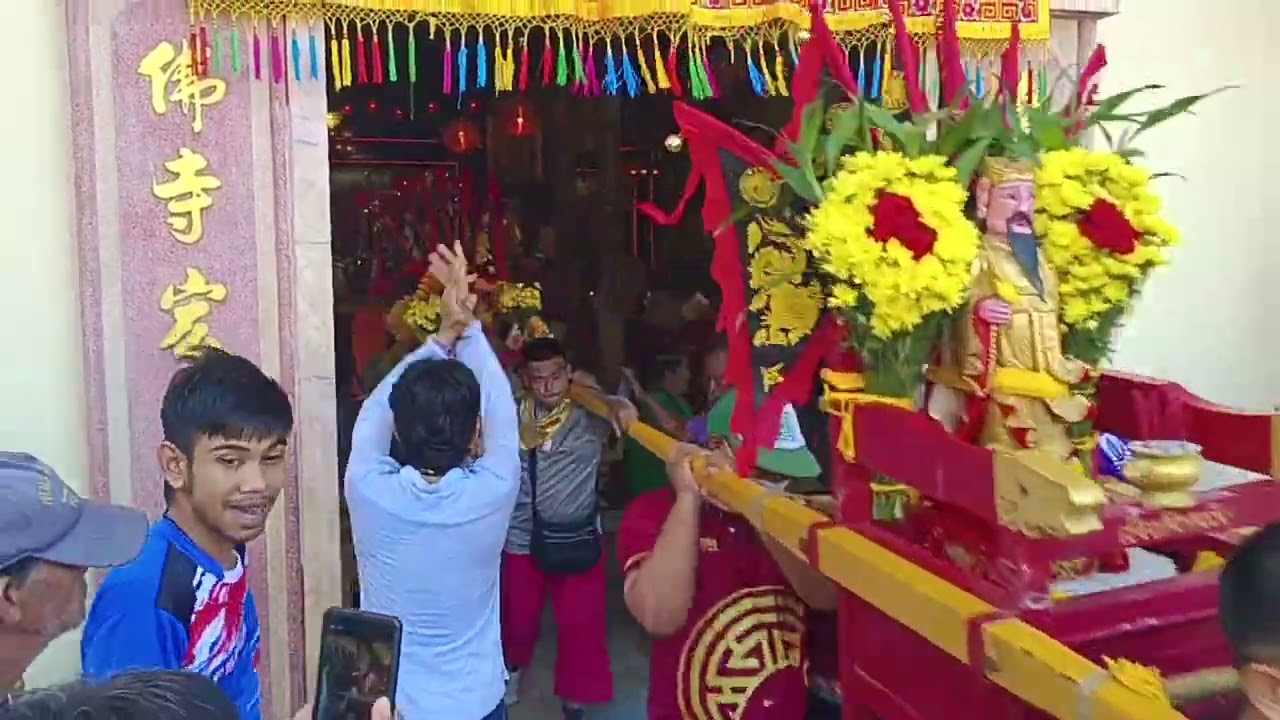
 Click to Access the Navigation Map GPS
Keng Hud Jee Shrine Map

 Art, Culture and Heritage
 Landmarks and Memorials(1)
 Art, Craft Centres, Tradition(2)
 Museums(2)
 Educational Places
 Educational Gardens, Farm(1)
 Temple(6)
 Mosque(2)
Other Sacred Sites(3)
Mosque(2)
Other Sacred Sites(3)
 Suburban Living
 Village, Community(4)
 Nature and Wildlife
 National Parks and Marine Reserves(2)
 Mountain (Doi)(5)
 Dam, Reservoir, Lake(5)
 Waterfalls(13)
 Hot Springs(2)
 Caves(7)
 River, Canal(4)
 Islands(1)
 Other natural attractions(8)
 Entertainment and Agricultural
 Stadium(1)
 Farms, Parks and Ecotourism(4)
 Outdoor and Adventure Activities(1)
 Travel Articles, Recipes
 Travel Review, Food Review(2)


