
lovethailand home >South Travel Attractions >Yala Travel Attractions >Ya Ha >Ta Chi > Wat Wongkot Banphot
TL;DR: Wat Wongkot Banphot is located at Ban Nok, Village No. 2, Ta Chi Subdistrict, Yaha District, Yala Province, open Daily, hours 08:00 – 17:00.
Wat Wongkot Banphot
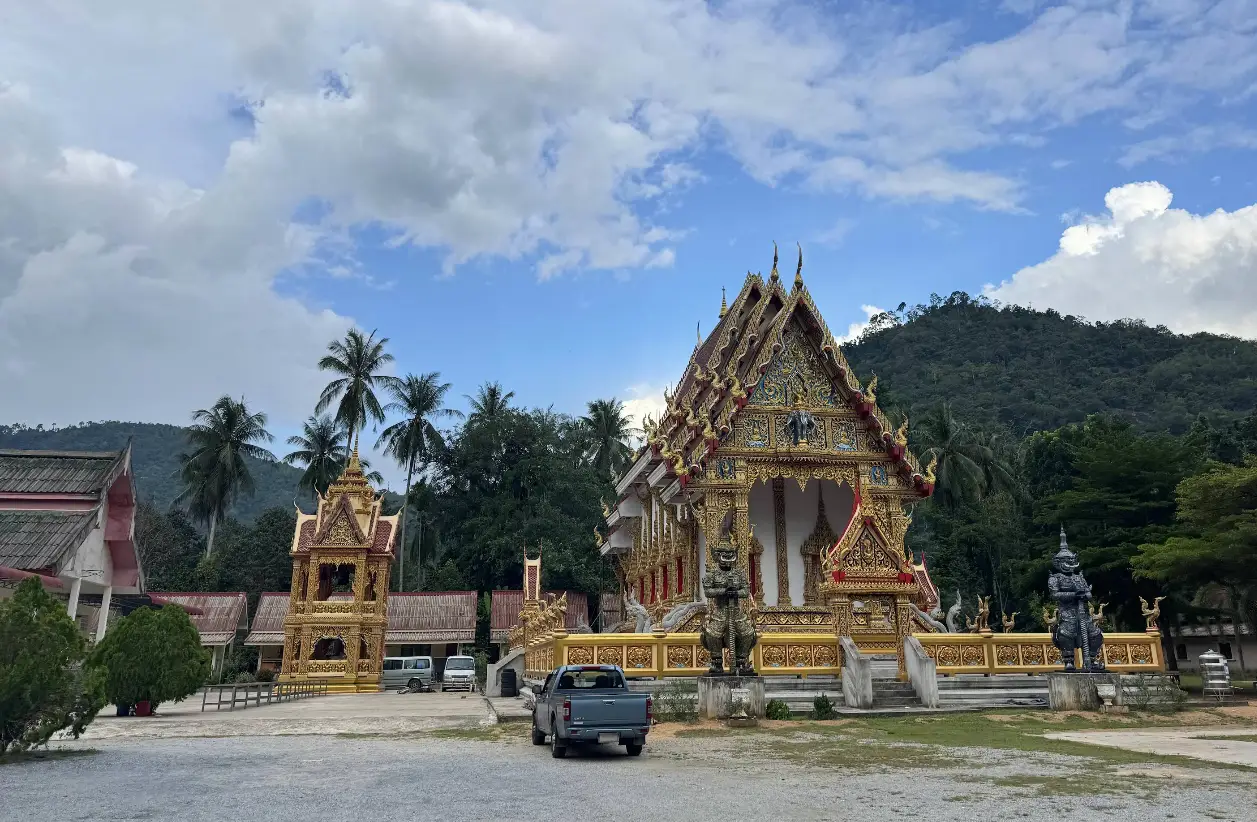
Open Days: Daily
Opening Hours: 08:00 – 17:00
Wat Wongkot Banphot, also known as Wat Ta Chi, in Yala Province is a private Buddhist temple under the Mahanikaya order. It is located at No. 13, Ban Nok, Village No. 2, Ta Chi Subdistrict, Yaha District, Yala Province. The temple is an important spiritual center for the Buddhist community of Ta Chi and nearby areas. It was established in 1921 and received its royal grant of Wisungkham Sima on 17 April 1928. Local people commonly call it Wat Ta Chi because the temple is closely tied to Ta Chi Subdistrict and village life. The temple is also remembered for sacred objects and revered monk statues, especially the local memory of Luang Pu Chao Saeng, a monk associated with compassion, community support, and traditional herbal knowledge.
The importance of Wat Wongkot Banphot does not come from large-scale tourism or monumental architecture. Its value lies in being a living community temple. The temple stands within Ta Chi Subdistrict, an area shaped by hills, lowland areas, waterways, agriculture, and local village life in Yaha District. The temple site is on flat land, with a village road in front and Ban Nok community around it. This makes the temple a real community space used for religious ceremonies, merit-making, public meetings, and activities involving monks, residents, and government agencies.
The name Wat Wongkot Banphot reflects the natural and cultural landscape of the area. Banphot means mountain, while wongkot suggests a winding or complex path. Together, the name evokes a temple rooted in a rural community near hills and natural terrain. The local name Wat Ta Chi is equally important because it reflects how local residents identify the temple in daily life. Using both names helps visitors understand that this single temple has a formal Buddhist name and a familiar community name.
Temple records state that Wat Wongkot Banphot was founded in 1921 at Ban Nok, Village No. 2, Ta Chi Subdistrict, Yaha District, Yala Province. The temple land covers 12 rai, 3 ngan, and 55 square wah. Its northern boundary meets the village road, the southern boundary meets a drainage canal, the eastern boundary meets the Ban Nok area with the temple ditch as a boundary, and the western boundary meets local private land. These details show that the temple has long stood within a real village environment, connected with houses, water channels, and local routes.
The royal grant of Wisungkham Sima on 17 April 1928 is a major milestone in the temple’s history. A Sima boundary is the sacred area needed for formal monastic acts, including important ceremonies performed according to Buddhist discipline. Wat Wongkot Banphot’s Sima boundary measures 80 meters wide and 120 meters long. This confirms the temple’s formal Buddhist status and shows that the Buddhist community in Ta Chi had developed a stable religious institution early in the modern period.
The main monastic buildings mentioned in temple records include the ordination hall, sermon hall, dining hall, kitchen, monks’ residences, guest-reception area, and alms-bowl hall. The ordination hall measures 11 meters wide and 12 meters long and was built with a wooden structure. The sermon hall measures 10.70 meters wide and 11.20 meters long and was also built with a wooden structure. These buildings reflect a traditional community temple built through local faith and practical use rather than commercial display.
The sermon hall is one of the most important areas of Wat Wongkot Banphot. It supports Dharma listening, temple meetings, merit-making, ceremonies, and community activities. In 2026, Yala Provincial Office of Buddhism held a preparation meeting for the Five Precepts Village project at the temple’s sermon hall. This shows that the temple remains a living religious and community coordination space in present-day Yala.
The current abbot of Wat Wongkot Banphot is Phra Khru Banphot Thammarat. He appears in recent 2026 reports from Yala Provincial Office of Buddhism in connection with the Five Precepts Village project. His role confirms that the temple is under active monastic care and remains a functioning Buddhist site used by monks, local leaders, committees, government agencies, and community members.
Historical abbot records include Phra Khru Sunthon Khunathan, who served from the early period of the temple in 1921, followed by Phra Khit Siriwanno, Phra Thongkaeo Chandasiri, Phra Palat Sing Tejawaro, and Phra Khru Sophit Thammakhun, also known as Thian Chammiko. These names show the continuity of monastic leadership at Wat Wongkot Banphot across generations.
Temple records mention Luang Pho Ta Chi as an important sacred object connected with the local name of the temple. The information provided for this article also notes a statue of Luang Pu Chao Saeng inside the temple. Local memory describes him as a compassionate monk who helped villagers through traditional herbal knowledge. This story should be understood as community memory and local faith rather than a medical claim. Its value lies in showing how monks, temples, herbal knowledge, and village trust were connected in earlier rural society.
The story of Luang Pu Chao Saeng gives Wat Wongkot Banphot deeper human significance. Local people remember him not only as a monk but as a figure of compassion and support. In many rural Thai communities, temples and monks were sources of religious guidance, emotional refuge, and local knowledge. A monk with herbal knowledge could play an important role in helping people before modern services were easily accessible. The temple therefore preserves not only physical objects but also the memory of care, trust, and community dependence.
Wat Wongkot Banphot is also listed as Yala Provincial Meditation Practice Center No. 6. This gives the temple a role beyond annual ceremonies. As a meditation-practice center, the temple functions as a place for mental cultivation, Dharma practice, and Buddhist training. This role is especially meaningful for a community temple because it allows the temple to serve both everyday merit-making and deeper spiritual practice.
The temple’s current activity is confirmed by several public reports from 2025 and 2026. These include a New Year chanting ceremony for 2026, a Five Precepts Village project meeting, a ceremony to cast a principal Buddha image for the ordination hall, an annual Mahachat sermon, and other public religious and community activities. These events show that Wat Wongkot Banphot is not only a name in temple records. It remains active as a place of worship, community gathering, and Buddhist cultural continuity.
One major 2026 activity was the casting ceremony for a 60-inch lap-width Buddha image in the Mara-subduing posture, along with two 30-inch attendant disciple images of Phra Sariputta and Phra Maha Moggallana and eight additional disciple images. The ceremony brought together monks, government officials, Buddhists, and local residents to make merit and support the creation of sacred objects for the temple. This reflects the continuing strength of Buddhist faith in the Ta Chi community.
The Mahachat sermon held with the Buddha-image casting ceremony is also significant. The Mahachat, or Vessantara Jataka, teaches generosity, sacrifice, patience, and spiritual perfection. When a community temple organizes a Mahachat sermon, local people gather to listen to Dharma, make merit, and pass Buddhist values to younger generations. At Wat Wongkot Banphot, this tradition strengthens the temple’s role as a place where Buddhist teachings remain part of community life.
The Five Precepts Village project also matches the role of Wat Wongkot Banphot in Ta Chi. The Five Precepts form the basic ethical foundation for peaceful community life: avoiding killing, stealing, sexual misconduct, false speech, and intoxicants that lead to heedlessness. When the temple serves as the meeting place for a project based on these principles, it becomes a center for moral development, community cooperation, and peaceful coexistence.
Wat Wongkot Banphot is connected with Ta Chi Subdistrict’s Buddhist Lent candle procession. In this activity, government agencies, local residents, youth, dancers, drum groups, and community members carry candles through the subdistrict before arriving at the temple to offer them to monks. The tradition helps link younger generations with Buddhism and gives the community a visible way to support monks during the Buddhist Lent period.
Offering Buddhist Lent candles symbolizes support for monks who stay in one temple during the rainy-season retreat to study and practice. Even though electricity is now widely available, candles continue to represent the light of wisdom, faith, and community support for Buddhism. For this reason, Wat Wongkot Banphot becomes an important community destination during Buddhist Lent.
After Buddhist Lent, Wat Wongkot Banphot has also appeared in connection with Yala’s Chak Phra procession. Chak Phra, or the southern Buddhist Buddha-image procession, commemorates the Buddha’s return from Tavatimsa Heaven. A Buddha image is placed on a decorated ceremonial structure or Buddha boat and pulled through the community so that people can make merit. This tradition connects village temples with the wider Buddhist network of Yala city and province.
The temple also serves wider community functions. Government agencies have used Wat Wongkot Banphot as a site for mobile public-service activities, including district outreach and fisheries-related knowledge services for residents. This shows that the temple functions not only as a sacred place, but also as a trusted public meeting point for villagers and local agencies.
Ta Chi Subdistrict is part of Yaha District, an area generally characterized by hills, forests, limited lowland areas, and important waterways including Khlong Ta Chi. This landscape shapes community life, agriculture, travel, and local identity. The temple’s name and setting are therefore closely tied to the natural environment of Yaha, where hills and waterways are part of everyday life.
Ta Chi is also known for distinctive local life connected with agriculture and rural transport. The community has been associated with the use of jeeps for farm work and transport because parts of the area are surrounded by hills and local roads require suitable vehicles. This context helps visitors see Ta Chi as more than a temple location. It is a living rural community with agriculture, movement, adaptation, and local identity.
For visitors, Wat Wongkot Banphot is best visited as a quiet community temple. A typical visit may take 30 minutes to 1 hour. Visitors can pay respect, observe the temple grounds, learn about Luang Pu Chao Saeng, and understand the Buddhist life of Ta Chi community. Daytime travel is recommended because local roads and village entrances are easier to recognize. Those interested in local culture should connect the visit with Buddhist Lent, Chak Phra, meditation practice, and the rural identity of Ta Chi.
Visitors should dress modestly, keep their voices low, avoid entering monks’ residences or private areas without permission, avoid touching sacred objects inappropriately, and take photographs respectfully, especially during ceremonies or when local people are making merit. Wat Wongkot Banphot is an active temple used by the community, so it should be approached first as a sacred space and only second as a visitor destination.
Getting There from Yala city is straightforward by private car or motorcycle. Travel from central Yala toward Yaha District, which is about 21 kilometers from Yala city, then continue to Ta Chi Subdistrict and Ban Nok, Village No. 2. The destination is Wat Wongkot Banphot, or Wat Ta Chi. Travelers using public transport should first reach Yala city or Yaha town, then continue by hired vehicle or local transport to Ta Chi Subdistrict.
A useful cultural route can begin in Yala city, continue to Wat Wongkot Banphot in the morning, then visit Wat Yaha Pracharam or the Moon Observation Pavilion in Yaha. Travelers can return toward Yala city to visit Wat Khuha Phimuk, Yala City Pillar Shrine, Suan Khwan Mueang, or Yala Learning Park. This route connects a village temple, local community identity, major Buddhist heritage, and city attractions in one day.
Dining options near Wat Wongkot Banphot are available mainly in Yaha town and Yala city. Ta Chi itself is a community area with fewer restaurant choices than central Yala. Travelers should plan meals ahead. Cafés, halal restaurants, drink shops, and local eateries can be found in Yaha, while central Yala offers more options for families and larger groups.
Accommodation is best found in Mueang Yala District because hotel choices are more available and transport is easier. Staying in Yala city allows visitors to make a day trip to Wat Wongkot Banphot while also visiting Wat Khuha Phimuk, Yala City Pillar Shrine, Suan Khwan Mueang, and other attractions. It also provides better access to restaurants, Yala Railway Station, shops, and services.
For families, Wat Wongkot Banphot can be an educational stop where children learn about community temples, sermon halls, ordination halls, monks’ residences, Buddhist Lent candles, merit-making, meditation practice, and the Chak Phra tradition of southern Thailand. Learning in a real temple setting helps younger visitors understand that Buddhism is part of community life, not only a subject in books.
Culturally, Wat Wongkot Banphot represents the Buddhist community of Yaha District within Thailand’s southern border region. The temple preserves Buddhist practice, community memory, compassion-based stories of monks such as Luang Pu Chao Saeng, and cooperation between monks, residents, and public agencies. It should be presented with emphasis on calmness, respect, continuity, and community value rather than as a commercial tourist attraction.
From a conservation perspective, Wat Wongkot Banphot should be regarded as living local heritage. Preserving the temple means caring for its buildings, history, local name Wat Ta Chi, the memory of Luang Pu Chao Saeng, Buddhist Lent traditions, Chak Phra, meditation practice, and community participation. As long as local people continue to make merit, join ceremonies, and use the temple as a shared spiritual space, Wat Wongkot Banphot remains meaningful in the present.
In summary, Wat Wongkot Banphot, or Wat Ta Chi, in Yala Province is an important community temple at Ban Nok, Village No. 2, Ta Chi Subdistrict, Yaha District. Founded in 1921 and granted Wisungkham Sima in 1928, it is a Mahanikaya temple with traditional monastic buildings, sacred objects, a meditation-practice role, and continuing Buddhist activities. It is connected with Luang Pu Chao Saeng, Buddhist Lent candle offerings, Chak Phra, Mahachat sermons, Buddha-image casting, and the Five Precepts Village project. Visitors who want to understand Yala beyond major landmarks should see this temple as a doorway into Ta Chi community, Buddhist faith, and rural life in Yaha District.
| Name | Wat Wongkot Banphot, Or Wat Ta Chi |
| Location | Ban Nok, Village No. 2, Ta Chi Subdistrict, Yaha District, Yala Province |
| Address | No. 13, Ban Nok, Village No. 2, Ta Chi Subdistrict, Yaha District, Yala Province 95120, Thailand |
| Place Type | Private Buddhist Temple Under The Mahanikaya Order |
| Local Name | Wat Ta Chi |
| Highlights | An old community temple of Ta Chi Subdistrict, associated with Luang Pu Chao Saeng, Luang Pho Ta Chi, Buddhist Lent activities, meditation practice, and community Buddhist ceremonies. |
| History / Period | Established in 1921 and granted Wisungkham Sima on 17 April 1928. |
| Temple Land | 12 rai, 3 ngan, and 55 square wah. |
| Sima Boundary | 80 meters wide and 120 meters long. |
| Current Abbot | Phra Khru Banphot Thammarat |
| Earlier Abbots In Temple Records | Phra Khru Sunthon Khunathan, Phra Khit Siriwanno, Phra Thongkaeo Chandasiri, Phra Palat Sing Tejawaro, and Phra Khru Sophit Thammakhun. |
| Sacred Objects / Key Features | Luang Pho Ta Chi, the statue of Luang Pu Chao Saeng, and the Mara-subduing principal Buddha image cast in the 2026 ceremony. |
| Main Areas / Zones | Ordination hall, sermon hall, dining hall, kitchen, monks’ residences, guest-reception area, alms-bowl hall, temple courtyard, and community activity areas. |
| Important Structures | Ordination hall measuring 11 meters by 12 meters, sermon hall measuring 10.70 meters by 11.20 meters, and several monks’ residences. |
| Meditation Role | Yala Provincial Meditation Practice Center No. 6. |
| Traditions / Regular Activities | Buddhist holy days, almsgiving, Dharma listening, meditation practice, Buddhist Lent candle procession, Buddhist Lent, the end of Buddhist Lent, Chak Phra, Mahachat sermons, Kathin, and the Five Precepts Village project. |
| Facilities | Worship area, sermon hall, temple courtyard, ceremonial spaces, guest-reception area, kitchen, and parking within or near the temple grounds. |
| Open Days | Daily |
| Opening Hours | 08:00 – 17:00 |
| Travel Information | From Yala city, travel toward Yaha District, then continue to Ta Chi Subdistrict and Ban Nok, Village No. 2. Public-transport travelers should reach Yala city or Yaha town first and continue by local transport or hired vehicle. |
| Current Status | Still active as a Buddhist temple with monastic care, Buddhist ceremonies, community activities, and cooperation with public agencies. |
| Nearby Tourist Attractions | 1. Fai Ban Ta Chi About 2 km 2. Fai Kaeng Nang Ram About 3 km 3. Wat Yaha Pracharam About 8 km 4. Moon Observation Pavilion, Yaha Subdistrict About 9 km 5. Wat Khuha Phimuk About 20 km 6. Yala City Pillar Shrine About 23 km 7. Suan Khwan Mueang Yala About 24 km |
| Nearby Restaurants | 1. MR.SOO YAHA About 8 km, Tel. 091-459-0218 2. IRIS YAHA About 8 km, Tel. 091-459-0218 3. Dillis Cafe, Yaha District About 8 km, Tel. 084-633-2463 4. Ban Coffee House, Yaha District About 8 km, Tel. 090-480-0819 5. Lamoon Lin About 9 km, Tel. 089-543-3300 6. Bae Ma Ka Yah, Yaha District About 10 km, Tel. 084-748-6525 |
| Nearby Accommodations | 1. 999 Yala Hotel About 22 km, Tel. 073-222-630, 099-616-1876 2. Nibong Resort About 23 km, Tel. 073-224-341, 099-312-5548 3. @INN YRU About 23 km, Tel. 062-182-2662 4. Park View Yala Hotel About 24 km, Tel. 073-217-002 5. Yala Rama Hotel About 24 km, Tel. 073-212-841 6. Yala Grand Palace Hotel About 24 km |
Frequently Asked Questions (FAQ)
Q: Where is Wat Wongkot Banphot in Yala Province located?
A: Wat Wongkot Banphot is located at No. 13, Ban Nok, Village No. 2, Ta Chi Subdistrict, Yaha District, Yala Province 95120.
Q: Does Wat Wongkot Banphot have another local name?
A: Yes. Local people commonly know it as Wat Ta Chi because it is closely connected with Ta Chi Subdistrict.
Q: Why is Wat Wongkot Banphot important?
A: Wat Wongkot Banphot is a Mahanikaya community temple established in 1921. It is a spiritual center for Buddhists in Ta Chi and continues to host Buddhist ceremonies and community activities.
Q: How is Luang Pu Chao Saeng connected with Wat Wongkot Banphot?
A: The temple houses a statue of Luang Pu Chao Saeng, remembered locally as a compassionate monk associated with traditional herbal knowledge and community support.
Q: Who is the current abbot of Wat Wongkot Banphot?
A: The current abbot is Phra Khru Banphot Thammarat.
Q: What are the opening hours of Wat Wongkot Banphot?
A: Wat Wongkot Banphot is open daily from 08:00 to 17:00.
Q: What traditions is Wat Wongkot Banphot connected with?
A: The temple is connected with Buddhist holy days, meditation practice, Buddhist Lent candle offerings, Chak Phra, Mahachat sermons, Kathin, and the Five Precepts Village project.
Q: What places can visitors see near Wat Wongkot Banphot?
A: Nearby places include Fai Ban Ta Chi, Fai Kaeng Nang Ram, Wat Yaha Pracharam, the Moon Observation Pavilion, Wat Khuha Phimuk, Yala City Pillar Shrine, and Suan Khwan Mueang Yala.
 Category: ●Places of Worship
 Group: ●Temple
Last Update : 2 WeekAgo
 Last Update : 2 WeekAgo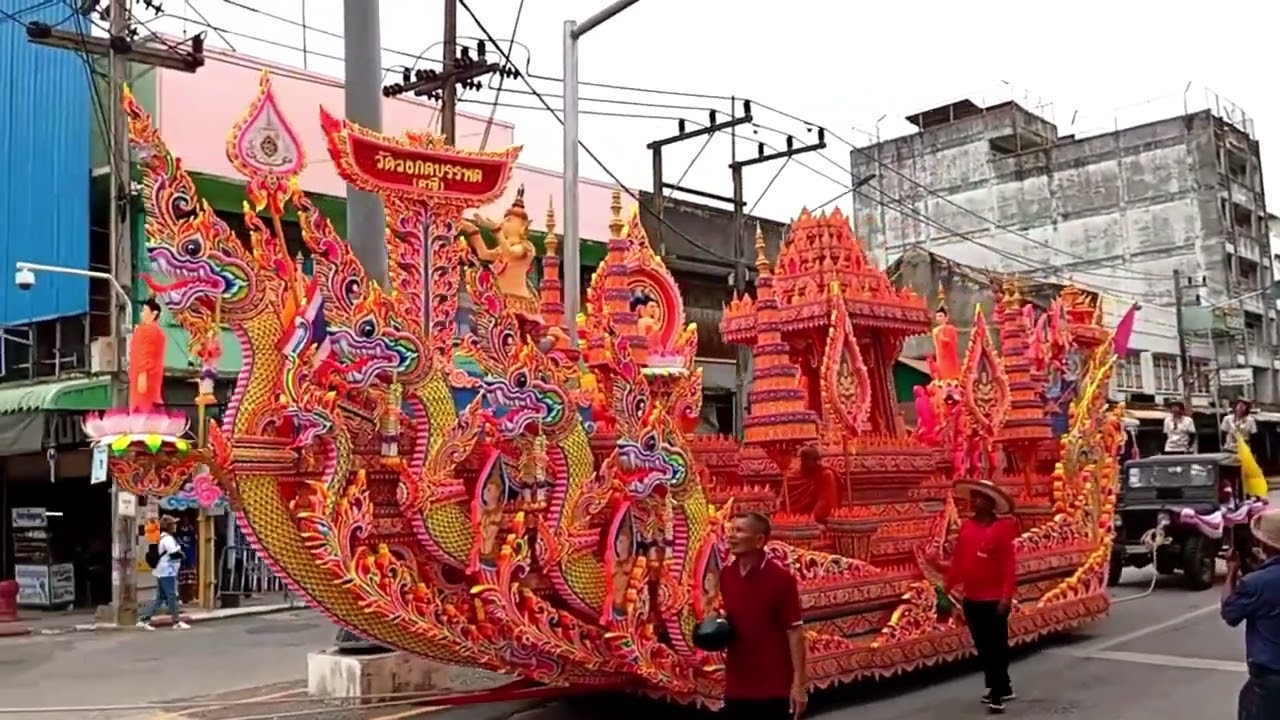
 Click to Access the Navigation Map GPS
Wat Wongkot Banphot Map

 Art, Culture and Heritage
 Landmarks and Memorials(1)
 Art, Craft Centres, Tradition(2)
 Museums(2)
 Educational Places
 Educational Gardens, Farm(1)
Temple(6)
Educational Gardens, Farm(1)
Temple(6)
 Mosque(2)
 Other Sacred Sites(3)
 Suburban Living
 Village, Community(4)
 Nature and Wildlife
 National Parks and Marine Reserves(2)
 Mountain (Doi)(5)
 Dam, Reservoir, Lake(5)
 Waterfalls(13)
 Hot Springs(2)
 Caves(7)
 River, Canal(4)
 Islands(1)
 Other natural attractions(8)
 Entertainment and Agricultural
 Stadium(1)
 Farms, Parks and Ecotourism(4)
 Outdoor and Adventure Activities(1)
 Travel Articles, Recipes
 Travel Review, Food Review(2)


