
lovethailand home >South Travel Attractions >Yala Travel Attractions >Be Tong >Ai Yoe Weng > Pak Khlong Hala
TL;DR: Pak Khlong Hala is located at Hala forest area, Aiyerweng Subdistrict, Betong District, Yala Province, Thailand, open A natural conservation area; visitors should coordinate with local authorities, hours Daytime visits only are recommended.

Pak Khlong Hala
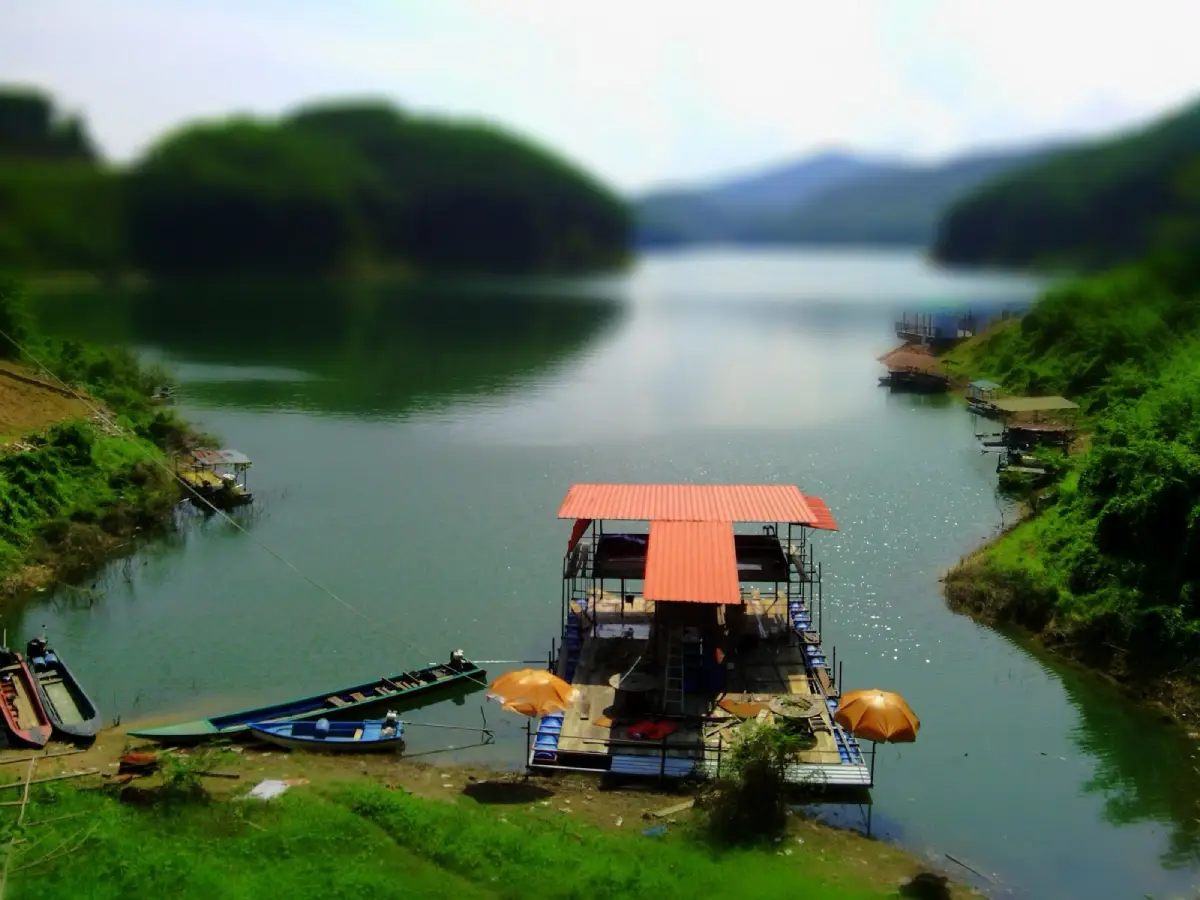
Open Days: A natural conservation area; visitors should coordinate with local authorities or relevant officers before traveling
Opening Hours: Daytime visits only are recommended
Pak Khlong Hala in Yala Province is a conservation-oriented natural area in Aiyerweng Subdistrict, Betong District, Yala Province. It is connected with the wider Hala forest landscape, Bang Lang National Park, Hala-Bala Wildlife Sanctuary, and local administrative areas in Aiyerweng. The area is known for dense tropical rainforest, headwater streams, mountainous terrain, rich biodiversity, rare wildlife, hornbills, distinctive forest plants, and indigenous communities historically connected with the Hala forest. Pak Khlong Hala should not be treated as a casual walk-in attraction. It is best understood as a sensitive headwater forest and ecological learning area that requires careful planning, local coordination, and responsible travel behavior.
The importance of Pak Khlong Hala begins with its position in the Hala side of the Hala-Bala forest complex. Hala forest lies mainly in Yala, while Bala forest lies mainly in Narathiwat. Although the two forest blocks are not fully continuous, they are protected under the same wildlife-sanctuary framework and form one of the most important tropical rainforest landscapes in Thailand’s lower south. This type of forest plays a critical role in water systems, plant diversity, wildlife habitat, and the ecological stability of the southern border region.
The name Pak Khlong Hala refers to an area associated with Khlong Hala and the forested headwater landscape. The name Hala is also connected with the history of Aiyerweng. The area was formerly known as Hala before local communities were relocated to lower ground along the Pattani River and the name Aiyerweng came into use. This background makes Pak Khlong Hala more than a remote natural point. It is part of the geographic and historical memory of communities that have long been connected with the Hala forest.
The landscape around Pak Khlong Hala is mountainous, humid, and stream-based. The broader Hala-Bala forest is recognized as a headwater area for several important rivers and streams, including the Pattani River, Sai Buri River, Su-ngai Kolok River, Khlong To Mo, Khlong Hala, and Khlong Ban Chet. For this reason, Pak Khlong Hala is not only scenic. Its streams and forest cover help sustain downstream ecosystems, communities, water resources, and landscapes across Yala and nearby provinces.
The strength of Pak Khlong Hala is the integrity of its rainforest setting. The area contains tall forest, layered canopies, moist stream corridors, and habitats used by many forms of wildlife. This makes it more suitable for ecological learning than for loud recreational activity. Visitors should approach the area as an outdoor forest classroom, not as an open recreational space. The value of the site lies in the fact that nature remains largely intact and should remain minimally disturbed.
Wildlife is a major part of the identity of the Hala-Bala forest. Public sources mention rare and protected species in this landscape, including gaur, elephants, tapirs, serows, Sumatran rhinoceros in historical records, marbled cats, siamangs, agile gibbons, wild boar, giant river frogs, and several species of hornbills. The presence of such wildlife reflects the quality of the habitat, but it also means that entry into the forest must be controlled and respectful. Visitors should not expect close wildlife encounters. The best form of wildlife appreciation is to protect the habitat and avoid disturbing animals.
Hornbills are one of the strongest symbols of Hala-Bala forest. They depend on large trees and suitable nesting cavities, so their presence indicates a healthy mature forest. Trees such as saya and other large rainforest species help support the wider hornbill habitat. Anyone studying nature around Pak Khlong Hala should move quietly, listen carefully, and avoid noise. Loud behavior can disturb birds and wildlife and reduces the quality of the ecological experience.
Plant diversity is another important feature of the Hala-Bala landscape. Sources mention rare or distinctive species such as yuan trees, saya trees, hua roi ru nam plants, and many tropical rainforest plants. These plants are not only visually interesting; they support wildlife, insects, birds, and the water system. Visitors should not cut, collect, uproot, or damage plants. Even small plants and fallen materials can be part of the forest’s ecological cycle.
Pak Khlong Hala is also associated with indigenous communities often referred to in Thai sources as Sakai, and in other contexts as Orang Asli or Asri. These communities have long-standing relationships with the forest. Any visit or discussion involving indigenous people should be handled with respect. Visitors should not photograph people closely without permission, enter living areas uninvited, or treat local ways of life as a spectacle. Indigenous communities should be recognized as holders of forest knowledge and part of the cultural landscape, not as tourist objects.
Travel to Pak Khlong Hala is therefore clearly conservation-oriented. It is suitable for people who want to learn about rainforest ecology, headwater streams, wildlife, plants, and the relationship between people and forest. It is not suitable for travelers expecting a fully equipped tourist facility. Some protected areas may have restricted access, and certain activities require advance coordination with officers or local guides, especially where wildlife sanctuary and headwater protection conditions apply.
Visitors who want to reach Pak Khlong Hala should coordinate with Aiyerweng Subdistrict Administrative Organization, Bang Lang National Park, Hala-Bala Wildlife Sanctuary, or other relevant conservation authorities before traveling. Advance contact helps confirm the route, seasonal conditions, water levels, weather, safety restrictions, and access rules. This is not only for convenience. In sensitive forest areas, coordination protects both visitors and the ecosystem.
For the Hala-Bala forest landscape in general, the period from late February to September is often described as suitable for nature study because rainfall is not excessive. However, Pak Khlong Hala is a specific headwater forest location, so visitors should not rely only on general seasonal information. Current weather, water conditions, and access advice should be checked before every trip.
Getting There generally starts from Betong town or Aiyerweng Subdistrict. Travelers use Highway 410, the main Yala–Betong road, passing Aiyerweng and nearby attractions such as Aiyerweng Skywalk, Hala-Bala Lake, and the route toward Chulabhorn Pattana 10 Village. From there, any smaller access route should be confirmed with local people or relevant officers. Visitors should not drive or walk into forest areas based only on a map, because Pak Khlong Hala is a protected natural area rather than a standard signposted tourist attraction.
A practical itinerary is to combine Pak Khlong Hala with other Aiyerweng and Betong nature sites. Aiyerweng Skywalk provides a panoramic view of the Hala-Bala forest landscape from above. Hala-Bala Lake and Bang Lang Reservoir show the relationship between forested mountains and large bodies of water. Chulabhorn Pattana 10 Village adds community and historical context. Pak Khlong Hala can then be understood as the deeper conservation layer of the same landscape.
Aiyerweng Skywalk is one of the best nearby places for general visitors to understand the wider Hala-Bala setting. It sits on a mountain viewpoint in Aiyerweng and offers views of mist, forest, hills, and valleys. Unlike Pak Khlong Hala, the skywalk has developed visitor facilities and is suitable for a broader range of travelers. It is a good starting point for understanding why deeper forest areas must be handled with greater caution.
Hala-Bala Lake and Bang Lang Reservoir are also useful companion sites. They show how headwater forests, mountain streams, reservoirs, local communities, and tourism are connected. Boat trips, lake viewpoints, and the Ban Kho Yae Bridge area help visitors see the wider relationship between water and forest in southern Yala. This context makes the conservation importance of Pak Khlong Hala easier to understand.
Chulabhorn Pattana 10 Village adds a historical and community layer to the trip. The village is associated with former members of the Communist Party of Malaya, Thai National Development participants, local history, forest products, giant trees, medicinal plants, and community museum displays. It helps visitors understand that the Hala landscape includes not only ecology but also settlement, conflict, relocation, adaptation, and community memory.
Preparation for Pak Khlong Hala should be more serious than preparation for an ordinary viewpoint. Recommended items include proper walking shoes, clothes suitable for humid forest conditions, rain protection, drinking water, light food, a personal trash bag, essential medicine, a flashlight, a power bank, and insect protection. Visitors should avoid sandals, loud audio devices, and strong-smelling food that may attract wildlife.
Important conduct rules include leaving no waste, not feeding wildlife, not chasing animals for photographs, not catching animals or insects, not collecting forest plants, not cutting branches, not making excessive noise, not leaving recommended routes, and not entering restricted areas. The value of conservation travel is not measured by how far a person goes into the forest. It is measured by whether the visitor leaves without damaging the place.
Safety is a major issue because Pak Khlong Hala is a mountainous forest and stream environment. Risks include rain, flash floods, slippery ground, wildlife, insects, poor mobile signal, and route confusion. Visitors should travel in a group, use local guidance, tell others about the travel plan, and avoid entering the area during heavy rain or after continuous rainfall. Entering forest areas in the evening or at night is not recommended.
References to wildlife such as tigers, gaur, elephants, hornbills, and other protected species should be understood as evidence of habitat value, not as a reason to search for or approach animals. A good visit does not require seeing wildlife at close range. The more important goal is to understand that a healthy forest allows wildlife to live safely, with humans entering only in a limited, regulated, and respectful way.
Pak Khlong Hala is best suited to specific groups: nature learners, birdwatchers, forest researchers, students, conservation travelers, and visitors who want to understand Aiyerweng beyond mainstream viewpoints. It is not suitable for an unplanned solo trip or a casual walk without information. Access conditions, local guidance, and protected-area rules matter more than photo opportunities.
Compared with better-known Betong attractions, Pak Khlong Hala plays a different role. Aiyerweng Skywalk is a developed viewpoint, Piyamit Tunnel is a structured historical attraction, Betong Hot Spring and Inthason Waterfall are familiar recreation stops, while Pak Khlong Hala is a sensitive forest and headwater area. Its value lies precisely in its ecological integrity and the discipline required to visit it responsibly.
For photography, the area is best approached through forest and landscape images: stream corridors, forest layers, filtered light, large trees, water channels, and the humid atmosphere of tropical rainforest. Visitors should not disturb wildlife, should not use drones without permission, and should not photograph indigenous or local people without consent. In conservation areas, safe and respectful photography is more important than dramatic images.
Pak Khlong Hala also explains what conservation tourism should mean. It is not about bringing large numbers of visitors into fragile spaces. It is about creating meaningful, low-impact learning that helps people recognize the value of forests, water, wildlife, and local communities. The best form of tourism here is careful, limited, respectful, and guided by people who understand the place.
To understand Pak Khlong Hala deeply, it should be viewed together with the history of Aiyerweng. The former Hala community, relocation to the Pattani River lowland, and the later development of Aiyerweng as a tourism subdistrict all show how people and forest have shaped each other over time. A visit to this landscape can therefore reveal ecology, community history, and the importance of protecting southern border forests at the same time.
In summary, Pak Khlong Hala is a conservation-focused natural area in Aiyerweng and part of the wider Hala-Bala forest landscape. Its value comes from tropical rainforest, headwater streams, rare wildlife, hornbills, forest plants, and the cultural memory of communities connected with the Hala forest. Visitors should coordinate with relevant authorities before traveling, enter only during daylight, prepare properly, and follow conservation rules strictly. The real value of Pak Khlong Hala is that it remains a rich natural area that should be protected for future generations.
| Name | Pak Khlong Hala / Pak Khlong Hara |
| Location | Hala forest area, Aiyerweng Subdistrict, Betong District, Yala Province, Thailand |
| Address Summary | Within the broader context of Bang Lang National Park, Hala-Bala Wildlife Sanctuary, and Aiyerweng local administrative area, Betong District, Yala Province |
| Highlights | Tropical rainforest, Khlong Hala headwater landscape, forest stream, rare wildlife, hornbills, rainforest plants, and forest-related cultural memory |
| Importance | A conservation-oriented natural area and part of the headwater forest system connected with Hala-Bala forest and major watersheds in Thailand’s lower south |
| Distinctive Features | Humid mountain forest, stream corridors, large trees, wildlife habitat, and a natural landscape that requires careful access |
| Main Areas / Zones | Stream-mouth area, Khlong Hala corridor, headwater forest, tropical rainforest zone, nature-study area, community connections, and Aiyerweng route links |
| Wildlife And Ecology | The Hala-Bala forest landscape is associated with rare wildlife such as gaur, elephants, tapirs, serows, Sumatran rhinoceros in historical records, siamangs, agile gibbons, giant river frogs, and several hornbill species |
| Notable Plants | The Hala-Bala rainforest includes notable plants such as yuan trees, saya trees, hua roi ru nam plants, and many tropical rainforest species |
| Community And Culture | Connected with Hala community history, Aiyerweng Subdistrict, and indigenous communities with long-standing relationships with the forest |
| Travel Information | Travel from Betong or the Yala–Betong route via Highway 410 to Aiyerweng, then coordinate local access with residents or relevant officers before entering any forest route |
| Current Status | A protected natural and nature-study area, not a place visitors should enter independently without prior coordination |
| Recommended Visiting Time | Daytime only; avoid heavy rain and periods after continuous rainfall |
| Recommended Season | Late February to September is generally described as suitable for Hala-Bala nature study, but current local conditions should always be checked before travel |
| Facilities | A natural forest area; visitors should bring personal equipment, drinking water, a flashlight, essential medicine, rain protection, proper walking shoes, and a personal trash bag |
| Caretaker / Related Agencies | Bang Lang National Park, Hala-Bala Wildlife Sanctuary, Aiyerweng Subdistrict Administrative Organization, and relevant conservation agencies |
| Local Administrative Contact | Aiyerweng Subdistrict Administrative Organization, Tel. 073-299539 |
| Hala-Bala Wildlife Sanctuary Contact | Tel. 073-519-0202 |
| Visitor Rules | Coordinate with officers before traveling, do not enter restricted areas, do not litter, do not collect plants, do not disturb wildlife, avoid loud noise, and do not photograph indigenous communities without permission |
| Nearby Tourist Attractions | 1. Chulabhorn Pattana 10 Village, about 20 km 2. Aiyerweng Skywalk, about 30 km, Tel. 073-299539 3. Hala-Bala Lake / Bang Lang Lake, about 30 km 4. La-ong Rung Waterfall, about 35 km 5. Bang Lang National Park, about 40 km 6. Betong Hot Spring, about 45 km 7. Piyamit Tunnel, about 50 km |
| Nearby Restaurants | 1. Aiyerweng Coffee House, about 30 km, Tel. 065-970-1982 2. Lam Tharn Restaurant Piyamit, about 50 km, Tel. 065-037-6748 3. Riverside Restaurant Betong, about 55 km, Tel. 063-112-7163 4. Ta Yern Kitti Betong, about 55 km, Tel. 073-230-461 5. Baiyok Restaurant Betong, about 55 km, Tel. 086-964-4692 6. Halal Cafe’ - Steak House Betong, about 55 km, Tel. 073-234-136 |
| Nearby Accommodations | 1. Ban Bae Ar, near Aiyerweng Sea Of Mist, about 30 km, Tel. 093-691-9583, 087-287-8272, 073-299-729 2. Aiyerweng Land, about 30 km, Tel. 095-350-2595 3. Cool Camping Resort, about 35 km, Tel. 073-373-224 4. Butterfly Hotel Betong, about 55 km, Tel. 073-230-888 5. Garden View Betong Hotel, about 55 km, Tel. 086-488-7190 6. Grand Mandarin Betong Hotel, about 55 km, Tel. 073-235-777 |
Frequently Asked Questions (FAQ)
Q: Where is Pak Khlong Hala located?
A: Pak Khlong Hala is in the Hala forest area of Aiyerweng Subdistrict, Betong District, Yala Province, within the broader context of Bang Lang National Park, Hala-Bala Wildlife Sanctuary, and Aiyerweng local administrative area.
Q: Is Pak Khlong Hala a general walk-in tourist attraction?
A: No. It is a protected natural area, and visitors should not enter independently without coordinating with officers or local people. Route conditions, access rules, and safety information should be checked before every trip.
Q: What is the main highlight of Pak Khlong Hala?
A: Its main highlights are tropical rainforest, Khlong Hala headwater streams, forest waterways, rare wildlife, hornbills, rainforest plants, and the relationship between Aiyerweng communities and the Hala forest.
Q: What wildlife is associated with Pak Khlong Hala?
A: The wider Hala-Bala forest is associated with rare wildlife such as gaur, elephants, tapirs, serows, siamangs, agile gibbons, giant river frogs, and several hornbill species. Visitors should observe nature quietly and avoid disturbing wildlife.
Q: When is the best time to visit Pak Khlong Hala?
A: Daytime is recommended, and visitors should avoid heavy rain or periods after continuous rainfall because mountain forest and stream areas can be slippery and risky.
Q: What should visitors prepare before going to Pak Khlong Hala?
A: Visitors should coordinate with officers or local people, wear proper walking shoes, bring rain protection, drinking water, essential medicine, a flashlight, insect protection, and a personal trash bag.
Q: How is Pak Khlong Hala connected with indigenous communities?
A: The Hala forest landscape is connected with indigenous communities who have long-standing relationships with the forest. Visitors should be respectful, avoid entering living areas without permission, and never photograph people without consent.
Q: What nearby places can be combined with Pak Khlong Hala?
A: Nearby places include Aiyerweng Skywalk, Hala-Bala Lake, Chulabhorn Pattana 10 Village, La-ong Rung Waterfall, Bang Lang National Park, Betong Hot Spring, and Piyamit Tunnel.
 Category: ●Nature and Wildlife
 Group: ●River, Canal
Last Update : 2 WeekAgo
 Last Update : 2 WeekAgo
 Click to Access the Navigation Map GPS
 Art, Culture and Heritage
 Landmarks and Memorials(1)
 Art, Craft Centres, Tradition(2)
 Museums(2)
 Educational Places
 Educational Gardens, Farm(1)
 Places of Worship
 Temple(6)
 Mosque(2)
 Other Sacred Sites(3)
 Suburban Living
 Village, Community(4)
 National Parks and Marine Reserves(2)
 Mountain (Doi)(5)
 Dam, Reservoir, Lake(5)
 Waterfalls(13)
 Hot Springs(2)
 Caves(7)
River, Canal(4)
Caves(7)
River, Canal(4)
 Islands(1)
 Other natural attractions(8)
 Entertainment and Agricultural
 Stadium(1)
 Farms, Parks and Ecotourism(4)
 Outdoor and Adventure Activities(1)
 Travel Articles, Recipes
 Travel Review, Food Review(2)


