
lovethailand home >South Travel Attractions >Yala Travel Attractions >Krong Pi Nang >Huai Krathing > Batu Kho Cave
TL;DR: Batu Kho Cave is located at Moo 4, Ban Khuan Langa, Huai Krathing Subdistrict, Krong Pinang District, Yala Province 95000, Thailand, open Open as a community nature attraction; visitors should contact Huai Krathing, hours Daytime visits are recommended.

Batu Kho Cave
Open Days: Open as a community nature attraction; visitors should contact Huai Krathing Subdistrict Administrative Organization or local leaders before visiting
Opening Hours: Daytime visits are recommended
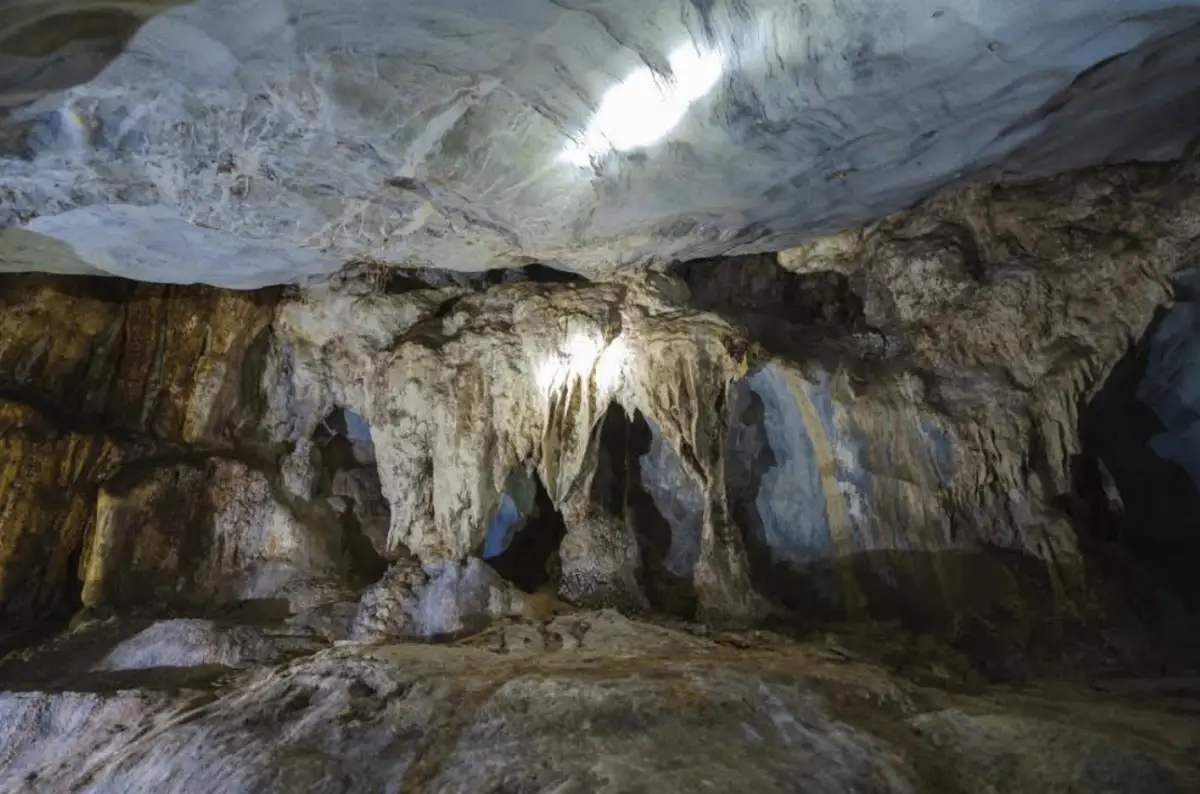
Batu Kho Cave in Yala Province is a natural cave attraction and local historical learning site in Huai Krathing Subdistrict, Krong Pinang District, Yala Province. Located at Moo 4, Ban Khuan Langa, the cave is a limestone formation with stalagmites, stalactites, a stream flowing inside, blind cave fish locally known as Phaya Kong, and rare plants growing around the cave area. Batu Kho Cave is therefore valuable not only as a scenic cave but also as a site connected with cave ecology, local memory, conservation, and community-based tourism.
The main appeal of Batu Kho Cave is its natural limestone environment. The cave retains a quiet and relatively undeveloped atmosphere, unlike highly commercial cave attractions. Inside, flowing water creates humidity and supports a special cave ecosystem. Visitors can observe limestone formations, damp cave surfaces, shaded rock areas, and the stream environment that makes this cave distinct from dry cave chambers. The visit is best approached as an ecological learning experience rather than only a photo stop.
In local memory, Batu Kho Cave was once associated with members of the PULO movement. Later, youth leaders from Huai Krathing Subdistrict explored the cave and helped promote it as a community attraction. This transformation is one of the most important parts of the cave’s identity. The site has moved from being linked with a difficult period in local history toward becoming a place for nature learning, conservation, public activities, and community pride.
Krong Pinang District is a mountainous and agricultural area of Yala. Huai Krathing Subdistrict, where Batu Kho Cave is located, is closely connected with limestone hills, forested landscapes, and rural communities. Many residents work in agriculture, including rubber plantations and fruit orchards, while local crafts such as kopiah hats, woven products, and community goods remain part of the district’s identity. A visit to Batu Kho Cave can therefore be connected with the wider landscape and everyday life of Krong Pinang.
Batu Kho Cave is also known in local cultural writing as a cave mosque, reflecting the relationship between the cave landscape and the Muslim community of Krong Pinang. The district has a strong Malay Muslim cultural character, and the cave is part of the local cultural landscape rather than an isolated natural feature. This makes the site meaningful for visitors who want to understand Yala through both nature and community identity.
The cave is formed in limestone. Stalactites and stalagmites developed slowly as mineral-rich water moved through rock layers over long periods. Some formations hang from the ceiling, some rise from the cave floor, and others appear as textured surfaces on cave walls. Visitors should observe these formations carefully without touching or breaking them. Limestone cave features take a very long time to form, and even small damage can permanently affect the cave’s natural appearance.
The stream inside Batu Kho Cave is central to its character. Flowing water changes the atmosphere inside the cave, creating cool, damp conditions and supporting cave life. However, a stream cave also requires caution. During rain or after heavy rainfall, water levels may rise, the floor may become slippery, and some sections may become unsafe. Visitors should not enter deep sections during bad weather and should follow local advice at all times.
The blind cave fish known locally as Phaya Kong is one of the most important ecological features of Batu Kho Cave. Cave-dwelling species often adapt to dark, humid, low-food environments. Their presence shows that the cave’s water system is sensitive and should be protected. Visitors should not catch the fish, feed them, place chemicals in the water, or leave trash in or near the stream. Small careless actions can harm a fragile cave ecosystem.
The rare plants around the cave add another layer of conservation value. Limestone hills often support plants that grow in special conditions, including damp areas, thin soils, rock crevices, and shaded forest edges. Visitors should stay on routes recommended by the community, avoid stepping on plants outside the path, and never remove plants, flowers, rocks, or natural objects from the cave area. Protecting the vegetation around the cave helps protect the cave ecosystem as a whole.
Today, Batu Kho Cave continues to function as a community-based attraction and a public activity area in Krong Pinang District. Activities such as walking, running, tree planting, and environmental promotion have been organized around the cave area to raise awareness of conservation and local tourism. These activities show that Batu Kho Cave is not only a place recorded in older travel descriptions but also a living community space that local agencies and residents continue to use and promote.
A visit to Batu Kho Cave suits travelers who prefer natural places rather than fully developed tourist sites. Visitors should bring a flashlight or headlamp, non-slip shoes, drinking water, comfortable clothing, and a bag for taking personal trash back out. Anyone planning to enter the cave should contact local leaders or the Huai Krathing community in advance, because cave conditions and access routes can change with weather, water levels, and local maintenance.
The best time to visit is during daylight, especially from morning to early afternoon. Daytime travel gives visitors enough time to reach the area, walk around the cave, observe the stream and rock formations, and return safely. Visitors should avoid entering close to dusk because the cave and forested surroundings have limited light. Heavy rain is also a reason to postpone or limit the visit to safe areas only.
Getting There from Yala city is easiest by private car or by a local driver who knows Krong Pinang and Huai Krathing. Travel toward Krong Pinang District, then continue to Huai Krathing Subdistrict and Moo 4, Ban Khuan Langa. Some community access roads may not be obvious to first-time visitors, so travelers should contact local residents or Huai Krathing Subdistrict Administrative Organization before the trip to confirm the best route and the current site condition.
Batu Kho Cave is suitable for nature travelers, students, families with proper supervision, cave enthusiasts, visitors interested in community tourism, and people who want to understand the local history of Yala beyond major city attractions. The site does not focus on luxury or urban convenience. Its value lies in natural cave conditions, flowing water, blind cave fish, rare plants, local stories, and the community effort to present the cave as a conservation attraction.
Families, children, and elderly travelers should assess physical readiness before visiting. Children should not run near the cave entrance or stream, and adults should explain that blind fish, cave plants, stalactites, and stalagmites must be observed respectfully rather than touched, caught, or collected. Batu Kho Cave can be a useful learning site for children when the visit is managed carefully and safely.
Compared with other caves in Yala, Batu Kho Cave has a distinct profile. Tham Silp is known for ancient cave paintings, Tham Kra Chaeng is known for a stream cave and pass-through scenery, and Tham Thalu combines a limestone cave with a shrine and Chinese traditions. Batu Kho Cave stands out for its cave ecology, internal stream, blind cave fish, rare surrounding plants, and the transformation of a site associated with local conflict into a community conservation destination.
Visitors should allow at least 1–2 hours for the site. This gives enough time to reach the community area, confirm access, view the cave entrance, observe limestone formations, see the stream environment, notice the surrounding vegetation, and understand the cave’s local background. Rushing through the site only for photographs misses the cave’s deeper value as a natural and community learning space.
Responsible behavior is essential. Visitors should not litter, make excessive noise, catch cave animals, feed fish, write on cave walls, break rock formations, remove plants or stones, or enter areas not recommended by local people. Respecting these rules helps keep Batu Kho Cave suitable for future visitors and supports the community’s conservation-based tourism efforts.
Batu Kho Cave has several layers of value. The first is its limestone cave landscape with water and rock formations. The second is its ecological value, including blind cave fish and rare plants. The third is local history connected with past conflict and later community exploration. The fourth is its present role as a community attraction and conservation activity area. Seen together, these layers make Batu Kho Cave more than a natural cave; it is a place where landscape, history, ecology, and community development meet.
In summary, Batu Kho Cave is a worthwhile destination in Krong Pinang District, Yala Province. Its key features are limestone formations, a stream inside the cave, blind cave fish known as Phaya Kong, rare plants around the site, and a local history connected with Huai Krathing community efforts. Visitors should go during daylight, coordinate with local people, prepare proper equipment, and explore with care. With responsible travel, Batu Kho Cave can remain a valuable conservation-based attraction and learning site for Yala.
| Name | Batu Kho Cave |
| Location | Moo 4, Ban Khuan Langa, Huai Krathing Subdistrict, Krong Pinang District, Yala Province 95000, Thailand |
| Address | Ban Khuan Langa, Huai Krathing Subdistrict, Krong Pinang District, Yala Province |
| Coordinates | 6.352920, 101.214557 |
| Highlights | Limestone cave with stalagmites, stalactites, an internal stream, blind cave fish locally known as Phaya Kong, and rare plants around the cave |
| History / Importance | Formerly associated with members of the PULO movement; later explored and promoted by youth leaders from Huai Krathing as a community attraction |
| Distinctive Features | A natural limestone cave with damp cave conditions, flowing water, cave formations, and a sensitive cave ecosystem |
| Main Areas / Zones | Cave entrance, limestone chamber, stalagmite and stalactite areas, internal stream, blind-fish habitat, rare-plant area around the cave, and community activity area |
| Travel Information | From Yala city, travel toward Krong Pinang District and continue to Huai Krathing Subdistrict, Moo 4, Ban Khuan Langa. A private car or local driver is recommended, and visitors should contact local people before entering the cave area |
| Current Status | Open as a community conservation attraction and public activity area in Krong Pinang District |
| Recommended Visiting Time | Daytime, especially morning to early afternoon |
| Facilities | Community access area, natural route, and public activity space; visitors should bring a flashlight, non-slip shoes, drinking water, and a personal trash bag |
| Caretaker / Related Agencies | Ban Khuan Langa community, local leaders, and Huai Krathing Subdistrict Administrative Organization |
| Local Administrative Contact | Huai Krathing Subdistrict Administrative Organization, Tel. 073-720551 |
| Nearby Tourist Attractions | 1. Bueng I Po, Huai Krathing, about 8 km 2. Pu Rong Rafting, Krong Pinang District, about 18 km 3. Wat Khuha Phimuk, about 22 km 4. Tham Silp Cave, about 25 km 5. Suan Khwan Mueang Park, about 27 km, Tel. 073-223666 6. Yala City Pillar Shrine, about 27 km, Tel. 073-223666 7. Sanam Chang Phueak Park, about 27 km, Tel. 073-223666 |
| Nearby Restaurants | 1. Makan Makin Shell Gas Station, about 12 km, Tel. 098-889-7544 2. Southern Gold, about 13 km, Tel. 082-101-1159 3. Fauzi Thai-Malay Cooked-to-Order, about 13 km, Tel. 093-650-2279 4. Brew Bread Cafe, about 13 km, Tel. 064-172-1650 5. Kawan Cafe, about 15 km, Tel. 080-870-5732 6. Napeesoh, about 15 km, Tel. 089-467-7330 |
| Nearby Accommodations | 1. @INN YRU Hotel, about 27 km, Tel. 062-182-2662 2. Yala Park View Hotel, about 28 km, Tel. 073-217001-9 3. The Linux Garden Hotel, about 28 km, Tel. 073-299-578 4. Yala Grand Palace Hotel, about 28 km, Tel. 073-215711, 073-215712 5. Yala Rama Hotel, about 28 km, Tel. 073-212563, 073-212815, 073-212841 6. Nibong Resort, about 28 km, Tel. 073-224341 |
Frequently Asked Questions (FAQ)
Q: Where is Batu Kho Cave located?
A: Batu Kho Cave is located at Moo 4, Ban Khuan Langa, Huai Krathing Subdistrict, Krong Pinang District, Yala Province.
Q: What is the main highlight of Batu Kho Cave?
A: The main highlight is the limestone cave with stalagmites, stalactites, an internal stream, blind cave fish known locally as Phaya Kong, and rare plants around the cave.
Q: How is Batu Kho Cave connected with local history?
A: The cave was formerly associated with members of the PULO movement. Later, youth leaders from Huai Krathing explored and promoted it as a community attraction.
Q: How should visitors protect the blind cave fish at Batu Kho Cave?
A: Visitors should not catch the fish, feed them, put chemicals in the water, or leave trash in the cave or stream area.
Q: What is the best time to visit Batu Kho Cave?
A: Daytime is best, especially from morning to early afternoon. Visitors should avoid entering during heavy rain or close to dusk.
Q: What should visitors bring to Batu Kho Cave?
A: Visitors should bring a flashlight, non-slip shoes, drinking water, comfortable clothing, and should contact local people before entering the cave area.
Q: Who is Batu Kho Cave suitable for?
A: It is suitable for nature travelers, cave enthusiasts, students, families with supervision, community-tourism travelers, and visitors interested in local history and cave ecology.
Q: What nearby places can be visited with Batu Kho Cave?
A: Nearby places include Bueng I Po, Pu Rong Rafting, Wat Khuha Phimuk, Tham Silp Cave, Suan Khwan Mueang Park, Yala City Pillar Shrine, and Sanam Chang Phueak Park.
 Category: ●Nature and Wildlife
 Group: ●Caves
Last Update : 2 WeekAgo
 Last Update : 2 WeekAgo
 Click to Access the Navigation Map GPS
 Art, Culture and Heritage
 Landmarks and Memorials(1)
 Art, Craft Centres, Tradition(2)
 Museums(2)
 Educational Places
 Educational Gardens, Farm(1)
 Places of Worship
 Temple(6)
 Mosque(2)
 Other Sacred Sites(3)
 Suburban Living
 Village, Community(4)
 National Parks and Marine Reserves(2)
 Mountain (Doi)(5)
 Dam, Reservoir, Lake(5)
 Waterfalls(13)
 Hot Springs(2)
Caves(7)
Hot Springs(2)
Caves(7)
 River, Canal(4)
 Islands(1)
 Other natural attractions(8)
 Entertainment and Agricultural
 Stadium(1)
 Farms, Parks and Ecotourism(4)
 Outdoor and Adventure Activities(1)
 Travel Articles, Recipes
 Travel Review, Food Review(2)


