
lovethailand home >South Travel Attractions >Yala Travel Attractions >Ban Nang Sata >Tham Thalu > Tham Thalu Cave
TL;DR: Tham Thalu Cave is located at Moo 1, Tham Thalu Subdistrict, Bannang Sata District, Yala Province 95130, Thailand, open Open as a community shrine and cultural attraction, hours Daytime visits are recommended.
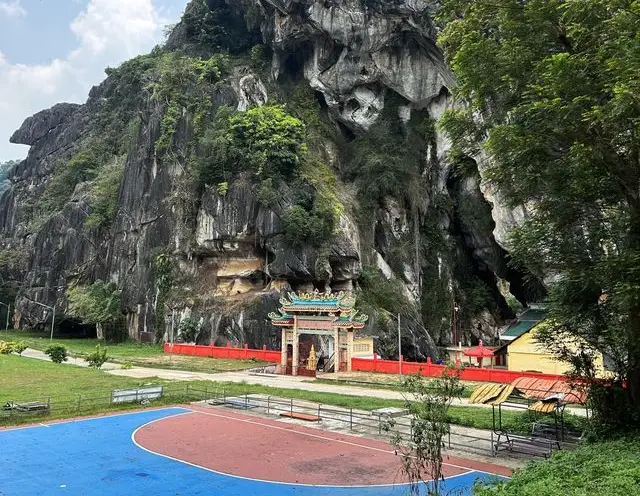
Tham Thalu Cave
Open Days: Open as a community shrine and cultural attraction
Opening Hours: Daytime visits are recommended
Tham Thalu Cave in Yala Province is a natural and cultural attraction in Tham Thalu Subdistrict, Bannang Sata District, Yala Province. Located along Highway 410 on the Yala–Bannang Sata–Betong route, the site is known for a limestone cave that passes through to the other side of the mountain. Inside and around the cave area is a Chinese shrine connected with Guanyin, locally associated with Chao Mae Hud Jow Shrine. This makes Tham Thalu more than a cave. It is a place where limestone landscape, Chinese faith, local tradition, and community memory meet in one setting.
The name “Tham Thalu” directly reflects the physical character of the cave. In Thai, “tham” means cave, and “thalu” means passing through. The cave has passage-like openings, including an entrance that can be accessed from the front and an upper opening where the sky can be seen in certain areas. This gives the cave a strong natural identity and distinguishes it from enclosed limestone caves. Visitors experience a combination of rock formations, natural light, sacred space, and community worship.
Tham Thalu Subdistrict lies in Bannang Sata District, an important area along the route from Yala city toward Than To and Betong. This route is known for mountains, forests, waterfalls, dams, and caves. Tham Thalu can be planned together with Tham Kra Chaeng Cave, Than To Waterfall Forest Park, Bang Lang Dam, and other attractions on Highway 410. For travelers, the cave adds a cultural and religious dimension to a route that is often known mainly for natural scenery.
The importance of Tham Thalu comes from its role as an art-and-cultural site, an archaeological locality, and a living shrine. The area contains Chinese shrine elements and Buddhist images, with Guanyin as the central sacred figure for many worshippers. Thai Chinese communities in Yala and nearby areas come here to pay respect, make merit, ask for blessings, and participate in vegetarian-festival activities. During annual ceremonies and vegetarian observances, the site becomes busier and more active than usual.
Chao Mae Hud Jow Shrine in the Tham Thalu area has a long community history. Local records connect the shrine with the installation of the Guanyin bodhisattva image inside the cave or shrine area in 1891. Chinese monks and nuns later maintained and restored the shrine, allowing it to become a religious and cultural center for the local community. Over time, the shrine became a place for worship, merit-making, annual ceremonies, and community gathering.
The story behind the name of Tham Thalu is closely linked with the cave’s structure. A Chinese nun who helped maintain the shrine observed that the cave could be passed through in 2 directions: through the cave entrance and through an upper opening that allowed the sky to be seen. Local people then called the place Tham Thalu. The name became both the identity of the cave and the name of the surrounding community, showing how natural geography can shape local memory.
Another important name connected with the site is Chao Mae Hud Jow Shrine. The shrine is central to community ceremonies, worship, merit-making, vegetarian meals, lion-dance activities, and local performances during annual events. Shadow-puppet performance is also mentioned as part of the traditional atmosphere of the annual celebration. The shrine is therefore not only a place for individual worship but also a space where different generations of the community gather and preserve shared cultural practices.
Tham Thalu clearly reflects the multicultural identity of Yala. Yala is home to Thai Buddhist, Thai Muslim, and Thai Chinese communities. In Tham Thalu, devotion to Guanyin and the traditions of Chao Mae Hud Jow Shrine form part of a broader local landscape of coexistence. Visiting the cave helps travelers understand Yala as a multicultural province rather than only a borderland or transit route to Betong.
The natural character of the cave is equally important. Tham Thalu is located in a limestone mountain area with complex terrain and some lowland sections nearby. Over time, water and natural erosion created openings, chambers, and rock surfaces inside the cave. Visitors can observe the relationship between cave walls, natural light, shrine architecture, and mountain surroundings. This combination gives the site the atmosphere of both a natural cave and a sacred space.
The shrine area is the main point of the visit. It houses the sacred Guanyin image and other revered objects. Visitors come to pay respect, ask for blessings, and spend quiet time in the shrine setting. Proper behavior is important. Visitors should dress respectfully, speak quietly, avoid disturbing worshippers, and follow local guidance, especially during annual ceremonies or the vegetarian festival when the site receives more people than usual.
The vegetarian festival is one of the most important periods at Tham Thalu. Worshippers come to pay respect to Guanyin, make merit, observe vegetarian practice, eat vegetarian food, and join shrine activities. The festival is not only about food. It is a practice of discipline, compassion, and purification, and it preserves Thai Chinese traditions that have been carried on in the local community for generations.
In addition to the vegetarian festival, the annual celebration of Chao Mae Hud Jow Shrine is a major community event. Activities include worship, merit-making, lion dance, firecrackers, performances by students and local residents, and shared vegetarian meals. These activities make the shrine a living community space. For visitors, the annual event shows how faith, performance, local identity, and community relationships are maintained through repeated practice.
As a travel destination, Tham Thalu suits visitors interested in limestone caves, Chinese shrines, local festivals, and cultural routes in Yala. A normal visit may take around an hour for worship, observation, photography in appropriate areas, and learning about the site. During festivals or ceremonies, travelers should allow more time because crowds and activities can extend throughout the day.
Visitors should not treat Tham Thalu only as a photo stop. The value of the place lies in the way a natural cave became a shrine, a center of faith, and a place of inherited tradition. Reading the information signs, observing the shrine details, and respecting worship practices make the visit more meaningful. The cave is memorable not simply because of its shape, but because the local community has given it cultural depth.
Preparation should match the natural setting. Visitors should wear comfortable walking shoes, watch for damp or uneven surfaces, and avoid entering areas outside the main walking route. A flashlight or mobile light can be useful when observing darker cave sections. Visitors should not climb rock walls, touch sacred objects unnecessarily, or damage natural limestone features. The site needs both natural and cultural protection.
Getting There from Yala city is straightforward by car. Take Highway 410 along the Yala–Bannang Sata–Betong route toward Bannang Sata District and Tham Thalu Subdistrict. When entering the Tham Thalu area, look for the side road leading toward the attraction on the right-hand side of the main route. Drivers should be careful because parts of the road pass through communities and hilly terrain.
For a half-day route, Tham Thalu can be combined with Than To Waterfall Forest Park and Tham Kra Chaeng Cave. Tham Thalu offers shrine culture and a limestone cave; Tham Kra Chaeng offers a stream cave; and Than To Waterfall offers a forested waterfall landscape. Together, these stops create a balanced short trip with cave, water, forest, and cultural elements.
For a full-day route, travelers can continue to Bang Lang Dam and Ko Thuat to enjoy reservoir, mountain, and lakeside scenery. This route is suitable for visitors who want to explore the nature of Bannang Sata and Than To more deeply. Starting at Tham Thalu allows the trip to move from cave and shrine culture into the larger natural landscape of Yala.
The best time to visit is during daylight, especially from morning to early afternoon. Daylight makes it easier to walk around the cave and shrine area safely. During annual festivals, visitors should allow extra time for travel and parking. During heavy rain, cave and walkway surfaces may become damp or slippery, so careful movement is necessary.
Tham Thalu is suitable for cultural travelers, people who wish to pay respect to Guanyin, visitors interested in limestone caves, students, families, and travelers using the Yala–Betong route. The site is not a luxury tourist attraction. Its appeal comes from simplicity, faith, community continuity, and the long cultural history of Thai Chinese people in the area.
Photography should be done respectfully. The shrine is a sacred place, so visitors should not photograph worshippers closely without permission, stand on restricted platforms, or use flash in a way that disturbs others. In the cave area, visitors should avoid climbing for risky photo angles. Safe, respectful photography is the best way to preserve the atmosphere of the site.
Important visitor etiquette includes keeping the area clean, avoiding graffiti, not touching sacred images or display objects unnecessarily, and following the guidance of the community or caretakers. Tham Thalu is both a natural site and a sacred community shrine. Respect for the place helps protect its value for local residents and future visitors.
In summary, Tham Thalu is a meaningful destination in Yala because it is more than a limestone cave. It is a pass-through cave that gave its name to the local area, a shrine connected with Chao Mae Hud Jow and Guanyin devotion, a site of vegetarian-festival practice, and a clear example of multicultural life in southern Thailand. Travelers on the Yala–Bannang Sata–Betong route should consider stopping here to experience both the natural limestone landscape and the living faith of the Thai Chinese community in Yala.
| Name | Tham Thalu Cave / Chao Mae Hud Jow Shrine |
| Location | Moo 1, Tham Thalu Subdistrict, Bannang Sata District, Yala Province 95130, Thailand |
| Address | Tham Thalu Subdistrict, Bannang Sata District, Yala Province 95130, on Highway 410, the Yala–Bannang Sata–Betong route |
| Coordinates | 6.2598605635, 101.110618424 |
| Highlights | A limestone cave that passes through the mountain, Chao Mae Hud Jow Shrine, and the Guanyin bodhisattva image revered by the Thai Chinese community |
| History / Importance | An art-and-cultural site and archaeological locality with Chinese shrine elements, Buddhist images, and long-running local shrine traditions |
| Name Origin | The name refers to the cave’s pass-through openings, including the cave entrance and an upper opening where the sky can be seen |
| Distinctive Features | A limestone cave in a complex mountain landscape, with a Chinese shrine integrated into the natural setting |
| Main Areas / Zones | Cave entrance, pass-through cave opening, upper skylight opening, Chao Mae Hud Jow Shrine, Guanyin worship area, vegetarian hall, and annual-festival area |
| Main Tradition | Annual celebration of the Guanyin bodhisattva / Chao Mae Hud Jow Shrine and the vegetarian festival, with worship, merit-making, vegetarian meals, lion dance, and community performances |
| Travel Information | From Yala city, take Highway 410 on the Yala–Bannang Sata–Betong route toward Bannang Sata. In Tham Thalu Subdistrict, look for the side road to the attraction on the right-hand side of the main road |
| Current Status | A community shrine, art-and-cultural site, archaeological locality, and local attraction in Tham Thalu Subdistrict |
| Recommended Visiting Time | Daytime, especially morning to early afternoon |
| Facilities | Shrine area, worship area, vegetarian hall and ceremony space during festivals, and walking areas around the cave and shrine |
| Caretaker / Related Agencies | Chao Mae Hud Jow Shrine committee, local leaders, Tham Thalu community, and Tham Thalu Subdistrict Administrative Organization |
| Local Administrative Contact | Tham Thalu Subdistrict Administrative Organization, Tel. 073-201-063 |
| Nearby Tourist Attractions | 1. Than To Waterfall Forest Park, about 5 km 2. Tham Kra Chaeng Cave, about 5 km 3. Bang Lang Dam, about 25 km, Tel. 073-281063 ext. 2001 4. Ko Thuat, Bang Lang Dam, about 25 km 5. La-ong Rung Waterfall, about 45 km 6. Bang Lang National Park, about 50 km, Tel. 02-562-0760 |
| Nearby Restaurants | 1. Riverside Bannang Sata, about 15 km, Tel. 088-395-1135 2. Ajumma Bannang Sata Branch, about 15 km, Tel. 065-404-0064 3. Sep Tang Mala Bannang Sata, about 15 km, Tel. 064-013-7095 4. The Apple Yam, about 20 km, Tel. 093-459-4332 5. Riverside Yala, about 50 km, Tel. 088-395-1135 6. Bang Lang Dam Restaurant Area, about 25 km, Tel. 073-281063 ext. 2001 |
| Nearby Accommodations | 1. Ban Sri Yala, Khun Sai Chon Villa, Bang Lang Dam, about 25 km, Tel. 073-281063 ext. 2001 2. Ban Kritsana, Khun Sai Chon Villa, Bang Lang Dam, about 25 km, Tel. 073-281063 ext. 2001 3. Ban Champa, Khun Sai Chon Villa, Bang Lang Dam, about 25 km, Tel. 073-281063 ext. 2001 4. 66 Baan Nai Suan, Than To, about 35 km 5. @INN YRU Hotel, about 50 km, Tel. 062-182-2662 6. Park View Hotel Yala, about 50 km, Tel. 073-217001-5 7. Yala Grand Palace Hotel, about 50 km, Tel. 073-215711, 073-215712 |
Frequently Asked Questions (FAQ)
Q: Where is Tham Thalu Cave located?
A: Tham Thalu Cave is located at Moo 1, Tham Thalu Subdistrict, Bannang Sata District, Yala Province, on Highway 410 along the Yala–Bannang Sata–Betong route.
Q: What is the main highlight of Tham Thalu Cave?
A: The main highlight is the limestone cave that passes through the mountain, together with Chao Mae Hud Jow Shrine and the Guanyin bodhisattva image revered by the local Thai Chinese community.
Q: How is Tham Thalu connected with Guanyin?
A: The cave area contains a shrine where the Guanyin bodhisattva image is enshrined. It is an important worship site for Thai Chinese people in Tham Thalu and nearby communities.
Q: What important festival is held at Tham Thalu?
A: The main events are the vegetarian festival and the annual celebration of Chao Mae Hud Jow Shrine, with worship, merit-making, vegetarian meals, lion dance, and local performances.
Q: Why is it called Tham Thalu?
A: The name comes from the cave’s pass-through character. It has an entrance that can be passed through and an upper opening where the sky can be seen.
Q: What is the best time to visit Tham Thalu?
A: Daytime is best, especially from morning to early afternoon, because it is safer and more convenient for walking around the cave and shrine area.
Q: How should visitors prepare for Tham Thalu?
A: Visitors should dress respectfully, wear comfortable walking shoes, bring a flashlight if they want to observe darker cave areas, and follow guidance from local caretakers.
Q: What nearby attractions can be visited with Tham Thalu?
A: Nearby places include Than To Waterfall Forest Park, Tham Kra Chaeng Cave, Bang Lang Dam, Ko Thuat, and Bang Lang National Park.
 Category: ●Nature and Wildlife
 Group: ●Caves
Last Update : 2 WeekAgo
 Last Update : 2 WeekAgo
 Click to Access the Navigation Map GPS
 Art, Culture and Heritage
 Landmarks and Memorials(1)
 Art, Craft Centres, Tradition(2)
 Museums(2)
 Educational Places
 Educational Gardens, Farm(1)
 Places of Worship
 Temple(6)
 Mosque(2)
 Other Sacred Sites(3)
 Suburban Living
 Village, Community(4)
 National Parks and Marine Reserves(2)
 Mountain (Doi)(5)
 Dam, Reservoir, Lake(5)
 Waterfalls(13)
 Hot Springs(2)
Caves(7)
Hot Springs(2)
Caves(7)
 River, Canal(4)
 Islands(1)
 Other natural attractions(8)
 Entertainment and Agricultural
 Stadium(1)
 Farms, Parks and Ecotourism(4)
 Outdoor and Adventure Activities(1)
 Travel Articles, Recipes
 Travel Review, Food Review(2)


